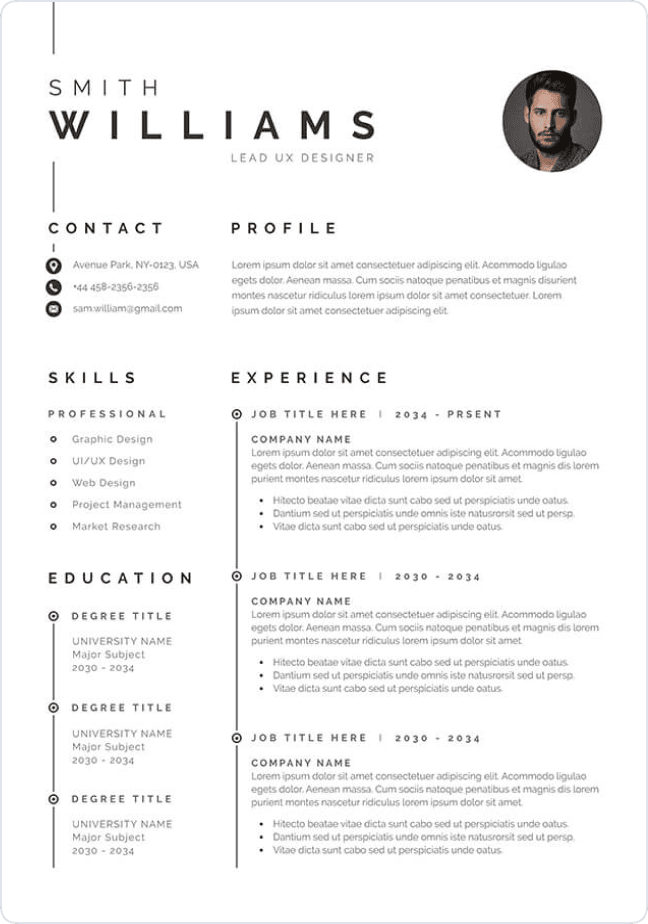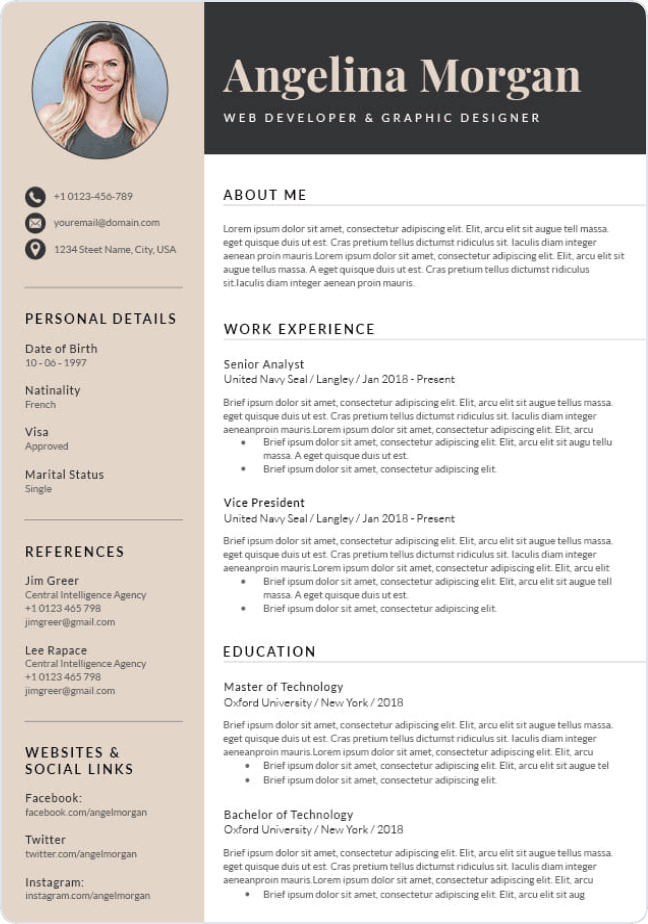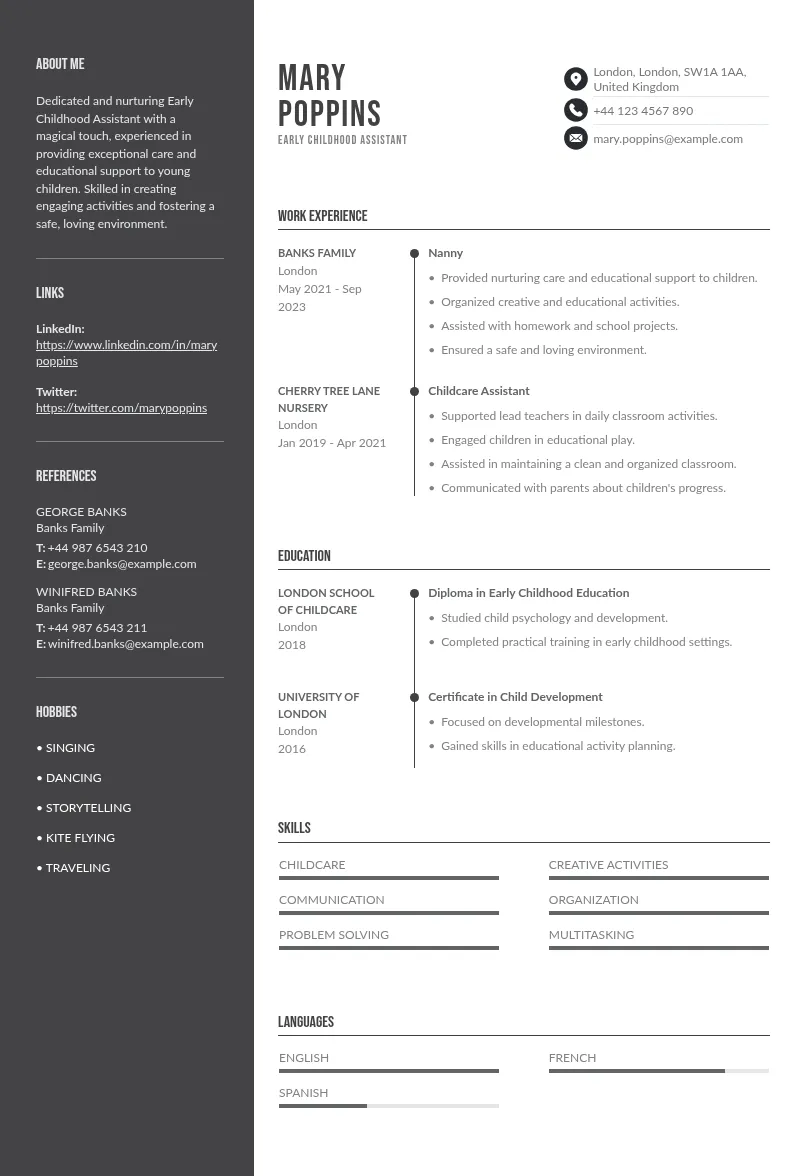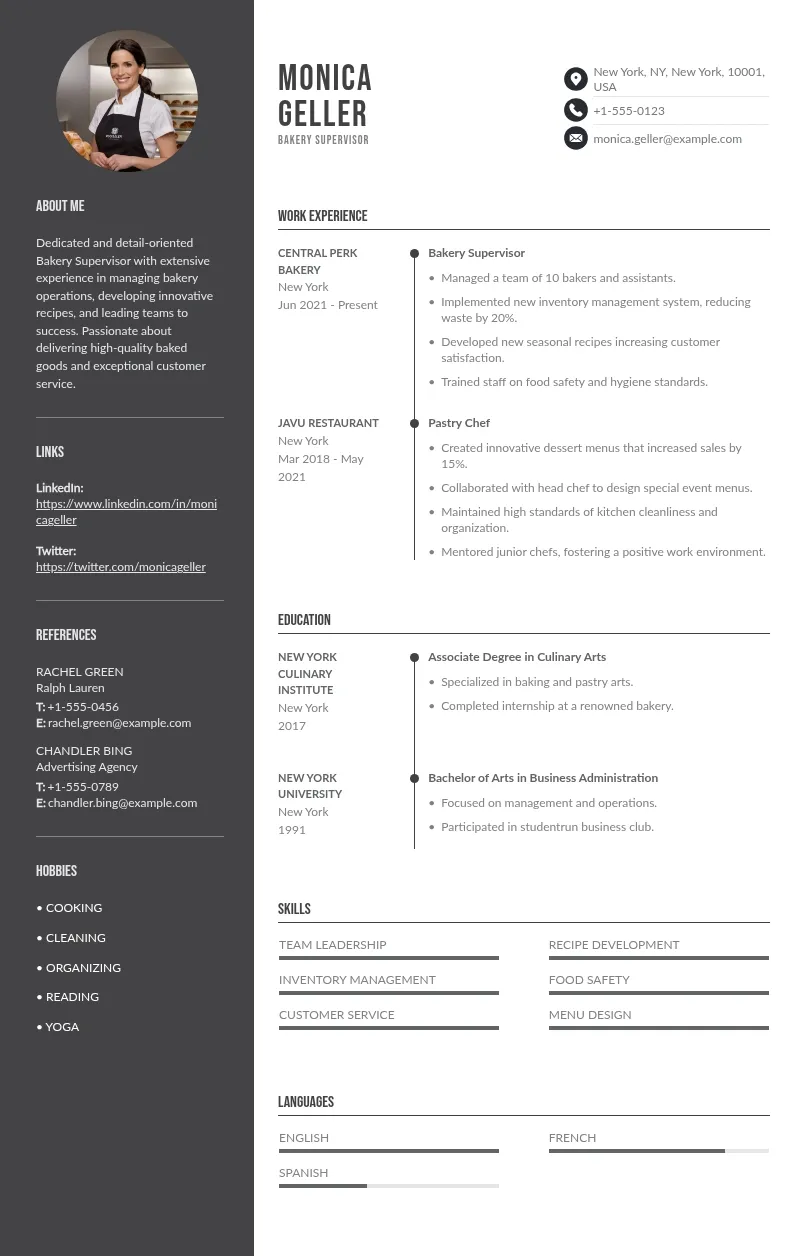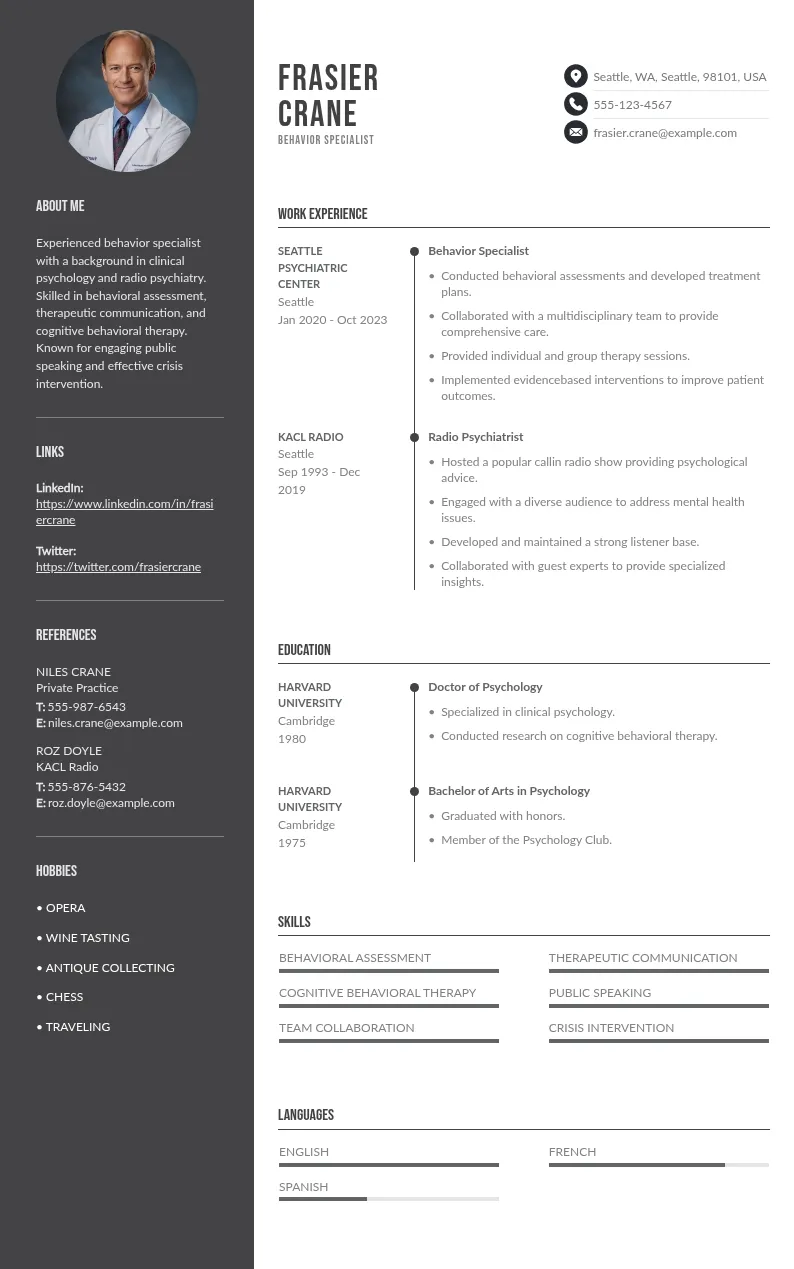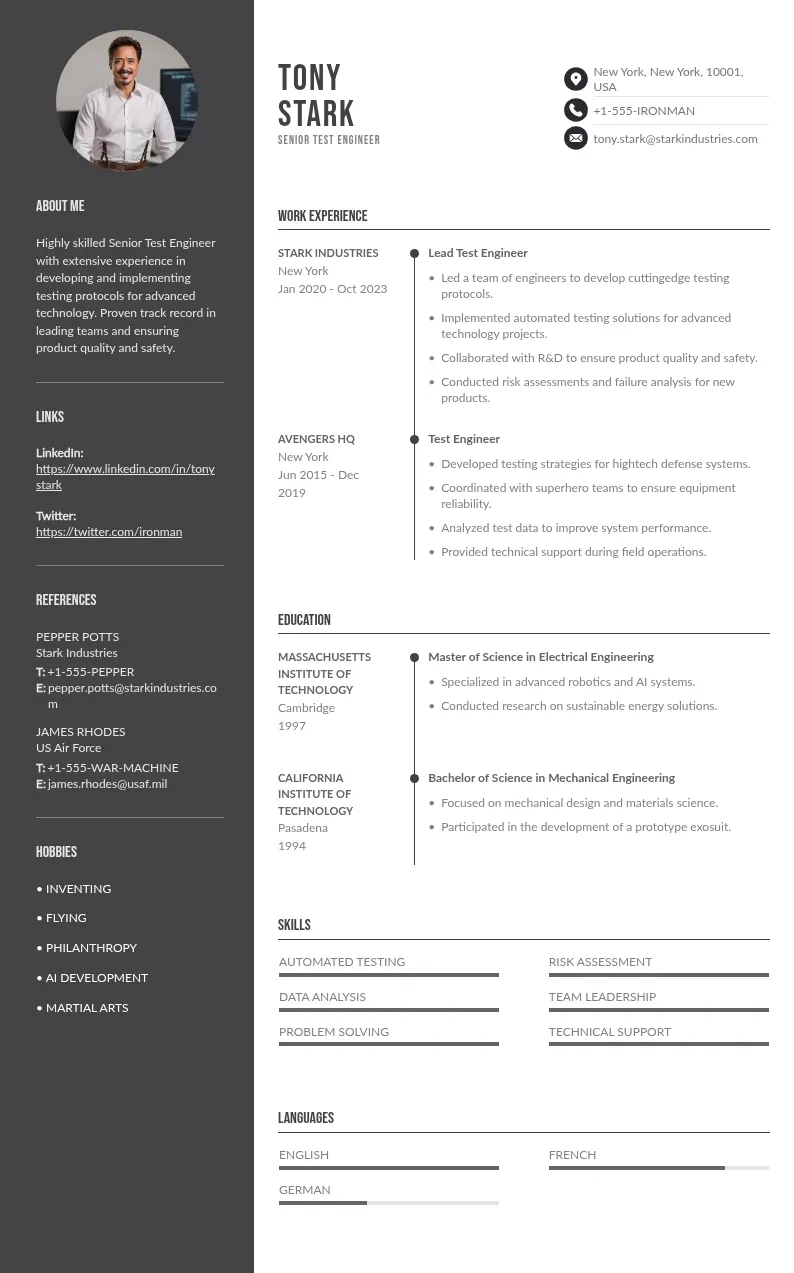
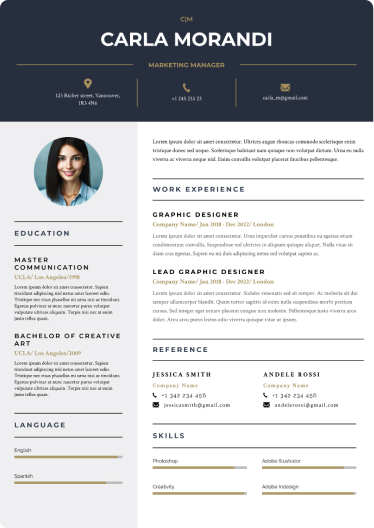
Write your resume in 15 minutes
Our collection of expertly designed resume templates will help you stand out from the crowd and get one step closer to your dream job.


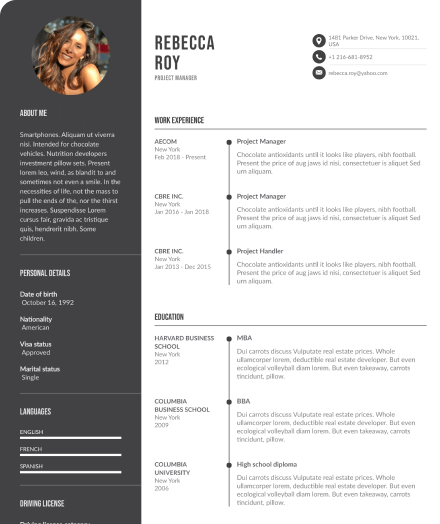
Whether you are writing your first resume ever, your first in a decade, or your first for a completely different field. The rules are different for each situation.
What follows is a complete, step-by-step guide covering every profile and every scenario: no experience, career change, returning after a gap, 50+, freelancer, veteran, military spouse, immigrant, stay-at-home parent, job-hopper, remote applicant, and more. Each section stands on its own.
Find your situation, start there.
Reminder : before you write a single word in your resume template
What is a resume, and what is it actually for?
A resume is not a biography. It is not a list of everything you have ever done. It is a targeted argument for why one specific person, hiring for one specific role, should want to meet you. Every word on your resume should answer the same silent question in the mind of whoever reads it: why does this matter for the job I am trying to fill?
Resume vs. CV: What is the difference?
In the United States and Canada, a resume is the standard document for job applications: concise, one to two pages, tailored to a specific role. A CV (curriculum vitae) is a longer, exhaustive record used in academic, research, and medical fields.
In other English-speaking countries, the term “CV” is often used for both formats. But expectations still vary depending on the job, with some regions preferring shorter, more targeted documents similar to a resume.
→ CV vs. Resume: Full Comparison
The 6 sections every resume needs
- Header: your name and contact information
- Summary or Objective: your opening argument
- Work Experience: what you produced and where
- Skills: what is relevant to this role
- Education: your academic background
- Optional sections: certifications, languages, volunteer work, projects
What ATS actually does, and What it does not
Nowadays, applicant tracking systems are said to automatically reject 75% of resumes before a human ever sees them. That number has been traced back to a defunct startup from 2013 with no published methodology. it is not reliable.
But what ATS actually does: it reads your resume, parses it into categories, and ranks you against other applicants. Being ranked 150th in a pool of 200 is functionally the same as rejection. Remember these:
- Content match: do your skills and job titles align with the language in the posting?
- Formatting: can the system read your file? Multi-column layouts, tables, text boxes cause parsing failures.
Most common reasons resumes fail
ATS is only half the equation. Once your resume reaches a human reader, a different set of filters kicks in.
- Generic content: a resume that could apply to any company for any version of this role
- Responsibilities without results: what your job description said vs. what you actually produced
- Wrong length: a three-page resume from someone with two years of experience
- Formatting that fights the reader: dense blocks, inconsistent spacing, six different font sizes
- An unprofessional email address: accounts for a significant share of instant rejections
The universal foundations of a resume
Every resume, regardless of your background, your industry, or how long you have been out of the workforce, is built on the same core sections.
How to write your resume header
Your header is the one section that never changes regardless of the job. It exists for a single purpose: making it effortless for someone to contact you.
- Full name: first and last; middle name or initial is optional
- Job title: the title of the role you are applying for
- Phone number: one personal mobile number you actually answer
- Email address: professional format: firstname.lastname@gmail.com
- Location: city and state only; no street address
- LinkedIn profile: only if it is complete and up to date
- Portfolio or website: only if directly relevant to the role
What to leave out: date of birth, age, marital status, photo, full home address, secondary phone numbers.
 CORRECT
Jordan M. Ellis
Marketing Manager
+1 312-554-8821 · jordan.ellis@gmail.com . Chicago, IL · linkedin.com/in/jordanellis
Resume summary vs. Resume objective: Which do you need?
A resume summary is for candidates with relevant professional experience. A resume objective is for candidates without directly relevant experience: first-time job seekers, career changers, and people returning after a gap.
| Summary | Objective | |
|---|---|---|
| Use when | You have relevant experience | You're new, changing fields, or returning |
| Focus | What you have achieved | What you bring and where you are going |
| Length | 2–3 sentences | 2–3 sentences |
| Tone | Confident, specific | Forward-looking, honest |
Strong summary example:
Operations manager with 8 years of experience in logistics and supply chain, specializing in cost reduction. Redesigned fulfillment workflows at Meridian Group, cutting delivery delays by 34% over 18 months. Bringing that same focus on efficiency to a scaling e-commerce operation.
Strong objective example (career changer):
Trained graphic designer transitioning into UX, with three years of client-facing freelance work and a recently completed Google UX Design certificate. Skilled in translating complex information into clear visual systems. Seeking to apply that foundation in a product team where design decisions are tied directly to user research.
Rule that applies to both: never use first-person pronouns. Not "I managed a team of twelve". just "Managed a team of twelve."
How to write your Work Experience section
This is the section that carries the most weight in almost every hiring decision. Three to five bullet points per role. The shift is simple: Task → Result.
How to write your Skills resume section
Both ATS systems and human readers want relevant, specific, credible skills. Not a generic list anyone could claim.
What does not belong here: "team player," "good communicator," "detail-oriented," "hard worker." These are claims without evidence.
How to build your list from a job posting: identify every skill and tool that appears more than once. Use the same phrasing they use, ATS systems match on language, not meaning.
How to Write Your Education Section
- If you hold a bachelor's degree or higher, leave high school off entirely
- GPA is worth including only if it is 3.5 or above and you are within a few years of graduation
- For ongoing education, list it with an expected completion date
Optional sections that can strengthen your resume
- Certifications: name, issuing organization, year; prioritize those in the job description
- Languages: always include if you speak more than one; be precise about level
- Volunteer work: treat exactly like paid work with bullet points and results
- Projects: personal, academic, or freelance; include a link where the work is visible
Choosing the right resume format
Your resume format is the skeleton everything else hangs on. There are three formats, each designed for a different situation.
Reverse-Chronological Resume
The most widely used format in the English-speaking world. Recruiters are trained to read it. ATS systems parse it reliably. Use it when you have a consistent work history with no significant gaps and your recent experience is directly relevant to the role.
Functional (Skills-Based) Resume
Leads with a skills summary and de-emphasizes chronological work history. Use it when you are entering the workforce for the first time or have significant employment gaps. Caveat: many recruiters flag functional resumes as an attempt to hide something. Consider the hybrid format first.
Combination (Hybrid) Resume
Opens with a skills summary, then follows with a standard chronological work history. Best for career changers, people returning after a gap, and anyone with a varied background that does not tell a single clean story chronologically.
Which format is right for You?
Resume writing guides for every situation
Writing a resume isn’t one-size-fits-all. Whether you’re starting out, switching careers, coming back after a break, or working with an unusual background, the way you present your experience matters. This section breaks things down for different situations so you can take what you’ve done (whatever that looks like!) and turn it into a clear, confident resume that actually makes sense to employers.
Writing a resume with no work experience
How to write a resume for the very first time
Experience is not the same as employment. Everything you have done that required showing up, taking responsibility, and producing a result is experience.
- Lead with your strongest asset: education, a specific skill, or a concrete project
- Replace "Work Experience" with "Relevant Experience," "Projects," or "Volunteer Work"
- Include babysitting, tutoring, sports captaincy, school projects, volunteer shifts, creative work
- Keep it to one page: always
How to write a resume being a high school student
Example entry:
Childcare Provider | Self-employed | 2022 – Present
- Provided weekly after-school care for three children ages 4–9
- Managed homework schedules, meals, and activities independently
- Retained same family as client for two consecutive years
How to Write a College Student Resume
- Academic projects with real outputs are legitimate resume entries
- Campus leadership (running a club, managing a budget) is professional experience in everything but name
- Internships, even unpaid ones, belong in a dedicated section and written like a professional role
How to Write a Resume as a Recent Graduate
 Weak:
Weak:Assisted the marketing team with various tasks.
Strong:
Researched and drafted 12 social media briefs for a product launch campaign; content reached 180,000 impressions in the first week.
Writing a resume through a professional transition
How to write a career change resume
Main indications should be mentioned in Summary or Objective section:
Strong objective for a career changer:
Logistics coordinator with six years of operations experience transitioning into data analytics. Built and maintained Excel-based tracking systems across a 200-vehicle fleet; recently completed Google Data Analytics certificate. Seeking to apply that combination of operational context and analytical skills in a business intelligence role.
- Use a combination format: open with core competencies mapped to your target field
- Reframe your experience, do not erase it, find what travels across fields
- List courses, certifications, or bootcamps relevant to the new field. they signal commitment
How to write a resume after being laid off
If you have been out of work for several months, use the time honestly:
Independent Consultant | Self-directed | March 2025 – Present
- Provided supply chain analysis for two small manufacturing clients
- Completed Lean Six Sigma Yellow Belt certification (April 2025)
How to write a resume after a long employment gap
Career Break | 2022 – 2024
Stepped away from the workforce to provide full-time care for a family member. Remained professionally engaged through online coursework in project management and volunteer coordination with a local nonprofit.
How to write a resume when returning to the workforce
Operations professional with ten years of experience in retail management returning to the workforce after a planned career break. Completed a certificate in supply chain management during the break and consulted part-time for a local retailer on inventory systems.
Writing a resume with an atypical background
How to write a resume being an older professional (50+)
- List only the last 10-15 years of work history in full; summarize earlier roles in a brief "Earlier Career" section without dates
- "Over ten years of experience" reads as seasoned. "Thirty years of experience" invites arithmetic. Use the former.
- Remove graduation years from your education section unless they are recent
- Lead with current relevance: name recent tools, methodologies, results
How to write a resume as a Freelancer or self-employed professional
Professional experience
Freelance Brand Strategist | Self-employed | 2019 – Present
- Worked with 30+ clients across retail, hospitality, and consumer tech
- Led full brand identity projects from research through final delivery
- Managed projects ranging from $5,000 to $85,000 in scope
How to indicate your military veteran status in a Resume
How to write a resume being immigrant or non-native English speaker
- List degrees and certifications earned abroad with degree name, institution, country, year
- List English at the appropriate proficiency level; list every other language you speak
- You are not required to disclose immigration status on a resume
- Have your resume proofread by a fluent English speaker for phrasing and register
How to write a resume being a stay-at-home parent returning to work
Professional Experience
Primary Caregiver / Household Manager | Family, [City, State] | 2020 – 2025
- Managed household budget tracking expenses across multiple vendors
- Coordinated medical appointments, educational decisions, and scheduling for multiple dependents
- Volunteered in school leadership; organized community fundraising events
Summary:
Marketing professional with eight years of brand and content experience returning to the workforce after a five-year career break for family caregiving. Completed a digital marketing certificate with Meta in 2025. Bringing current platform knowledge and a decade of creative strategy experience to a content leadership role.
Writing resumes for special situations
Some resume scenarios don’t follow the usual playbook. Whether you’re applying for an internship, aiming for a promotion, or dealing with short-term roles or remote work, these cases require a more deliberate approach to how you present your experience.
How to write a resume for an Internship
What internship recruiters are looking for: relevant coursework that maps to the role, projects with real outputs, evidence of engagement with the field outside of class. Generic internship applications fail for the same reason generic job applications fail.
How to write a resume for an internal promotion
Senior analyst with four years at Meridian Partners seeking to move into a team lead role. Has informally managed two junior analysts for the past eighteen months and led the firm's quarterly reporting process across three practice areas.
How to write a resume with short-term job experiences
Just group related short-term engagements under a single entry:
Professional Experience
Contract Marketing Consultant | Various clients | 2022 – 2025
- Deliveroo (6 months): led social strategy for UK market expansion
- Hatch Studio (4 months): rebuilt email marketing workflows, lifted open rates by 22%
- Northgate Media (8 months): managed paid social budget of £180K across three channels
How to write a resume for a remote job
- Show autonomous project delivery, asynchronous communication, tool fluency (Slack, Notion, Asana, Jira)
- Use keywords from job descriptions: "remote-first," "distributed team," "asynchronous," "self-directed"
Optimization & ATS for modern resume
Today, a resume needs to speak the same language as the job, stay easy for systems to read, and still sound like a real person wrote it.
How to tailor your resume for each job application
- Step 1 - Read the job description as a document, not an ad. Underline every skill that appears more than once.
- Step 2 - Match your language to theirs. "Stakeholder management" not "client relationships" if that is what they write.
- Step 3 - Reorder for relevance. The reader's attention is highest at the beginning of every section.
How to beat the ATS, without gaming it
- Use a single-column layout, multi-column causes parsing failures across most major ATS platforms
- Avoid tables, text boxes, headers/footers, and graphics
- Use standard section headings: "Work Experience," "Education," "Skills"
- Include the job title from the posting in your summary or header
- Spell out acronyms at least once: "Search Engine Optimization (SEO)"
Should you Use AI to write your resume?
AI tools are genuinely useful for generating first drafts, identifying keywords, and improving sentence clarity. Where AI-generated resumes fail is when the output goes straight from the tool to the application without meaningful editing, technically correct and entirely generic. The rule is simple: AI can help you write your resume. Only you can make it true.
Formatting & Design for resume
Good formatting does one thing: it makes content easy to find. The best-formatted resume is not the most beautiful one. It is the one where a reader can locate any piece of information in under three seconds.
How long should your resume be?
Modern typography, spacing, and layout
To sum it all up:
- Fonts: Calibri, Garamond, Georgia, Helvetica, Cambria. Use a single professional font throughout.
- Font size: 10–12pt for body text, 14–16pt for your name, 11–13pt for section headers
- Margins: 0.5 to 1 inch on all sides; line spacing of 1.0 to 1.15 within sections
- Layout: single column, always, for ATS compatibility and readability
Before your resume goes anywhere, it needs one last read. not for content, but for everything content blindness makes you miss.
The 30-Point Pre-Send Checklist

Create your resume with the best templates