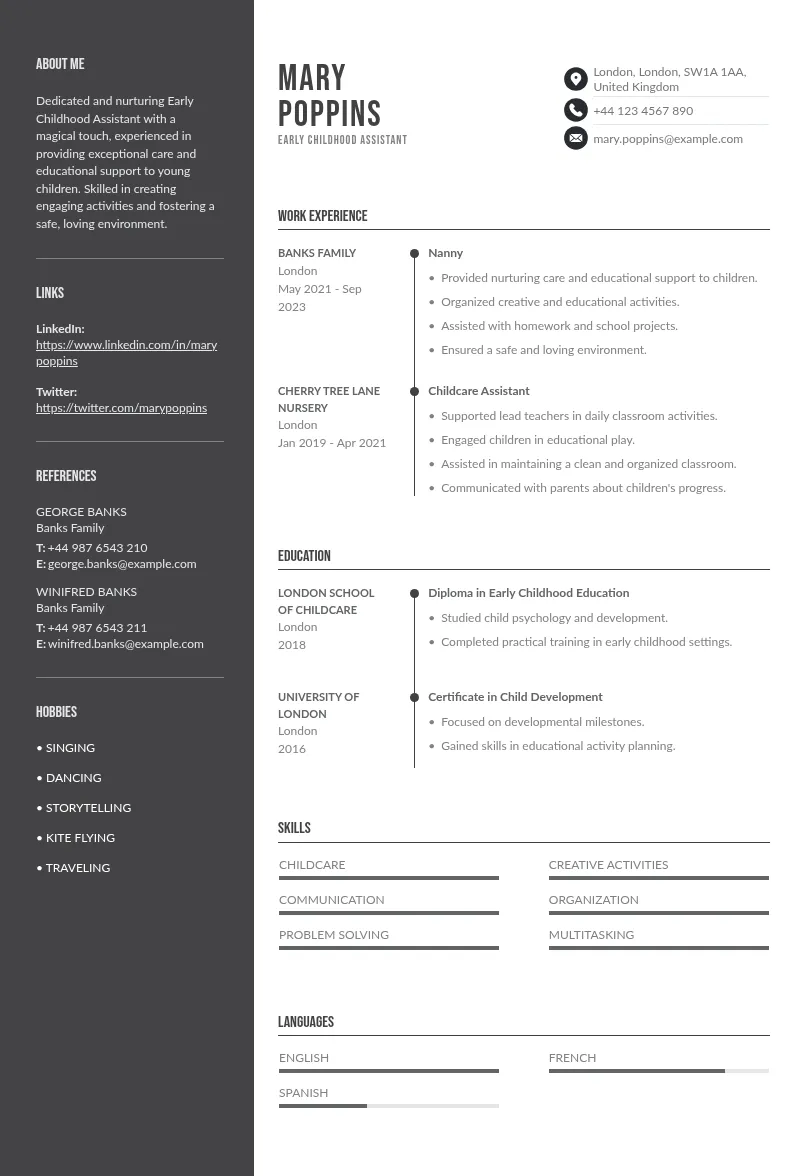
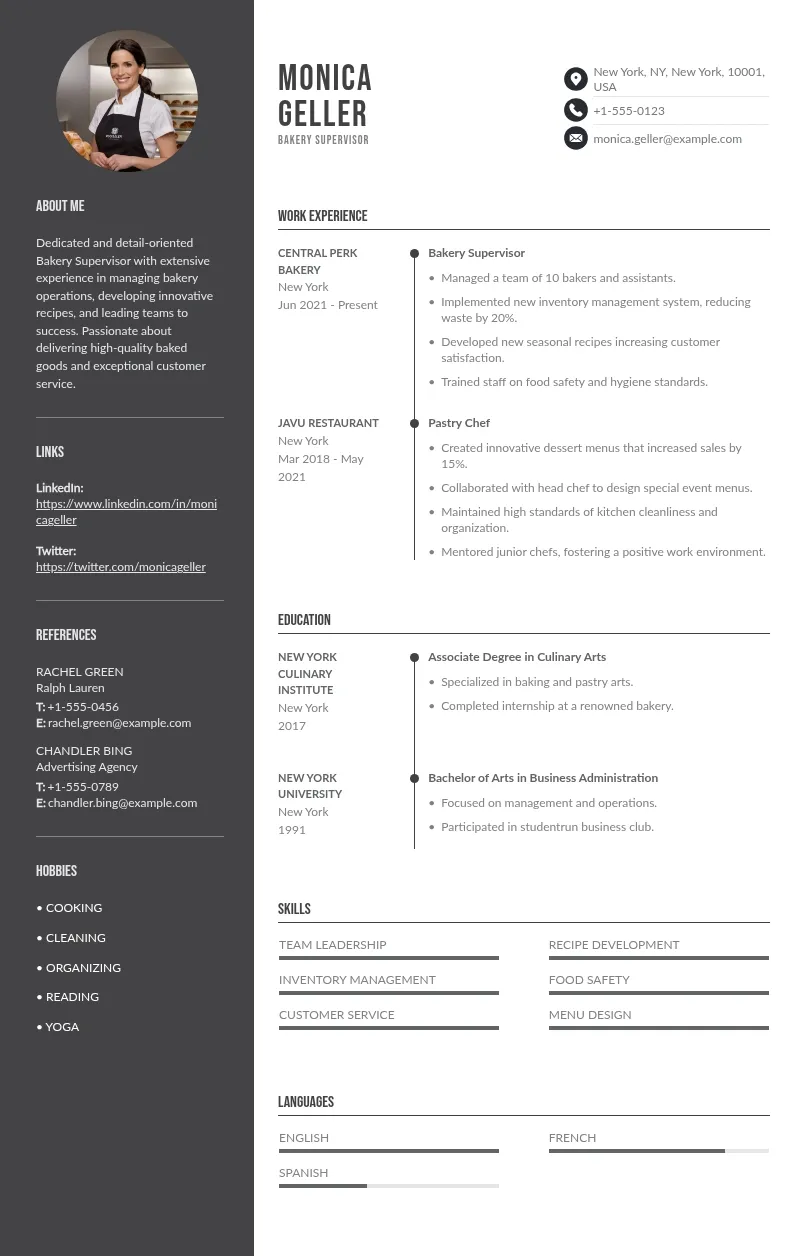
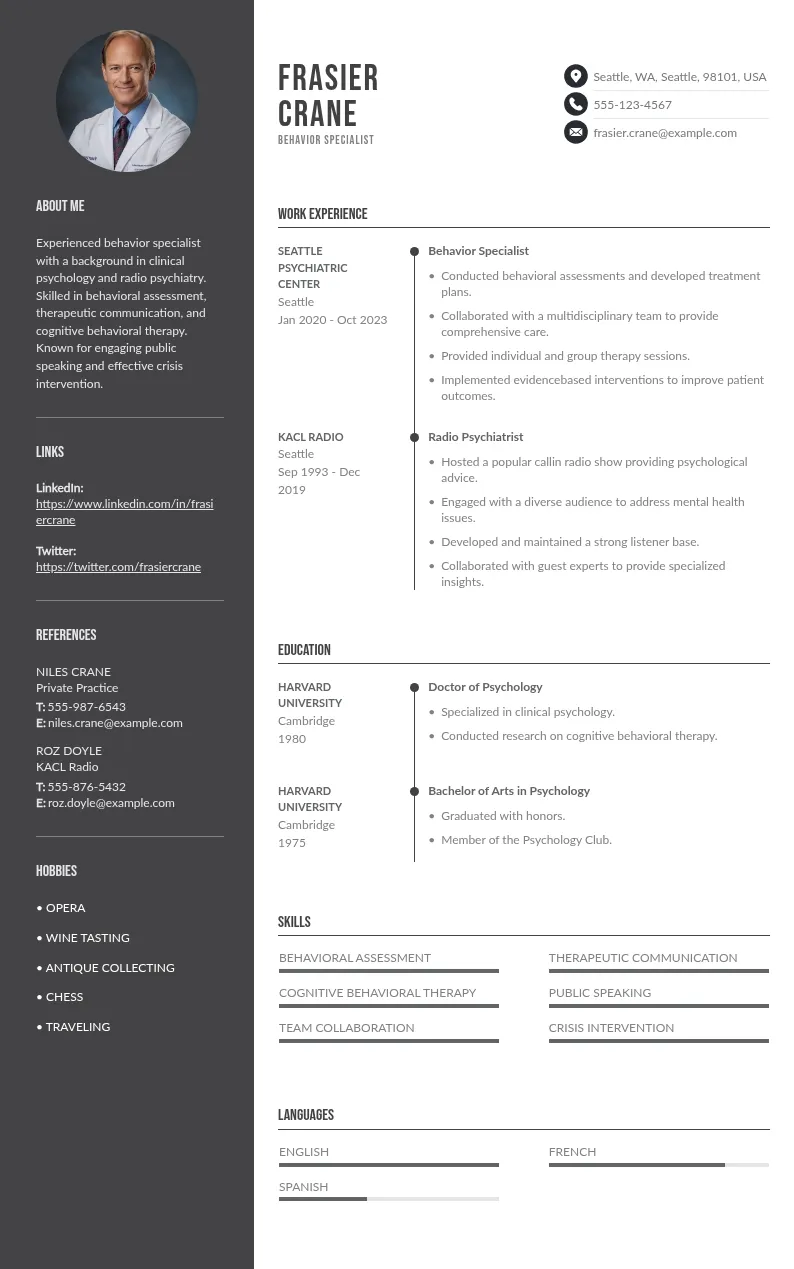
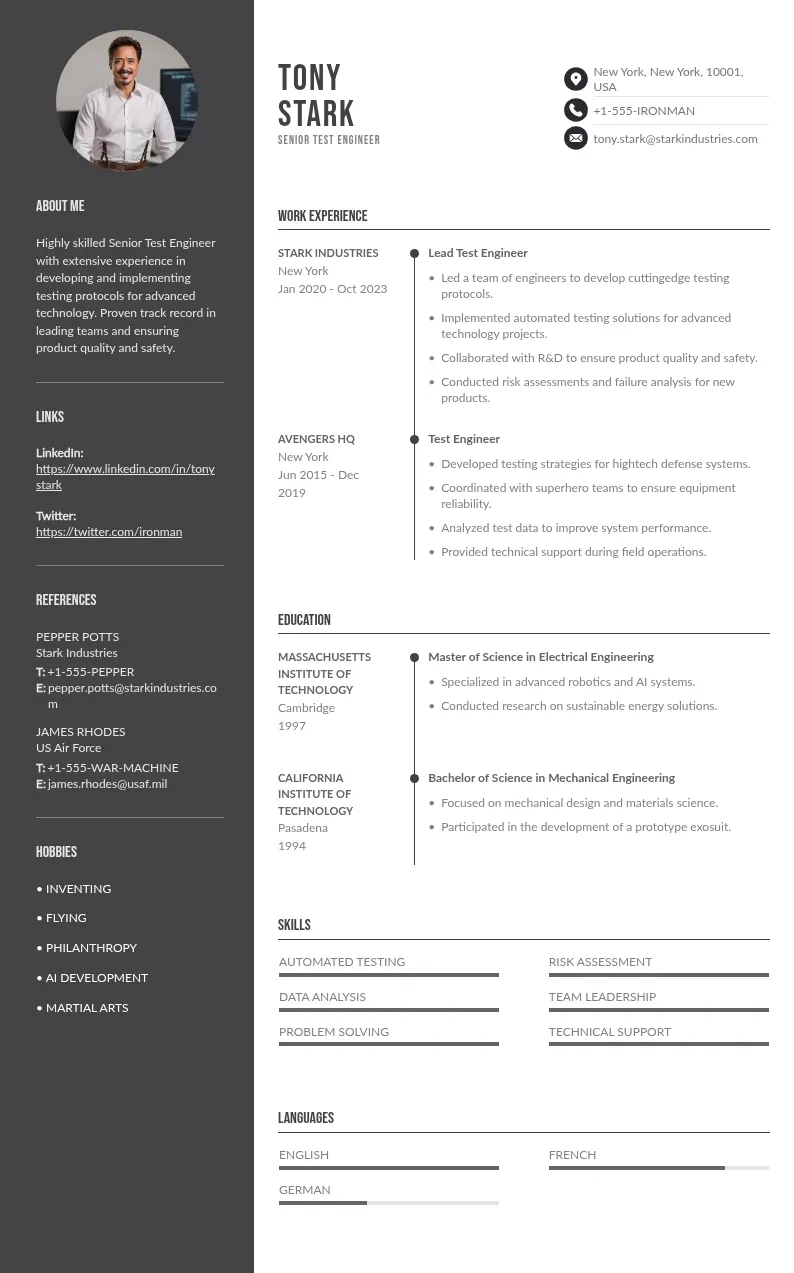
Creating a compelling CV that captures the attention of potential English employers involves a deep understanding of the distinct characteristics of the English job market. How can you tailor your CV to resonate with English recruiters and hiring managers? This article will provide valuable insights into the nuances of the English job market, as well as practical tips for crafting a CV that showcases your qualifications and competencies in the most appealing light.


JOHN DOE
123 Any Street, Anytown, Any State, 12345
Phone: (123) 456-7890
Email: john.doe@gmail.com
OBJECTIVE:
Highly motivated marketing professional with over 5 years of experience in the industry, seeking a challenging opportunity in a fast-paced, innovative organization where my skills and experiences can be used to drive company growth and success.
SKILLS:
WORK EXPERIENCE:
Marketing Manager, XYZ Corporation, Anytown, Any State | June 2016 - Present
Marketing Coordinator, ABC Company, Anytown, Any State | July 2014 - May 2016
EDUCATION:
Bachelor of Science in Marketing, University of Any State, Anytown, Any State | May 2014
REFERENCES:
Available upon request
LANGUAGES:
Fluent in English and Spanish
VOLUNTEER EXPERIENCE:
Marketing Volunteer, Local Non-Profit, Anytown, Any State | June 2012 - May 2014
In the following sections of this article, we will be providing a comprehensive guide on how to craft an impeccable CV in English, specifically tailored for the English job market. The purpose of writing a CV in English when applying for jobs in the English market is to effectively communicate your qualifications, skills, work experience, and other relevant information to potential employers.
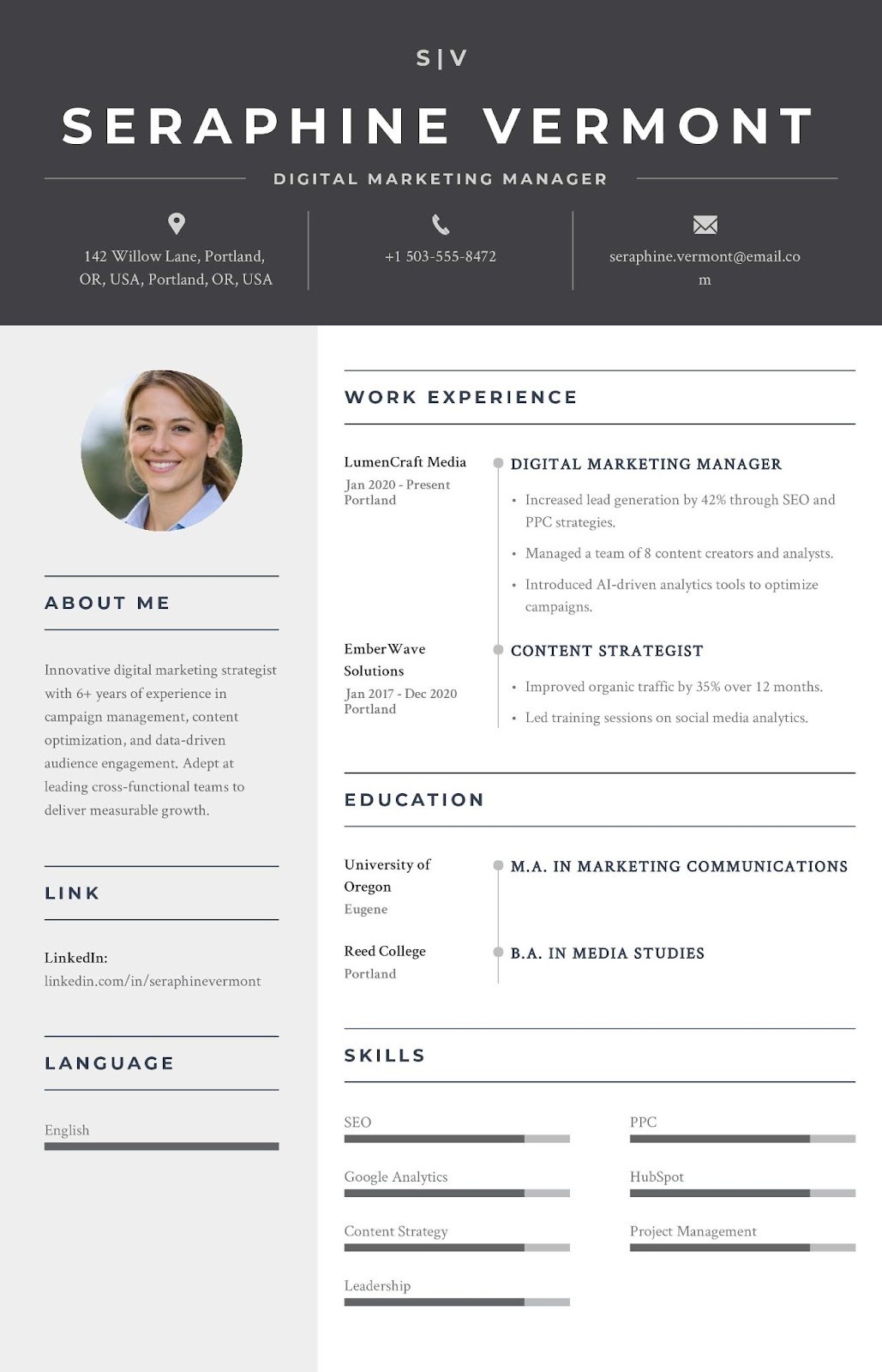
With the U.S. Bureau of Labor Statistics projecting millions of job openings annually across English-speaking markets, competition for each position remains intense. This makes a well-crafted English CV or resume one of your most critical career tools.
When a recruiter opens a resume, he wants to “feel” the candidate's presence, their confidence, their weight… immediately. That’s what a professional resume in English does: not just about listing jobs, it’s about speaking in a way that sounds experienced and capable.
Every sentence is chosen to project professionalism and clarity. In English, this often means short, punchy sentences with strong action verbs. Numbers and metrics are sprinkled in naturally to show results without sounding boastful.
Linguistic and stylistic features:
Additional Tips:
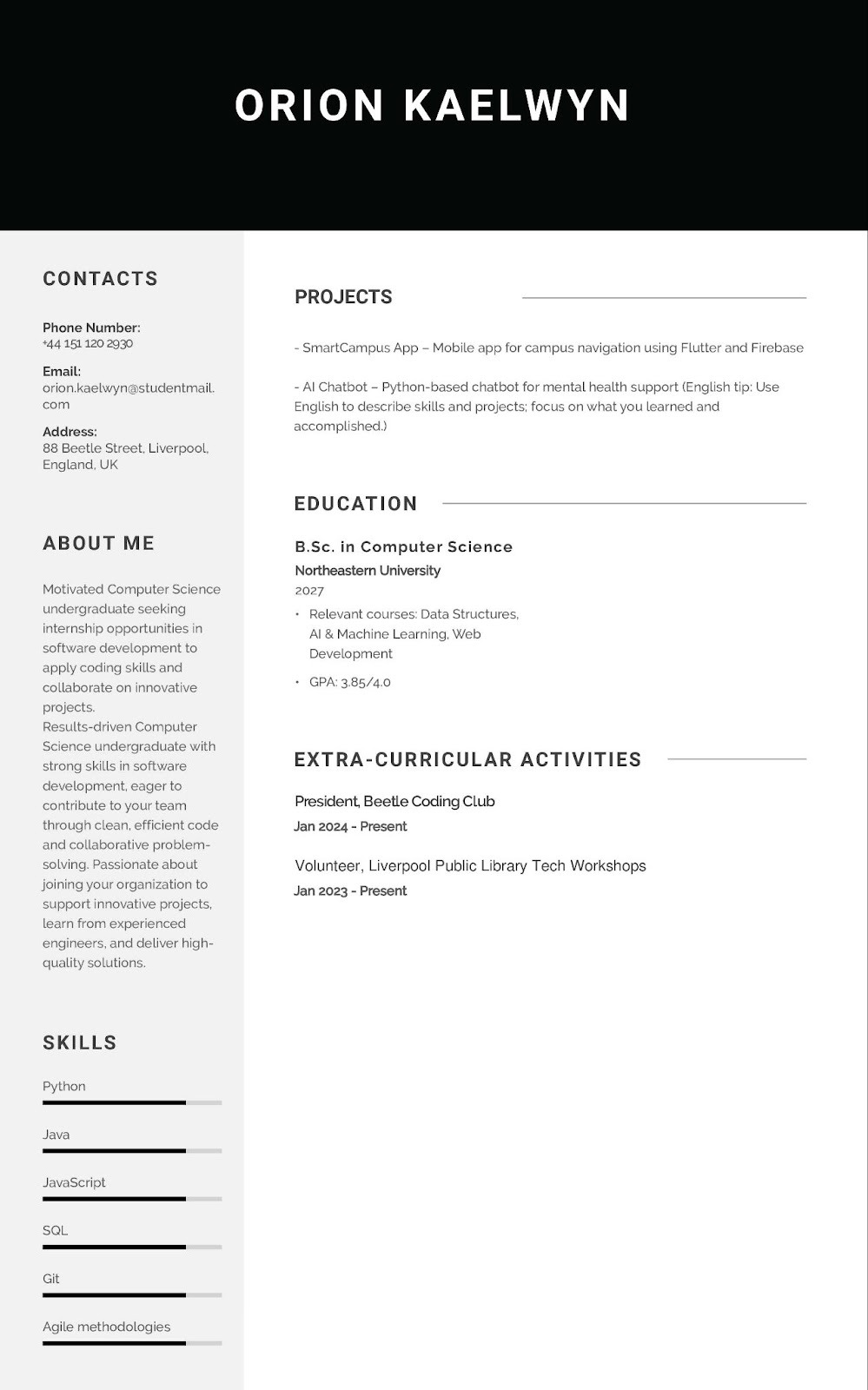
Writing a student resume in English is like introducing yourself for the first time in a professional way. The tone is curious, motivated, and slightly aspirational. You’re using English to communicate potential and learning ability, not just past achievements. Projects, coursework, and activities become your “proof points”. And you want the reader to see your enthusiasm in every line.
English usage highlights:
Additional Tips:
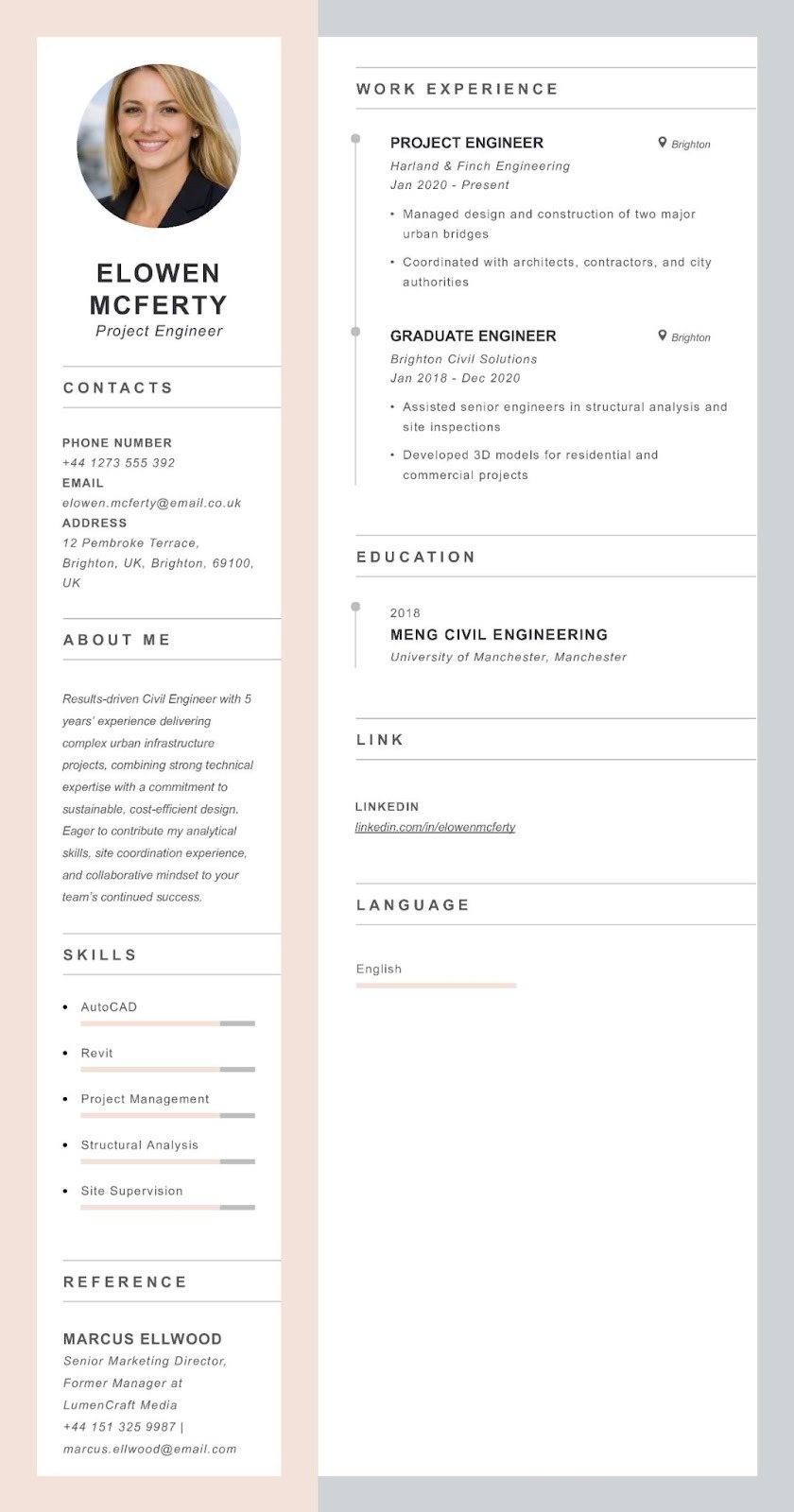
British English for CVs tends to be formal, precise, and polished… like a LinkedIn post from an Oxford graduate: no boasting, just credentials that speak for themselves. Even when describing achievements, the tone leans toward measured professionalism rather than promotion.
Writing “in English” here is about choosing words that demonstrate expertise, reliability, and attention to detail. The structure and language make it feel credible and trustworthy.
How this CV speaks in english:
Additional Tips:
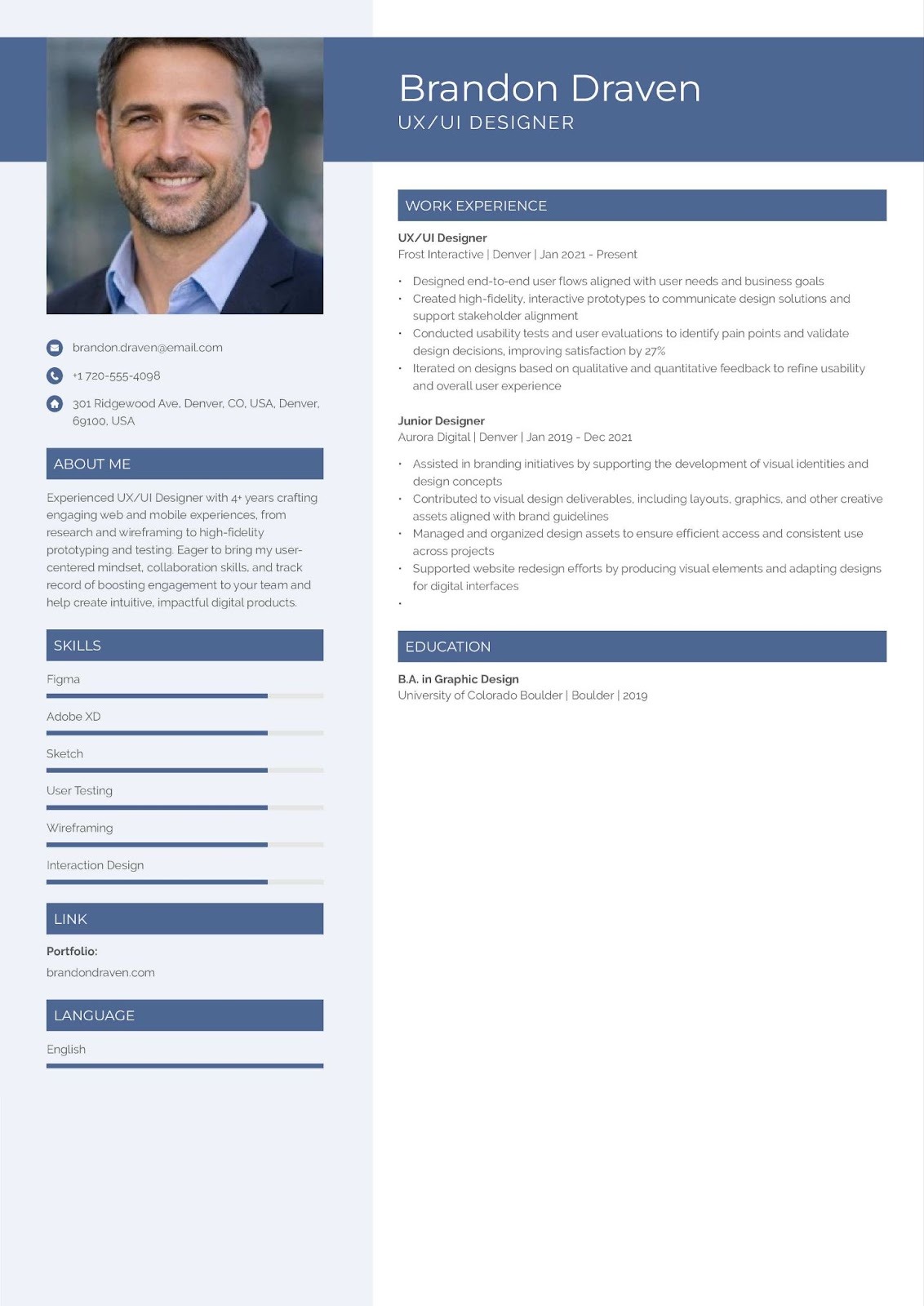
American english for resumes has a certain energy and clarity. It’s concise but enthusiastic. Almost like you’re telling a story about your impact in a few sentences. Even in creative fields like UX/UI design, the English is about showing results and skill in a clear, digestible way. There’s a balance between sounding approachable and professional.
Linguistic and stylistic features:
Additional Tips:
If you’re writing a resume in English, it helps to get familiar with the key terms and concepts. English resumes have some differences depending on whether you’re following American or British conventions, so understanding these nuances will make your resume clearer and more professional. Here’s a handy guide:
When writing a resume in English, it is important to use the correct grammar, tense, and person to present oneself professionally. The general rule is to use third person and avoid using pronouns such as 'I', 'we', 'you', etc. This is because it makes your resume seem less subjective and more objective. For instance, instead of saying, "I managed a team of 10 people", you should say, "Managed a team of 10 people". It's more concise and professional.
In terms of tense, for your current job, use the present tense. For past roles, use the past tense. This helps to distinguish between your current role and your past roles. For example, for a current role you could write, "Manage a team of 15 employees, overseeing all sales operations" and for a past role, you might write, "Managed a team of 20 employees, driving a 15% increase in sales". Using the correct tense is crucial in ensuring your resume is easily understood, and gives a clear timeline of your career progression. Be sure to also use a consistent verb tense within each job description.
Embarking on a career journey in the English market presents exciting opportunities and unique challenges. Among these challenges, the crucial task of crafting a well-structured CV stands out. A meticulously designed CV not only showcases your professional qualifications but also reflects your organisational skills and attention to detail.
The layout and structure of your CV can significantly enhance its readability, making it easier for potential employers to identify your key strengths and experiences. Consequently, a well-structured CV can serve as a powerful tool in your arsenal, propelling you towards your career goals in the dynamic English market.
When creating a CV in English, it's important to structure it in a way that clearly communicates your skills, experiences, and achievements to potential employers. Here's a breakdown of the mandatory sections you should include:
Remember, it's important to tailor your CV to each job you're applying for, highlighting the skills and experiences that make you a perfect fit for the role.
The header of a resume in English holds significant importance as it should be clearly visible and contain all relevant contact information. To make an efficient header, start with your last name, followed by your first name. Then, list your profession and discipline to give the employer an immediate understanding of your field of expertise. You should include your mailing address next, to provide a reference for your geographical location. Following this, list your phone number, ensuring it is an active contact point where you can be readily reached. Lastly, provide your email address, a crucial component as employers often prefer to establish initial contact via email.
 CORRECT
---------------------------------------
| Surname, First Name |
| Kowalski, John |
| Profession and Discipline |
| Civil Engineer |
| Mailing Address |
| Texas, 00-789 El Paso, United States |
| Phone |
| +555 123 456 789 |
| Email Address |
| john.kowalski@gmail.com |
---------------------------------------
Including a photo in the English Resume is not a standard practice. This is primarily because hiring decisions should not be influenced by a candidate's appearance, ensuring an unbiased process. Employers in the English-speaking world, especially in the United States and the United Kingdom, must comply with strict anti-discrimination laws, so they generally prefer not to see photos on resumes.
In certain professions, such as acting or modeling, a headshot is expected. If a photo is required, it should be a professional headshot, ideally in color, and approximately 1.5" x 1.5". It should be placed in the top right or left corner of the first page of the resume. However, unless specifically requested, it's best to refrain from including a photo on a resume.
Instead, focus on presenting a well-structured and detailed resume that highlights skills, qualifications, and experiences relevant to the job you are applying for. This will make a stronger impression on potential employers.
The Experience section in an English CV is a crucial element that showcases the candidate's past work history, skills, and competencies. This component provides a clear and concise overview of the professional journey, allowing potential employers to gauge the applicant's suitability for the specific job role.
CORRECT
Senior Marketing Manager
Microsoft Corporation
January 2015 - December 2019
Crafting a compelling CV with no experience can often seem daunting, but it's not an insurmountable task. Strategic presentation of skills, educational qualifications and personal attributes can make a significant impact. Here, we provide practical, easy-to-use tips for filling out a CV in English even if you're just starting out. These guidelines will help you create a CV that stands out, despite your lack of professional experience.
The education section in an English CV is critical as it provides potential employers with a snapshot of the candidate's academic qualifications. This section can demonstrate the applicant's applicable knowledge base, critical thinking abilities, and commitment to learning and development. It can also highlight any specialized training or certifications that align with the job requirements, thereby indicating the candidate's readiness for the role.
Moreover, for positions that require specific educational qualifications or for industries that highly value academic achievements, the education section can be a determining factor in the selection process. It allows employers to assess if the candidate meets the basic educational criteria for the job. For recent graduates or individuals transitioning careers, the education section can compensate for limited work experience, showcasing relevant coursework or projects that have prepared them for the role.
In an English CV, education is typically placed near the beginning, especially for individuals early in their career or if the level of education is particularly relevant to the job application. For example, if a recent graduate is applying for a job that requires a specific degree, the education section should be highlighted near the top to immediately draw the recruiter's attention to this qualification. Similarly, if a candidate holds a PhD in a field directly related to the job, it would be advantageous to place this information near the top of the CV.
However, as one's career progresses, professional experience often takes precedence over education. In such cases, work history is commonly listed first, demonstrating the candidate's practical application of skills and experience in relevant roles. For instance, if a seasoned marketing professional with 10 years of experience is applying for a senior role, their extensive portfolio and achievements in the field would likely be more compelling than their degree, hence, they would benefit from detailing their work experience first.
Therefore, while placing education first in an English CV can be beneficial in certain cases, it is not a hard and fast rule. The candidate should evaluate their unique set of qualifications and experiences, and organize their CV in a way that best highlights their suitability for the specific role.
CORRECT
Education
Bachelor of Arts in English Literature | Harvard University, Cambridge, MA | 2015 - 2019
Master of Arts in English | University of Oxford, Oxford, UK | 2019 - 2021
Continuing Education
Professional Writing Certificate | Coursera | 2021
Online Course: “Editing and Proofreading Made Simple” | Udemy | 2020
Professional Development
Attended Annual Conference for English Teachers | National Council of Teachers of English | 2019, 2020
Participated in Workshop: "Innovative Teaching Methods in English Literature" | American Association of Teachers of English | 2021
In the current competitive job market, demonstrating your skills in an English resume is of paramount importance. These skills serve as a clear indicator of your abilities, knowledge, and expertise, providing potential employers with a valuable insight into what you can bring to their company. A well-constructed resume that effectively showcases your skills can significantly increase your chances of landing an interview, and subsequently, the job.
It's not just about having the right qualifications or experience; it's about presenting yourself as a complete package, a professional who has a wide array of skills that can contribute to the company's success.
According to LinkedIn's 2025 Global Talent Trends Report, soft skills like communication, and adaptability are now cited by recruiters as equally important as technical qualifications. Making your skills section one of the most strategically important parts of your English CV.
A resume that shows a balance of these skills indicates a well-rounded candidate who can handle the demands of the job. Furthermore, in an age where technology is integral to most workplaces, digital literacy and other tech-related skills are highly sought after by recruiters. Therefore, it's crucial to highlight these skills in your resume to stand out in the English job market.
Below, we present a sample list of soft and hard skills that can be valuable to include when crafting your resume in English.
CORRECT
Soft Skills:
Hard Skills:
Additional headings included in an English CV can provide a more comprehensive and detailed view of the candidate's skills, experiences, and interests. These categories not only show the candidate's professional abilities but also their personal characteristics or additional skills that may be beneficial for the job. They can highlight the candidate's adaptability, versatility, and uniqueness. They might be particularly helpful when the candidate's work experience is limited or when they are applying for a job in a diverse and international environment.
The chosen categories are "Languages" and "Hobbies or Interests".
The "Languages" category is significant, particularly for jobs that require communication with international clients or partners. Proficiency in multiple languages can be a strong asset, setting the candidate apart from others. It demonstrates the candidate's adaptability, cultural awareness and ability to communicate effectively in diverse environments. Furthermore, it could also be a critical requirement for the job, particularly in multinational companies or organizations.
The "Hobbies or Interests" category provides insights into a candidate's personality and suitability for the company culture. It can show that the candidate is well-rounded, has a balanced lifestyle, and possesses qualities that may not be immediately evident in the professional experience section. For example, someone with a hobby in team sports may be a good team player. An interest in volunteering could indicate a strong sense of social responsibility. This section can be especially useful for fresh graduates or those with limited work experience, as it can highlight transferable skills and demonstrate a good fit for the company.
Improving your English CV can significantly increase your chances of securing a job in English-speaking countries. Here are some practical tips to help you enhance your CV:
In conclusion, creating a professional and captivating English CV is an essential step to securing your desired job. It acts as a reflection of your professional journey and the qualities you bring to the table. Here are some key, practical tips to consider when drafting your English CV:

Including a cover letter with your English resume when applying for a job in an English-speaking country is crucial. It provides a platform to introduce yourself, explain your interest in the position, and highlight your key skills and experiences. The cover letter offers potential employers a more personal insight into who you are, beyond the formal constraints of a resume. It gives you an opportunity to explain how you can contribute to the company's success, making you a more appealing candidate. In a competitive job market, a well-crafted cover letter can set you apart from other applicants and increase your chances of securing an interview.
Our collection of expertly designed cover letter templates will help you stand out from the crowd and get one step closer to your dream job.