Write your resume in 15 minutes
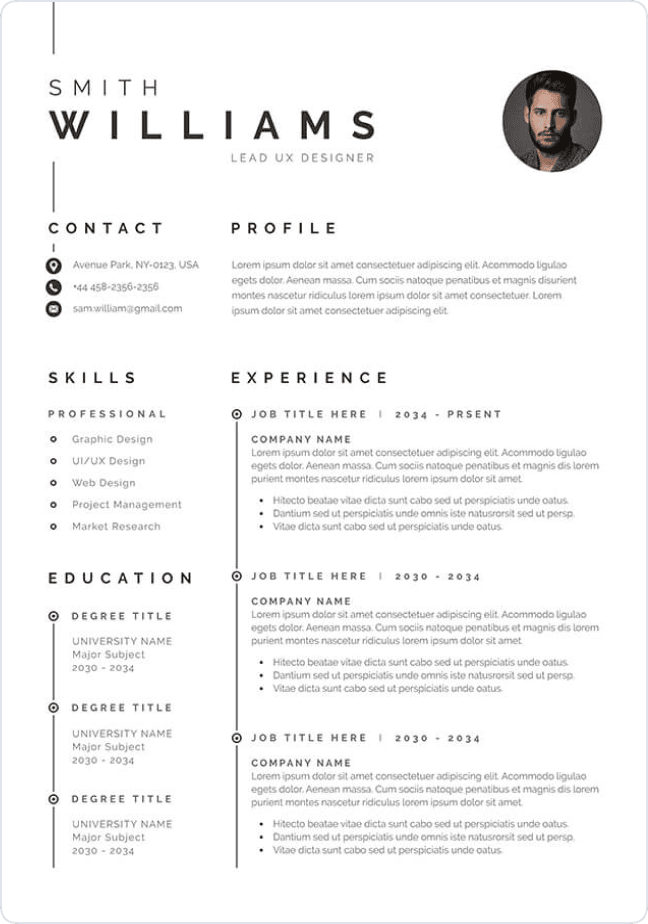
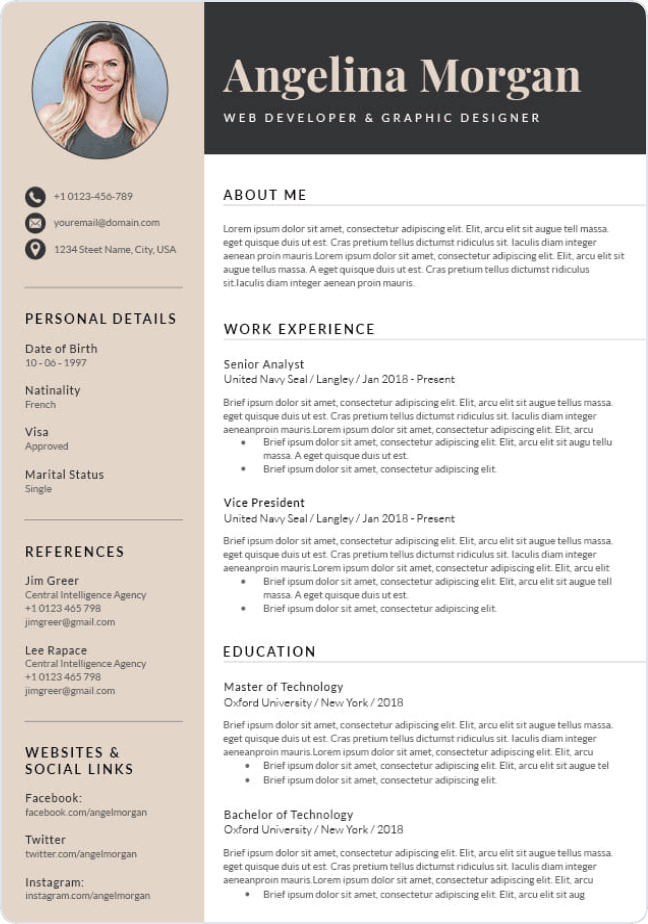
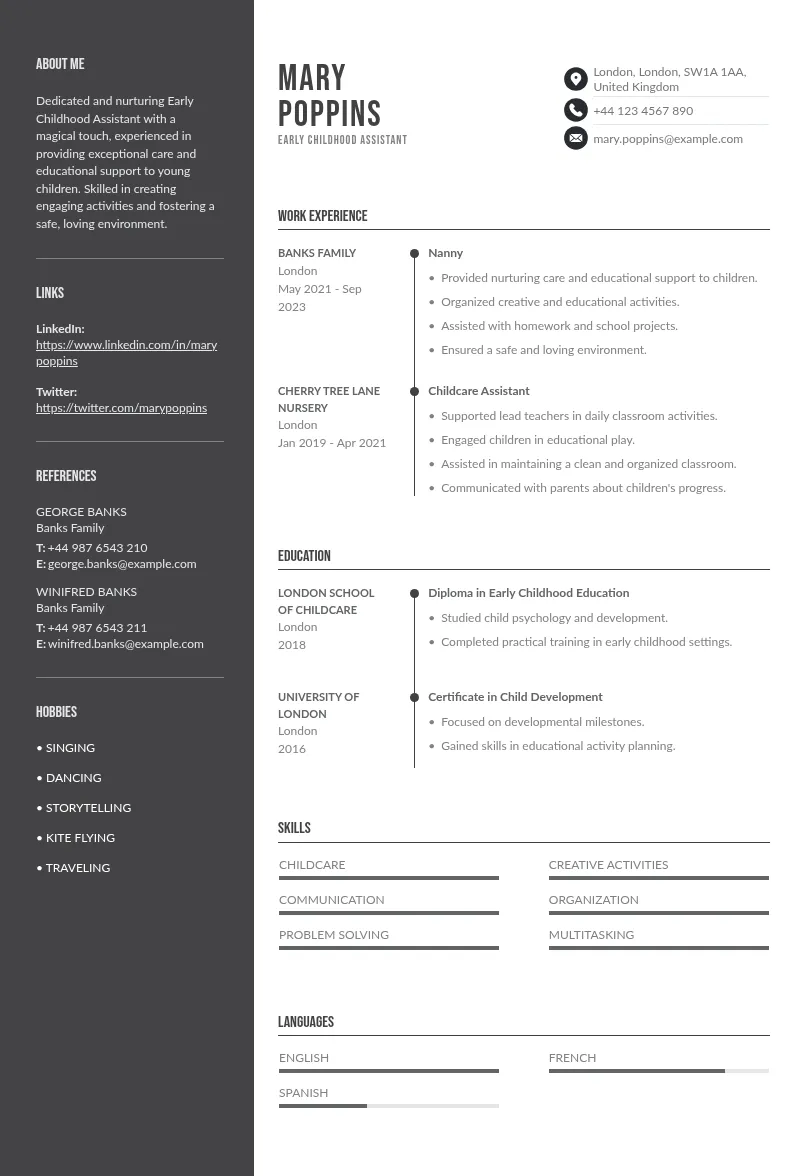
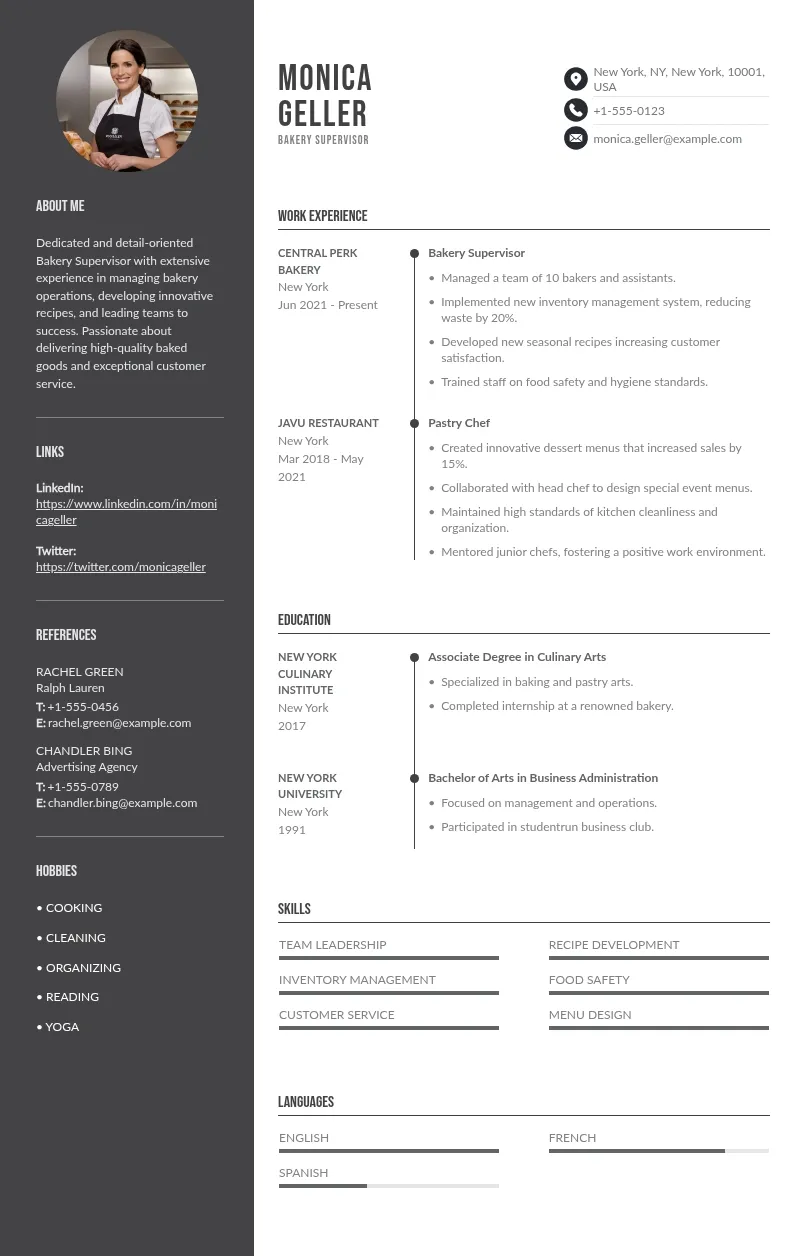
Our collection of expertly designed resume templates will help you stand out from the crowd and get one step closer to your dream job.


So, repeat the question : are you ready for this ? That voice isn't hostile. It's not unfair. It's just how human pattern recognition works under pressure. And recruiters, who are navigating overloaded inboxes and tightening hiring timelines, rely on it constantly.
Here's the good news: that moment is also your opportunity. Because a career-change cover letter is a direct answer to the questions your recruiter hasn't yet asked out loud.
Let’s not keep the mystery any longer!
3 career-changers cover letters examples
Career-changer cover letter from Education to Tech

Claire Whitfield
14 Elmwood Avenue, London, UK · claire.whitfield@email.com · +44 7700 900 142 · linkedin.com/in/clairewhitfield
24 March 2026
Ms. Laura Chen
Head of Design
Healpath Technologies
London, UK
Application — Junior UX Designer
Dear Ms. Chen,
For eight years, I designed learning experiences for classrooms of 30 students with vastly different needs — struggling learners, advanced students, disengaged teens. That work trained me to observe closely what creates friction, test different approaches, and iterate until something actually works. I applied exactly that process during my UX certification last year, when I redesigned the onboarding flow of a tutoring app: user testing revealed three major drop-off points, which I resolved in two prototyping cycles, reducing onboarding abandonment by 40%.
I left teaching deliberately, not out of burnout. It was precisely because I loved designing learning experiences that I wanted to apply that same thinking to digital products reaching millions of users. A UX certification and three freelance projects confirmed what I suspected: the instincts I built in the classroom — empathy, clarity, iteration — are at the core of good design.
Your recent redesign of the patient booking flow caught my attention. The challenge of guiding anxious, non-technical users through a high-stakes process is something I understand deeply — it was the daily reality of my classroom. I would welcome a 20-minute conversation this week to walk you through my portfolio and discuss how my background connects to your current priorities.
Yours sincerely,
Claire Whitfield
Cover letter example for career change from Accountant to Product manager
James Hartley
52 Birchwood Drive, Toronto, Canada · james.hartley@email.com · +1 647 555 0193 · linkedin.com/in/jameshartley
24 March 2026
Mr. Daniel Osei
VP of Product
Fintool Inc.
Toronto, Canada
Application — Product Manager
Dear Mr. Osei,
In six years as a financial controller, I spent half my time bridging the gap between technical teams and business stakeholders who did not speak the same language. The clearest example: I led the migration of an internal reporting tool used by 120 people across five departments. I gathered user requirements, coordinated developers, managed scope trade-offs, and delivered on schedule. That project taught me that the hardest part of building a product is not the build — it is the alignment. I want to make that my full-time role.
My move into product management is not a sharp left turn — it is the formalisation of work I was already doing informally. I completed a product management certification last year and ran a consulting engagement for a fintech startup in parallel: writing user stories, prioritising the backlog, and running agile ceremonies. Finance taught me to make decisions under uncertainty with incomplete data. That is a skill that is genuinely rare in junior PM profiles.
Your focus on accounting tools for small and mid-sized businesses resonates directly with my background. I spent years understanding the pain points of lean finance teams who are perpetually under-resourced. The automated bank reconciliation feature you announced last month raises workflow questions I know from the inside. I would be glad to discuss this with your team — I am available next week if that works.
Yours sincerely,
James Hartley
Example of cover letter for career change from Media to Tech
Megan Calloway
38 Bayside Road, Sydney, Australia · megan.calloway@email.com · +61 412 345 678 · linkedin.com/in/megancalloway
24 March 2026
Mr. Patrick Nguyen
Data Team Lead
The Daily Brief
Sydney, Australia
Application — Data Analyst
Dear Mr. Nguyen,
My last major investigation involved analysing 14,000 rows of public procurement data to surface irregular contract award patterns. I used Python and Pandas to clean the dataset, built the visualisations in Tableau, and translated the findings into a narrative published across two national outlets. That was not a data project on the side of my journalism work — it was the core of the work. I now want to make that analytical layer my primary function.
I was always the person in the newsroom who wanted to look at the raw numbers before writing a single sentence. After five years, I recognised that what energised me most was not the writing — it was the exploration and interpretation phase. I formalised that instinct through a data analytics certification covering SQL, Python, and Tableau, and I have several independent projects published on GitHub. Journalism trained me to form hypotheses, challenge sources, and communicate complex findings to non-expert audiences. Those are skills that most purely technical profiles do not have.
Your team's work on election results and supply chain analysis has been on my radar for some time — it sits precisely at the intersection of analytical rigour and clear storytelling that I want to work in. I would be happy to share my portfolio and explore how my background might complement your current team. A 20-minute conversation would be a good place to start.
Yours sincerely,
Megan Calloway
3 unspoken questions every recruiter asks about career changers

Fear #1: "Can this career changer actually do the job?"
This is the most immediate concern, and the most concrete. When a recruiter looks at your application and doesn't see the "expected" background, their first instinct is to wonder whether you have the technical capability to perform in the role.
It doesn't matter that skills are increasingly transferable across industries. It doesn't matter that you've built genuine expertise in adjacent areas. The burden of proof is on you to connect those dots, because no recruiter will do it for you.
What not to do: Open your cover letter with a statement of enthusiasm ("I've always been passionate about marketing") or a declaration of intent ("I am writing to apply for the position of…")... These do not answer the question. They delay it.
What to do instead: Lead with a specific, measurable result from your past experience that maps directly to a skill the new role requires. Don't make the recruiter guess at the connection, spell it out like this:
The goal isn't to pretend you have a direct background you don't have. It's to demonstrate that what you have done translates concretely into what the role needs.
One structural shift in hiring makes this easier than it used to be: most employers now use skills-based hiring practices (half of them in 2022. Hiring managers are actively trained to look past job titles and evaluate what candidates can actually do. Your cover letter just needs to show them where to look.
Fear #2: "Why is this candidate really changing careers?"
Once a recruiter decides you might be capable, a second question surfaces—quieter, but just as important: why now, and why us?
This fear has two layers. The first is practical: career changers can seem like higher risks for early attrition. If someone left their previous field, what's to say they won't leave this one too? The second is subtler: a vague or unconvincing reason for the change signals a lack of clarity—and unclear candidates tend to make uncertain employees.
Interestingly, research shows that 50% of hiring managers consider it important when a cover letter explains a career transition. They're not looking to penalize you for changing—they just want the change to make sense.
What not to do: Either ignore the transition entirely (which raises more questions than it answers), or over-explain it in a way that sounds defensive ("I know my background doesn't directly match, but…"). Both approaches draw attention to the gap rather than bridging it.
What to do instead: In one focused paragraph, name the pivot briefly and confidently, then redirect immediately to what it produced—the skills you built, the perspective you gained, the value you're bringing forward. Frame the change as a deliberate evolution, not an escape.
Notice what this paragraph doesn't do: it doesn't apologize. It doesn't hedge. It names the transition, owns it, and immediately demonstrates that the experience it came from was productive and directional.
The data on career change motivations is worth keeping in mind here, too: the vast majority of career changers report that their decision was driven by a genuine desire for growth, new challenge, or better alignment between their work and their values. That's a story worth telling clearly, and in your own words.
Fear #3: "Is this person serious about this role, or just casting a wide net?"
This is the fear that career-change cover letters most often fail to address, and ironically, it's the easiest one to neutralize.
Recruiters have learned, through experience, that generic applications usually produce generic hires. And career changers, who are often applying across multiple industries simultaneously, are particularly prone to sending letters that could belong to any company in any sector. A letter that reads as thoughtful today can read as templated tomorrow, once a recruiter has seen enough of them.
The stakes here are concrete: a survey of 753 recruiters found that 81% had already rejected applicants based on their cover letter alone. A letter that feels copy-pasted, regardless of how qualified the candidate, sends a signal that the recruiter will act on.
What not to do: Reference the company in vague, flattering terms that could apply to any employer in the sector ("I admire your commitment to innovation and client success"). This is the cover letter equivalent of a non-answer.
What to do instead: Name one specific, recent, and genuinely interesting thing the company has done—a product launch, a market move, an initiative, a stated challenge—and connect it directly to something real in your own background.
This paragraph does three things at once: it proves you've done your homework, it makes the connection between your background and their context feel earned rather than claimed, and it signals genuine intent. That's a lot of weight for one paragraph to carry—which is exactly why it's worth writing carefully.
How to structure a career-change Cover Letter that works
A career-change cover letter built around these three fears doesn't need to be long. It needs to be precise. Here's how the structure flows:
Opening paragraph: A specific achievement from your past that demonstrates a skill directly relevant to the new role. No throat-clearing, no declarations of intent. Start with evidence.
Middle paragraph: A brief, confident account of the transition itself: what prompted it, what it produced, and what it means for where you're headed. One paragraph. Unapologetic.
Company paragraph: One concrete, specific observation about this organization and why your background connects to it in a way that would actually help them. No flattery, no generic admiration… just a real connection.
Closing: A clear, specific call to action. Not "I look forward to hearing from you". Rather something like: "I'd welcome a 20-minute conversation this week or next to discuss how my experience might contribute to your team's current priorities."
Total length: 250 to 380 words. Every sentence should do something. If a sentence doesn't address one of the three fears, directly or indirectly, consider cutting it.
A note on “authenticity” - Perfect your cover letter for career change
One last thing worth saying plainly: in a market where AI-generated applications are increasingly common (73% of employers say they've noticed a surge in them), the letters that stand out are the ones that sound like a specific human wrote them about a specific role at a specific company.
That's not a stylistic preference. It's a strategic advantage. Your career change, honestly framed, is a story that no template can replicate. The recruiter reading your letter has seen thousands of conventional applications from conventional candidates. A well-told transition, concrete, confident, and clearly addressed to them, cuts through that noise in a way that a polished but generic letter simply cannot.
Write the letter only you could write. Then make sure it answers the three questions before they're asked.
Create your resume with the best templates