You've decided to work in Australia. Smart move - the minimum wage sits at $24.10 per hour as of 2025, and employers are actively hiring skilled workers right now.
But here's the problem.
Your resume from home won't work here. Australian employers expect a specific format, a different length, and certain details that other countries skip entirely. Miss these expectations and your application gets filtered out before anyone reads past your name.


Casey James
Administrative assistant
jamesc@gmail.com
+61 2 1356 5828
https://www.linkedin.com/in/casey
Profile summary
A dedicated administrative assistant with over 5 years of experience in legal firms excited to contribute to Telco Pty Ltd's dynamic culture. As administrative assistant for the CEO, I was responsible for the CEO's schedules and travel plans while also managing the general administration functions at M&A Consultants.
Professional Experience
June 2019 to Present
Telco Pty Ltd
Aug 2017 to May 2019
Milton Associates
Education
Bachelor’s degree in HR management, 2012-2015
Australian National University
GPA- 3.8/4
Diploma in Information Technology 2018-2019
Institute of Technology, Melbourne
Key Skills
This guide shows you exactly how to write an Australian-style resume. You'll learn the structure recruiters expect, what to include in each section, and the small details that trip up most international applicants. Whether you're an international student hunting for part-time work, a skilled professional targeting Sydney's corporate sector, or a newcomer trying to break into the job market, you'll finish this knowing how to build a resume that actually gets callbacks.
We'll cover:
Australian resumes follow a straightforward structure. Your header sits at the top with contact details - name, phone, email, LinkedIn profile, and city/state. No photos. No birth dates. No marital status. Australian anti-discrimination laws make these details problematic for employers, so leave them out completely.
After your header comes a professional summary. Two to four sentences explaining what you bring and why you're worth interviewing. Then your work experience section in reverse chronological order - most recent job first. This section matters most. Australian recruiters spend more time here than anywhere else, so focus on results you delivered rather than duties you performed. Numbers help. What did you actually accomplish? That's what matters.
Education follows work experience. List your degrees, institutions, and graduation years. Recent graduate? Relevant coursework or honors can fill things out. Otherwise keep it brief.
Then comes your skills section. Technical abilities. Interpersonal strengths. Both matter.
After that? Optional sections that strengthen your case. Certifications work well if your field values them. Volunteer experience shows community involvement. Languages give you an edge in multicultural workplaces. Professional memberships prove you're connected in your industry. Include what helps. Skip what doesn't.
The framework stays the same across industries. But the content changes dramatically. A wildlife conservationist's resume looks nothing like a doctor's resume, even though both follow this basic structure. The seven examples below show exactly how this adapts.
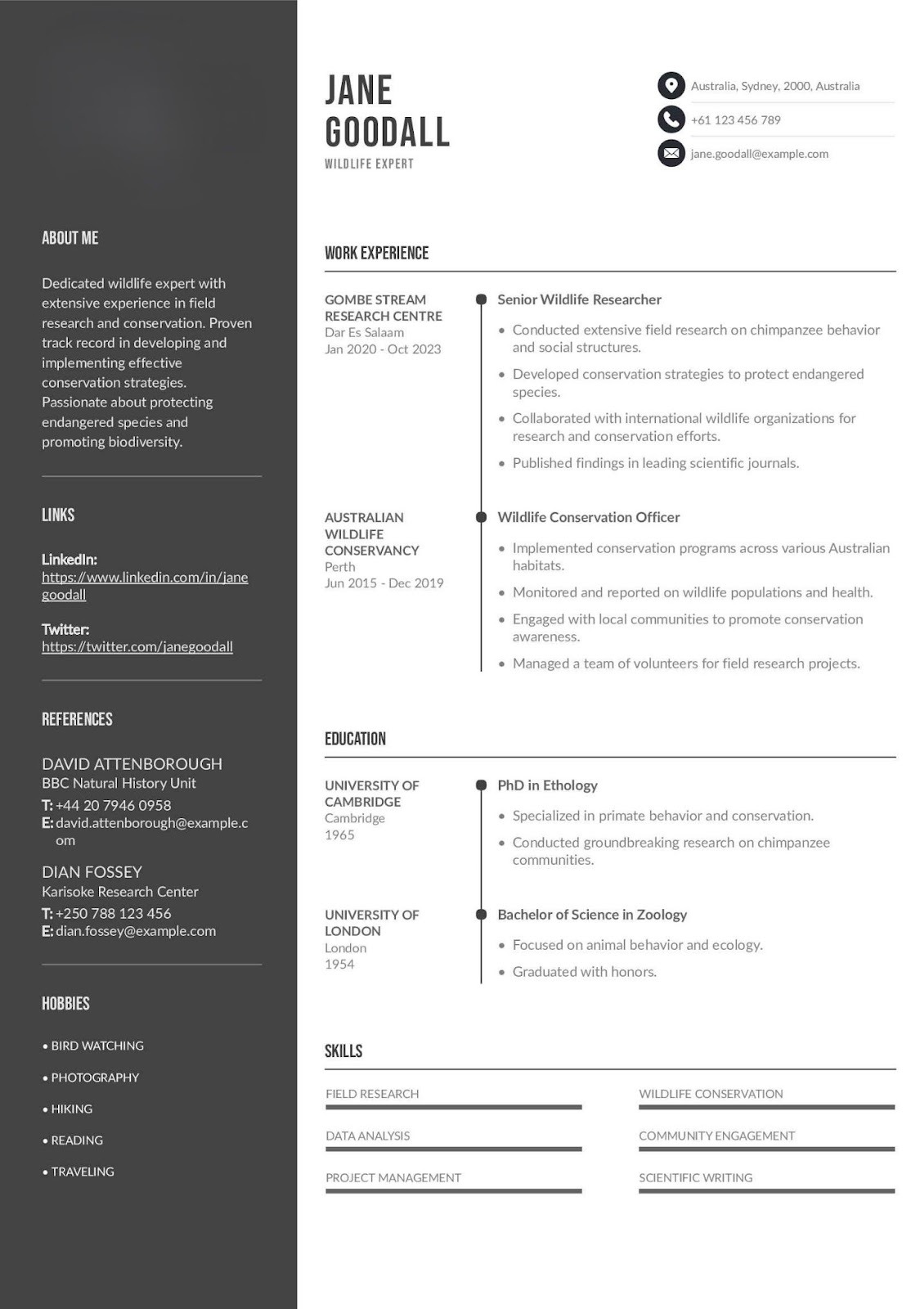
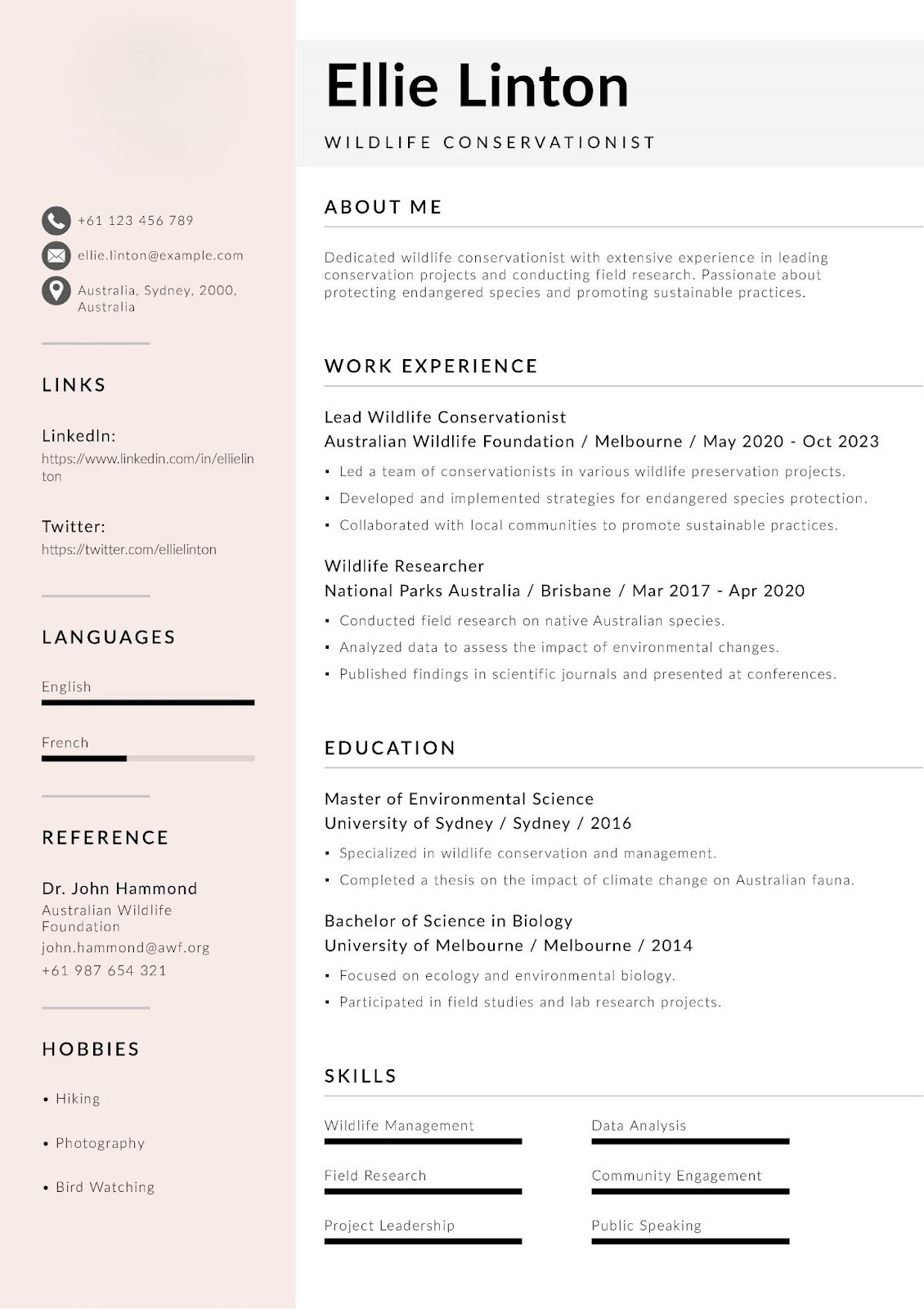
This resume works for conservation jobs, field research roles, and wildlife management positions across Australia. The format emphasizes hands-on field experience and research credentials. No fluff - just measurable conservation work.
Australian environmental organizations need people who can do both. You handle tough field conditions. You also maintain solid scientific standards. This layout shows both sides clearly.
The work experience section focuses on three things: field assignments you've completed, which species you've worked with, and what conservation results you delivered. Australian employers in this sector care about local expertise. If you've worked with koalas, say so. Platypuses? Even better. "Wildlife management experience" means nothing here. Name the species.
Where does this format work best? Queensland's rainforest reserves hire regularly. So do Western Australia's marine programs. The Northern Territory's outback stations need researchers year-round. This resume speaks their language.
Additional Tips
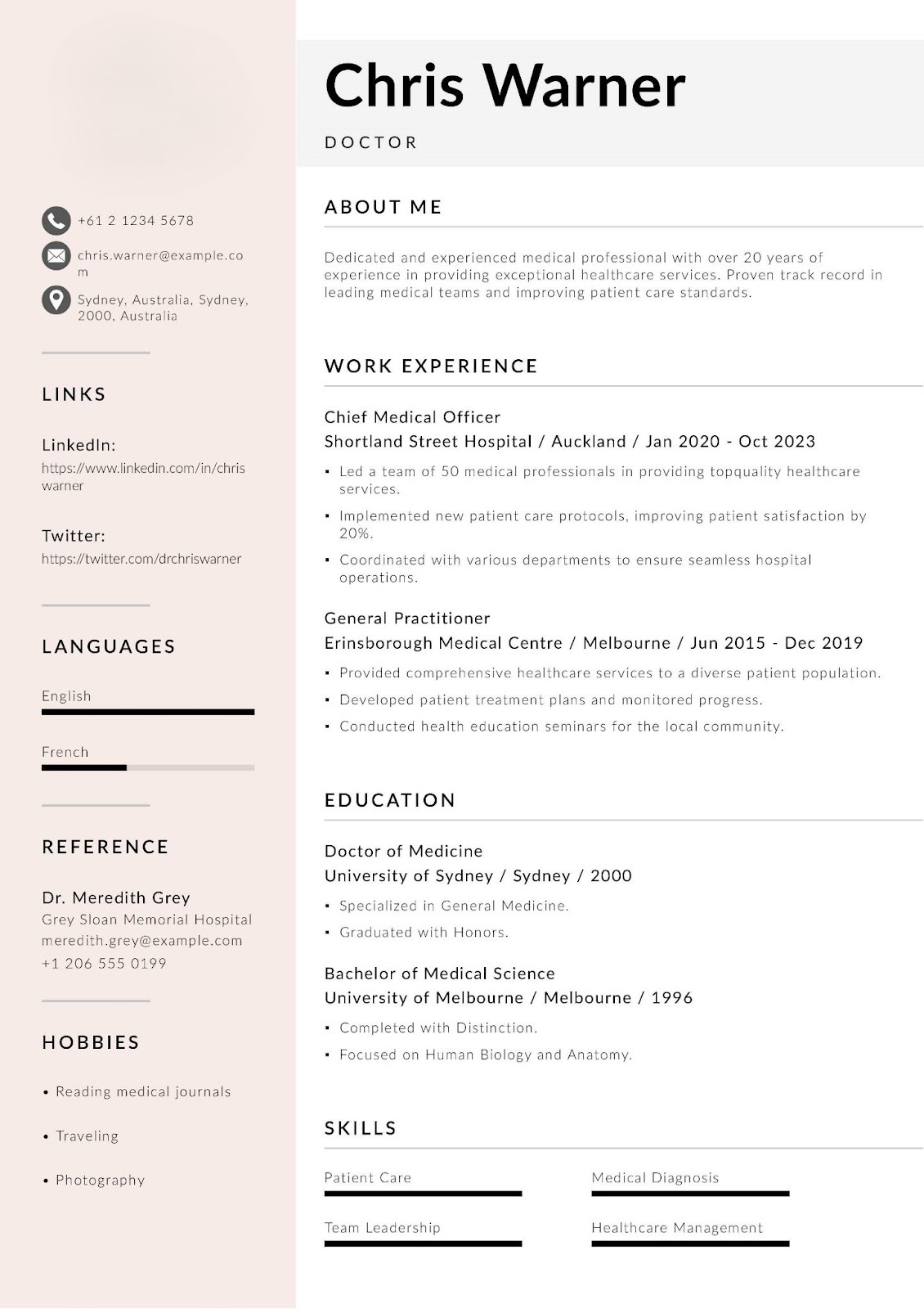
This resume targets medical positions across Australia's public and private healthcare systems. The format emphasizes clinical experience, AHPRA registration status, and specialty credentials. Australian medical employers need to verify qualifications fast. This layout makes that easy.
The structure separates supporting details from core medical credentials. Contact information, references, and language proficiency sit in a sidebar. Your clinical work history takes center stage. Why? Because hospital administrators and recruitment panels spend most of their time verifying your scope of practice and checking for continuity in your career.
Work experience focuses on three critical elements: clinical responsibilities you've handled, patient volume you've managed, and which procedures or treatments you're qualified to perform. Australian hospitals operate under strict credentialing protocols. Generic descriptions won't work. Don't write "emergency medicine experience." Write "managed acute care for 40+ patients per shift in Level 1 trauma center." See the difference? One tells them nothing. The other shows exactly what you can do.
Where does this work? Sydney teaching hospitals. Melbourne's major medical centers. Brisbane's specialist networks. It also works well for regional health positions - areas where doctor shortages mean they're hiring actively. The layout matches what Australian healthcare recruiters expect to see.
Additional Tips
This resume targets conservation program roles, habitat restoration projects, and species protection positions within Australian environmental organizations. The format highlights community engagement experience, grant management skills, and measurable conservation impact. Australian conservation groups need people who can work with communities, not just animals.
The layout separates personal details and supporting information from your core conservation achievements. Your professional summary sits prominently at the top. It positions you as someone who understands both ecological science and community partnership. Why does this matter? Because conservation work in Australia involves constant collaboration with local communities, Indigenous groups, and government agencies.
Work experience emphasizes program outcomes you've delivered. How many hectares of habitat did you restore? How much funding did you secure? Which stakeholder groups did you bring together? Australian conservation employers want proof you can deliver. Generic claims won't help. Here's what I mean: "habitat restoration experience" tells them almost nothing. But "restored 150 hectares of koala habitat with three local councils" shows exactly what you accomplished.
This format works well across Australia's conservation sector. Brisbane environmental NGOs hire program coordinators regularly. Sydney-based groups need urban wildlife project managers. Perth focuses on Western Australia's unique species. Regional groups? They want people who get rural communities.
Additional Tips
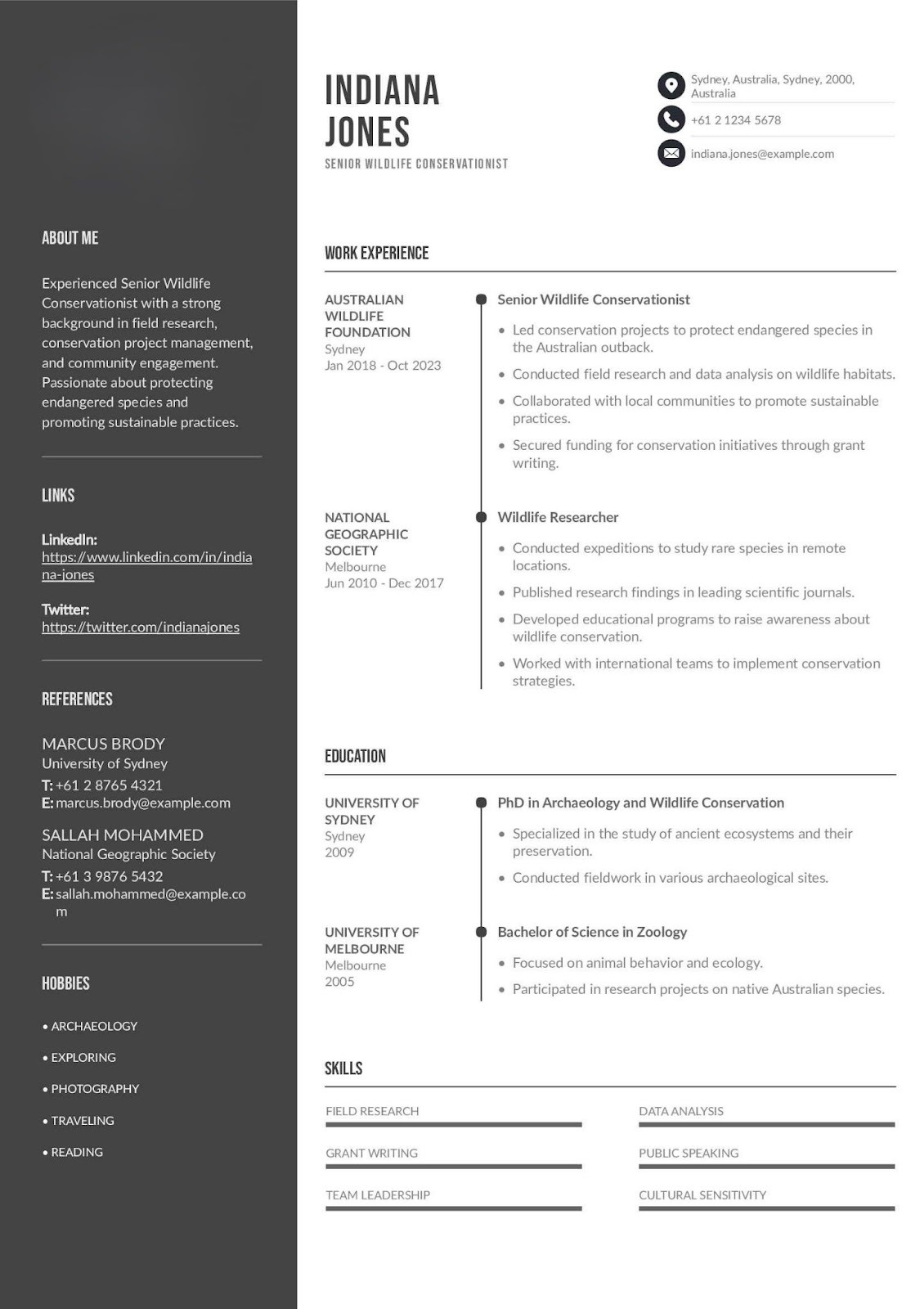
This resume works for executive conservation jobs. Think program director roles. Strategic leadership positions at major Australian environmental organizations. The format shows large-scale project management and stakeholder leadership first.
Senior conservation roles in Australia need more than field expertise. Can you lead teams? Manage budgets? Influence policy? You need to show all three.
The layout puts leadership credentials up front. Your professional summary needs to cover both sides: strategic thinking and actual conservation knowledge. Work experience focuses on scale. How many staff reported to you? What budgets did you control? Which government departments asked for your advice? Senior roles mean constant negotiation - with funding bodies, politicians, media.
References matter more at this level. So do your professional networks. Board memberships too. Australian conservation leaders sit on committees. They advise government departments. They maintain connections across multiple sectors. This resume structure makes room for that.
Where does this format work? Directors at WWF Australia use it. So do leaders at Australian Conservation Foundation. General managers at state environment departments. Regional directors running multi-site programs. Anywhere senior conservation leadership counts, this layout works.
Additional Tips
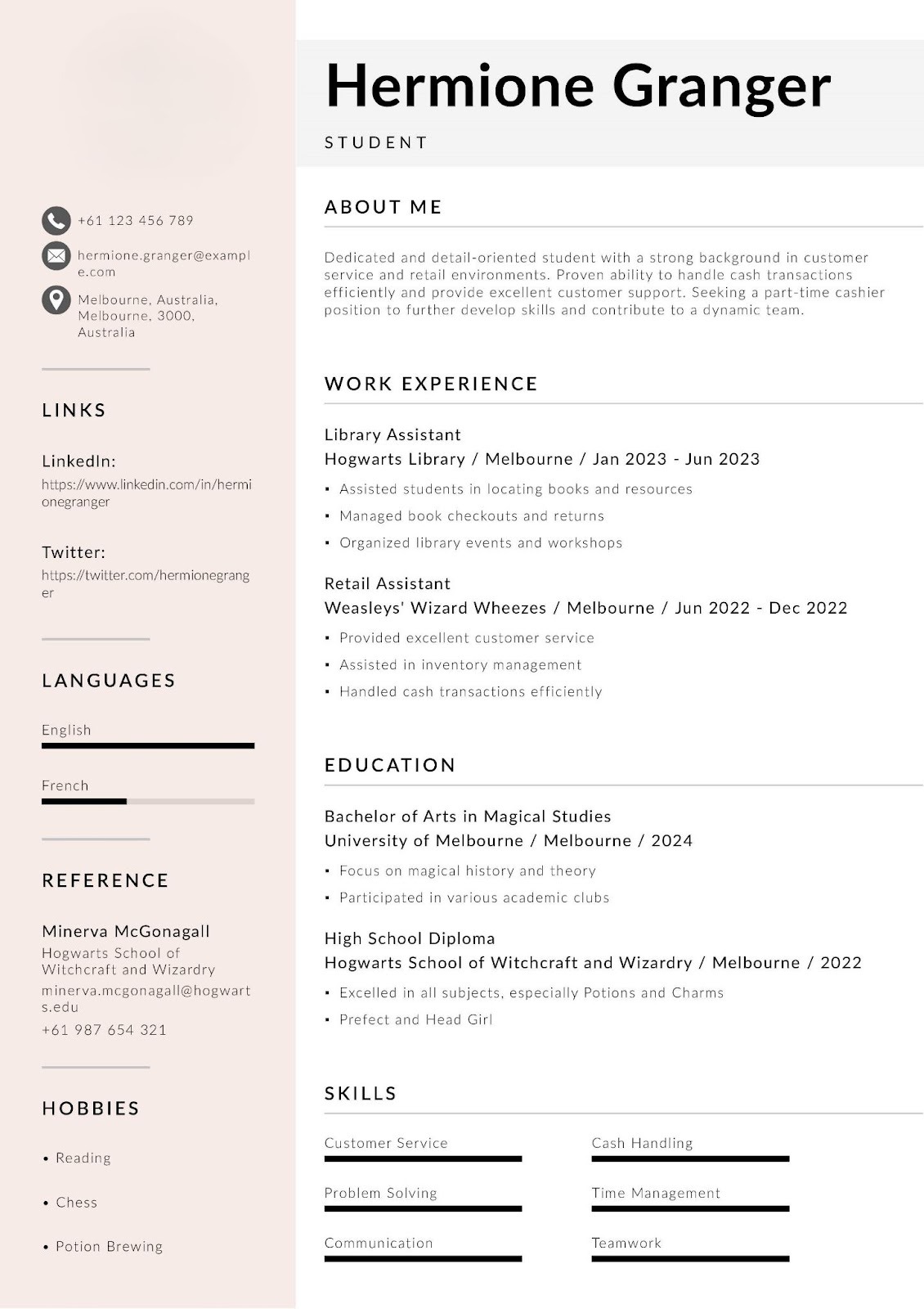
This resume works for students in Australia chasing cashier shifts at Woolworths, Coles, Kmart, or local supermarkets. Think scanning groceries. Processing payments. Handling weekend rushes. Entry-level retail where you're on your feet dealing with customers all day.
Store managers hiring cashiers scan for three things: Can you legally work? When are you available? Have you handled cash before? Your visa status matters more than your career goals. Your Saturday availability matters more than your high school GPA.
The layout stays simple. Contact details at the top. Visa subclass and work hour limits right underneath. Why so early? Managers at Coles and Target check work eligibility first. International students get 48 hours per fortnight during semester. State that upfront, not buried three paragraphs down. Work experience focuses on reliability and cash handling. Two months at an Australian supermarket? You already know EFTPOS systems and how returns work. Even short local jobs beat years of overseas experience.
References matter less here than availability. So does your willingness to work weekends and public holidays. Cashier managers need shift coverage, not elaborate credentials. This resume structure gives them what they're actually looking for.
Where does this work? Supermarkets across Sydney. Melbourne retail chains. Brisbane petrol stations. Adelaide shopping centers. Anywhere hiring casual cashiers, this straightforward format helps supervisors make quick roster decisions.
Additional Tips
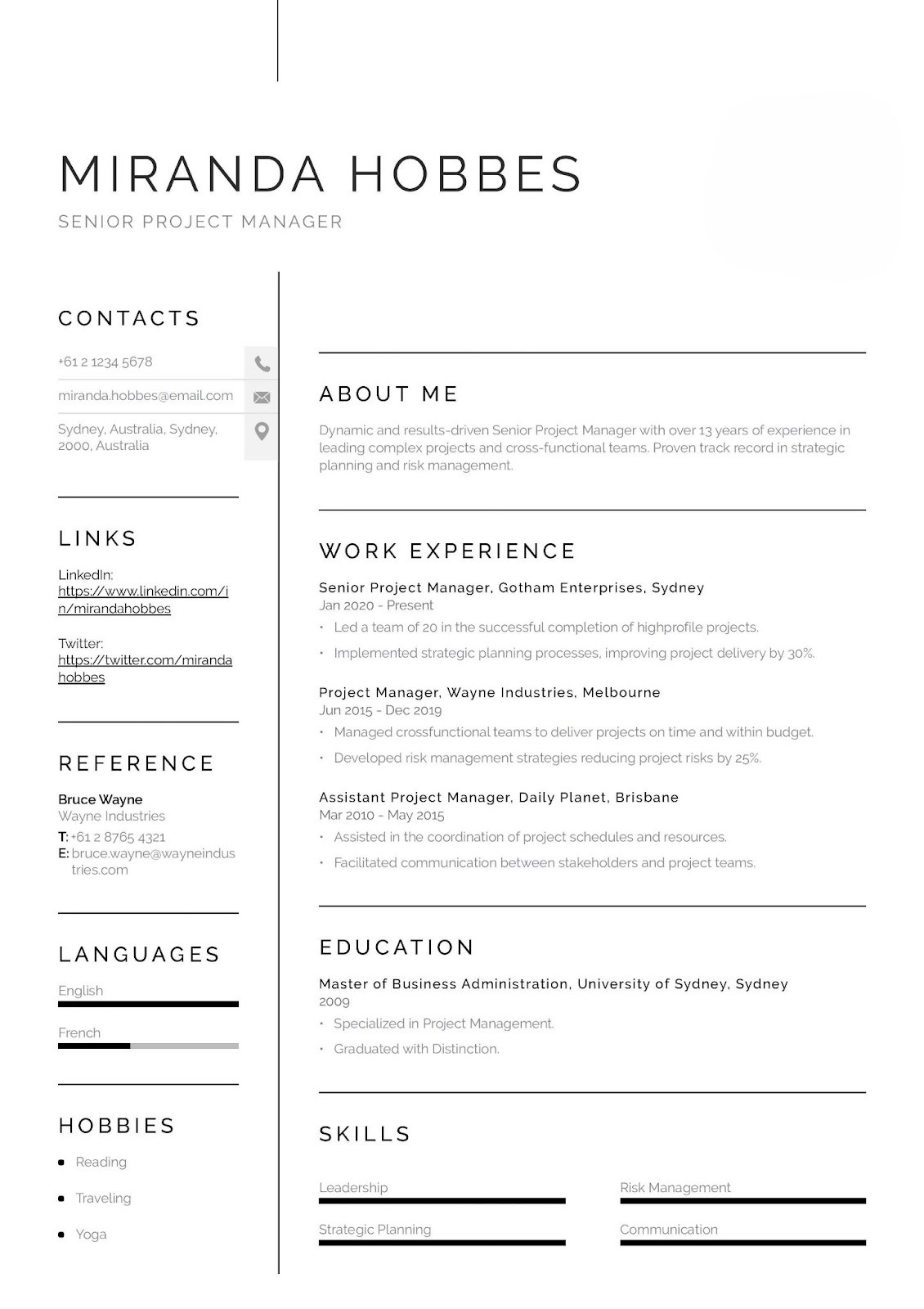
This resume targets senior project manager roles across Australian business sectors. Think project managers. Business analysts. Marketing coordinators. Finance specialists. The format emphasizes career progression, measurable achievements, and professional credentials.
Australian corporate employers in Sydney, Melbourne, and Brisbane operate in competitive markets. Can you deliver? Your resume needs to prove it. Show a clear career path. Each role demonstrates increased responsibility. Each achievement includes numbers that back up your claims.
The layout uses reverse chronological order for work experience. Most recent position first. Why? Recruiters spend six seconds scanning your resume initially. They look at your current role and decide if you're worth a closer read. Make that section count.
Work experience focuses on outcomes you delivered. Revenue you generated. Costs you cut. Teams you led. Processes you improved. Australian corporate culture values directness and accountability. Generic statements don't help your case. Compare these two: "contributed to team success" versus "reduced operational costs by $180K through process automation." Which one tells the real story?
Where does this format work best? Corporate offices across Sydney's CBD. Melbourne's financial district. Professional services in Brisbane. Perth's mining services companies. Basically anywhere your credentials and results need to speak for themselves.
Additional Tips
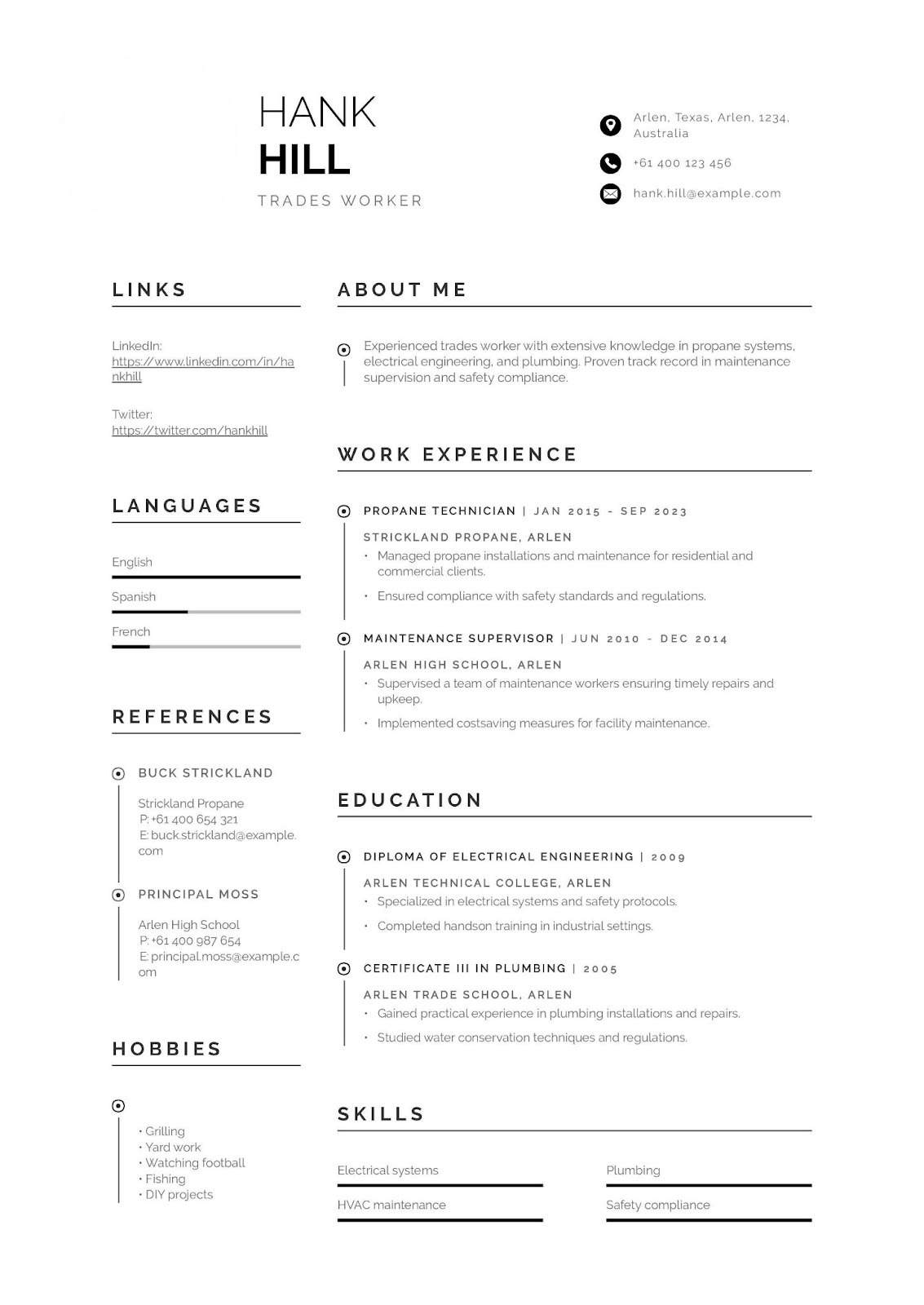
This resume works for skilled trades across Australia. Construction jobs. Mining positions. Maintenance roles. Electricians use this. So do plumbers, carpenters, welders, and HVAC technicians. The format shows your licenses, certifications, and hands-on experience first.
Australian trades employers need to verify qualifications immediately. Do you hold the right licenses? Can you work on commercial sites? Have you completed required safety training? These questions get answered in the first few seconds of reading your resume.
Put your trade qualifications and licenses right at the top. Your electrical license number matters more than a fancy summary paragraph. Work experience focuses on project types you've completed, sites you've worked on, and complexity of jobs you can handle. Residential versus commercial? Light versus heavy industrial? Be specific.
Trades recruitment in Australia moves fast. Perth needs mining electricians. Brisbane construction sites hire carpenters constantly. Sydney's building boom creates steady demand. Regional areas face chronic trades shortages. A clean resume with visible qualifications gets you callbacks quickly.
Additional Tips
Most Australian resumes get scanned by software before humans see them. Applicant Tracking Systems - ATS for short. These systems filter applications based on formatting and keywords. Format wrong? Your resume never reaches the recruiter. Miss key terms? Same result.
Stick with standard professional fonts. Arial works. So does Calibri, Helvetica, or Times New Roman. Fancy fonts break ATS software. That beautiful script font you downloaded? It reads as gibberish to the scanner.
Font size matters too. Body text should sit between 10-12 points. Your name can go larger - 16-18 points. Section headings work well at 14-16 points. Anything smaller than 10 points strains human eyes after the resume passes the ATS.
Australian resumes use A4 paper size. That's 210mm x 297mm. Not US Letter size. When you save as PDF, double-check this setting. Wrong page size throws off your formatting.
Set margins at 2.54cm (1 inch) on all sides. Some people shrink margins to fit more content. Don't. It looks cramped and desperate.
PDF or Word? Both work in Australia, but PDF preserves your formatting better. Send it as "FirstName_LastName_Resume.pdf" so recruiters can actually find your file later.
Some companies specifically request Word documents because their ATS handles .docx files better. Check the job posting. When they specify a format, use that format.
Here's what breaks ATS software: tables, text boxes, headers and footers with important info, graphics, images, columns, and fancy formatting.
Use standard section headings the software recognizes. "Work Experience" beats "Where I've Been." "Education" beats "Academic Journey." ATS looks for conventional labels. Get creative with your content, not your section names.
Left-align everything. Centered text confuses some systems.
Read the job posting carefully. Really carefully. What terms do they use? "Project management" versus "programme coordination"? "Stakeholder engagement" versus "client relations"? Use their exact phrases.
Where do keywords go? Throughout your resume. In your professional summary. In your work experience bullets. In your skills section. But here's the thing - they need to fit naturally. Keyword stuffing gets caught by both ATS and human readers.
Example: If the job posting mentions "stakeholder engagement" three times, that phrase matters. Include it where it honestly describes your work. Don't just list "stakeholder engagement" five times with no context.
ATS scans for industry-specific terminology. If you're in healthcare, use proper medical terms. Engineering? Include relevant technical standards and systems. Marketing? Name the platforms and metrics you worked with.
Start each bullet point with strong action verbs. Led. Built. Increased. Reduced. Managed. Developed. These words carry weight with both software and humans.
Copy your resume text and paste it into a plain text editor like Notepad. Can you still read everything? If chunks disappeared or turned into symbols, your formatting is too complex for ATS.
Some free ATS scanners online let you test your resume. Jobscan is one. Upload your resume and the job description. It shows you what the ATS actually sees and what keywords you're missing.
Remember, your resume needs to work for two audiences. Software first. Then humans. Pass the ATS and your formatting still needs to look professional for the recruiter who opens your file at 9 AM with coffee in hand, scanning through fifty other resumes that morning.
Keep it clean. Keep it scannable. Make it easy for both the machine and the person to see why you're the right candidate.
Building an Australian resume isn't complicated. You just need to know what goes where and how employers here expect to see it presented. Follow these steps and you'll have a solid foundation.
Your header sits at the top. Keep it simple.
Full name in a larger font. Phone number with Australian country code if needed. Professional email - firstname.lastname@gmail.com works. Skip those party-themed addresses from 2015.
Got LinkedIn? Add the URL. But check your profile first. Half-finished pages hurt more than help.
Address? City and state only. Nobody's mailing you anything. Plus some recruiters filter by distance, so keeping it vague helps.
 CORRECT
Sarah Mitchell
+61 4 1234 5678
sarah.mitchell@gmail.com
linkedin.com/in/sarahmitchell
Melbourne, VIC
Clean and straightforward. Name at the top. Australian phone number with proper formatting. Professional email. LinkedIn profile. City and state only.
 INCORRECT
David Wong
davidw_1998@hotmail.com
0412-345-678
04-5678-9012 47
Collins Street, Melbourne, Victoria, 3000
What's wrong? Two phone numbers. Unprofessional email with birth year. Full street address that might work against you.
Two to four sentences below your header. Explain why you're worth interviewing.
Professional Summary - use this when you have relevant experience. Be specific. "Marketing professional with experience" says nothing. "Marketing coordinator who increased social media engagement by 40% across three campaigns" proves impact.
Formula: First sentence covers your experience. Second sentence shows what you achieved with real numbers.
CORRECT
CORRECT
CORRECT
CORRECT
Notice the pattern? Each one names specific Australian companies, locations, or institutions. Each one includes numbers that prove impact. Each one connects past experience to future goals.
Here's what NOT to do:
INCORRECTWhy does this fail? Completely generic. Could work for any job anywhere. No field mentioned. No Australian context. No achievements. No numbers. What specific value do you bring?
Objective Statement - better for newcomers, career changers, or recent arrivals. Focus on where you're headed and what you'll contribute.
Skip vague phrases like "hardworking professional seeking opportunities." What's your field? Your skills? What makes you different?
This section carries the most weight. Recruiters spend more time here than anywhere else.
Use reverse chronological order. Most recent job first, then work backward. For each position, include company name, job title, location, and dates.
Under each role? Three to six bullet points work well. Don't just list what your job description said. What did you actually accomplish?
"Managed social media accounts" doesn't tell the story. "Grew Instagram following from 3,000 to 18,000 in seven months" proves impact.
Start each bullet with action verbs - led, built, increased, reduced, launched, managed, developed. Avoid passive phrasing like "was responsible for" or "duties included."
Include numbers wherever possible. Percentages, dollar amounts, team sizes, project counts. Numbers make your achievements concrete and believable.
Look at these bullet points:
INCORRECTWhat do these actually tell anyone? Vague duties with no results.
Compare that to:
CORRECT
Why do these work better? You're showing actual outcomes with real numbers. You're naming Australian companies and cities. You're proving what you delivered, not just describing your daily tasks.
Match keywords from the job posting. Most Australian companies now use software that scans applications for certain words and phrases. The posting says "stakeholder engagement"? Use those exact words where they fit your actual experience.
International background? No problem. Just give recruiters context they'll understand.
How big was the company? What industry? Use Australian terminology where possible. And focus on what transfers - did you lead teams, manage projects, solve problems, communicate across departments? Those skills work anywhere.
The real key? Numbers. A 30% increase in efficiency means the same thing in Manila, Mumbai, or Melbourne.
List your degrees in reverse chronological order. Include the degree name, institution, and graduation year.
Recent graduates can add relevant coursework, academic honors, or GPA if it's 3.5 or higher. Once you're a few years into your career, keep this section shorter. Your work experience matters more at that point.
If your degree is from outside Australia, just list it normally. Most jobs don't require formal assessment.
Regulated profession? Nursing, engineering, accounting - these fields have different rules. Check if your specific profession needs credential evaluation before you start applying.
Australian employers want to see both hard skills and soft skills.
Hard skills are technical and job-specific.
Whatever tools and technologies your industry uses.
Soft skills are:
Keep your skills list focused. Eight to twelve relevant skills is plenty. Don't pad it with obvious stuff like "Microsoft Word" or "email" unless the job posting specifically asks for it.
Tailor this section to each job. If the posting mentions specific tools or competencies, and you have them, make sure they appear here.
Depends what you've got.
Additional sections can help your application stand out. They're especially useful if you don't have much Australian work experience yet. But don't just throw them in to fill space.
Volunteer work matters here. Australians value community involvement. If you've volunteered anywhere - animal shelters, community centers, school programs - include it. This also helps if you have gaps in your work history.
Got certifications or licenses? List them. First aid certificates count. So do trade licenses and professional certifications. Healthcare employers check these. So do construction companies and finance firms.
Speak multiple languages? That's worth mentioning. List each language with how well you speak it. Basic? Conversational? Fluent? Australia has multicultural workplaces. Extra languages can give you an edge.
Awards and achievements? Be selective here. "Top Sales Performer 2024" strengthens your application. Your high school debate trophy from 2010 doesn't help anyone.
Published research or conference presentations? Include these if you're applying for academic or research roles. For most other jobs, skip it.
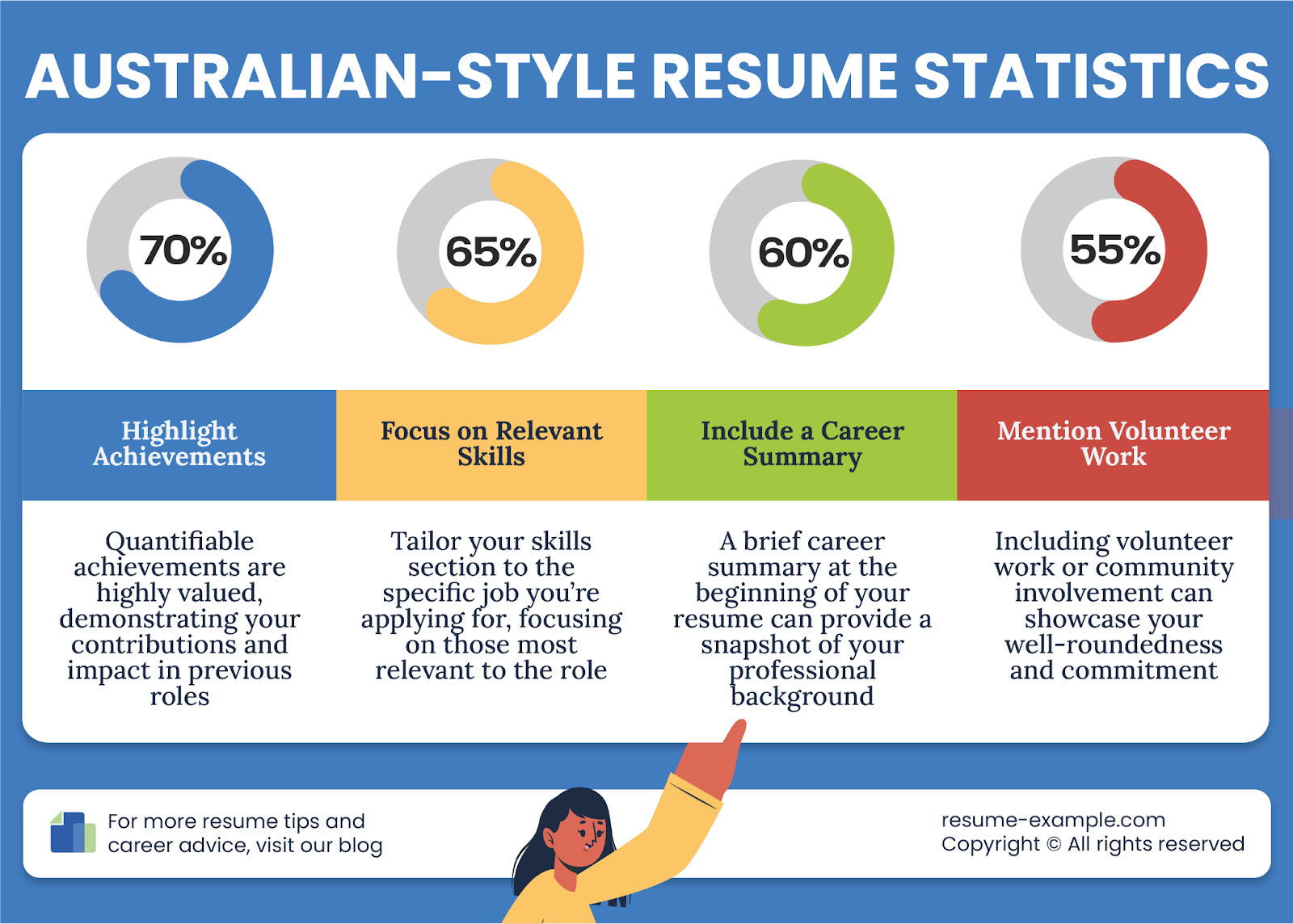
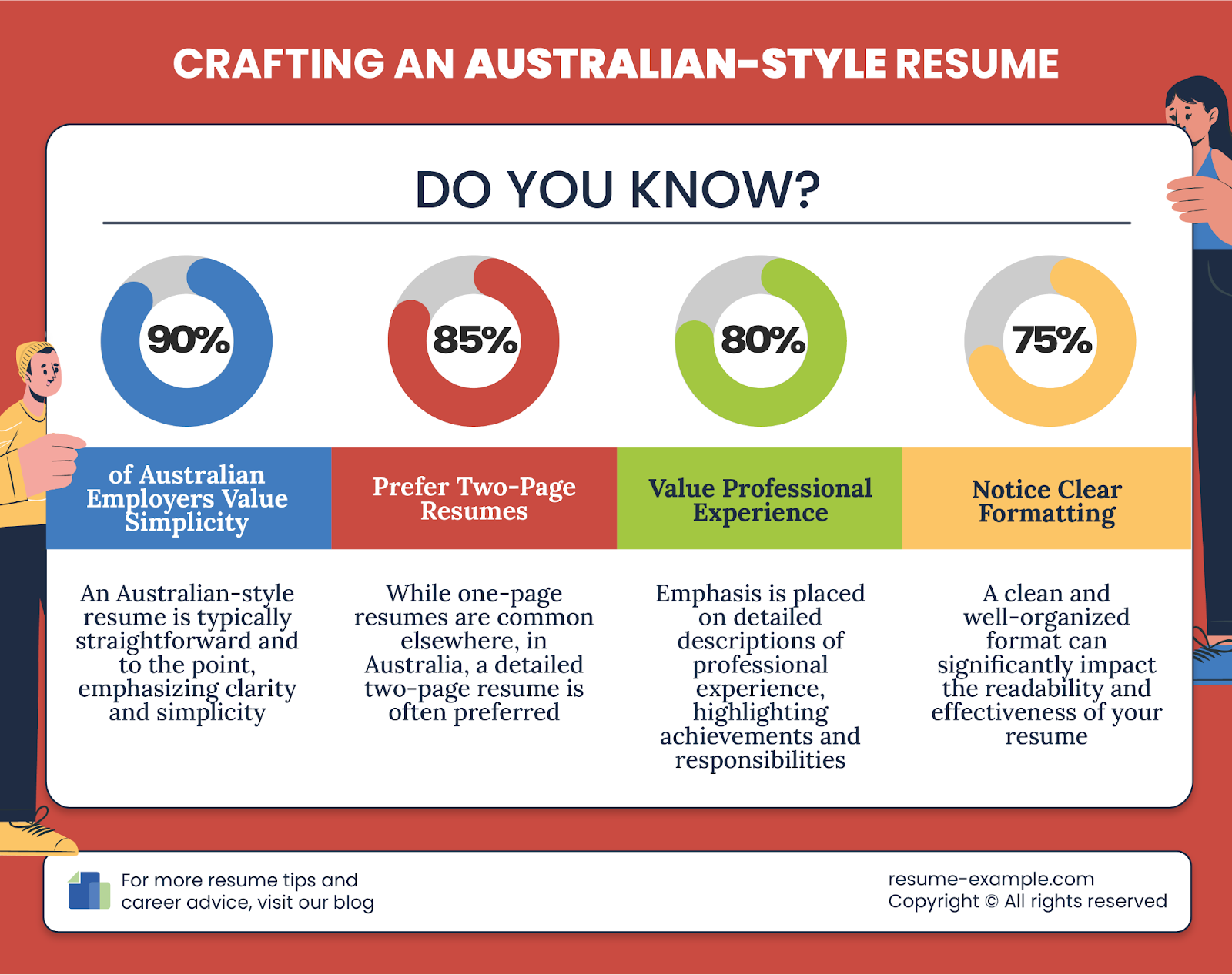
Australian resumes run longer than American ones. That's just how it works here.
Two pages is standard for most professionals. Entry-level candidates? Two pages. Experienced professionals? Three to four pages.
Why the difference?
Employers here want more detail. They need to see your full career path. They want comprehensive descriptions of what you did in each role. They expect context around your achievements.
The US model compresses everything into one tight page. Australia gives you breathing room.
But longer doesn't mean padding with filler.
Use that extra space well. Give context to your achievements. Detail what you were responsible for. Show how your career progressed.
Don't repeat the same information three different ways. Don't stuff in irrelevant details just to hit page three.
How long should yours be? However long it takes to tell your story without wasting time.
Got 8-15 years of experience? Three pages works. Senior executive with extensive leadership roles? Four pages makes sense. Just graduated? Two pages is plenty.
The real question isn't page count. It's whether every sentence makes you more hireable. If something doesn't strengthen your case, cut it.
Knowing what to leave out matters just as much as knowing what to include. Some information that's standard in other countries can actually hurt your chances here.
Never include a photo. Ever.
Why? Australian anti-discrimination laws are strict. Employers can face legal issues if they're seen making hiring decisions based on appearance. Many companies automatically reject resumes with photos just to avoid potential problems.
Your professional headshot might look great. Doesn't matter. Leave it off.
Don't include any of this. Australian hiring laws prohibit discrimination based on age, marital status, or family situation. Employers don't want to see this information. It puts them in an awkward legal position.
Skip your date of birth. Skip your marital status. Skip how many kids you have. None of it belongs here.
City and state are enough. Nobody's sending you letters.
Including your full street address can actually work against you. Some recruiters filter out candidates who live too far from the office. Keeping it general gives you more flexibility.
Recruiters know what they're looking at. You don't need to label it. Use that space for your name and professional title instead.
Don't list them. Don't even write "References available upon request." That phrase is outdated and wastes space.
If an employer wants references, they'll ask for them later in the hiring process.
That retail job from 15 years ago? Probably not helping you land a senior accounting role.
Stick to recent, relevant experience. The last 10-15 years usually works. Got something older that directly connects to this job? Fine, keep it. Otherwise, cut it.
Generic hobbies? They do nothing for your application.
"I enjoy reading and watching movies" - okay, so does everyone. What does that tell an employer about your work abilities? Nothing.
Does your hobby actually connect to the job? Marathon running for a fitness industry role makes sense. Coding side projects for a developer position? Absolutely include that. But random hobbies that could belong to anyone? Cut them.
Never use your work email on a job application. It looks unprofessional and suggests you're job hunting on company time. Use a personal email address.
Never put salary information on your application. Salary discussions happen later, usually during interviews. Listing a number too early can price you out or lowball yourself before negotiations even start.
Not much, honestly.
The basic structure matches what you'd see in the US. Same sections. Same order. Same expectations around keeping it concise and relevant. If you've written an American resume before, you're already halfway there.
But there are a few differences that matter.
Australian English follows British spelling conventions. That means "colour" not "color." "Organisation" not "organization." "Centre" not "center." Small differences, but they add up.
Why does this matter? Australian recruiters might read American spellings as careless mistakes. And mistakes get resumes rejected. Run your document through a spell checker set to Australian English before you send it anywhere. Takes two minutes. Saves you from looking sloppy.
In Australia, people use both terms interchangeably for the same document. You'll hear "resume" and "CV" used to describe the exact same thing - that two-page document you send with job applications.
This confuses people coming from countries where CV means something specific. In your email to employers, feel free to say "I've attached my CV" or "my resume is attached." Both work fine here.
Here's where things differ slightly. American resumes stick to one page, maybe two for senior roles. Australian resumes typically run two pages for most professionals. Three to four pages works for senior positions with extensive experience.
Does that mean you should pad your resume with filler? No. Use the extra space to provide context about your achievements, detail your responsibilities, and explain your career progression. Australian employers expect more detail than American ones.
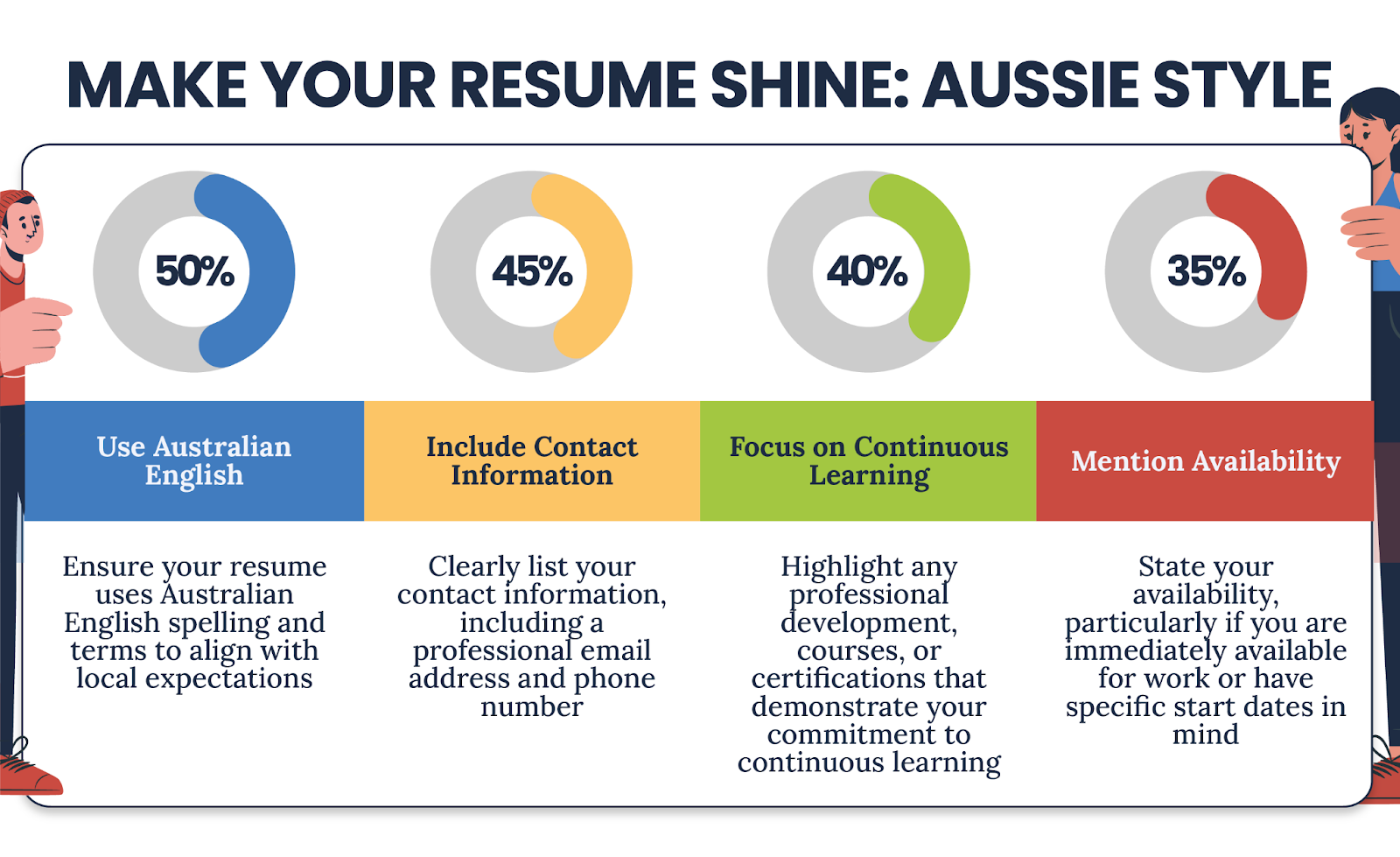
Understanding Australia's job market helps you position your resume better. Here's what's happening right now.
Australia needs workers. Badly.
Post-pandemic recovery created huge demand for skilled people. The government knows it can't fill these gaps with local talent alone. They're actively bringing in international workers.
What does this mean for you? More opportunities than ever before. Companies are hiring fast. Visa pathways exist for skilled workers. If you've got in-demand skills, Australian employers want you.
Minimum wage in Australia? $24.10 per hour as of July 2024. That's among the highest in the world.
Professional salaries match that standard. Competitive pay is the norm here. Most companies adjust salaries annually for cost of living increases.
Labor shortages push wages even higher in certain fields. Skilled trades? Healthcare? IT? These sectors offer particularly strong pay packages right now.
Healthcare dominates the shortage list. Doctors are needed. So are nurses, allied health workers, and aged care staff. Australia's aging population drives this demand. It's not slowing down.
Engineering and construction come next. Civil engineers, electricians, plumbers, carpenters, project managers - major infrastructure projects across Sydney, Melbourne, and Brisbane need these roles filled yesterday.
Accounting and finance positions stay open for months. Government agencies struggle to hire. Private companies face the same problem. Got an accounting background? That matters here.
Applying for healthcare jobs? Engineering roles? Construction positions? Accounting or IT work? Your resume will get reviewed faster.
These sectors face the worst shortages. Employers in these fields move quickly. They can't afford to wait. A solid resume in one of these areas can generate multiple interview requests within a week of applying.
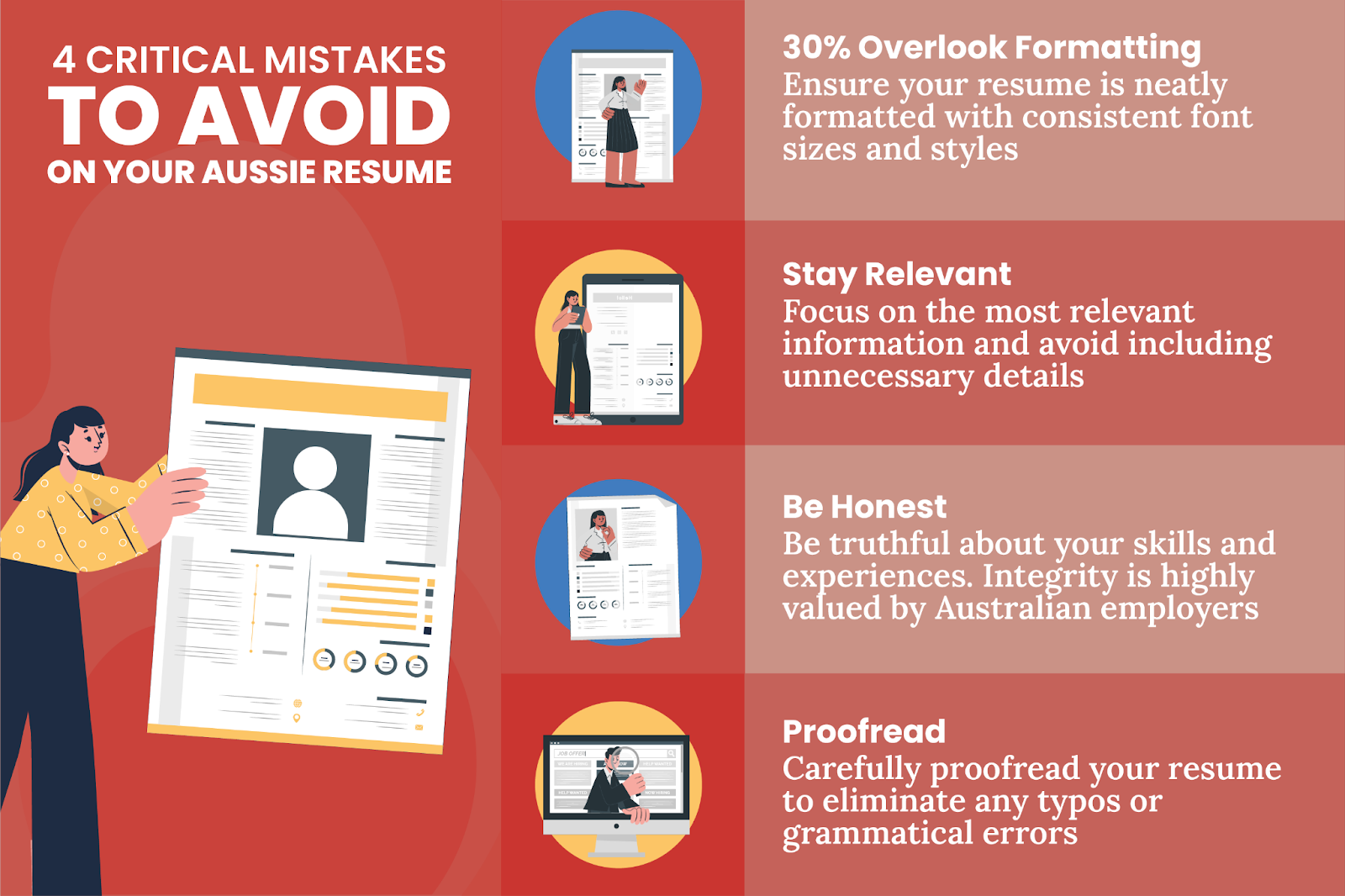
These tips will help your resume stand out from the pile on a recruiter's desk.
Read the job posting carefully. Look for keywords the employer uses. Include those exact terms naturally throughout your resume - in your summary, experience, and skills sections. Applicant Tracking Systems scan for these words. Miss them and your resume gets filtered out before a human sees it.
Include your LinkedIn profile link in the header. But first, check that your profile is actually complete and current. A half-finished LinkedIn hurts more than no link at all. Update your photo, headline, and description before adding that URL.
Pick a template that matches your industry. Creative fields like design or marketing can use more visual templates. Corporate sectors like finance or law need clean, traditional layouts. Your template choice signals whether you understand the industry you're targeting.
Spell check using Australian English settings. This catches the differences between American and Australian spelling. "Organization" becomes "organisation." "Center" becomes "centre." Small details matter. Recruiters notice these things.
Get certified if your field values it. Australian employers respect professional credentials. PMP for project managers. CPA for accountants. Industry-specific certifications for your sector. Don't have one yet? Consider getting certified before you start applying.
Tailor every resume you send. The same generic resume sent to fifty jobs won't work. Customize each one. Match your experience to what they're asking for. Emphasize the skills they specifically mention. Takes more time but generates way more callbacks.
Write a cover letter. Not every job requires one. But when you're competing against hundreds of other applicants, a good cover letter helps you stand out. Keep it brief. Explain why you want this specific job at this specific company. Show you've done your research.
Use consistent formatting throughout. Pick fonts and stick with them. Use the same heading style for every section. Keep margins uniform. Inconsistent formatting looks careless. Recruiters notice these details even if they don't consciously realize it.
Check that file links work properly. If you're including your LinkedIn URL or portfolio website, test those links in both PDF and Word formats. Broken links waste everyone's time.
Get feedback before you send it. Ask someone in your industry to review your resume. Fresh eyes catch mistakes you've read past a dozen times. They also spot sections that don't make sense to outsiders.
Let's recap the essentials. Here's what you need to remember when putting your Australian resume together.
Header comes first. Your name goes at the top. Add your phone number, email, and LinkedIn profile. That's it. City and state work fine for location - skip the full street address.
Your professional summary needs to be specific. Write two to four sentences about what you can do for them. Concrete achievements work. Generic phrases don't.
Work experience carries the most weight. List your jobs in reverse chronological order. Focus on results you delivered, not just duties you performed. Include numbers that prove your impact.
Education section stays straightforward. List your degrees, institutions, and graduation dates. Recent grads can add coursework or honors. Experienced professionals keep this brief.
Skills need both hard and soft abilities. Technical skills specific to your field. Interpersonal abilities too - communication, teamwork, problem-solving. Read the job posting carefully. Which skills do they want? Make sure those appear in your skills section.
Extra sections can work in your favor. Volunteer work, certifications, languages, relevant awards. Include these when they make you more hireable. Skip them when they don't add value.
Two pages is standard length. More experienced professionals can stretch to three or four pages. Recent graduates should stick to two. Don't worry about hitting a specific page count. Just include enough detail to tell your story without rambling.
What should you skip? Photos. Age or birth date. Marital status. Full street address. Hobbies that don't relate to work. Reference lists.
Tailor each resume to the job posting. Use keywords from the job description. Match your experience to what they're asking for. Generic resumes get filtered out.
Check your spelling using Australian English. Small differences between American and Australian spelling matter to local recruiters.
Our collection of expertly designed cover letter templates will help you stand out from the crowd and get one step closer to your dream job.