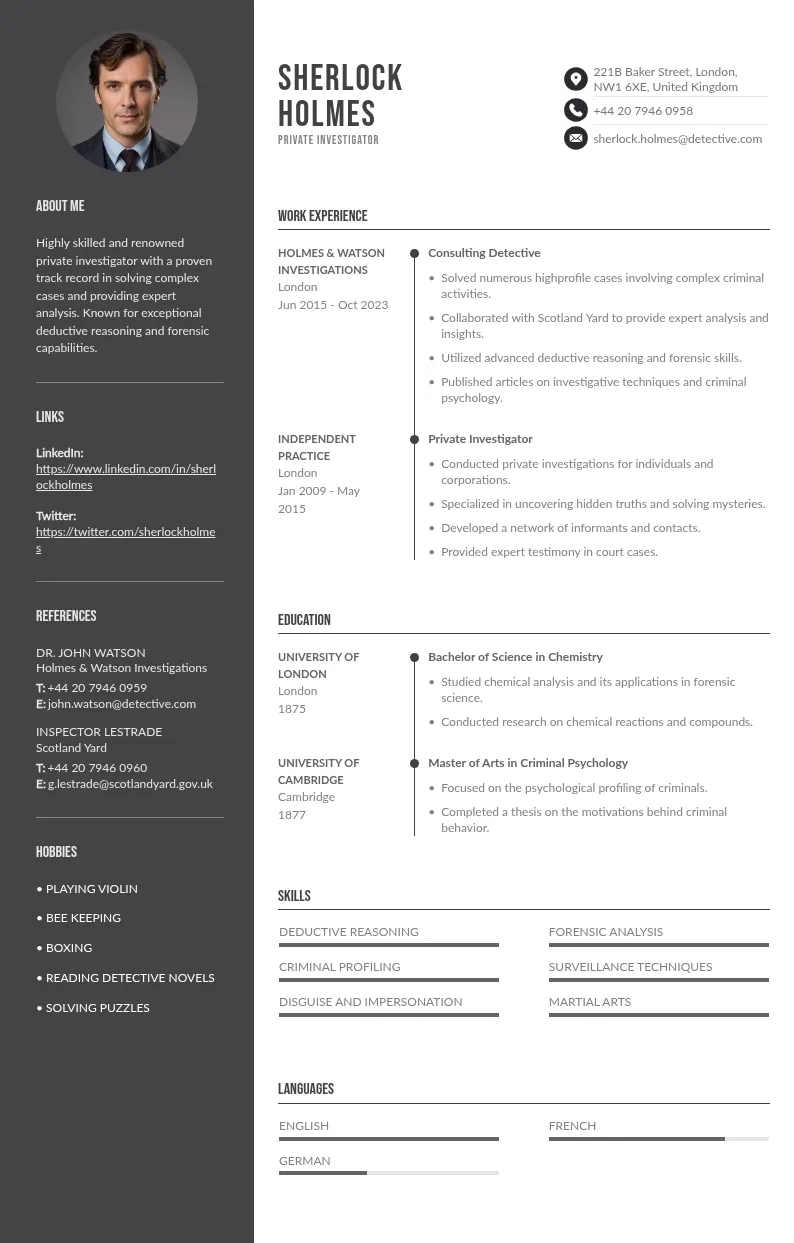


A private investigator’s job is very different from most professions. You are not simply completing routine office tasks; you are gathering admissible evidence, conducting covert surveillance, interviewing witnesses, and producing investigative reports that may end up in court.
Because of this, hiring managers and investigation agencies evaluate resumes differently than in other industries. They want clear proof that you can document evidence properly, handle sensitive information, and complete investigations that stand up to legal scrutiny.


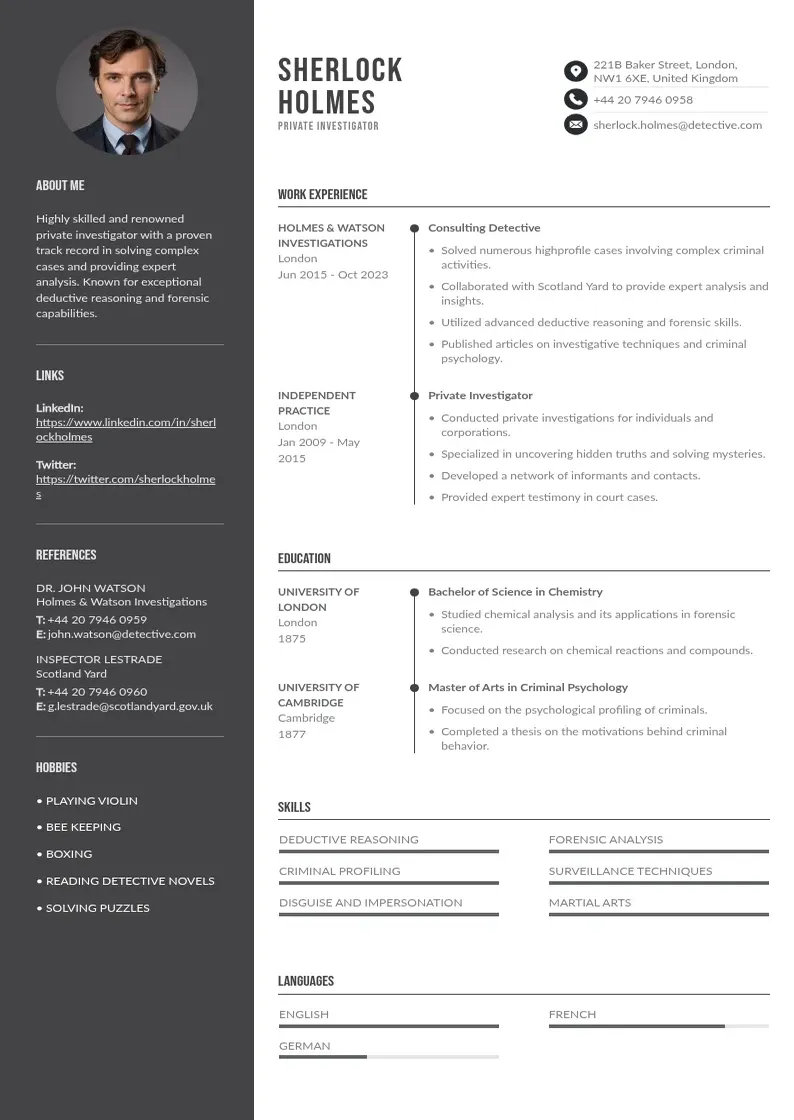
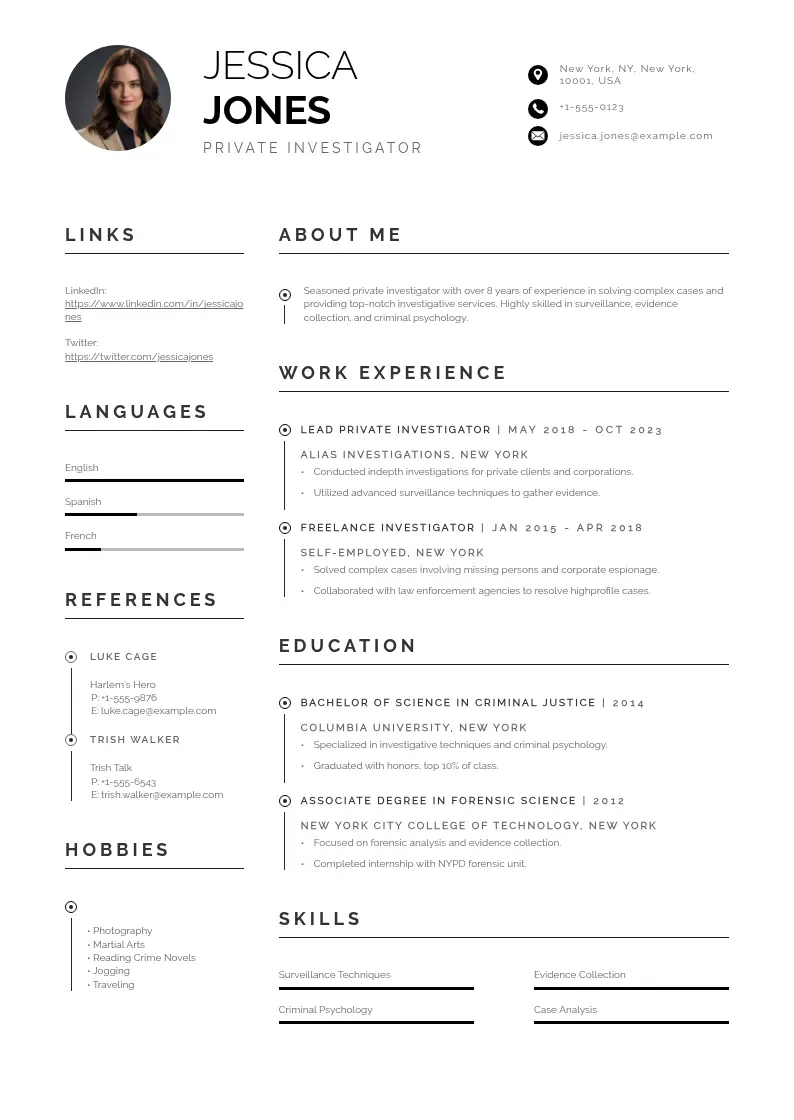
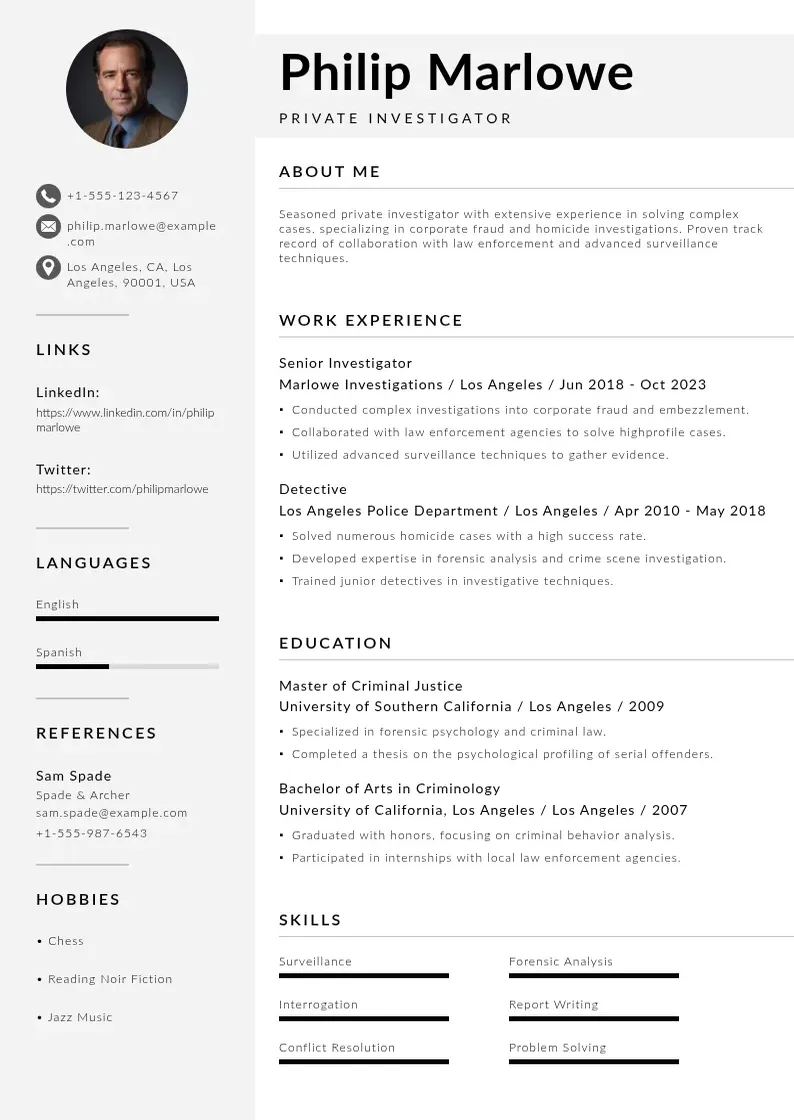
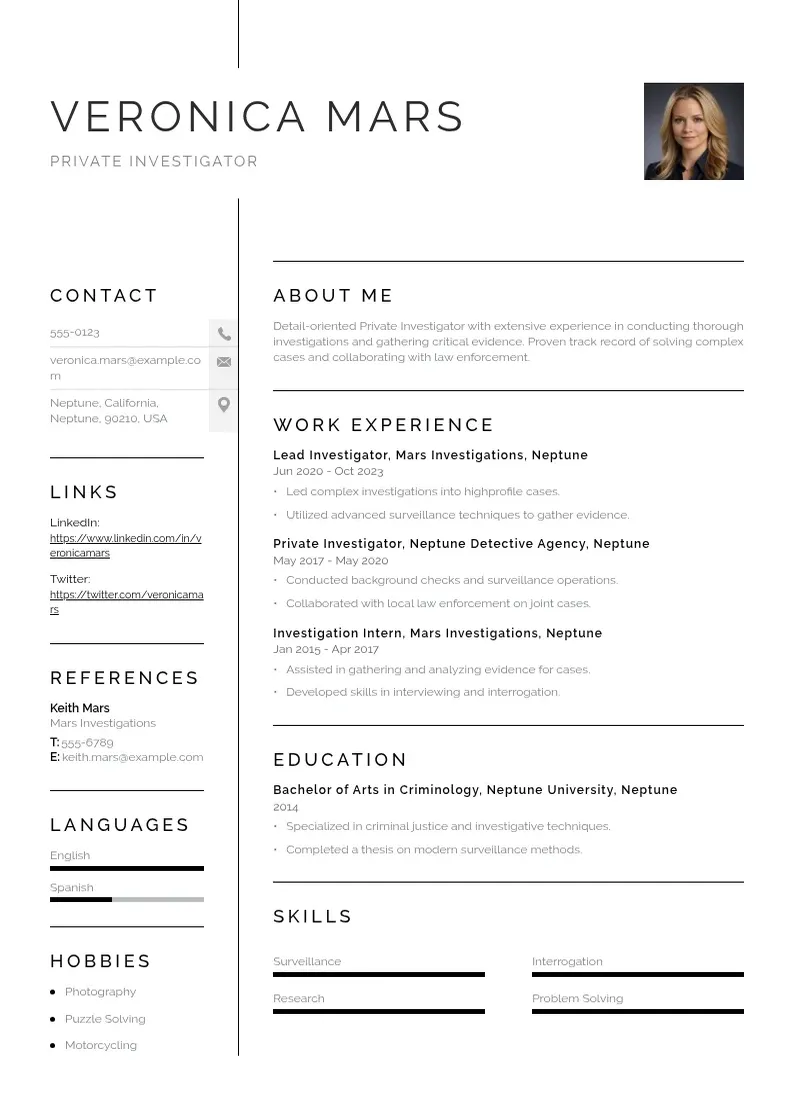
A generic resume full of vague phrases like “detail-oriented professional” will not impress an investigative firm. What employers want to see is real investigative work: surveillance operations, fraud investigations, skip tracing results, and case outcomes.
This guide will walk you through how to write a strong private investigator resume and includes 5 real resume examples for different types of investigators, so you can see how professionals present their experience.
We will cover:
Plus, we will provide expert resume writing tips and professional examples to inspire you.
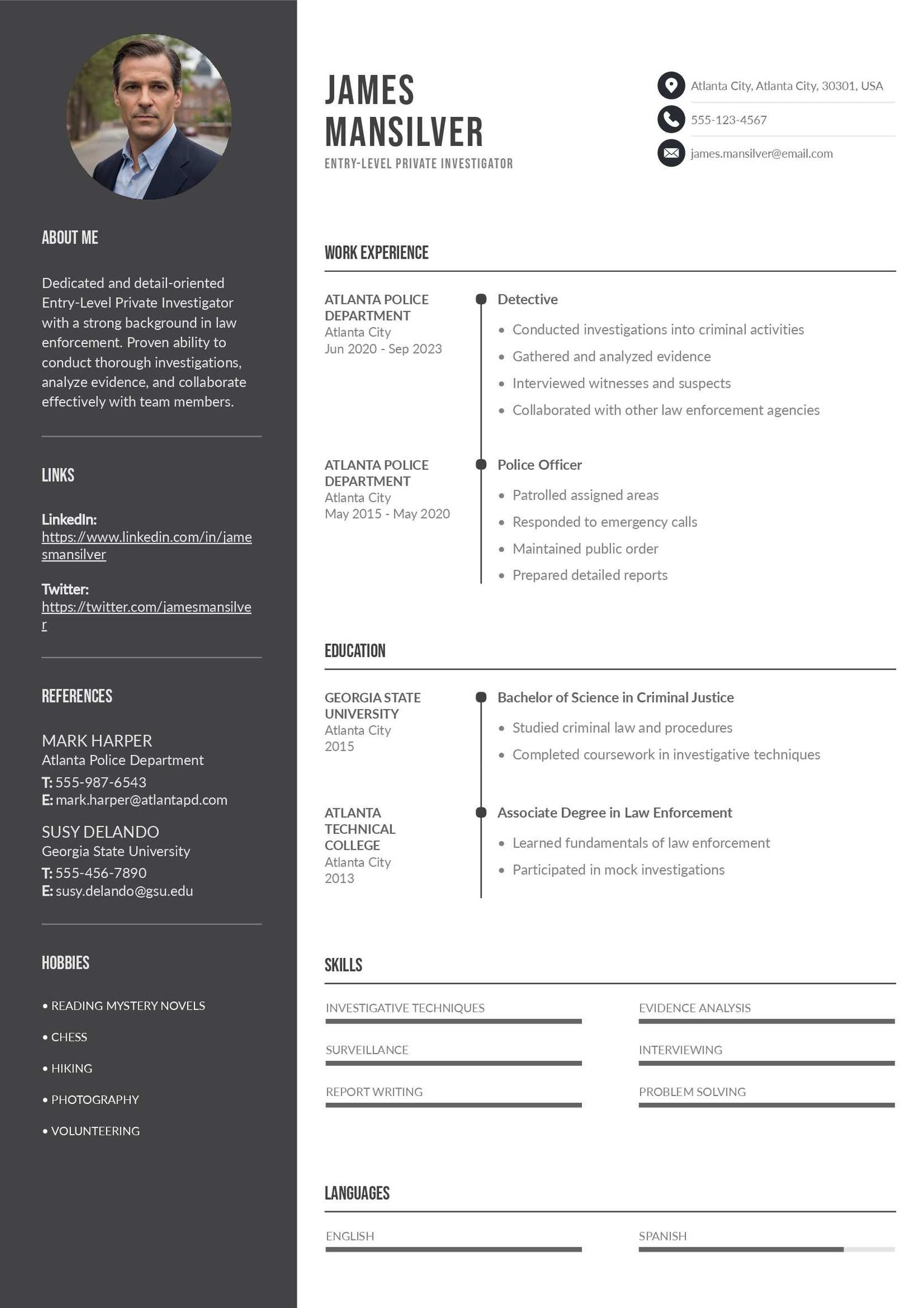
This resume works best for candidates transitioning from law enforcement, military, or security roles into private investigation. It highlights investigative training, field experience, observation skills, and legal knowledge gained during previous service.
Job Description
Entry-level private investigators conduct background checks, assist in surveillance operations, collect evidence, and support senior investigators in case documentation. Professionals coming from police or military backgrounds often bring valuable experience in report writing, interrogation techniques, and law enforcement procedures.
Key Notes
Focus on transferable skills such as surveillance, evidence handling, interviewing witnesses, and writing detailed reports. Mention law enforcement training, certifications, and familiarity with legal procedures. Even if direct private investigation experience is limited, emphasize investigative thinking and field discipline.
Additional Tips
Highlight Investigative Training: Include police academy training, criminal justice coursework, or military intelligence experience.
Show Field Experience: Mention patrol duties, incident reporting, and suspect monitoring.
Include Legal Knowledge: Demonstrate understanding of evidence procedures, criminal law basics, and investigative protocols.
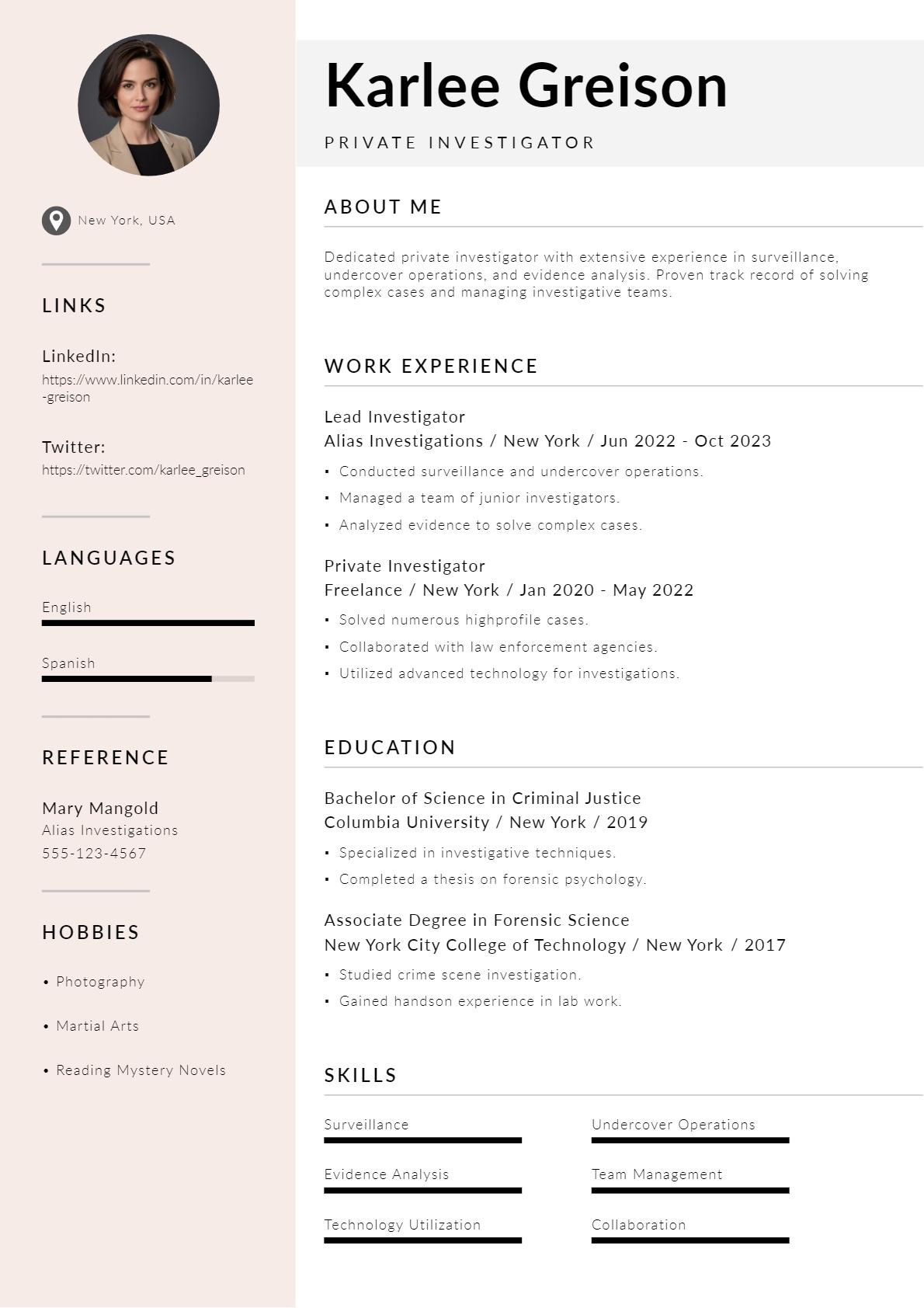
This resume works best for professionals with several years of private investigation experience. It emphasizes case management, investigative techniques, and successful case outcomes.
Job Description
Experienced private investigators handle a wide range of cases, including background investigations, missing persons, insurance claims, corporate disputes, and legal investigations. They collect evidence, conduct interviews, perform surveillance, and prepare reports that may be used in legal proceedings.
Key Notes
Focus on the number of cases handled, investigation types, and successful case outcomes. Highlight skills such as evidence collection, witness interviewing, database research, and report writing. Include measurable achievements where possible.
Additional Tips
Demonstrate Case Results: Mention investigations that led to fraud detection, asset recovery, or successful legal outcomes.
Show Investigation Diversity: Highlight experience with civil, criminal, and corporate cases.
Include Licensing and Certifications: Mention private investigator licenses and relevant professional training.
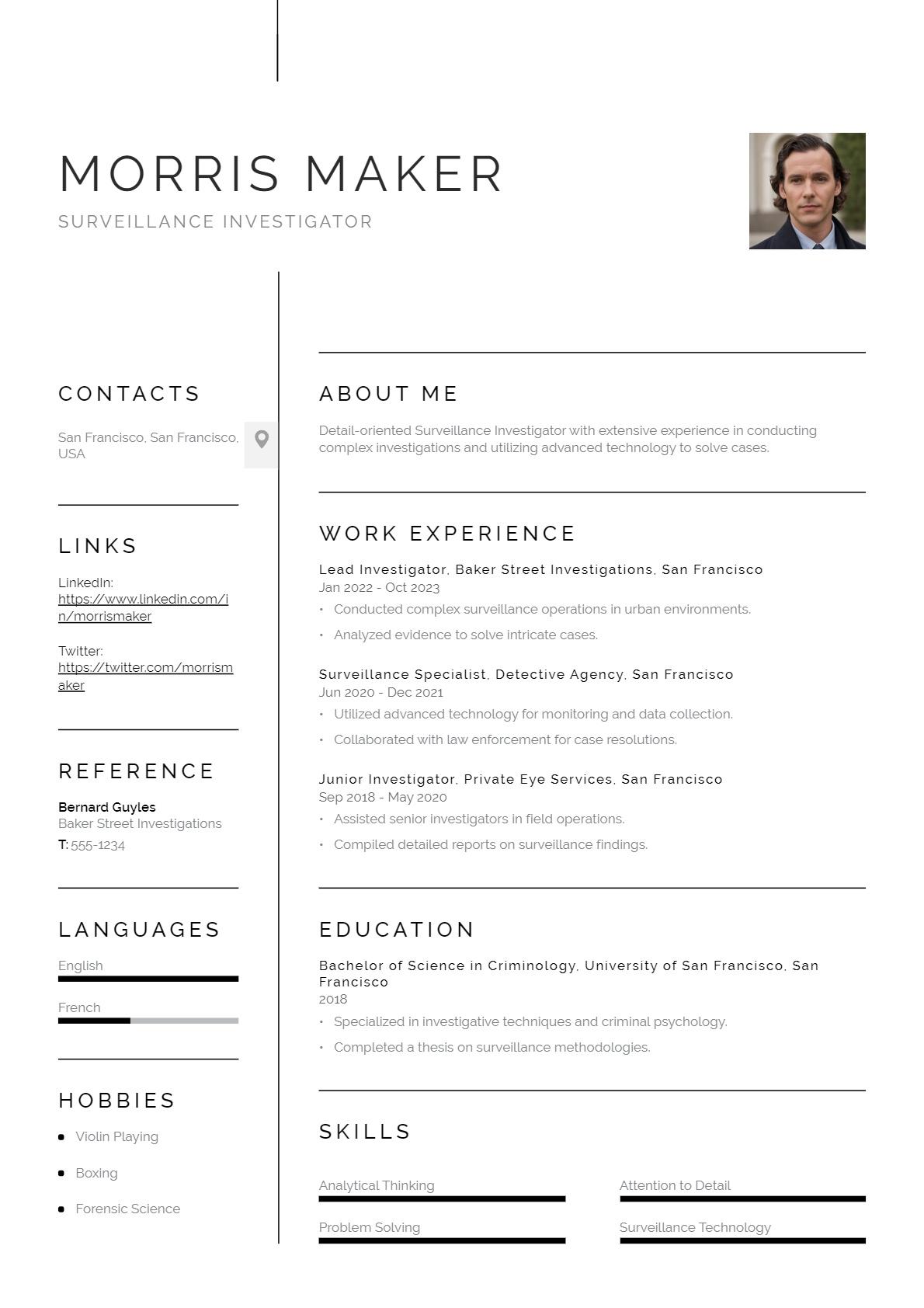
This resume works best for professionals specializing in surveillance investigations. It emphasizes observation skills, covert operations, and detailed reporting.
Job Description
Surveillance investigators monitor individuals to collect visual or documented evidence for insurance claims, legal cases, or corporate investigations. The role requires long hours of observation, discreet tracking, video documentation, and accurate reporting of activities.
Key Notes
Focus on surveillance hours completed, cases documented, and evidence collected through video or photographic documentation. Emphasize attention to detail, patience, and the ability to remain discreet during field operations.
Additional Tips
Highlight Surveillance Experience: Mention the number of surveillance operations conducted and successful evidence capture.
Include Technical Tools: List equipment used, such as surveillance cameras, GPS trackers, and video recording systems.
Show Reporting Accuracy: Demonstrate your ability to produce detailed surveillance reports for legal or insurance use.
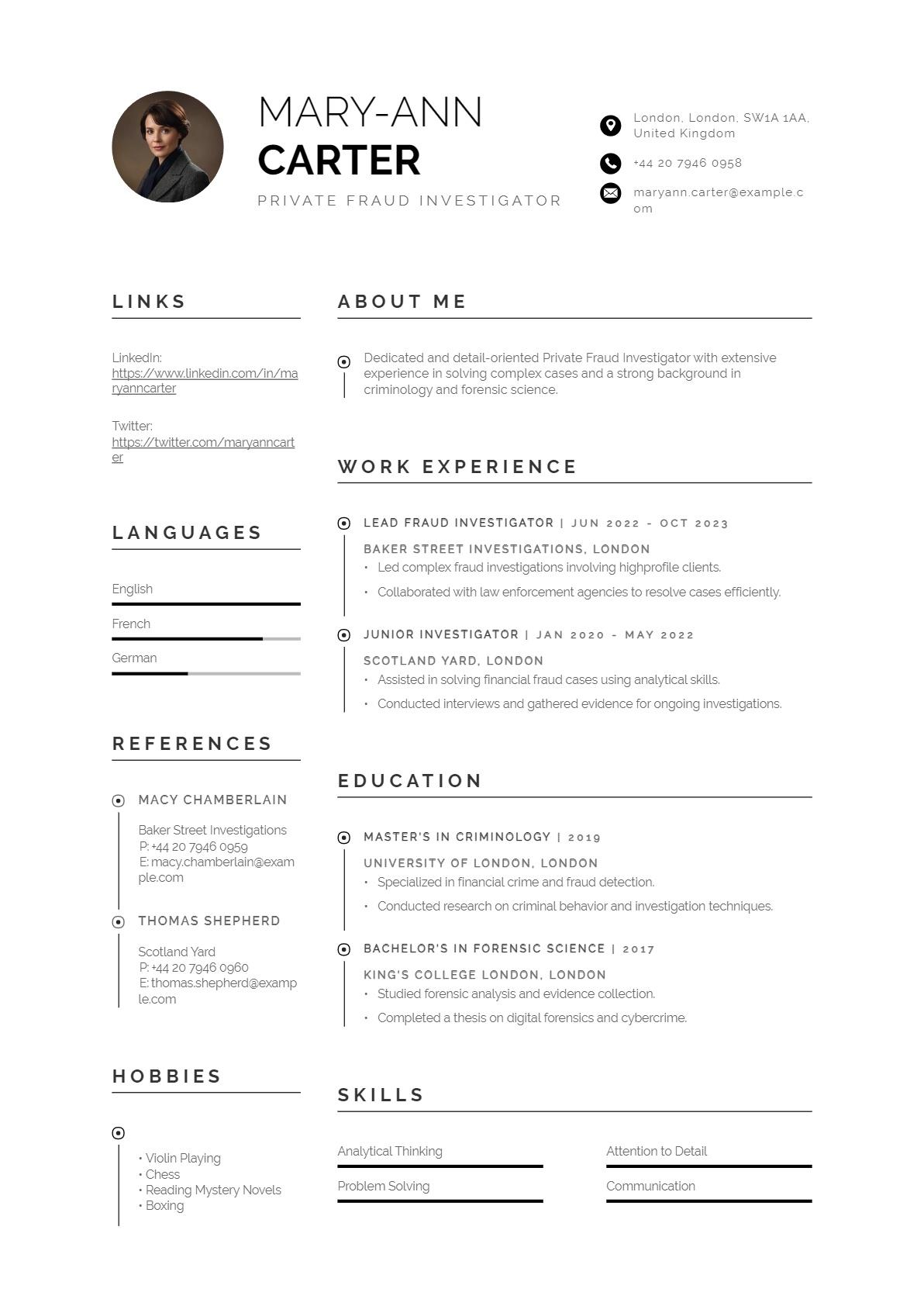
This resume works best for investigators specializing in financial crimes, insurance fraud, or corporate misconduct. It highlights analytical skills, financial investigation experience, and fraud detection capabilities.
Job Description
Corporate or fraud investigators examine financial records, investigate suspicious transactions, and identify fraudulent activities within organizations or insurance claims. They work closely with legal teams, compliance departments, and law enforcement agencies.
Key Notes
Focus on fraud detection, financial analysis, case documentation, and collaboration with corporate stakeholders. Mention investigations involving insurance fraud, employee misconduct, or financial irregularities.
Additional Tips
Highlight Fraud Detection Success: Include cases where investigations prevented financial losses or uncovered fraudulent claims.
Emphasize Analytical Skills: Mention experience reviewing financial documents, audit reports, or transaction records.
Show Compliance Knowledge: Demonstrate familiarity with corporate regulations, compliance standards, and investigative protocols.
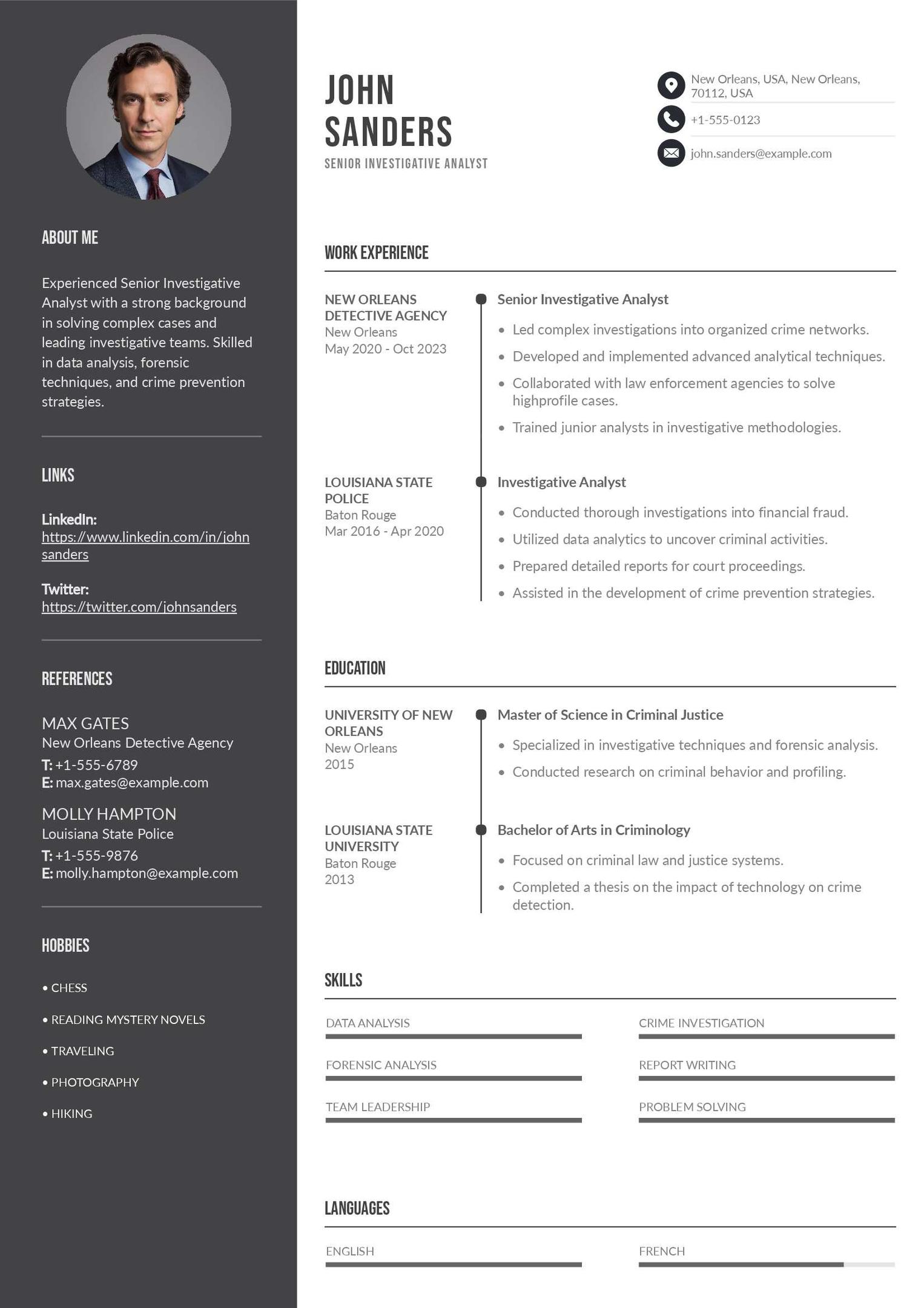
This resume works best for senior professionals managing complex investigations and leading investigative teams. It emphasizes strategic analysis, leadership, and high-level case management.
Job Description
Senior investigators oversee major investigations, coordinate investigative teams, analyze complex case data, and provide strategic recommendations. They may work with legal teams, corporate leadership, or government agencies on high-profile cases.
Key Notes
Focus on leadership responsibilities, large-scale investigations handled, and strategic decision-making. Highlight analytical skills, investigative planning, and the ability to manage multiple complex cases simultaneously.
Additional Tips
Show Leadership Experience: Mention team supervision, investigator training, and case management responsibilities.
Highlight High-Level Investigations: Include complex cases involving financial crimes, corporate fraud, or multi-state investigations.
Demonstrate Strategic Impact: Show how your investigations helped organizations reduce risk, recover assets, or strengthen compliance.
Creating a strong private investigator resume requires clarity, structure, and measurable results. Employers want proof of investigative competence, legal awareness, and professional discretion. Every section of your resume should reinforce your ability to handle sensitive cases efficiently and ethically.
Your professional summary is the first section employers read. It should immediately communicate your experience level, licensing status, specialization, and measurable achievements.
Include:
Avoid vague statements like “hardworking professional.” Instead, focus on impact and results.
 For example:
A strong summary sets the tone for the rest of your resume.
Your experience section should highlight achievements rather than routine job duties. Employers want to see how you contributed, not just what you were responsible for.
 Instead of writing:Write:
Quantifying your experience adds credibility and demonstrates proven performance.
Strong experience bullet examples:
Focus on outcomes, legal compliance, and measurable impact.
Licensing and certifications are essential in the private investigation field. They establish credibility and demonstrate legal authorization to operate.
Clearly include:
Certifications show commitment to professional development and industry standards.
Your skills section should reflect investigative expertise and ATS-friendly keywords. Many employers use applicant tracking systems to scan resumes before a human reviews them.
Include relevant skills such as:
Avoid generic skills that do not directly relate to investigative work.

Many investigator resumes fail because they read like generic job applications.
Most states require a private investigator license, and agencies expect to see it clearly listed.
Employers want investigation results, not vague descriptions.
Example of a weak bullet:Stronger bullet:
Evidence collection and reporting are core investigator skills. If your resume does not mention them, it weakens your credibility.
Phrases like:
do not communicate investigative ability.
Investigation firms want evidence of analytical thinking, surveillance work, and legal awareness.
A strong private investigator resume should clearly demonstrate your ability to conduct investigations, document evidence, and support legal cases.
To make your resume stronger:
The more your resume reflects actual investigative work, the more credible you appear to employers.
Creating a strong private investigator resume requires precision, clarity, and strategic presentation of your investigative expertise. Employers look for candidates who demonstrate measurable results, legal compliance, technical proficiency, and professionalism.
By following this Private Investigator Resume Example, you can structure your resume effectively, highlight your strengths, and avoid common mistakes that cost candidates interviews.
If you want to build a professional, ATS-friendly resume in minutes, use our smart Resume Builder to create a polished private investigator resume that stands out from the competition.
Turn your investigative skills into interview opportunities — start building your professional resume today.
Our collection of expertly designed cover letter templates will help you stand out from the crowd and get one step closer to your dream job.