Write your resume in 15 minutes
Our collection of expertly designed resume templates will help you stand out from the crowd and get one step closer to your dream job.


If you already know the basics of writing a resume in English, then you won’t have to overhaul your whole document. But what really matters is how you put the words together. A CV aimed at UK recruiters needs to sound right, read naturally, and avoid sticking out like a sore thumb.
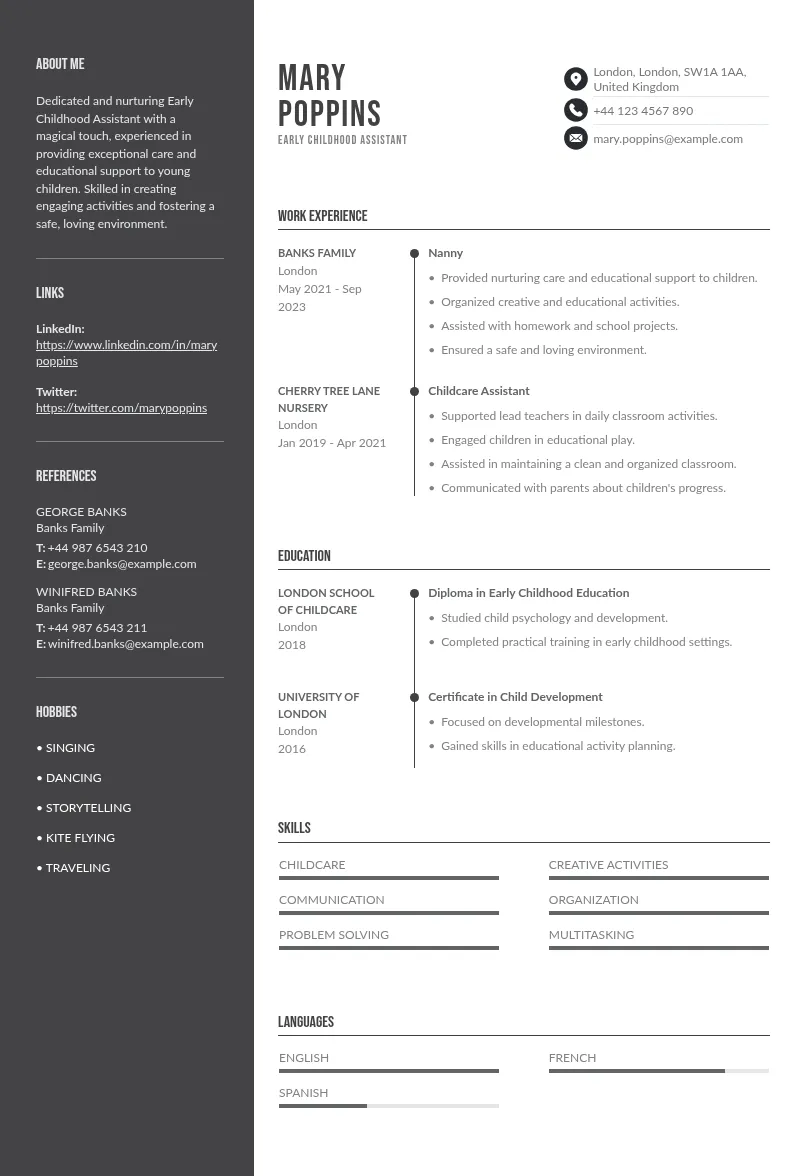
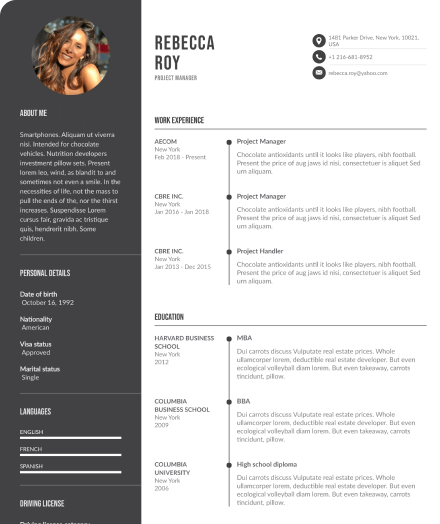
The job now is “make your application feel at home for British eyes”. Even if you’re applying from abroad, your CV should give the impression that you understand the local professional style. Behold the example below, and keep reading.
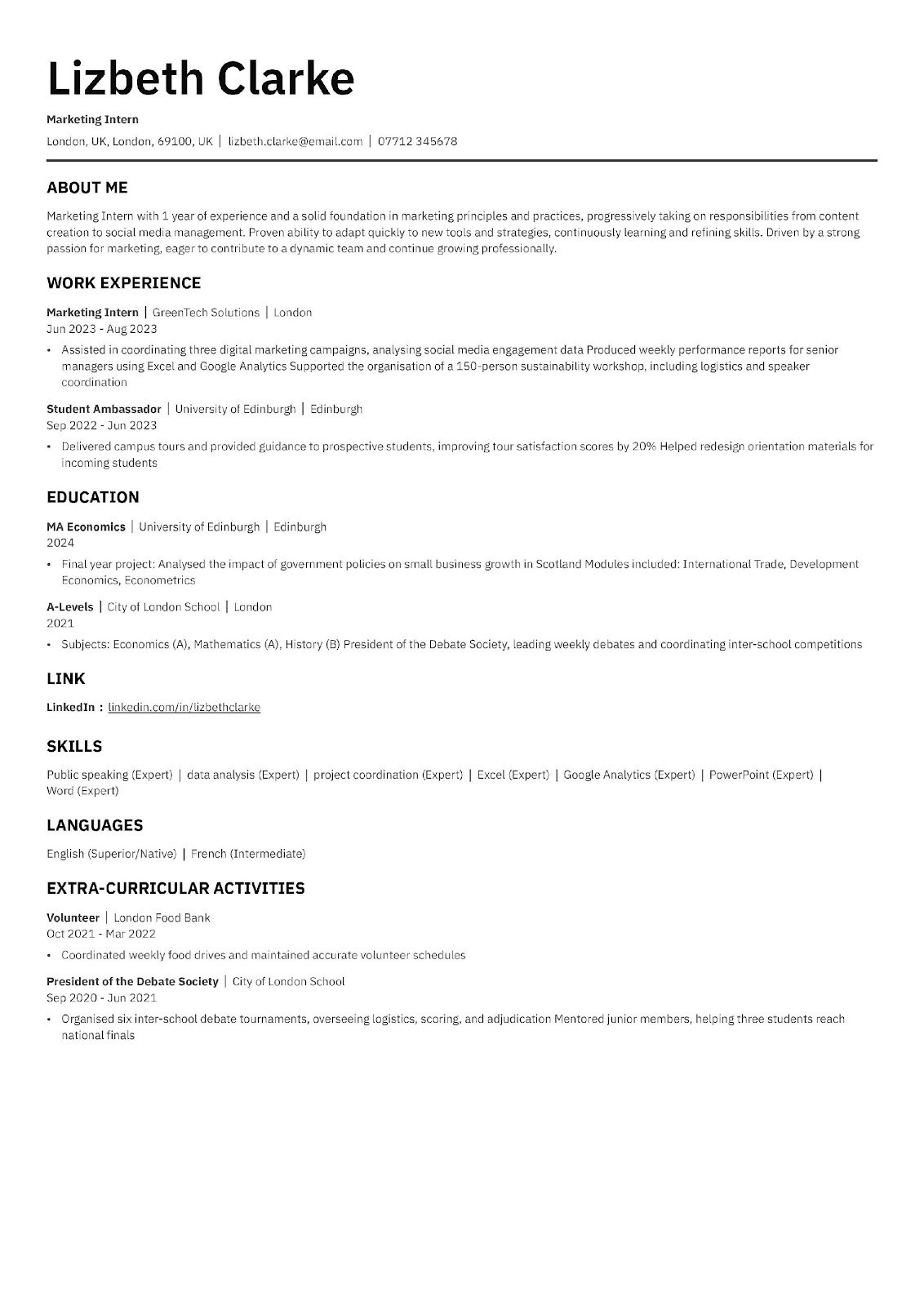
Use UK spelling consistently in your British English CV
One of the first things recruiters notice is spelling. Certain words are written differently in the UK. That doesn’t mean the alternative is wrong. But mixing styles? That’s a big no. It makes the CV feel slapped together.
So, pick one style and stick with it throughout. Consistency gives your CV a professional polish. A document that jumps back and forth between US and UK spellings? It just looks messy.
British English CV vocabulary: the words recruiters expect
Certain words just fit better in the UK. Using them shows you know what’s expected, and your CV won’t stick out for the wrong reasons.
And there are small tweaks that make a huge difference.
For instance, instead of “student activities,” say “extracurricular leadership roles”.
Sounds small? It really isn’t. That tiny shift immediately makes your CV sound sharper, more professional, more local.
Action-oriented bullet points for a CV in British English
UK recruiters skim. They don’t linger. So your bullet points need to jump off the page. They should be tight, active, and show what you actually did, not just what you were meant to do.
Example:
Have you noticed the difference? The first (wrong) one lists duties, the other demonstrates real action. That’s what makes British English CVs tick.
Avoid academic and overly formal language in your English CV
Students often carry over academic phrasing from essays or dissertations. That can work wonders for an essay, but for a CV? It’s a disaster. Long, bloated sentences, abstract terms—they just slow the reader down.
Example:
Short, punchy sentences win. They read faster, hit harder, and make your accomplishments crystal clear.
Some common phrasing mistakes to avoid in your CV in English
Even with perfect spelling and UK vocabulary, some phrasings stick out as non-native:
- Long noun phrases instead of verbs:
❌ Responsible for the execution of marketing strategy initiatives
✅ Executed three marketing initiatives, achieving X% engagement increase
- Overusing “I” or first-person constructions: UK CVs are neutral. They focus on actions, not you.
- Mixing US and UK prepositions:
❌ Participated on a project → ✅ Participated in a project
These are small things? They can make the difference between a CV that flows and one that jars the reader.
Subtle language signals that make your British English CV natural
There are little cues you can use to make your CV feel genuinely local.
- Dates: Spell them out, e.g., September 2023 – June 2024. Don’t just put 09/23 – 06/24.
- Personal info: Forget photos, dates of birth, marital status… UK recruiters don’t want them.
- Bullets: Start every point with an active verb; keep your tense consistent.
- Avoid overused adjectives: Words like motivated, dynamic, passionate? Replace them with examples of what you did.
Example:
Do you see? The second one shows exactly what you achieved instead of telling them how great you are.
Regional variations within British English CVs
Spelling or strong verbs are your main concern? Not quite. What really matters is how your language reads to UK recruiters. Subtle differences in wording, phrasing, and tone can make your CV feel either generic or polished. London, Edinburgh, Belfast, Cardiff… each expects slightly different language. Nail it, and your CV clicks in a glimpse of an eye.
Professional titles and terminology
Job titles are often region-specific. Using the right title helps recruiters immediately understand your role. A mismatch can create confusion or make your experience seem less relevant.
- London / South England: Programme Coordinator, Graduate Intern
- Scotland: Programme Manager, Work Placement Student
- Northern Ireland: Project Assistant, Placement Student
Degree names and academic phrasing
Degree titles vary across the UK. Universities in England, Scotland, Wales, and Northern Ireland may label similar degrees differently. Using the correct phrasing enhances credibility and shows precision.
- England: BA Economics (Hons), MSc Marketing
- Scotland: MA Economics, MSc in Marketing
- Wales / Northern Ireland: BSc (Hons) in Economics, MA in History
Even small distinctions matter: Honours vs Hons or programme vs program... Consistency throughout your CV is essential.
Job description phrasing
The way you describe your experience should reflect local conventions. Certain terms resonate more in different regions.
- Work placement → preferred in Scotland and Northern England
- Internship → widely recognised in London and international companies
- Final year project → clear for UK recruiters
- Senior thesis → more international phrasing
Language and tone nuances
Tone is subtle but important. UK CVs favour neutral, professional phrasing over self-promotion. Regional differences exist:
- London recruiters often prefer short, measurable bullet points.
- Scottish or smaller organisations may accept slightly longer sentences that provide context.
- Across all regions, avoid adjectives like motivated, dynamic, or passionate. Let achievements speak for themselves.
Examples of CV phrasing for different UK Regions
Here’s how a student’s CV bullet might be adapted depending on the region while keeping the core experience the same:
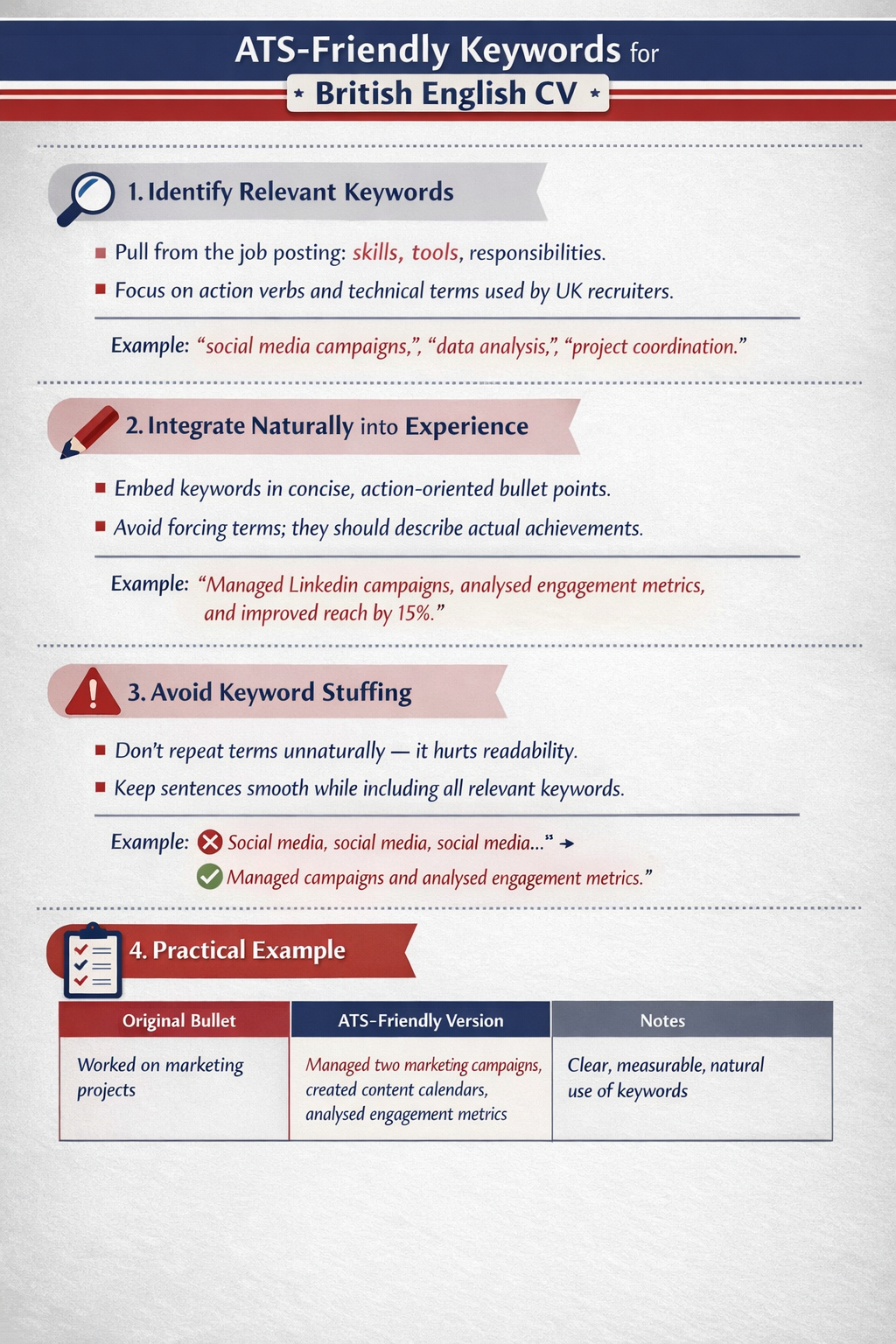
Mastering ATS Keywords to Strengthen Your CV
Modern recruitment in the UK is increasingly driven by Applicant Tracking Systems (ATS), with studies suggesting that over 70–80% of large employers use some form of automated screening before a human ever reviews a CV.
This means even highly qualified candidates can be overlooked if their applications aren’t optimised with the right terminology. By carefully selecting keywords from job descriptions, weaving them naturally into your experience, and avoiding overuse, you can significantly improve your chances of passing initial screening, while still presenting a clear, compelling narrative to hiring managers.
Your main goal: A CV that reads naturally to UK recruiters
Writing a British English CV isn’t about rewriting your entire document. It’s about tweaking language, phrasing, and style so that it reads naturally in the UK.
Once your spelling, vocabulary, bullet points, tone, and small stylistic details line up with what’s expected in the UK, your CV will not only look professional—it will sound like it belongs there, and recruiters will notice.
Create your resume with the best templates