Nursing is one of the most in-demand professions across the English-speaking world. In the United States, the Bureau of Labor Statistics projects RN employment to grow 6% through 2033. In the United Kingdom, the NHS is actively recruiting to fill over 40,000 nursing vacancies. Canada and Australia face similar shortages, with both countries running dedicated immigration pathways to attract internationally trained nurses.


Fred Swing
Registered Nurse
875-003-123
fredswing@gmail.com
Washington, MD
linkedin.com/in/fredswing
Professional Summary
Caring and experienced nurse offering twelve years of healthcare experience. A strong track record of delivering highly effective care plans to meet patients' preferences and giving assistance to other medical professionals. Highly skilled at case research with meticulous attention to detail.
Work experience
Medstar Hospital Center
Registered Nurse
January 2017-December 2020
Markham Senior Living
Nurse Practitioner
June 2014-March 2016
Education
Bachelor of Science in Nursing
James Madison University
2013
Skills
Certification
Basic Life Support(BLS) Certification
Strong demand does not guarantee you the job. Recruiters spend less and less time scanning resumes. Hospitals, NHS Trusts, and healthcare networks increasingly use Applicant Tracking Systems (ATS) that filter out resumes missing key clinical keywords… before a HR decision-maker ever reads any profile.
This guide gives you everything you need to build a resume that clears ATS filters and compels hiring managers to call you back, whether you're applying to a Level I trauma center in Chicago, an NHS Trust in London, a Toronto teaching hospital, or a public health service in Melbourne.
What this guide covers:
Below are six nurse resume examples tailored to different specialties, experience levels, and healthcare systems. Use them as a guide to structure your resume and highlight the skills most valued in nursing roles.
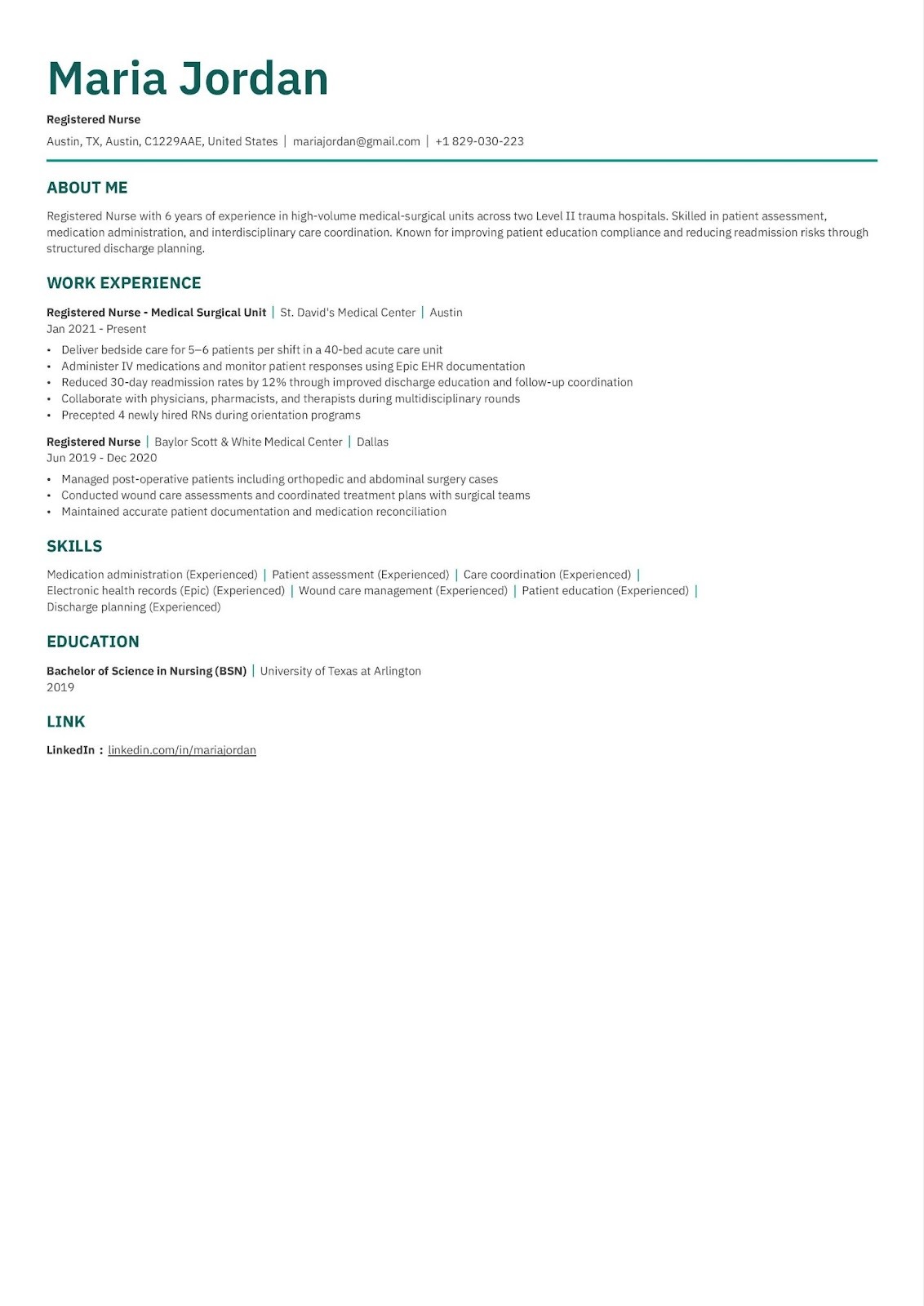
Registered Nurses remain the backbone of hospital care across the US, Canada, and Australia. Nowadays, hospital recruiters increasingly prioritize clinical versatility and measurable impact rather than simply listing duties.
Many ATS systems used by large healthcare networks now screen for keywords like patient assessment, care coordination, medication administration, and electronic health records (EHR) before a recruiter even reviews a resume.
A strong RN resume demonstrates three things quickly: clinical competence, patient safety awareness, and collaboration with multidisciplinary teams. The example below reflects what hiring managers expect from a mid-career RN applying to a large acute care hospital.
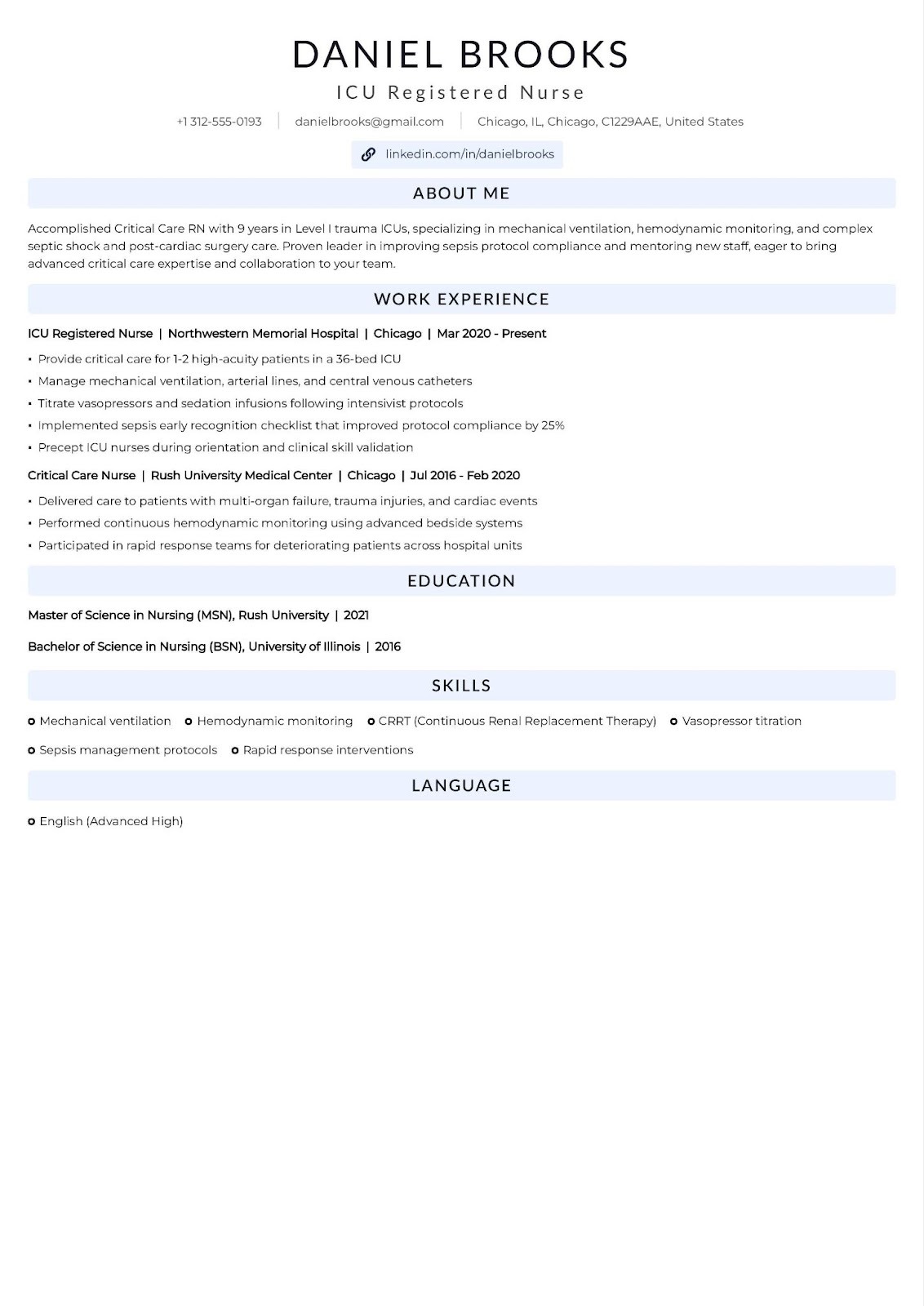
Critical care nursing remains one of the most competitive specialties. Hospitals in 2026 look for ICU nurses who can demonstrate experience with high-acuity patients and advanced monitoring technologies. Recruiters commonly screen resumes for competencies like mechanical ventilation, vasopressor management, hemodynamic monitoring, and rapid patient deterioration response.
An effective ICU resume also shows experience working within tight nurse-to-patient ratios (often 1:1 or 1:2) and collaborating with intensivists and respiratory therapists. The example below reflects the profile typically sought in major teaching hospitals.
In the UK, NHS recruiters evaluate nursing applications against the Knowledge and Skills Framework (KSF) and the NMC Code of Practice. For Band 5 and Band 6 roles, hiring panels look for evidence of clinical competence, patient safety awareness, and the NHS 6 Cs of Nursing (Care, Compassion, Competence, Communication, Courage, Commitment).
In 2026, NHS Trusts also emphasize experience with electronic patient records (EPR), safeguarding procedures, and multidisciplinary care planning. A strong Staff Nurse CV clearly demonstrates these competencies while aligning with the Band level expectations outlined in the job description.
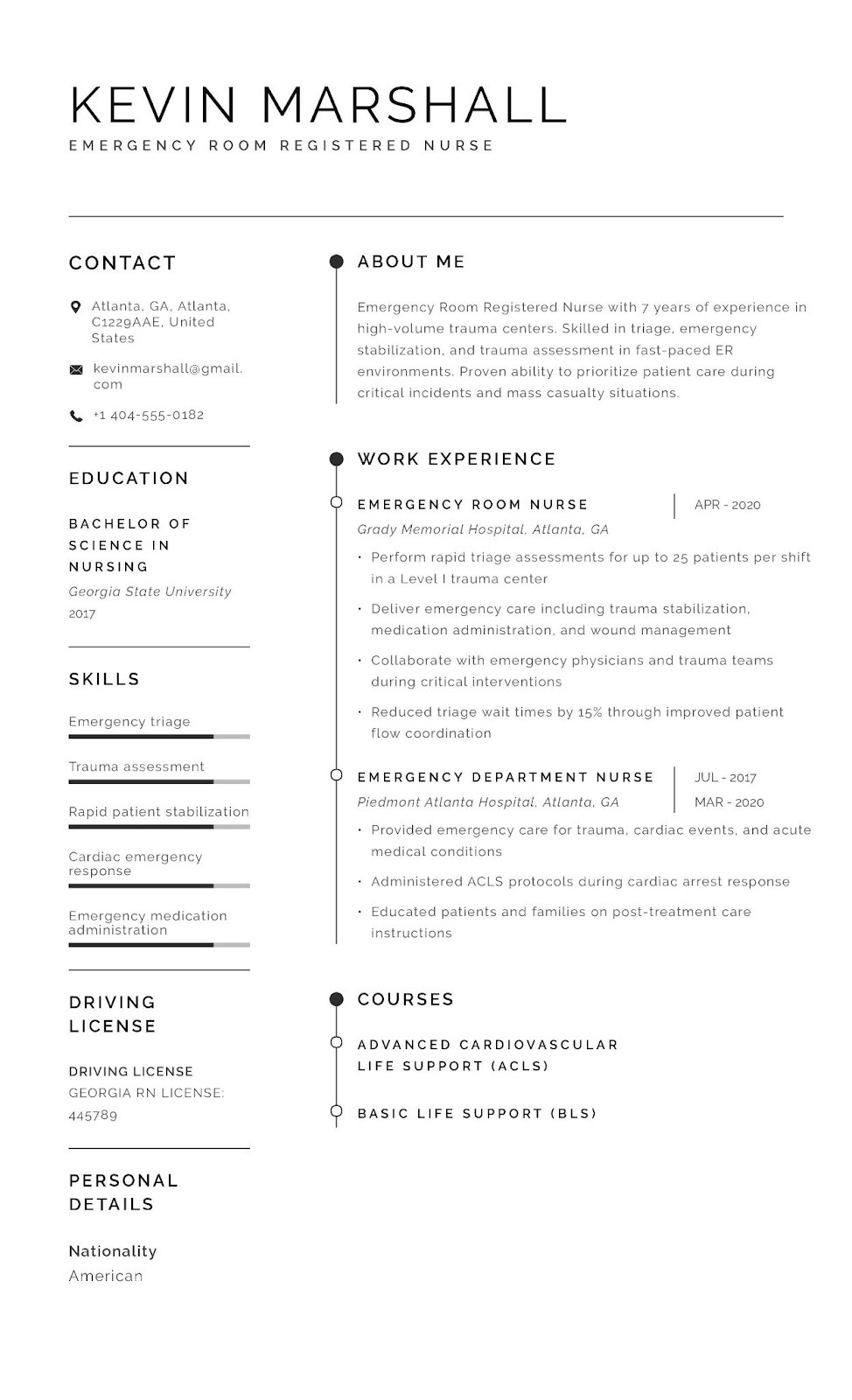
Emergency departments worldwide continue to face staffing shortages and high patient volumes. In 2026, ER recruiters focus heavily on triage skills, trauma assessment, and the ability to make rapid clinical decisions under pressure.
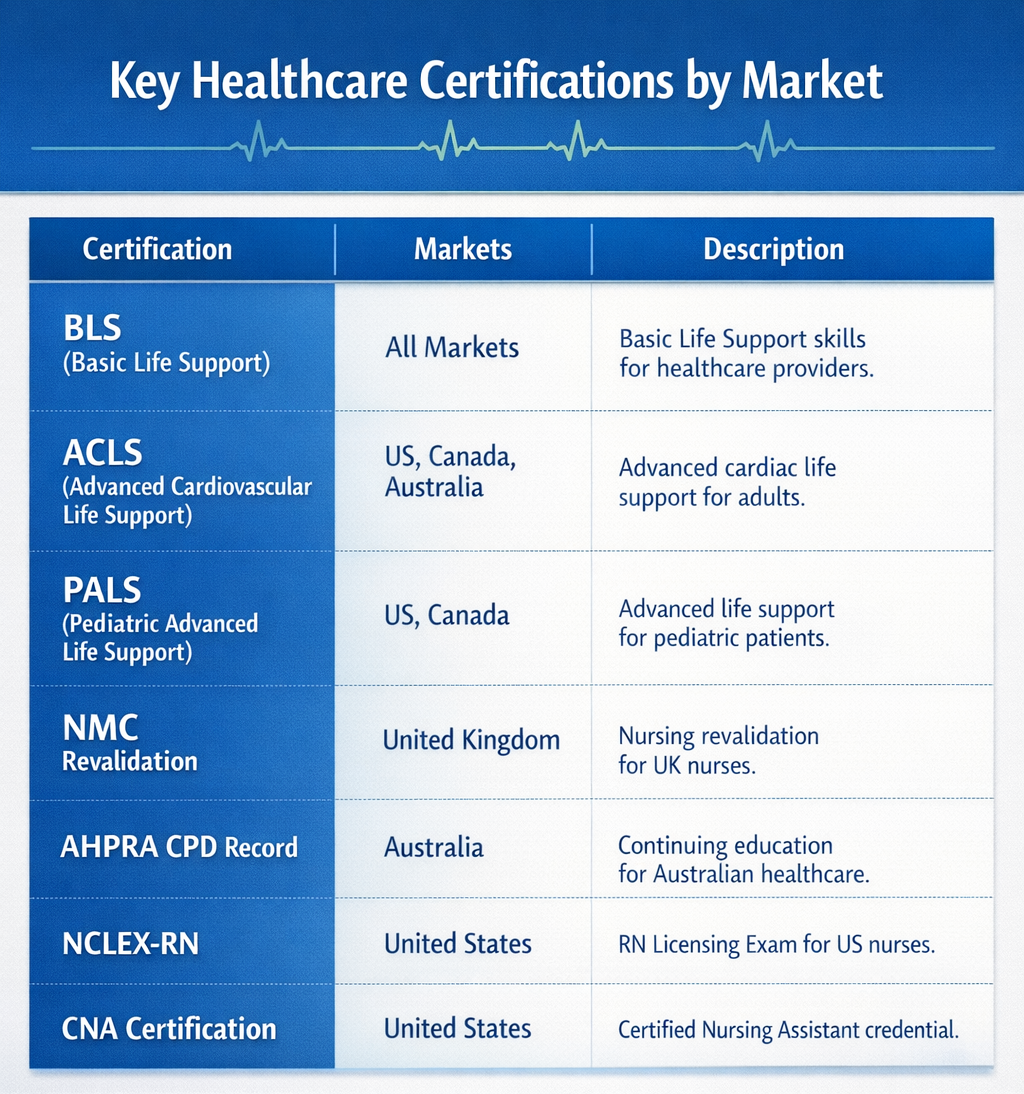
Most ATS systems used by emergency departments scan for certifications like ACLS, trauma care training, and triage competency, alongside keywords such as rapid patient assessment, emergency stabilization, and critical intervention. A strong ER resume also demonstrates experience handling high patient turnover and unpredictable case loads.
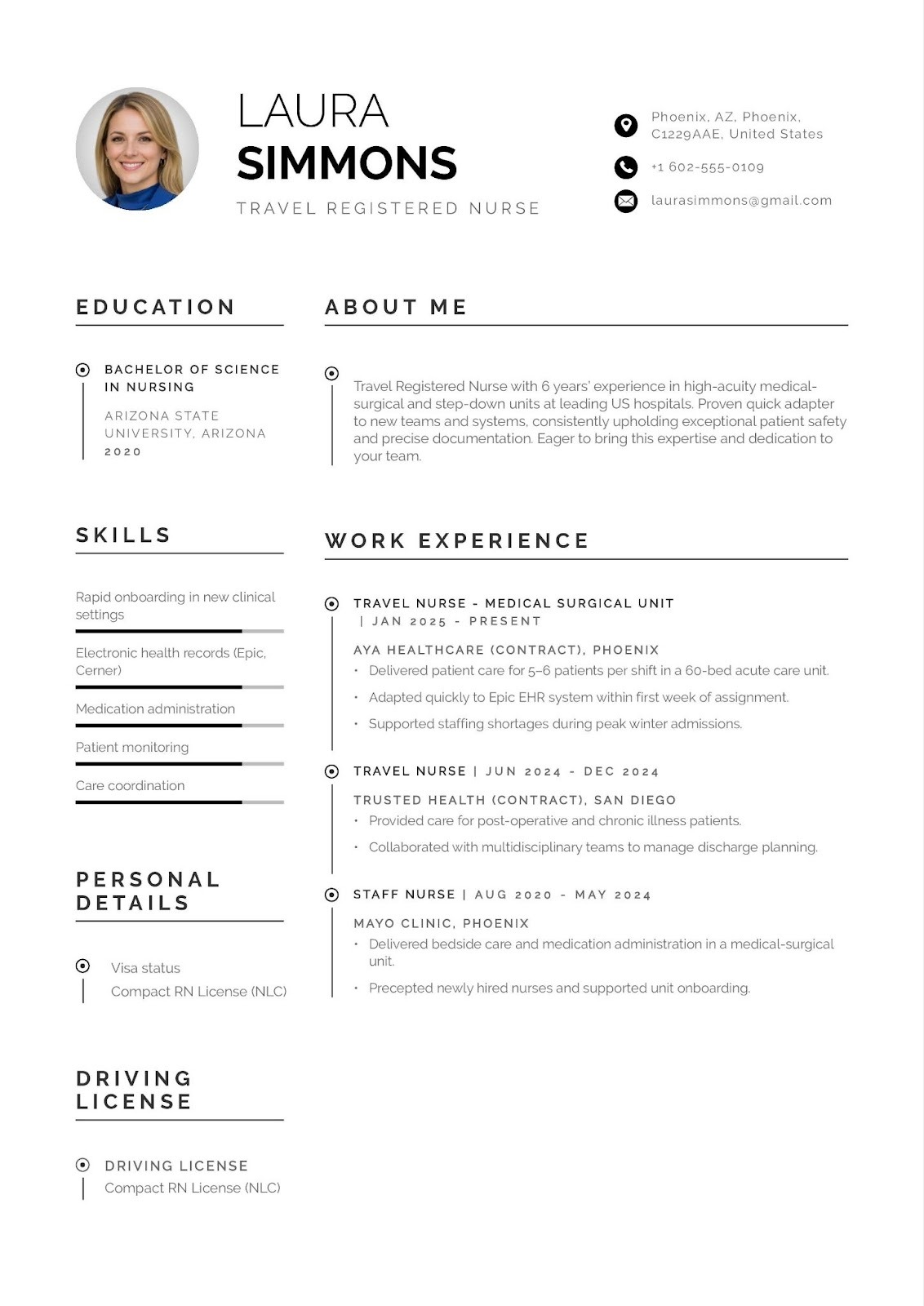
Travel nursing continues to expand rapidly across the United States and Australia as hospitals rely on temporary staffing to manage shortages. In 2026, recruiters for travel assignments prioritize nurses who demonstrate adaptability, rapid onboarding ability, and experience across multiple hospital systems.
Travel nurse resumes should clearly list each assignment, location, and facility type, since agencies and hospital recruiters evaluate candidates based on their ability to transition quickly into new environments.
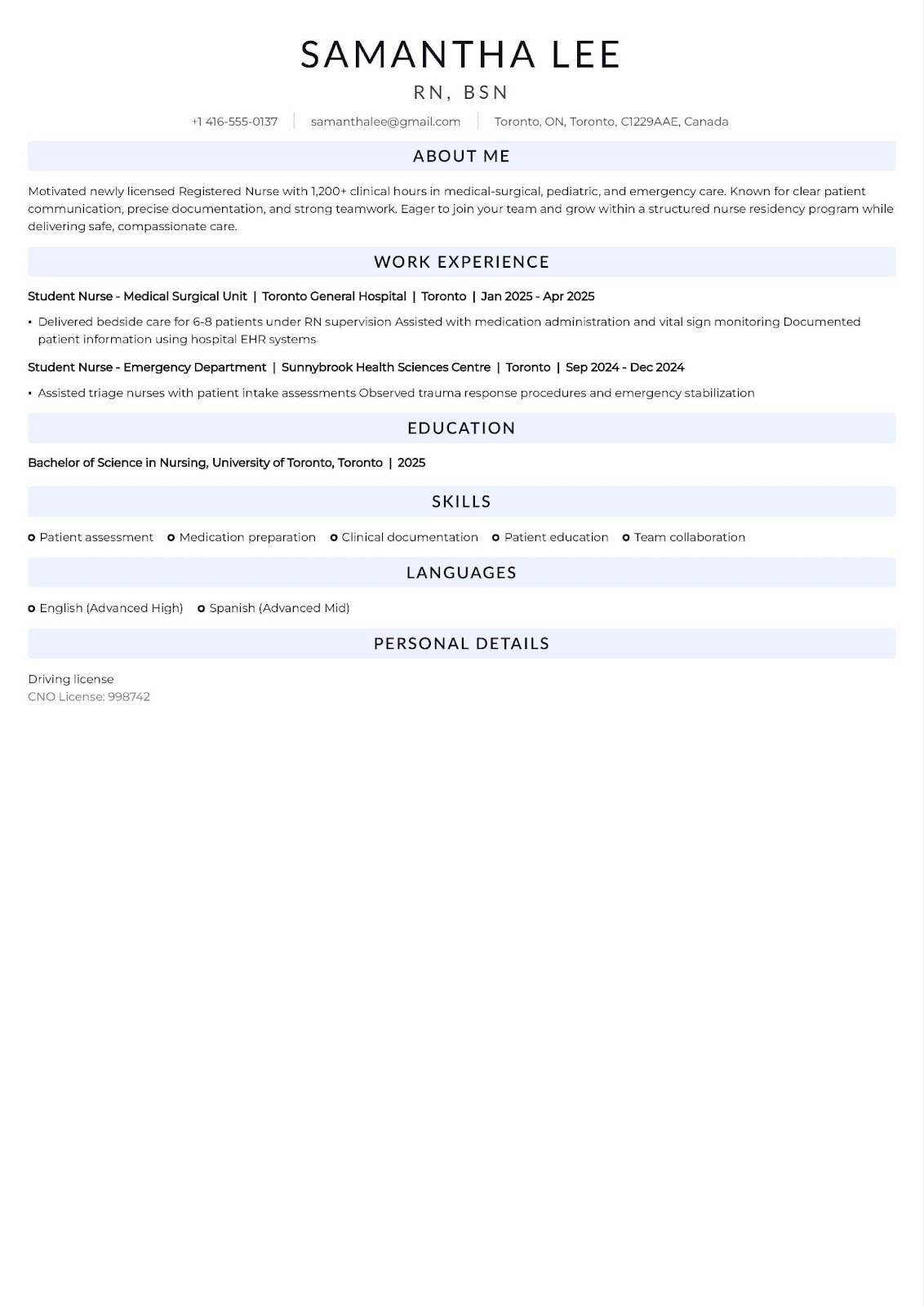
Hospitals hiring new graduate nurses in 2026 focus heavily on clinical placements, competencies, and certification readiness rather than work history. Many new nurses enter the workforce through structured nurse residency programs, which are designed to transition graduates into acute care environments safely.
A strong new graduate RN resume should emphasize clinical rotation hours, relevant patient populations, and technical nursing skills learned during training.
Nursing resumes face a format problem most professions don't: you need to communicate both hard clinical skills and measurable achievements, which are two things that pull in opposite directions.
A functional format shows skills but hides your clinical timeline, which hospital recruiters need to assess acuity progression and recency of ICU or ER exposure. A reverse-chronological format shows your timeline but buries skills unless you structure it carefully.
The right choice also varies by where you're applying: NHS Band 5–7 roles are evaluated against the Knowledge and Skills Framework, which means your CV structure needs to map visibly to competency levels… a consideration that doesn't exist in US or Australian applications.
Universal layout rules:
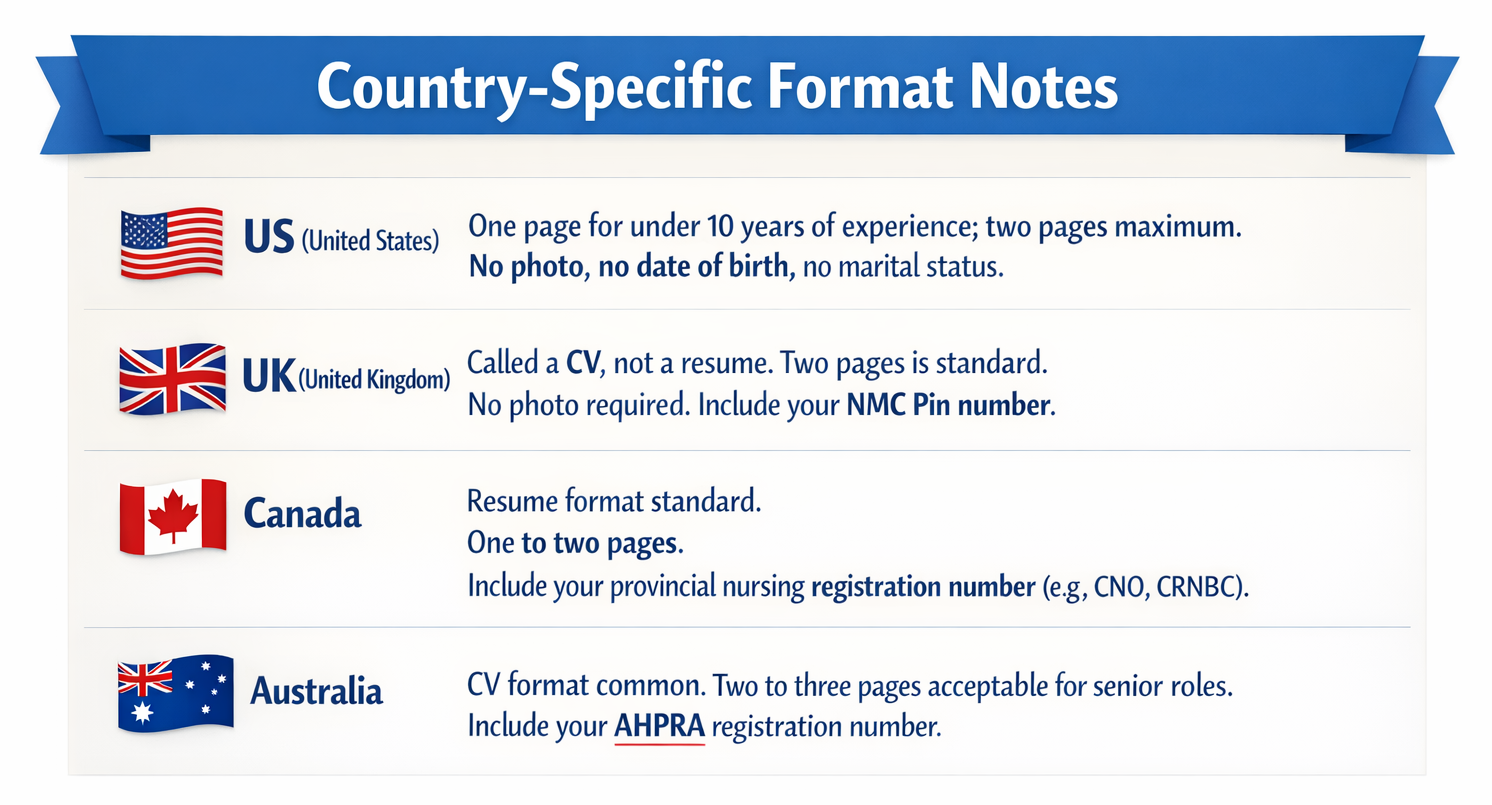
NHS recruiters cross-check NMC Pin numbers directly against the public register before shortlisting: a mistyped digit flags a fitness-to-practice concern before you've said a word. In the US, some hospital ATS systems are configured with "knockout questions" that instantly disqualify any application missing an active state license number for the posting's location. In Australia, AHPRA registration status is the first thing a hiring panel verifies.
Your header isn't a formality. It's the first clinical credential check of your application..
Include:
Do not include: date of birth, marital status, nationality, or a photo (unless specifically required — rare in all four markets).
 Correct example
Maria Jordan | Registered Nurse, BSN
+1 829-030-223 | mariajordan@gmail.com
Austin, TX | linkedin.com/in/mariajordan
Texas RN License: 123456
 Incorrect example
Maria Jordan
4275 Moore Avenue, House 21, Austin TX
Date of birth: 02/01/1990 | Nationality: American
Most nursing summaries fail the same way: they lead with personality ("compassionate, dedicated nurse") instead of clinical identity. Nurse recruiters zero in on three things in the first pass: your specialty, your acuity level, and your credentials.
A summary that opens with "Registered Nurse with 9 years of ICU experience managing vented patients at 1:2 ratio" tells them everything immediately. One that opens with "passionate healthcare professional" tells them nothing that differentiates you from the other 200 applicants for the same role.
Your summary is also the only section where weaving in 3–5 high-value keywords contextually (rather than listing them in a skills block) produces the strongest ATS score without triggering keyword-stuffing filters.
What to include:
Strong example (experienced RN)
Registered Nurse with 9 years of critical care experience across Level I trauma centers in the US and NHS acute settings in the UK. Proven record in managing high-acuity patients, leading multidisciplinary care teams, and reducing patient deterioration events through early warning protocol implementation. Seeking a senior ICU role within a major teaching hospital.
Strong example (new graduate)
Newly licensed RN (NCLEX-RN, 2025) with 1,200+ clinical placement hours across medical-surgical, pediatric, and emergency settings. Recognized for clinical accuracy, patient communication, and rapid adaptability in high-pressure environments. Eager to contribute to a progressive acute care team in a hospital committed to evidence-based practice.
Weak exampleAccomplished and ambitious nursing practitioner with experience caring for patients and working well with other nursing staff.
Patient ratios are a baseline expectation, not an achievement. Every nurse on the unit has them. What separates a strong nursing resume is the evidence of what you did within that ratio: did you precept new grads and retain them? Audit medication errors and reduce them? Standardize handoff procedures and cut overtime?
Nurse recruiters at large health systems are explicitly trained to look for proof beyond duties: facts, figures, and outcomes that show the impact you had on your unit.
Structure for each role:
Action verbs that resonate with nursing recruiters: Administered, Assessed, Coordinated, Delivered, Documented, Educated, Evaluated, Implemented, Managed, Monitored, Supervised, Triaged
Strong example (experienced RN)
Registered Nurse - ICU | MedStar Washington Hospital Center, Washington DC | Jan 2020 – Present
Strong example (new graduate / nursing student)
Graduate Nurse | Unity Health Care, Boston MA | Aug 2024 – Present
In the US, 25% of hospitals now require a BSN for new hires, and nearly 70% prefer it. That means an ADN without an upgrade pathway visibly noted on your resume can quietly disqualify you before a recruiter considers your clinical experience.
For internationally trained nurses, this section carries an additional layer of scrutiny: CGFNS (US), NMC overseas assessment (UK), NNAS (Canada), and AHPRA (Australia)... each run distinct credential recognition processes. Failing to document where you are in that process is one of the most consistent reasons international nursing applications stall at the screening stage.
Include:
Correct example
Master of Science in Nursing (MSN) | Johns Hopkins University, Baltimore MD | 2022
Bachelor of Science in Nursing (BSN) | University of Toronto, Canada | 2019 | Credentials assessed by CGFNS
A nursing ATS is not reading your resume the way a human would: it’s parsing it for exact strings.
The fix is precise: mirror the exact language of the job description, spell out acronyms followed by their abbreviation ("Basic Life Support (BLS)"), and never use unit-specific internal terminology. "4West" means nothing outside the walls of your current hospital.
For NHS applications specifically, ATS tools are actively configured to scan for the 6 Cs of Nursing (Care, Compassion, Competence, Communication, Courage, Commitment) as verbatim terms in your personal statement..
High-priority hard skills by specialty:
Universal soft skills that matter:
🇺🇸 United States Include your state RN license number and whether it falls under the Nurse Licensure Compact (NLC), which allows practice across 41 member states. This is especially important for travel nurses.
🇬🇧 United Kingdom Include your NMC Pin number. Reference the NHS Knowledge and Skills Framework (KSF) band if applying to NHS roles (Band 5 for newly qualified, Band 6–7 for senior/specialist). Mention any Care Quality Commission (CQC) inspection experience if applicable.
🇨🇦 Canada Include your provincial registration body (CNO in Ontario, CRNBC in British Columbia, etc.). Note whether you hold a temporary or full practicing certificate. If internationally trained, state whether your credentials have been assessed by NNAS.
🇦🇺 Australia Include your AHPRA registration number and endorsement category. Note your registration type: Registered Nurse, Enrolled Nurse, or Nurse Practitioner. Reference any experience with the National Safety and Quality Health Service (NSQHS) Standards.
Our collection of expertly designed cover letter templates will help you stand out from the crowd and get one step closer to your dream job.