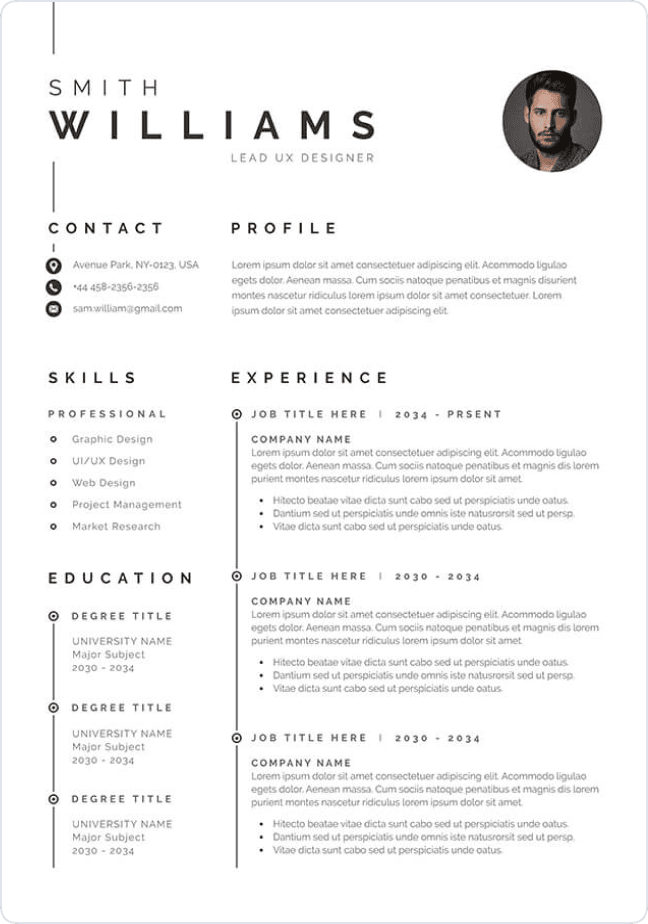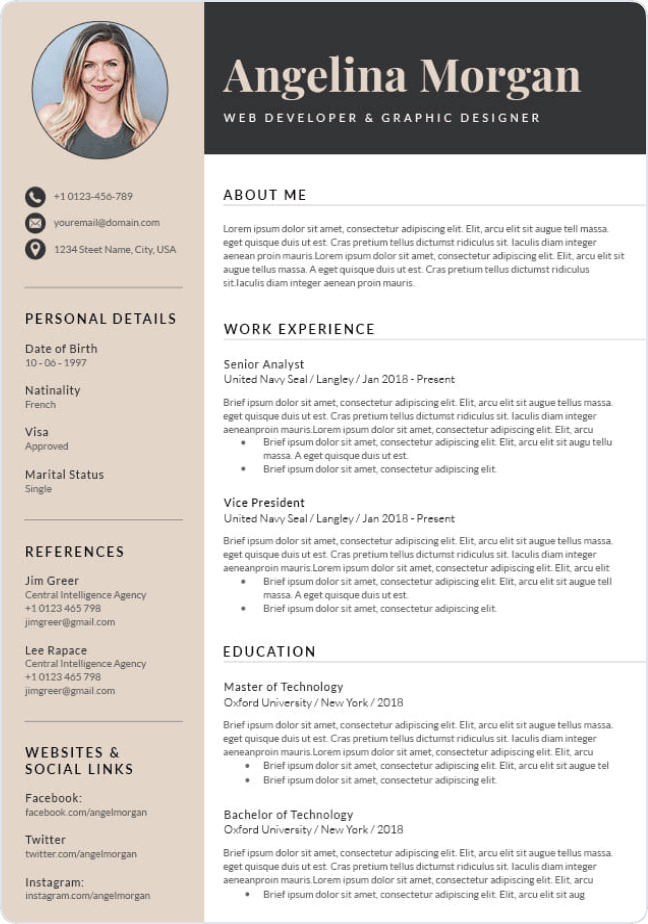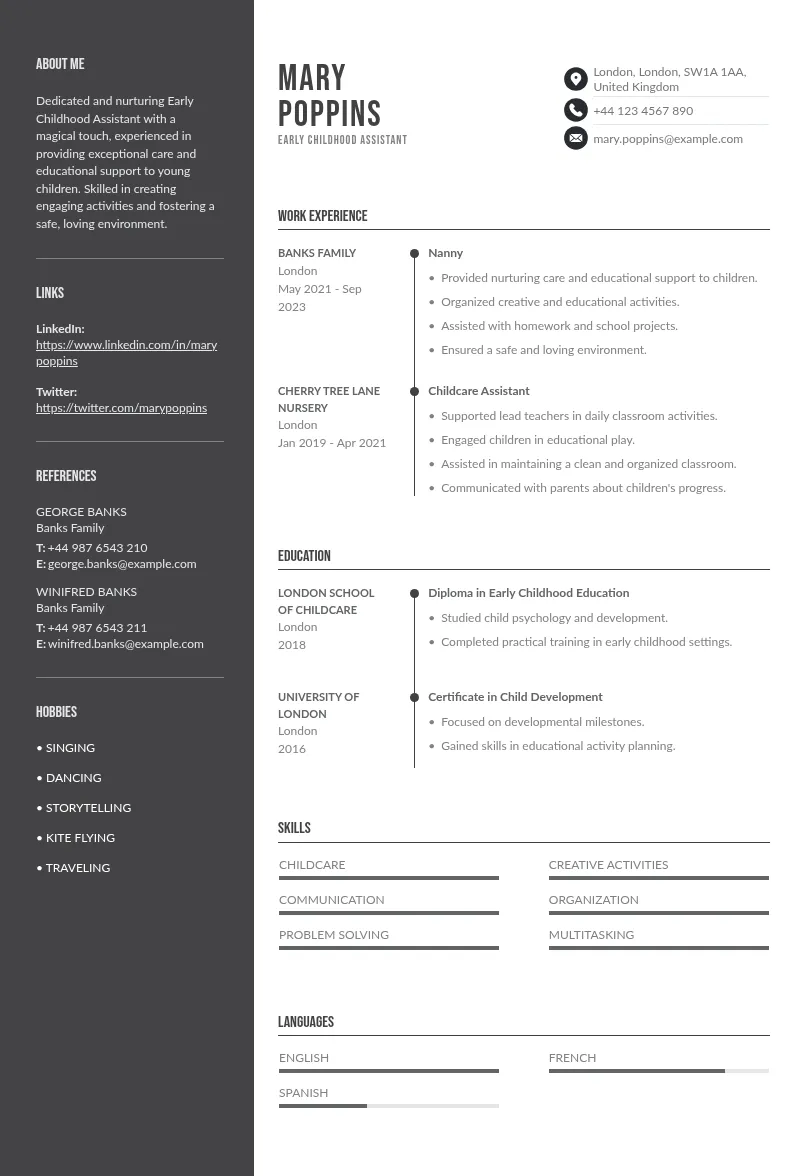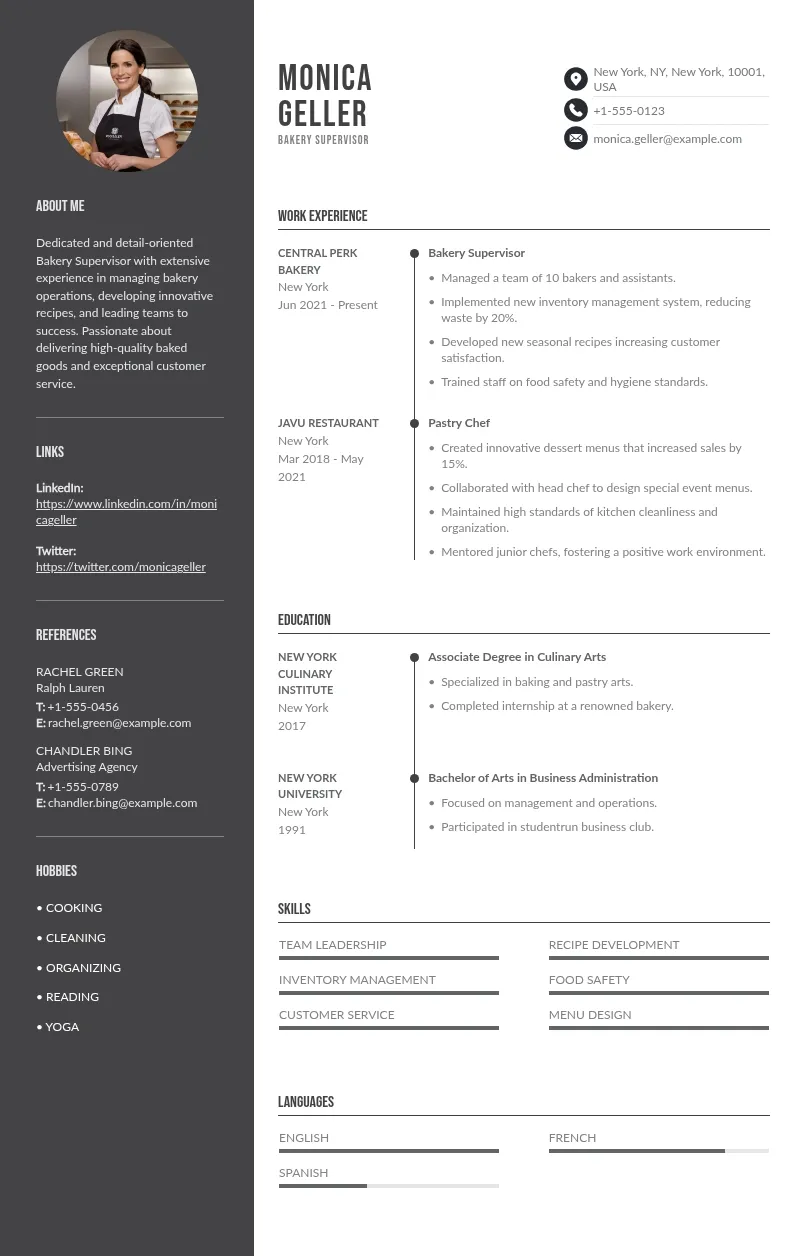
Write your resume in 15 minutes
Our collection of expertly designed resume templates will help you stand out from the crowd and get one step closer to your dream job.


Whether you're an entry-level candidate, an experienced analyst, or a data engineer moving into analytics... your application should demonstrate how your analytical skills can create measurable business value.
What Makes an IBM Data Analyst Role Different?
IBM Data Analysts typically work beyond basic reporting and dashboard creation. Depending on the position, analysts may clean and analyze data, develop dashboards, identify trends, communicate findings, and support business or consulting projects.
Common responsibilities include:
- Collecting, cleaning, and validating data
- Using SQL to analyze business data
- Creating dashboards with Power BI, Tableau, or IBM Cognos
- Identifying trends and generating actionable insights
- Presenting findings to technical and non-technical stakeholders
- Collaborating with business, product, engineering, and consulting teams
- Improving or automating reporting processes
The strongest candidates demonstrate both technical expertise and measurable business impact.
What IBM Looks for in Data Analyst Candidates
Before applying, it's not enough to simply consider industry standards : review the specific IBM job description carefully.
Technical Skills
Commonly requested skills include:
- SQL
- Microsoft Excel
- Python or R
- Power BI
- Tableau
- IBM Cognos
- Data visualization
- Dashboard development
- Statistical analysis
- Data modeling
- Data quality management
- AI skills
Rather than listing every tool you've used, prioritize the technologies mentioned in the specific IBM job posting.
Business Skills
Technical knowledge is only part of the role. IBM Data Analysts may also need to communicate insights and collaborate across teams.
Important skills include:
- Stakeholder communication
- Business problem-solving
- Critical thinking
- Cross-functional collaboration
- Presentation skills
- Data-driven decision-making
- Adaptability
Support these skills with examples and measurable results throughout your resume.
Step 1: Build an IBM-Ready Resume
Your resume should show how your analytical skills have created business value. Instead of simply describing responsibilities, focus on achievements and measurable outcomes.
For example:
 Weak:
Weak:Built Power BI dashboards.
 Stronger:
Developed Power BI dashboards that reduced executive reporting time by 35% and improved visibility into monthly sales KPIs across four business units.
The stronger version shows the tool, the work performed, and the business result.
Tailor Your Resume like an IBMer
Don't use the same resume for every IBM position. Before editing your resume, identify:
- Required qualifications
- Preferred qualifications
- Technical tools
- Business responsibilities
- Industry terminology
- Communication requirements
Then work closely on naturally incorporating the most relevant skills and experience into your resume.
Example of a resume to apply as Data analyst at IBM
This example shows how to position your experience for an IBM Data Analyst role by connecting technical expertise with business impact.
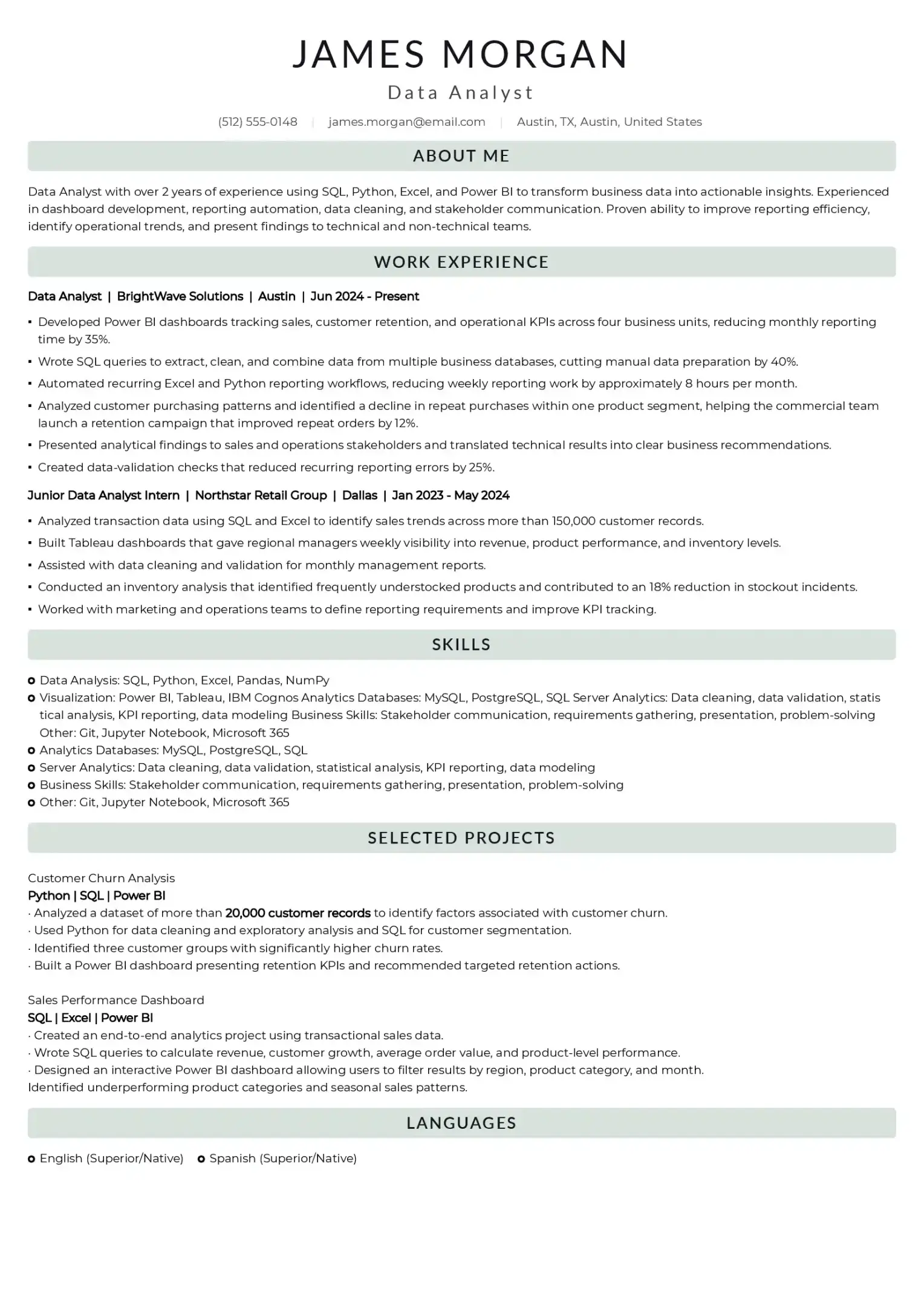
Why this is a strong IBM Data Analyst resume ?
- Technical expertise: Highlights practical experience with SQL, Python, Excel, Power BI, and IBM Cognos.
- Measurable business impact: Shows how analytics work improved reporting, efficiency, and business outcomes.
- Business problem-solving: Demonstrates the ability to turn data into actionable insights and recommendations.
- Stakeholder communication: Shows experience presenting findings and collaborating with technical and business teams.
Step 2: Highlight Measurable Achievements
IBM-focused resume bullets should emphasize outcomes rather than routine tasks.
SQL example:
Wrote advanced SQL queries to automate weekly reporting, reducing manual data preparation by 40% and improving reporting accuracy.
Stakeholder example:
Presented analytical findings to senior stakeholders, enabling faster business decisions that reduced inventory shortages by 18%.
Process improvement example:
Redesigned reporting workflows using Power BI and Excel automation, decreasing report delivery time from two days to four hours.
A useful formula is:
Action + Tool/Skill + Business Outcome + Measurable Result
This makes it easier for recruiters to understand the value you could bring as IBM data analyst.
Step 3: Build Relevant Data Analyst Projects
If you're an entry-level candidate, relevant projects can strengthen your application by demonstrating practical analytics skills.
Focus on projects that solve realistic business problems, such as:
- Sales Dashboard: Use SQL, Excel, and Power BI to analyze sales performance and identify trends.
- Customer Churn Analysis: Use Python and SQL to identify factors affecting customer retention.
For each project, explain the business problem, tools used, analysis performed, and key outcome. This demonstrates that you can apply technical skills to practical business challenges.
Step 4: Check Whether You Meet IBM's Requirements
Before submitting your application, compare your qualifications with the specific job posting.
Many IBM Data Analyst positions prefer degrees in areas such as:
- Computer Science
- Data Analytics
- Statistics
- Mathematics
- Business Analytics
- Information Technology
- Engineering
- Economics
Relevant professional experience, internships, certifications, and practical analytics projects can also strengthen your application.
Don't automatically reject yourself if you don't meet every preferred qualification. Focus on the required qualifications and whether you can demonstrate the core skills needed for the role.
Step 5: Understand IBM's Business Environment
Research IBM before applying so you can better understand where Data Analysts contribute.
Relevant areas to explore include:
- IBM Consulting
- Hybrid Cloud
- watsonx
- Enterprise analytics
- Responsible AI
- Business transformation
This knowledge can help you tailor your resume and give more relevant answers when explaining why you want to work at IBM.
Step 6: Complete Your IBM Candidate Profile
The application process doesn't end after uploading your resume. IBM's Candidate Portal, or My Profile, allows you to manage applications, track progress, update your information, and apply for other roles.
Make sure your profile accurately matches your resume, including:
- Education and employment history
- Technical skills and certifications
- Resume and contact details
- Work authorization, if applicable
You can also use the portal to track application status, update your information, set job alerts, view applications and offers, and apply for other IBM positions.
Keep your profile and resume consistent. Differences in job titles, dates, or qualifications can create unnecessary questions during the review process.
Step 7: Review Your Application Before Submitting
Take a few minutes to check your application carefully before clicking Submit.
Confirm that:
- Your resume is tailored to the IBM job description.
- Your technical skills match the role requirements.
- Your projects demonstrate business impact.
- Employment dates and job titles are accurate.
- Portfolio, GitHub, or LinkedIn links work correctly.
- There are no spelling or formatting errors.
IBM states that applications cannot be edited after submission. If you discover an important mistake afterward, you may need to withdraw the application and submit a new one if the position is still available.
Step 8: Understand the IBM Hiring Process
The hiring process can vary by position and location, but IBM Data Analyst candidates may go through several stages.
1. Application Review
After you apply, a recruiter reviews your qualifications against the job description.
They may look for evidence that you can:
- Solve business problems using data
- Demonstrate measurable achievements
- Communicate effectively
- Match the required technical skills
This is why tailoring your resume to each position is important.
2. Online Assessments
Depending on the role, IBM may ask candidates to complete assessments involving:
- Coding
- SQL
- Logical reasoning
- English-language skills
- Video responses
Not every Data Analyst position includes every assessment, so the process may differ between candidates.
3. Recruiter Screening
If your application is shortlisted, you may speak with a recruiter about:
- Your professional background
- Why you want to work at IBM
- Relevant projects
- Salary expectations
- Work authorization
- Preferred location
The recruiter may also assess your communication skills and interest in the position.
4. Technical Interview
Prepare to discuss practical analytics topics such as:
- SQL joins and window functions
- Data cleaning
- Dashboard design
- Excel automation
- Power BI or Tableau
- Data visualization
- Statistics
- Business reporting
Don't focus only on memorizing definitions. Be prepared to explain why you selected a particular approach and how it helped solve a business problem.
5. Behavioral Interview
IBM uses structured behavioral interviews that focus on real examples from your experience.
A useful framework is the STAR method:
- Situation: Explain the context.
- Task: Describe your responsibility.
- Action: Explain what you did.
- Result: Show the outcome.
For example, if you're asked about using data to solve a problem, explain the original challenge, your analytical approach, the tools you used, and the measurable result.
6. Hiring Manager Interview
The hiring manager interview may focus on how you would contribute to the team.
Be prepared to discuss:
- Collaboration
- Client communication
- Business decision-making
- Career goals
- Projects on your resume
Expect follow-up questions about your projects, including the challenges you faced, decisions you made, and results you achieved.
Step 9: Follow IBM's AI Policy During Recruitment
IBM provides guidance on how candidates can use AI during recruitment.
Acceptable Uses
Candidates can use AI to:
- Improve resume grammar and clarity
- Understand job descriptions
- Explain achievements more effectively
- Learn technical concepts
- Practice behavioral interviews
- Brainstorm interview questions
For example, AI can help improve a resume bullet while keeping your experience intact.
Prohibited Uses
Candidates should not use AI to:
- Complete coding or technical assessments
- Answer questions during live interviews
- Invent qualifications or experience
- Present AI-generated work as their own
Use AI as a preparation and improvement tool, not as a replacement for your own skills.
Common Mistakes IBM Applicants Should Avoid
Even technically qualified candidates can weaken their applications through avoidable mistakes.
Avoid:
- Sending the same resume to every IBM role
- Ignoring required qualifications
- Listing responsibilities without measurable results
- Failing to explain project impact
- Using AI during assessments or live interviews
- Submitting an application without reviewing it
A strong IBM application should combine technical skills, business understanding, measurable achievements, and clear communication.
Create your resume with the best templates