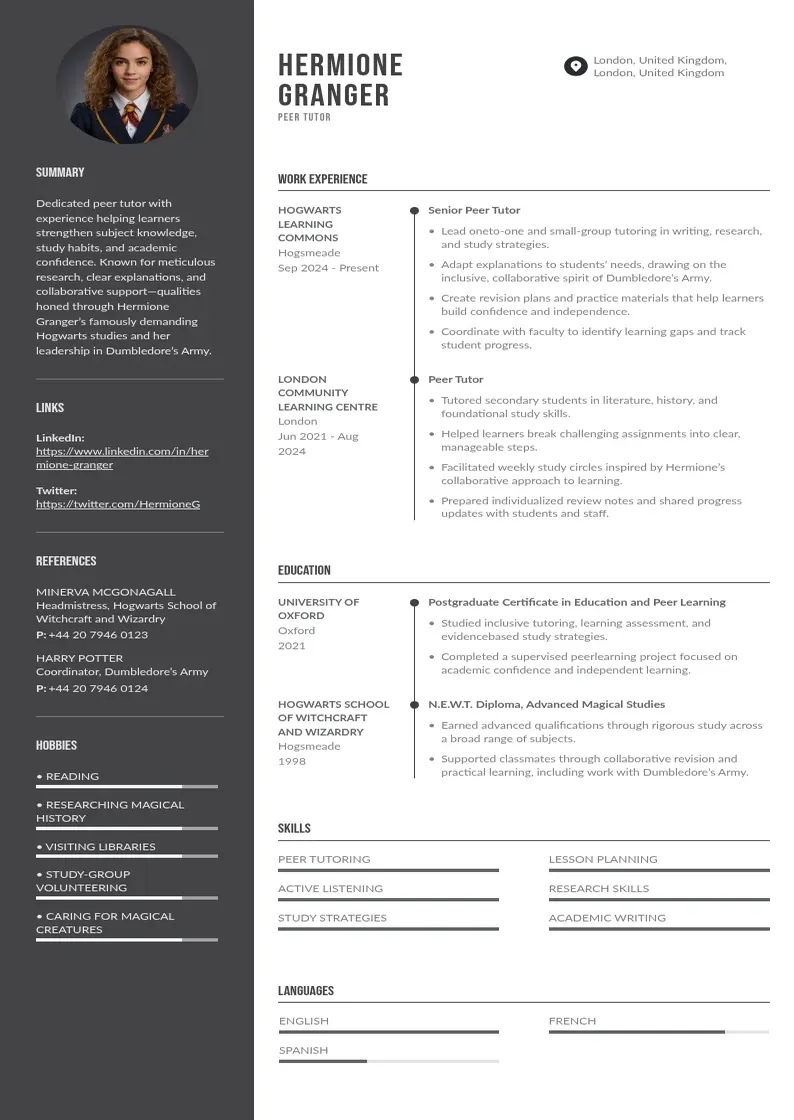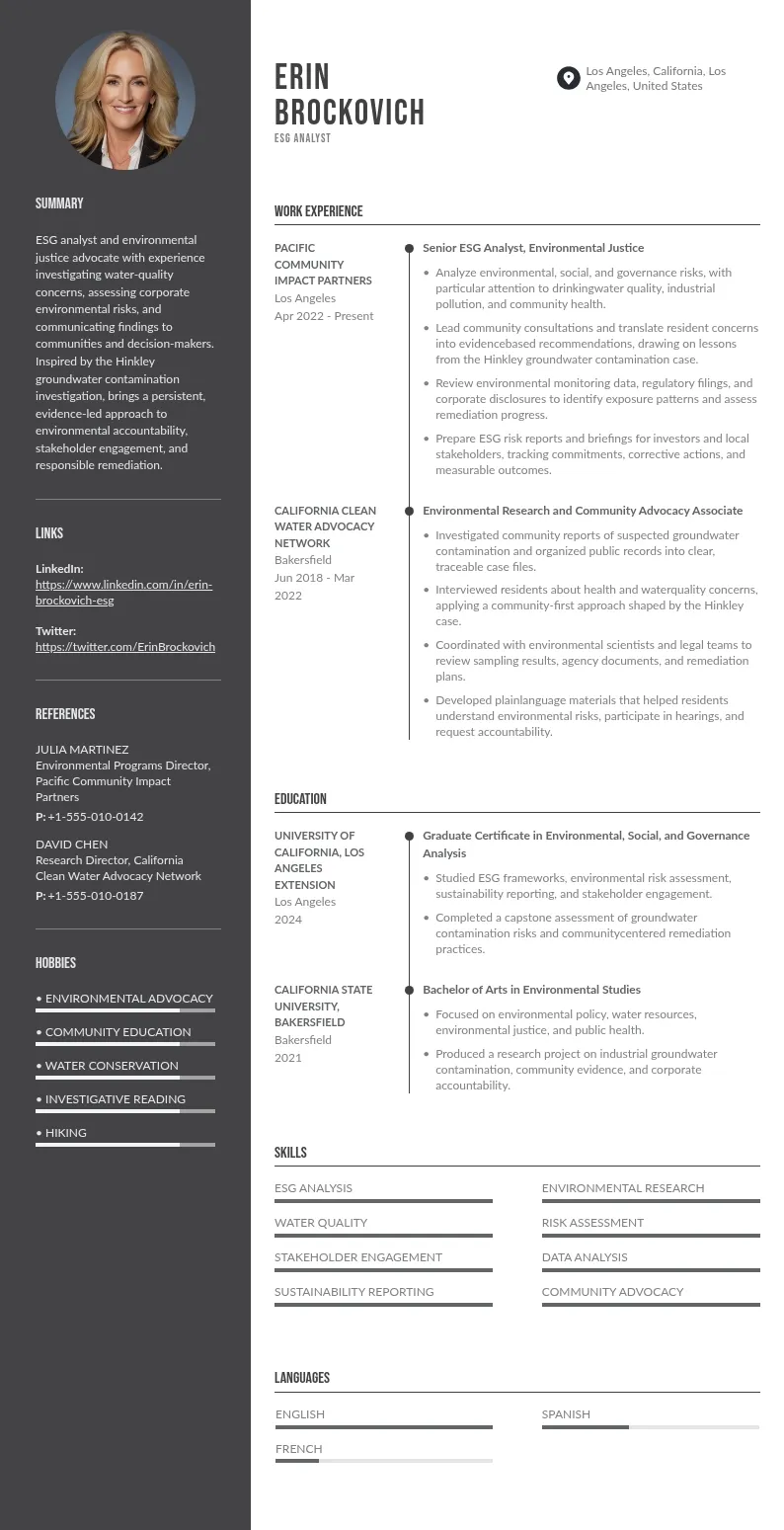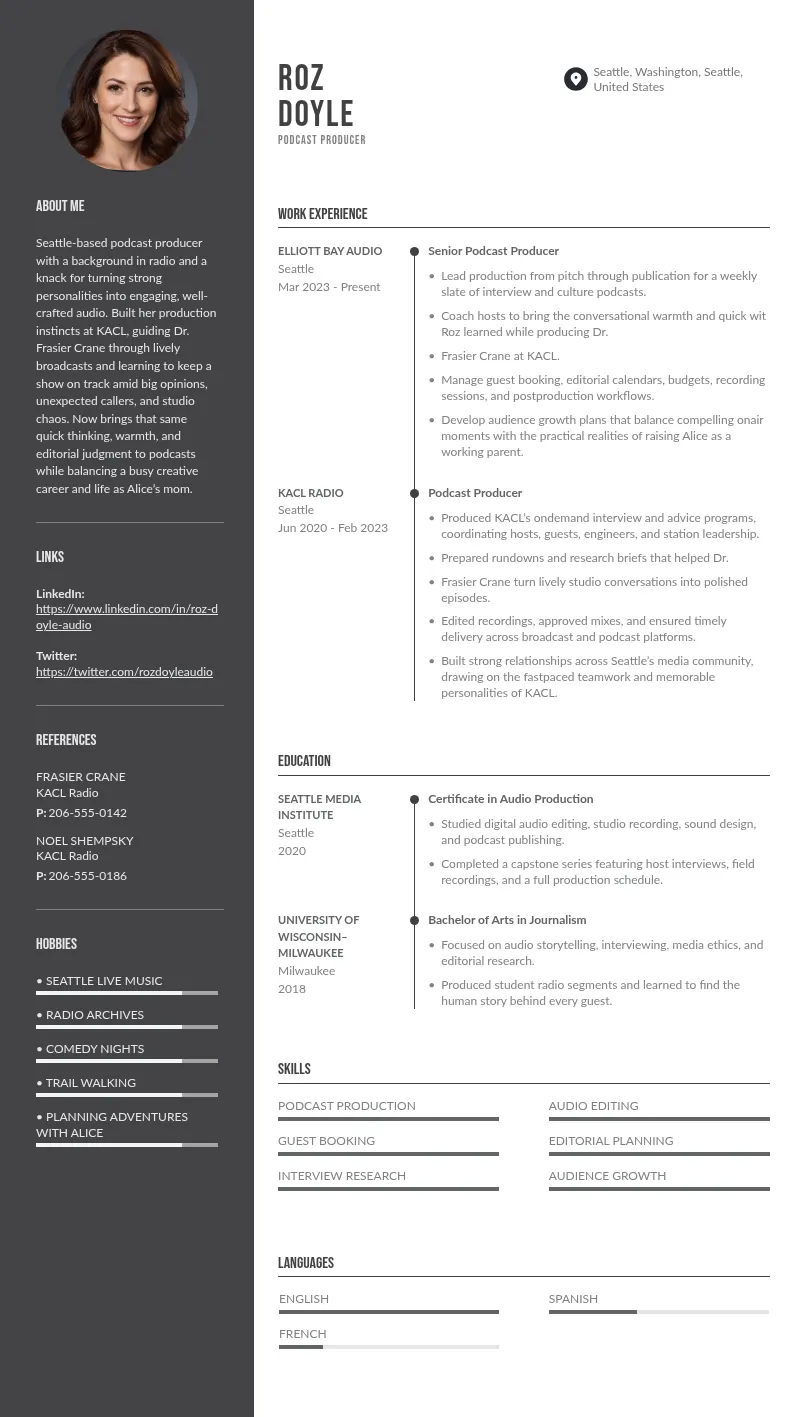


A podcast episode may involve several people, from the host and researcher to the audio editor and producer. A podcast producer resume should make your role in that process clear. If you developed the story, prepared guests, managed recordings, or edited the final episode, show how those responsibilities fit the job you want.



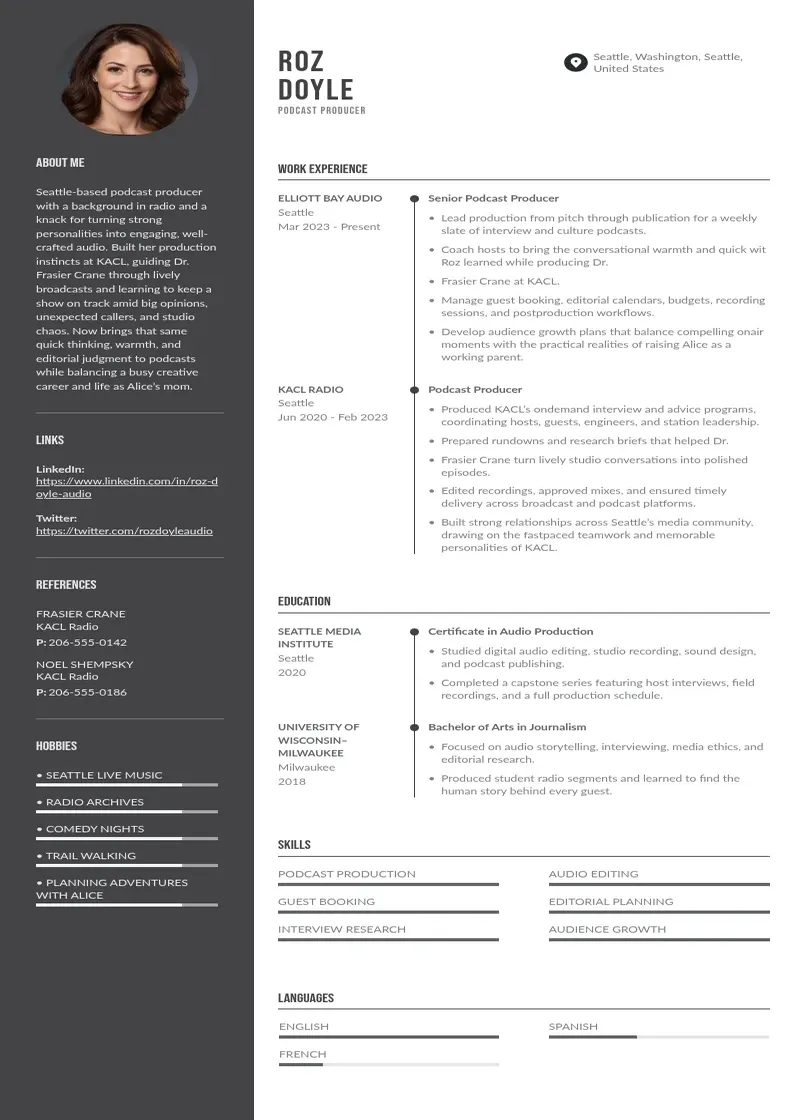
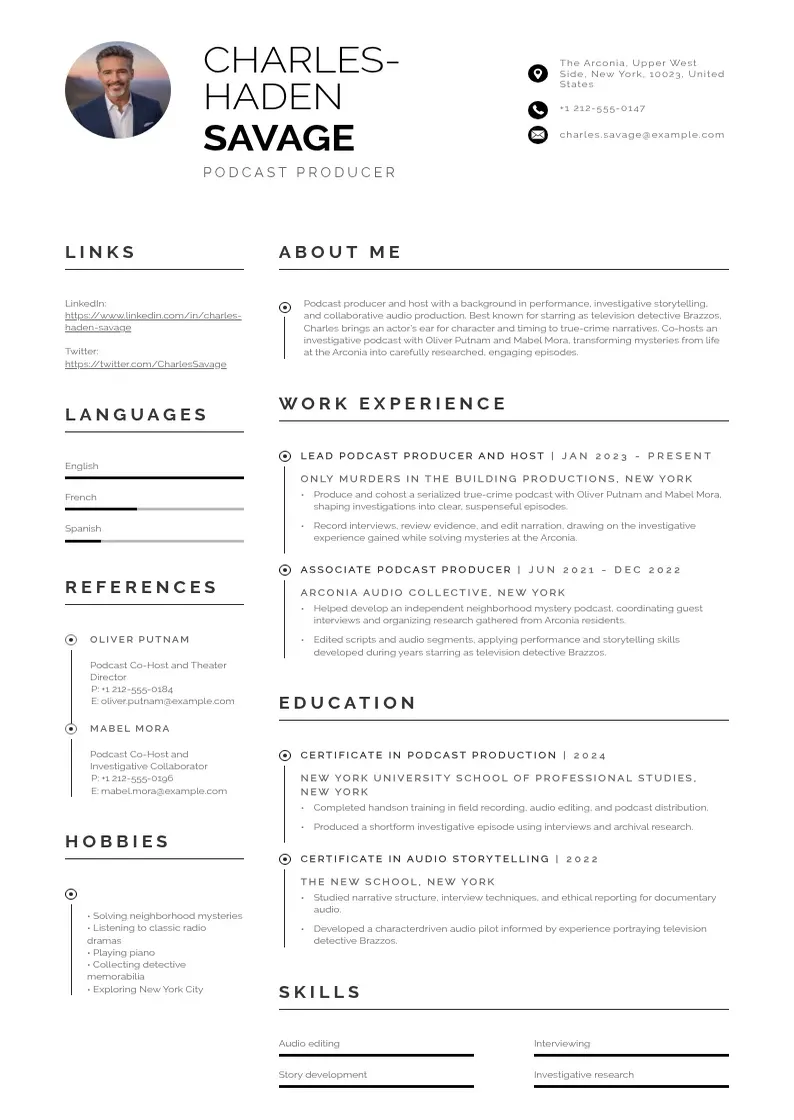
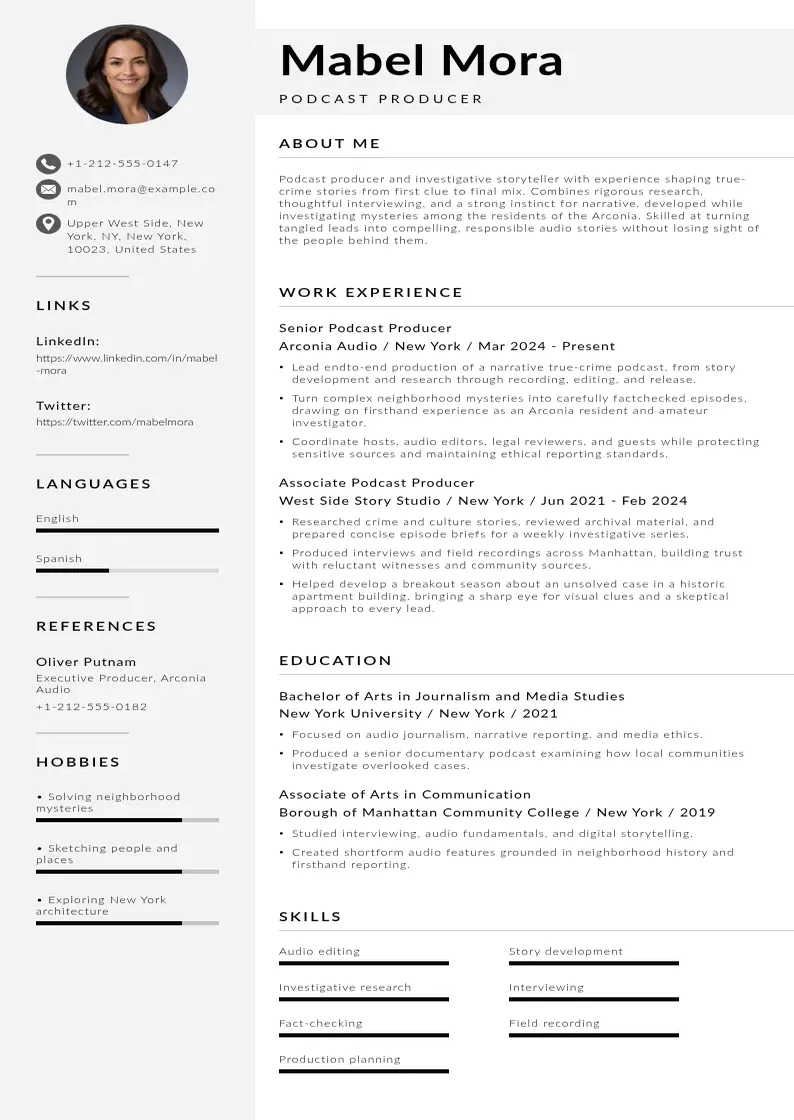
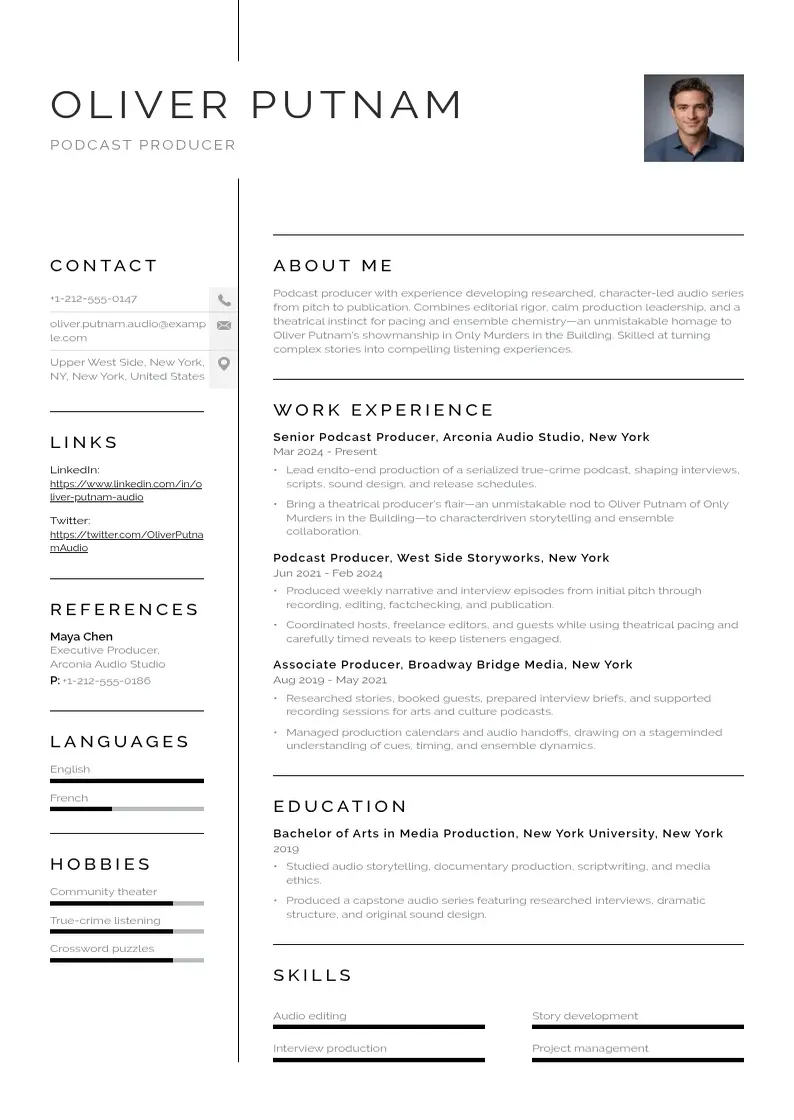
The right experience to emphasize depends on the vacancy. Editorial roles may value research and story development, while audio-focused positions look for recording and editing skills. Production management jobs may require scheduling, budget control, and team coordination. The examples below show how to present your experience at different career stages.
These examples cover entry-level, mid-level, and senior positions. Choose the one closest to your experience and adjust the details to reflect the work you have actually completed.
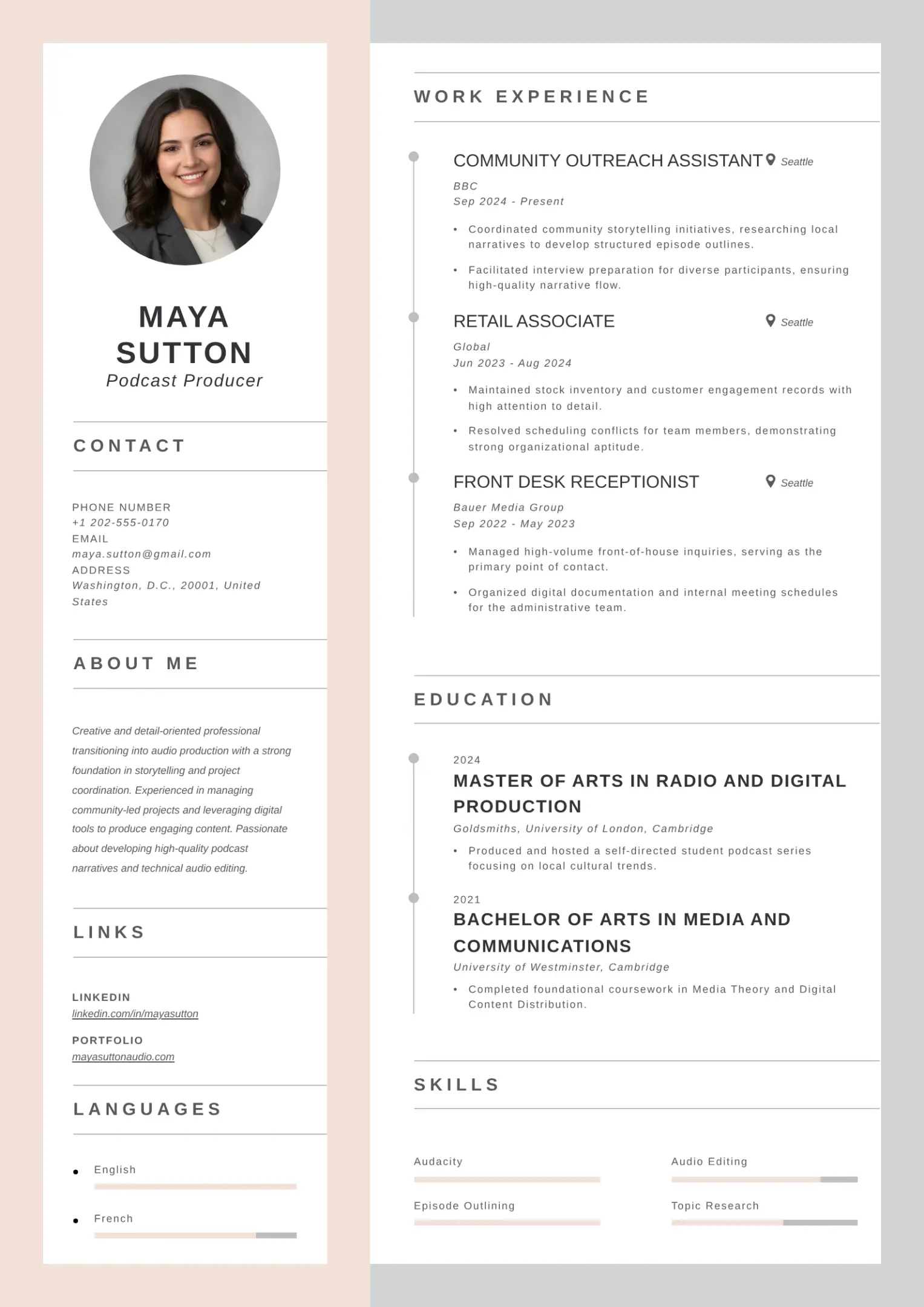
Your first production credit may come from a student show or a podcast you made yourself. This example is for applicants whose practical experience comes mainly from those projects.
In your project section, you could describe the parts you handled: researching topics, preparing episode outlines, recording, or editing conversations. Name the software you used and, if possible, link to a finished episode.
What to Highlight:
If you have worked on a recurring show, your experience extends beyond individual episodes. This example focuses on the production stages you handled regularly and how you worked with hosts, editors, and other contributors.
Describe your responsibilities within that team, such as preparing guests, editing recordings, or managing publication. An episode count or release schedule can help show the scale of your work, even when audience figures are unavailable.
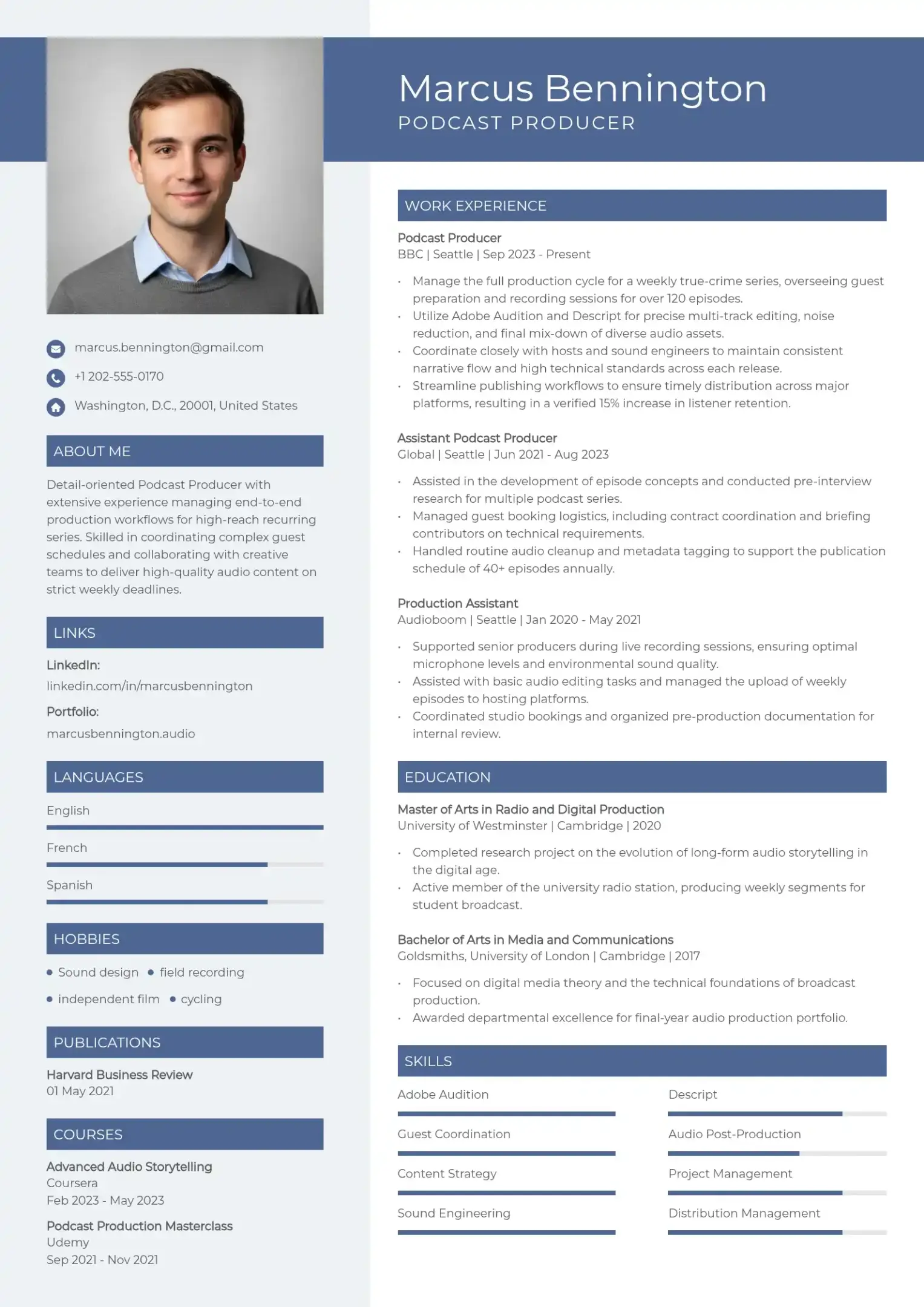
What to Highlight:
When you manage several shows or a production team, hands-on audio work is only part of your experience. This example focuses on decisions about budgets, staffing, schedules, and editorial direction.
Choose a decision that shows how you managed competing demands. If a recording delay threatened publication, for example, explain how you reassigned work or adjusted the schedule, then state the outcome you can verify.
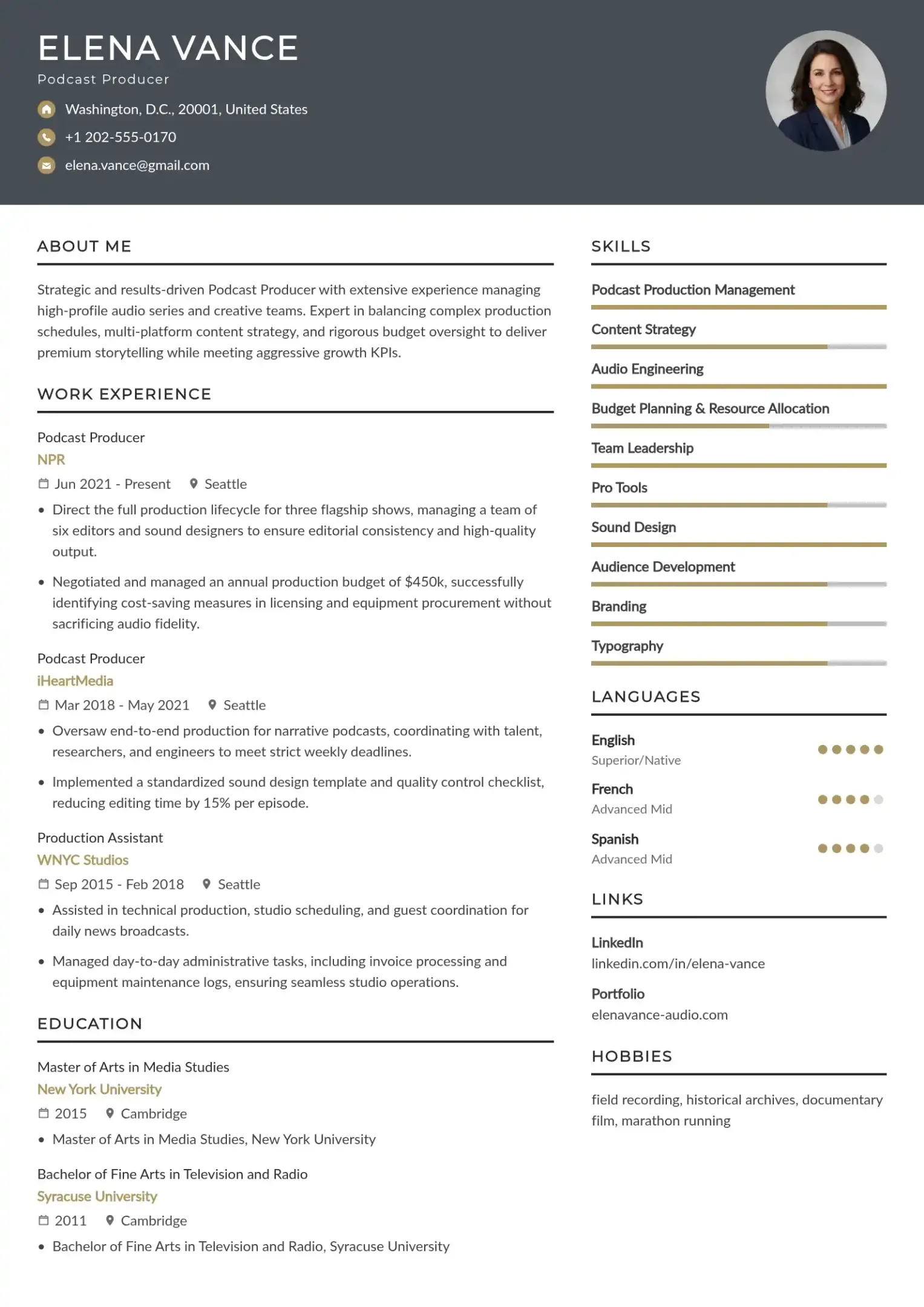
What to Highlight:
A podcast producer may work on research, recording, editing, scheduling, and distribution. However, not every vacancy requires the same combination of skills. Review the job description and select those that match your experience.
The tools you list should reflect your actual production workflow. Mentioning software is more useful when you can explain what you used it for.
Adobe Premiere Pro may also be relevant if you work on video podcasts. Avoid filling your resume with tools you have only tried briefly. Focus on the software you can use confidently and that the employer needs.
Your resume should connect your experience to the production responsibilities in the vacancy. A broad description of your work is less useful than a clear account of the episodes, deliverables, and tasks you handled.
Podcast producer responsibilities vary between organizations. Before writing your experience section, identify what the employer expects you to handle.
If you have limited professional experience, include relevant freelance projects, internships, personal podcasts, or academic productions. Label these accurately so employers can distinguish independent work from paid employment.
A resume bullet should identify the work you performed and the production task involved. Avoid broad statements such as “Responsible for podcast production.” They do not explain which part of the process you handled.
Illustrative wording—use only details that match your work:
 Too broad:
 More specific:

If you also handled publication, you could add:
If your contribution was limited to editing, keep the claim focused on editing. Do not imply that you managed the complete production process when other team members handled planning or publishing.
Action verbs such as produced, edited, researched, coordinated, developed, and managed can help describe your work. Choose the verb that accurately reflects your responsibility.
Employers may want to know how much work you handled and whether you delivered it consistently. Numbers can help, but they are not essential for every resume bullet.
Consider including details such as:
For example, if the episode count and responsibility are accurate, you could write:
For audience growth, identify the metric, measurement period, and source when available. A podcast's overall growth should not be presented as your individual achievement unless your work directly contributed to it.
If you do not have reliable performance data, describe the project scope, deliverables, or responsibilities instead. Preparing 15 interview briefs or editing a series of episodes can demonstrate experience without an invented percentage.
Podcast producers may work across multiple shows, freelance projects, and production teams. Organize your experience so employers can identify the show, its format, and your contribution.
For each relevant project, include:
Label an independent podcast as a personal project rather than employment. For team productions, explain which tasks you handled. For instance, you may have prepared interviews and edited dialogue without managing the publishing schedule.
Your portfolio should let employers hear the quality of your work. Choose a few episodes that fit the role and explain what you handled on each one.
A useful portfolio entry includes the episode title, show format, your contribution, and a timestamp when your work appears within a longer recording. Check that each link opens without requiring an account.
You can use this format:
For an audio editing role, a polished interview segment may be more relevant than a full episode. For an editorial position, a sample that demonstrates research, story development, or interview preparation may be a better choice.
The credits should support the claims in your resume. A few relevant samples with clear descriptions are more useful than a long list of links without context.
Your podcast producer resume should show the work behind each episode. Focus on the responsibilities you handled, the shows you contributed to, and the samples that demonstrate your skills.
Build your podcast producer resume to organize your experience and prepare a clear application for your next production opportunity.
Our collection of expertly designed cover letter templates will help you stand out from the crowd and get one step closer to your dream job.