


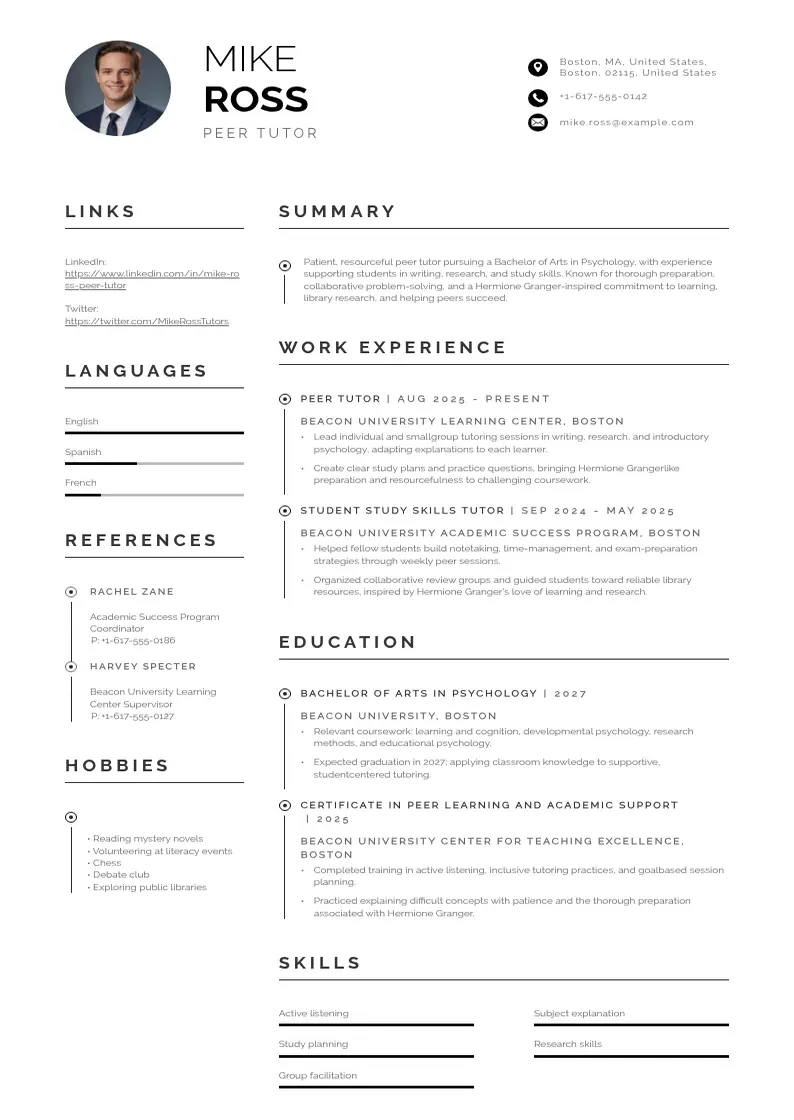
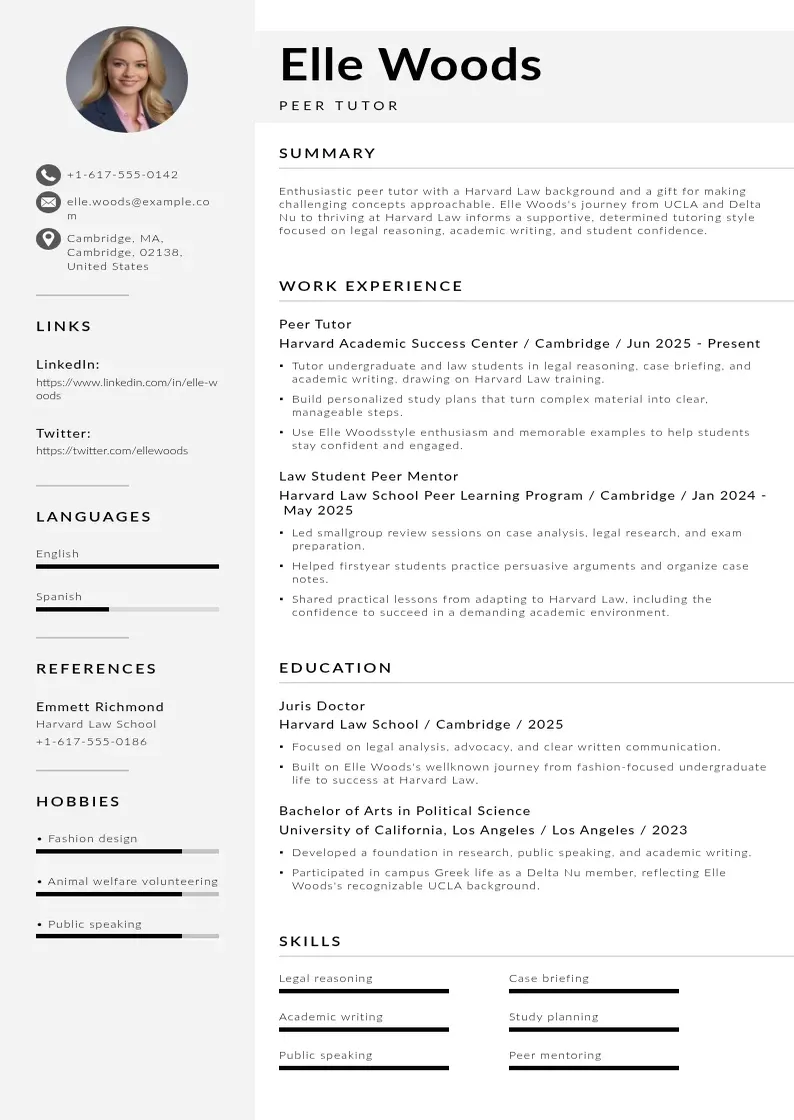
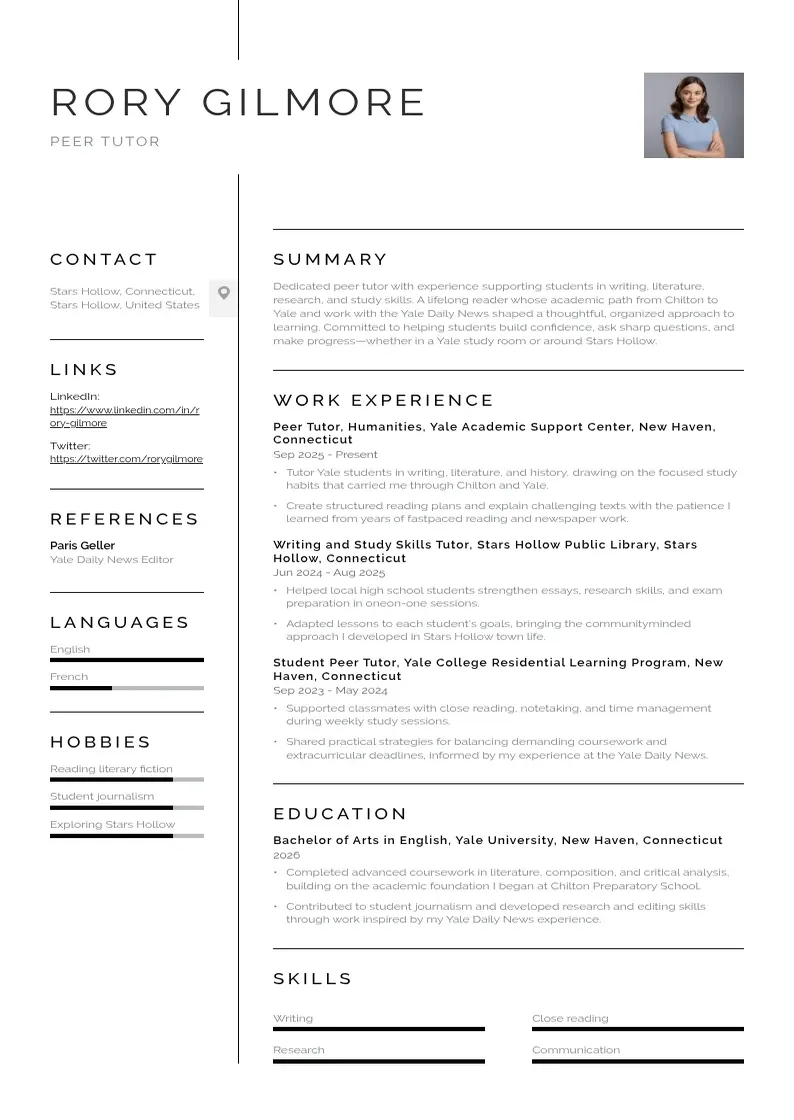
If two examples fit your background, look at what the job posting asks you to do. A college student applying to tutor Calculus II can use the math example to highlight that course. The same student applying to a writing center might choose the writing and English example and describe how they helped a classmate revise a draft.
A first tutoring application can draw on time spent helping classmates study. Elena’s resume brings that experience together with her work at a library and a summer camp.
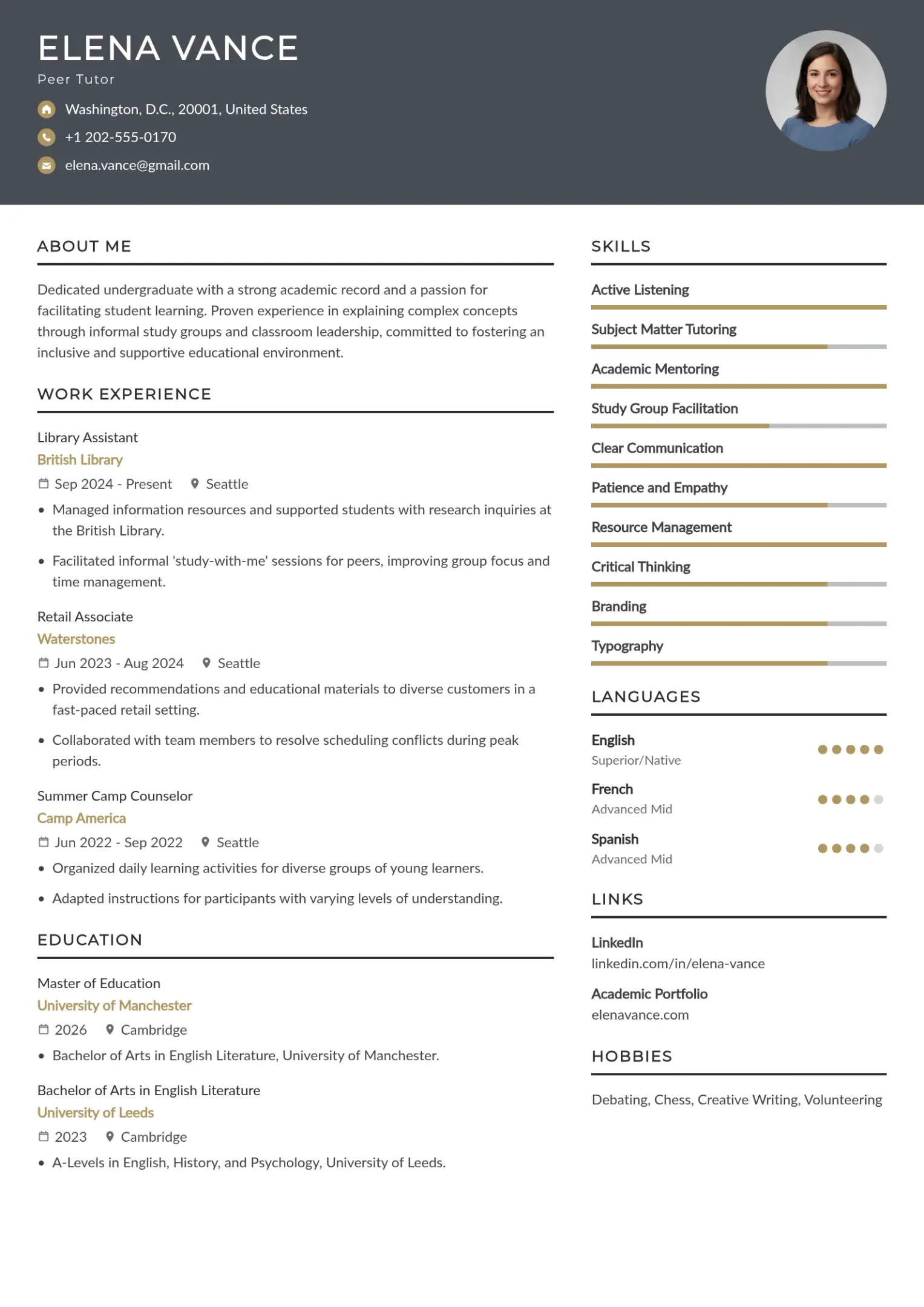
Experiences that count here:
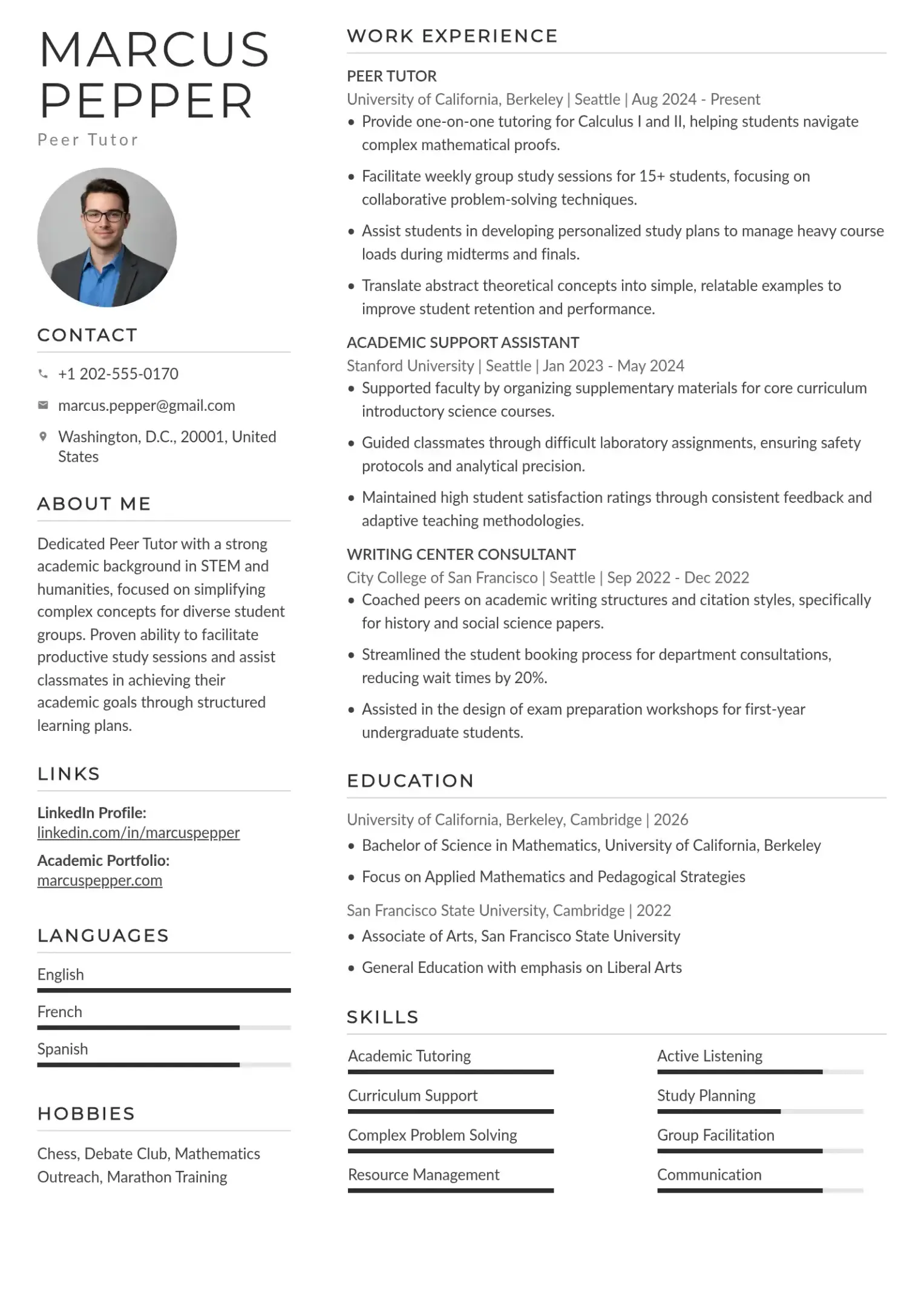
Marcus’s resume fits a campus tutoring job where the same student tutor might take individual calculus appointments and run a weekly study group.
What to Highlight:
If a coordinator needs coverage for Calculus II next semester, the course name in Marcus’s first bullet answers an immediate question. The next bullet tells them he has also led a group of 15 or more. When applying to your own college, use the course title students see in the catalog so the coordinator can match you to the right section.
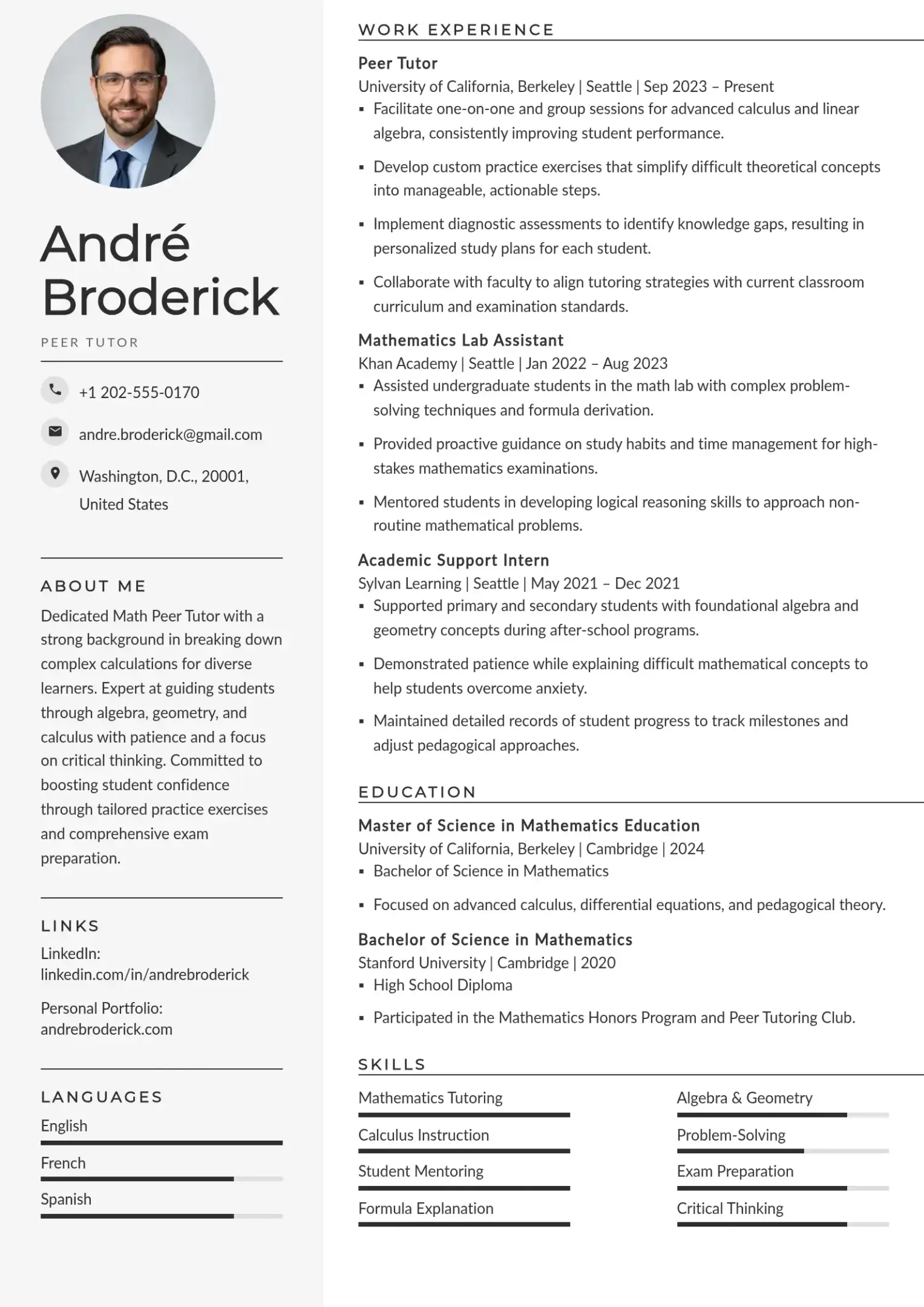
André’s resume follows his progression from after-school algebra and geometry to tutoring undergraduates in advanced calculus and linear algebra.
How do you decide what a student should practice next?
André’s current role mentions diagnostic assessments and exercises he writes himself. In your own resume, you could connect those details in one bullet by naming a mistake you noticed and the problem you chose for the student to try next.
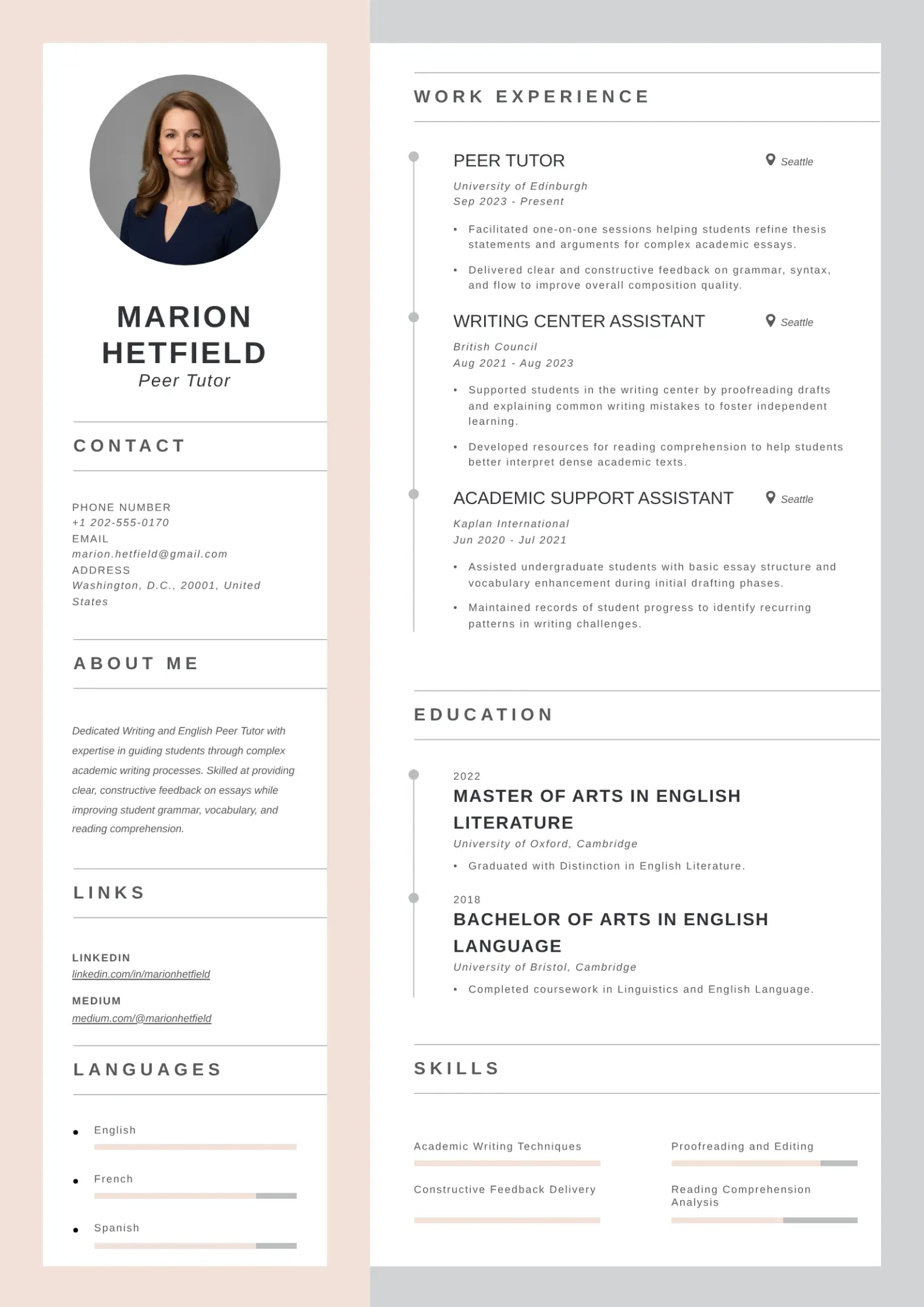
Marion’s resume would suit a writing center where students bring essays at different stages. Her experience covers early outlines, thesis statements, and revisions at the sentence level.
Two phrases from Marion’s resume capture different appointments:
If most of your appointments happened at one of those stages, give that work the first bullet under your tutoring role.
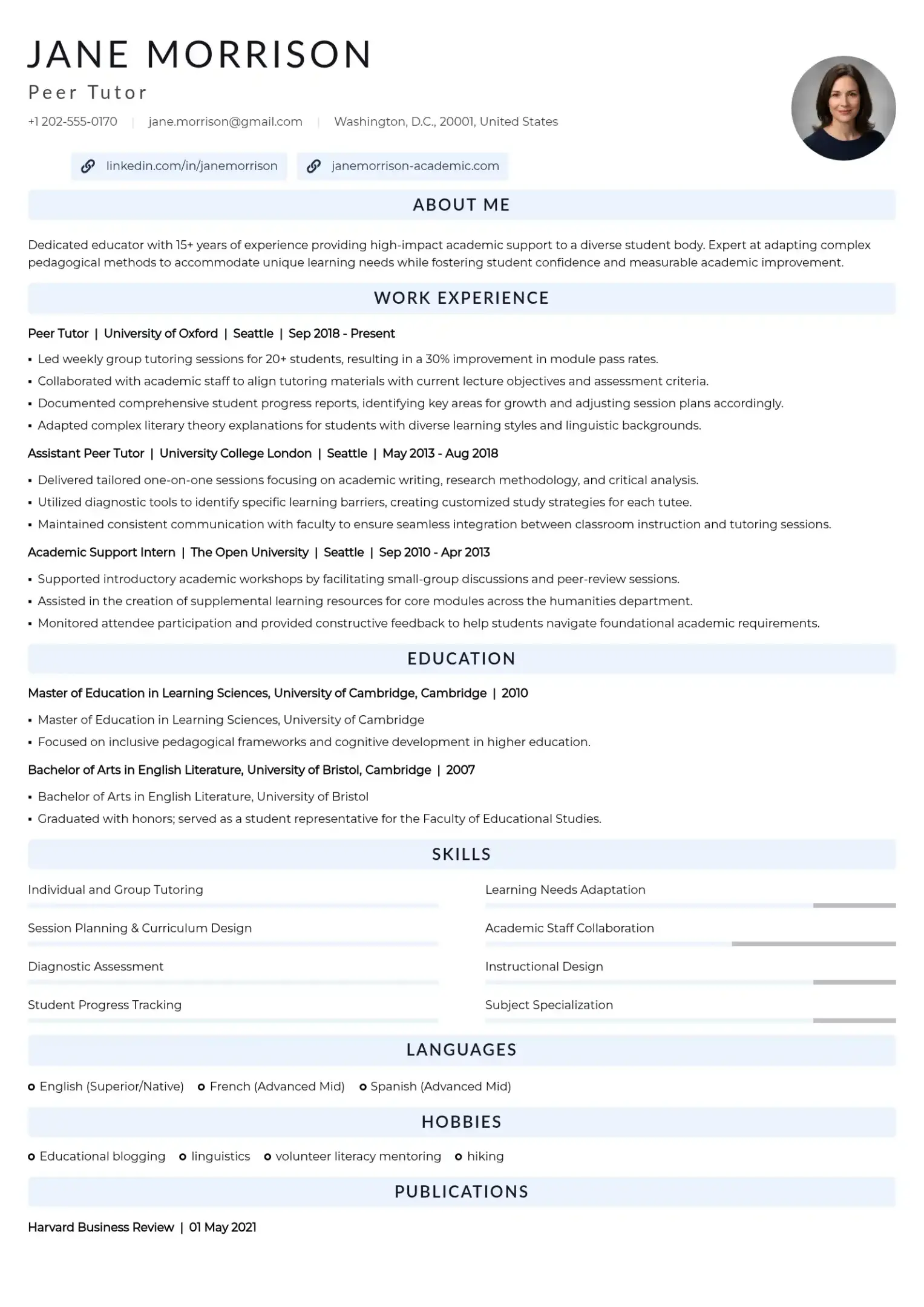
Jane’s resume shows how her responsibilities grew from helping with small-group workshops to leading weekly sessions and adjusting them as students progressed.
How your responsibilities grew:
Carnegie Mellon’s peer tutor job description emphasizes course concepts and problem-solving strategies. Georgetown’s Writing Center describes extended conversations with writers about their work. For a course-based role, name the class you can cover. For a writing center, describe a conversation that helped a student decide what to revise.
Your subject knowledge is an important part of your tutoring profile. Identify the courses, academic subjects, or topics you can confidently support.
Consider including:
For example, a mathematics peer tutor can mention algebra, calculus, and statistics rather than using a broad description such as strong numerical abilities.
Include relevant experience even if it did not come from a paid position. Academic mentoring, volunteer tutoring, study groups, and supervised learning programs can demonstrate your ability to support students.
However, distinguish between informal academic assistance, supervised training, volunteer experience, and paid tutoring. Clearly identify the setting and responsibilities you handled.
A reverse-chronological format works well if you have previous tutoring or academic support experience. It places your most recent responsibilities first.
A hybrid format can be useful for students with limited employment history who want to emphasize subject knowledge, academic projects, and relevant skills.
Use two or three sentences to introduce your academic background, tutoring abilities, and relevant experience. Mention the subjects you can support and the type of academic guidance you provide.
Example from Marcus’s experience
Peer tutor for Calculus II. Meet with students one-on-one and lead a weekly study group of 15 or more students.
Use concise bullet points to explain your responsibilities. Start with action verbs such as assisted, explained, facilitated, guided, reviewed, and organized.
Instead of writing "Helped students with math," provide a more specific description:
"Explained algebraic equations through step-by-step examples and guided students through practice problems."
Education is particularly important for peer tutoring positions because many programs recruit students with demonstrated subject knowledge.
List your degree, institution, relevant coursework, and academic achievements. Include tutor training or certifications only if you have completed them.
Choose skills according to the subjects you intend to tutor and the responsibilities mentioned in the job description.
Your resume can tell a tutoring coordinator which courses you’ve completed. If the posting also asks for an unofficial transcript, check that your final grade appears on it before you upload it. If you’re still taking the course and registration for next semester’s tutors closes before grades are posted, ask the coordinator whether you can apply now and send the grade later.
Our collection of expertly designed cover letter templates will help you stand out from the crowd and get one step closer to your dream job.