ESG Analyst Resume Examples for Research and Reporting Roles
cta

ESG Analyst Resume Examples for Research and Reporting Roles

For a corporate reporting role, show which sustainability data you collected, how you checked it, and what disclosure you supported. For an investment role, show which companies or sectors you researched, the risks you examined, and how you presented your findings. Choose the experience that matches the vacancy, then name your contribution, the tools you used, and the limits of your responsibility.

Last update:
18/11/2026

Best Resume Examples in This Guide

No items found.
Resume 1
Resume 1
Resume 2
Resume 3
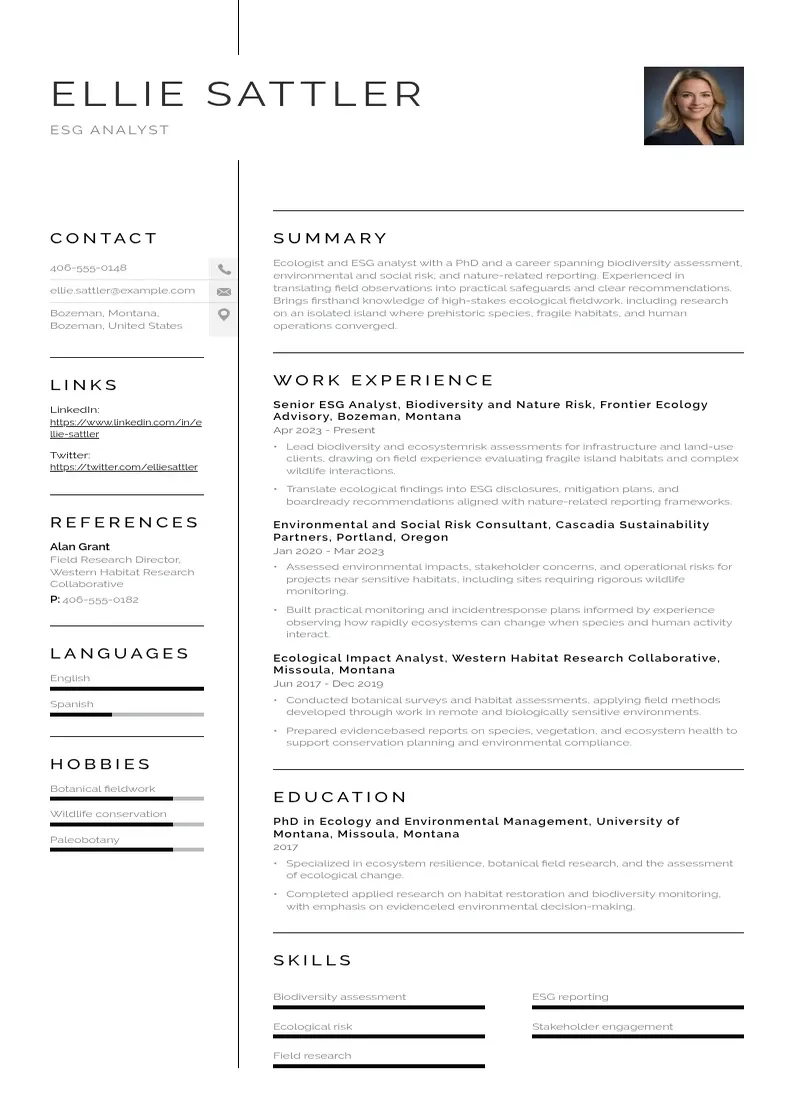
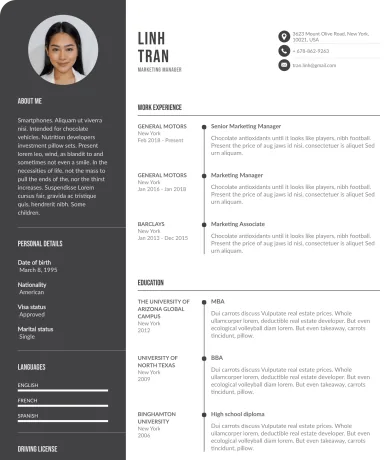
two column esg-analyst-resume resume example
Budapest
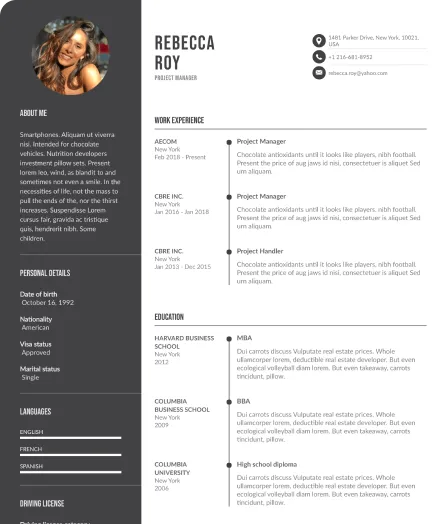
professional  resume template
Perth
modern  resume template
Rotterdam
simple  resume example
Chicago

Resume Guide
Content Score
of your resume
Get My Resume Score

The examples below cover general ESG research, entry-level applications, and sustainability reporting.

2 ESG Analyst Resume Examples


1. Entry-Level ESG Analyst Resume Example

Candidates without professional ESG experience can use academic projects, internships, and research assignments to demonstrate their knowledge.

Describe the research question, method, and output. For example, explain how you used Excel to compare company disclosures or prepared a report on emissions and waste management. Keep academic work separate from paid employment.
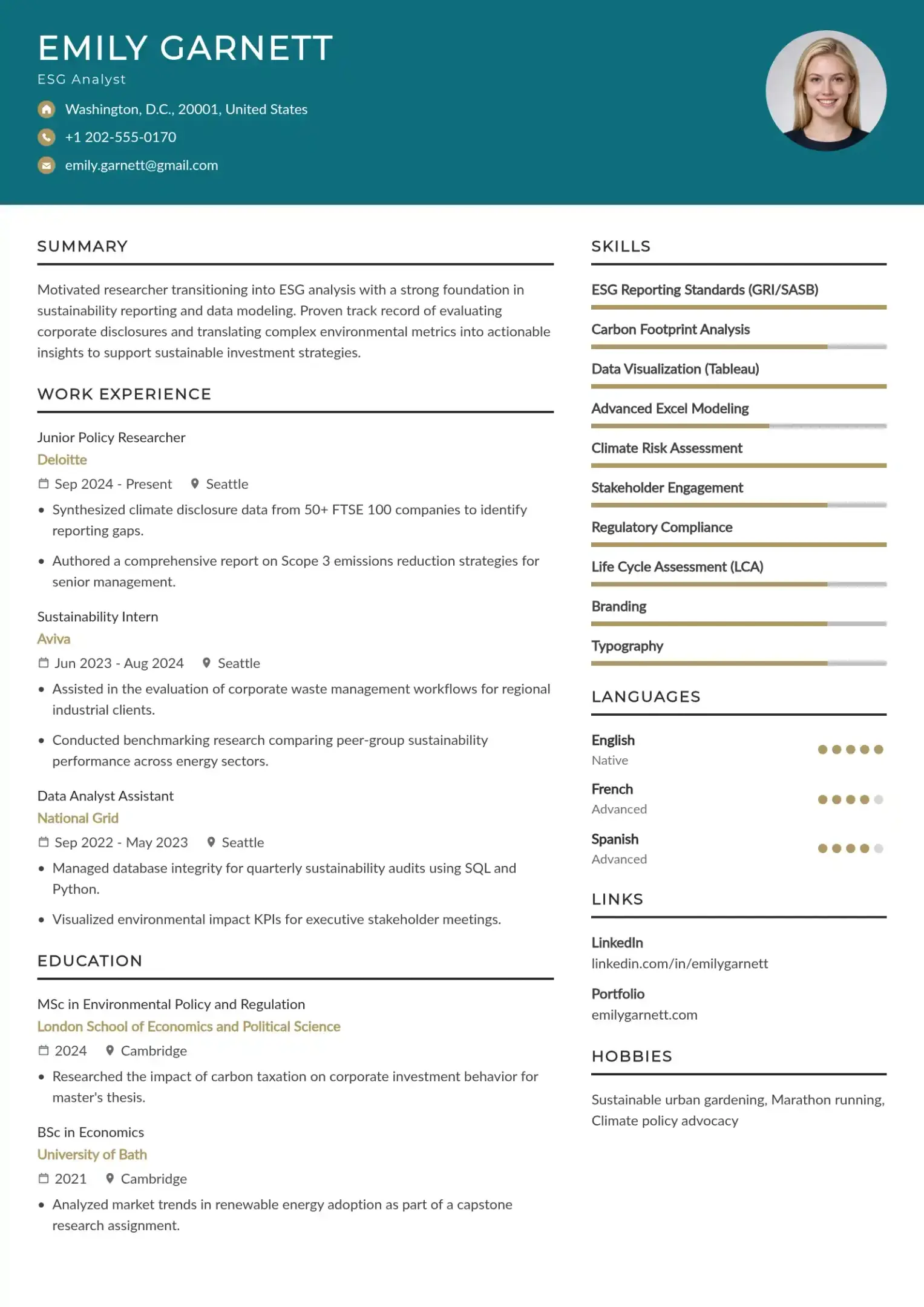
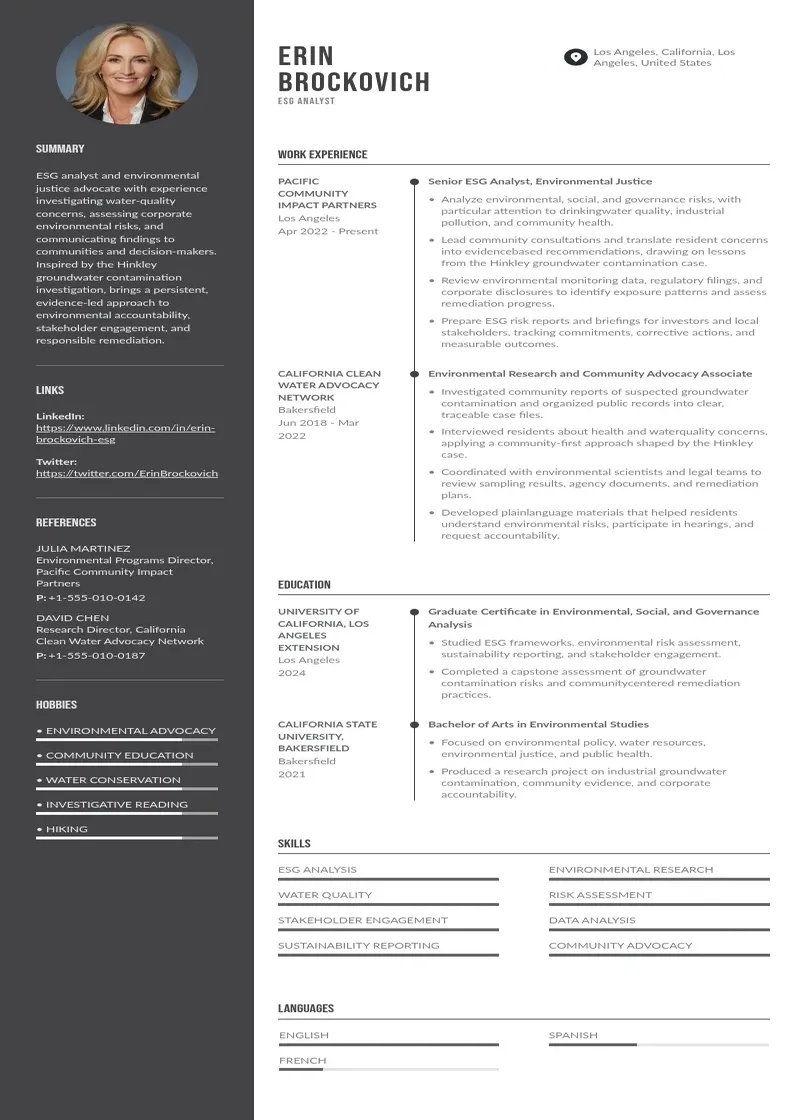
Entry-Level ESG Analyst Resume Example

2. ESG Reporting Analyst Resume Example

An ESG Reporting Analyst resume should demonstrate experience supporting sustainability data collection, validation, and disclosure preparation.

Mention the reporting tasks you handled, such as gathering information from departments, checking emissions data, or maintaining documentation. If you have worked with GRI or SASB, explain how you used the standards rather than simply listing them.
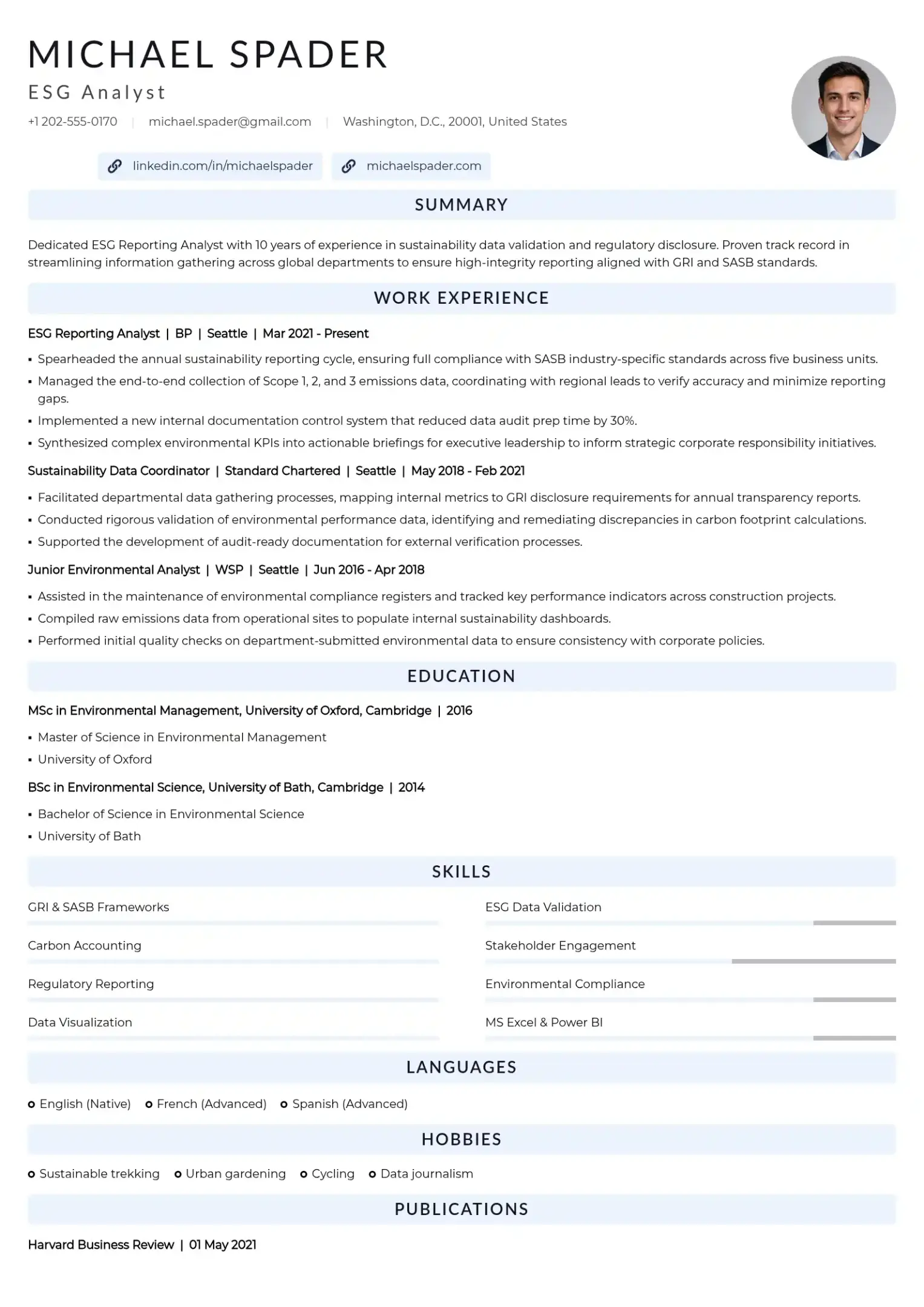
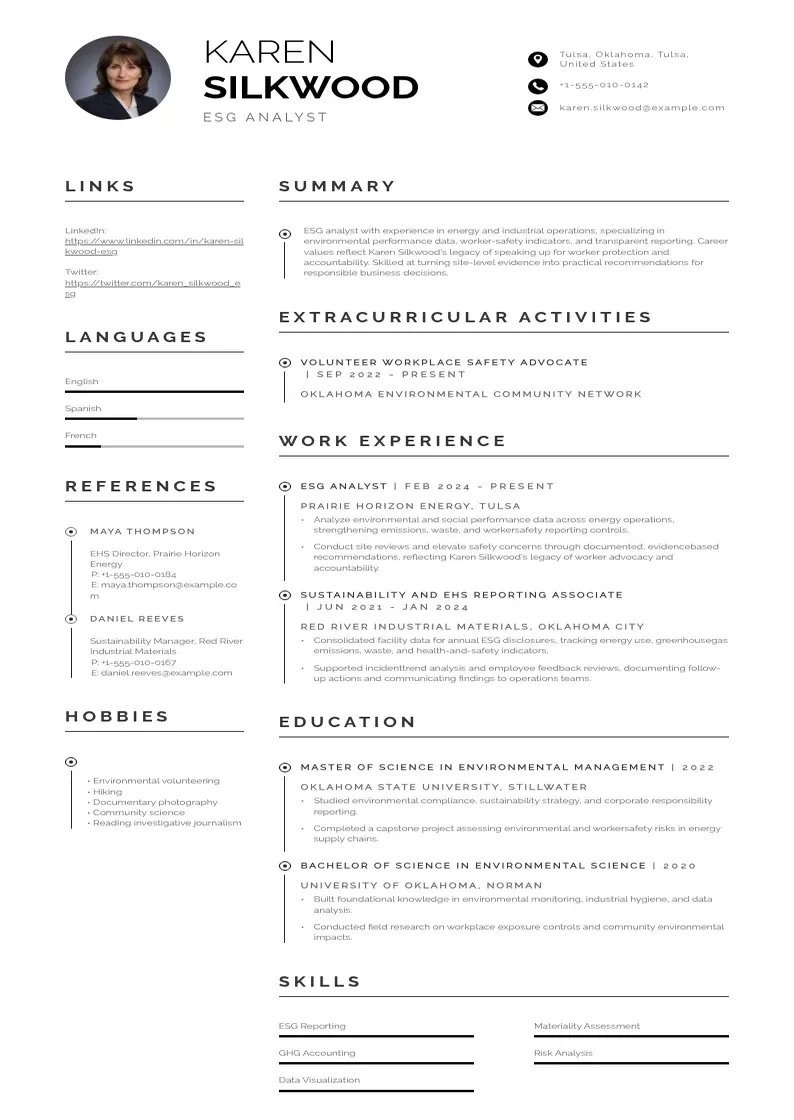
ESG Reporting Analyst Resume Example

What Should an ESG Analyst Resume Include?


Include the sections most relevant to your experience and the job description:

  • Contact information: Name, phone number, professional email, location, and LinkedIn profile.
  • Professional summary: Briefly describe your ESG research, analytical strengths, and sustainability knowledge.
  • Work experience: Highlight ESG data analysis, corporate disclosure research, or reporting responsibilities.
  • Skills: Include relevant research, reporting, analytical, and technical skills.
  • Education: List your degree and institution.
  • Certifications and projects: Add relevant credentials, internships, or academic research.
    ‍

Experienced candidates should prioritize professional accomplishments, while entry-level applicants can emphasize projects and internships.

How to Write an Effective ESG Analyst Resume


1. Match Your Resume to the ESG Analyst Job Description

Review the job description to identify whether the role focuses on reporting, investment research, ESG ratings, or risk analysis.

Job Requirement Relevant Resume Evidence
Sustainability reporting Data validation and disclosure preparation
ESG investment research Company research and ESG risk assessment
ESG ratings Indicator review and corporate disclosure analysis
Climate risk research Emissions data and environmental risk analysis
Social and governance research Workforce disclosures and board composition

For investment-focused roles, explain how your research supported company or sector assessments. For reporting positions, emphasize data accuracy, documentation, and disclosure requirements.

2. Show the Data, the Check, and the Output

ESG analysts often review information from corporate reports and internal datasets. Explain what you assessed, how you checked it, and what you documented.

Instead of:

“Responsible for ESG data analysis.”


Use a more specific example:
Copy

“Compared reported Scope 1 and Scope 2 emissions across company disclosures, flagged differences in reporting periods and organizational boundaries, and recorded comparability limits in the research workbook.”


This bullet identifies the data, the analytical check, and the output. If you only identified discrepancies, do not claim that you resolved them or reduced emissions.

3. Highlight Relevant ESG Frameworks

Depending on the role, knowledge of sustainability standards may strengthen your resume.

  • GRI Standards: Focus on an organization's impacts on the economy, environment, and people.
  • SASB Standards: Provide industry-specific disclosure topics and metrics relevant to investors.
  • IFRS Sustainability Disclosure Standards: Address sustainability-related risks and opportunities that could affect an organization's prospects.
  • Greenhouse Gas Protocol: Relevant to greenhouse gas emissions accounting.
    ‍

Connect each framework to work you actually performed, such as reviewing disclosures or mapping information to reporting requirements. Describe coursework as academic knowledge rather than professional implementation.

Sources: GRI Standards | IFRS Sustainability Standards

4. Write Specific, Evidence-Based Achievements

A strong resume bullet explains what you did, how you did it, and what you produced.

Use this structure:

Action verb + task + method or scope + verified outcome


Examples:
Copy
  • Reviewed sustainability disclosures and documented missing ESG indicators for further research.
  • Consolidated environmental data and performed validation checks before reporting.
  • Prepared ESG research summaries to support comparisons of corporate sustainability performance.

Include genuine metrics, such as the number of companies reviewed or reports prepared, when you can verify them. Avoid unsupported percentages or claims about business impact.

5. Include Social and Governance Research

ESG analysis also covers social and governance factors. Relevant research may involve workforce disclosures, labor practices, board composition, or corporate governance policies.

For example:
Copy

“Reviewed publicly available workforce disclosures and documented differences in employee-related indicators for comparative analysis.”


Mention the sources and research output where relevant. Avoid claiming that you independently verified company practices unless you did.

ESG Analyst Resume Skills to Include


Select skills that match the vacancy and reflect your experience.

Skill Category Relevant Skills
ESG Research Corporate disclosure analysis, ESG data collection, sustainability research
Data Analysis Excel, data interpretation, quantitative analysis, data validation
Sustainability Reporting ESG reporting, performance analysis, reporting documentation
Risk Analysis ESG risk assessment, environmental risk research, governance analysis
Technical Skills Microsoft Excel, Power BI, Tableau
Communication Analytical report writing, research documentation, stakeholder communication

Depending on the role, knowledge of climate risk, energy efficiency, waste management, or environmental impact assessment may also be useful.

Common ESG Analyst Resume Mistakes to Avoid


Avoid these common mistakes when preparing your ESG analyst resume:

  • Listing ESG frameworks without practical context: Mentioning GRI, SASB, or IFRS Sustainability Disclosure Standards is not enough. Explain how you used them in research, reporting, or academic projects.
  • Using vague job descriptions: Statements such as "Responsible for ESG analysis" don't explain your contribution. Specify the data you reviewed, the methods you used, and the findings you documented.
  • Including unsupported achievements: Avoid adding percentages or performance improvements that you cannot verify. Use measurable evidence, such as the number of company disclosures reviewed or reports prepared.
  • Ignoring social and governance factors: ESG covers environmental, social, and governance issues. Focusing only on carbon emissions and sustainability reporting may leave out relevant experience in workforce disclosures, labor practices, and corporate governance.
  • Using the same resume for every ESG role: ESG research, investment analysis, and sustainability reporting require different skills. Tailor your resume to the responsibilities and requirements of each vacancy.
  • Overloading the resume with technical keywords: Include relevant terms such as ESG risk assessment, sustainability reporting, and data validation naturally. Avoid listing tools, frameworks, or skills you cannot confidently discuss in an interview.
    ‍

Conclusion


A strong ESG analyst resume demonstrates how you research sustainability issues, evaluate data, and communicate findings. Match your experience to the role, use specific examples, and keep every achievement accurate and verifiable.

Frequently Asked Questions

Should I include ESG certifications on my resume?

Include relevant certifications that you have earned. The CFA Institute Sustainable Investing Certificate, formerly the Certificate in ESG Investing, may be relevant to investment-focused roles. The GARP Sustainability and Climate Risk (SCR) Certificate may support climate risk applications. If a certification is in progress, label it clearly.

Official CFA Institute credential information

How do I write an ESG analyst resume with no experience?

Use relevant academic projects, internships, and research assignments. Explain the data you collected, the analysis you performed, and the findings you documented. Keep academic work separate from professional employment.

What skills are important for an ESG analyst resume?

Important skills include ESG research, data validation, sustainability reporting, corporate disclosure analysis, risk research, Microsoft Excel, and analytical report writing. Choose skills based on the job description.

What keywords should I include in an ESG analyst resume?

Include keywords that reflect the role's responsibilities, such as ESG data analysis, sustainability reporting, environmental risk assessment, corporate governance, climate risk, materiality assessments, and regulatory compliance. Use relevant terms naturally throughout your resume, particularly in your professional summary, work experience, and skills sections.

How can I make my ESG analyst resume stand out?

Focus on measurable results and practical examples rather than listing responsibilities alone. Highlight experience with ESG frameworks such as GRI, SASB, and TCFD, along with data analysis, sustainability research, and reporting projects. Where possible, quantify improvements in reporting accuracy, data quality, or risk assessment.

About the author
Abhay Singh Bhadouria
LinkedIn ↗
Generalist content writer with years of experience in covering career topics and job applications, with practical insights on CVs, cover letters, and the application process.

Create your resume with the best templates

Resume Guide
Use this example
Content Score
of your resume
Get My Resume Score

Create your resume in 15 minutes

Our collection of expertly designed cover letter templates will help you stand out from the crowd and get one step closer to your dream job.

Create my resume