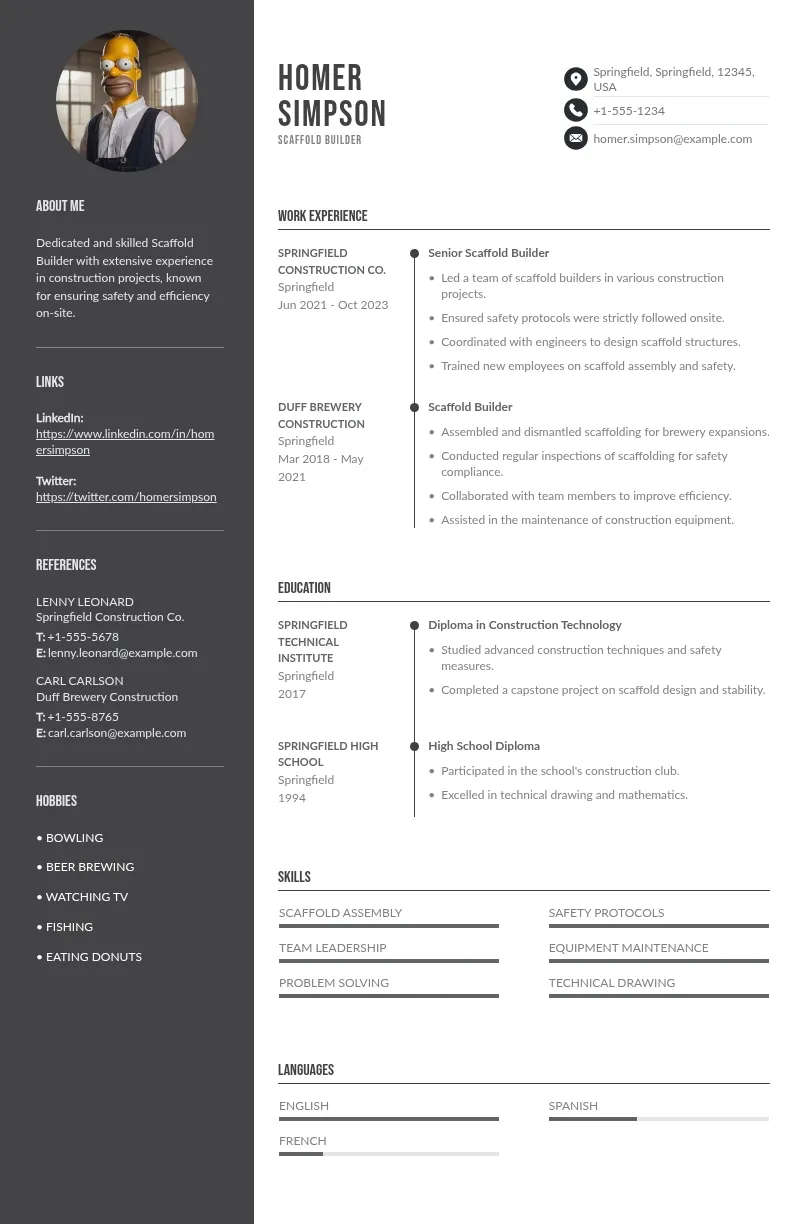


A strong scaffold builder resume should make your construction experience, scaffold assembly skills, familiarity with scaffolding equipment, safety knowledge, and technical abilities easy for employers to find. Instead of listing only routine duties, focus on what you did, the equipment you used, and the results you achieved.


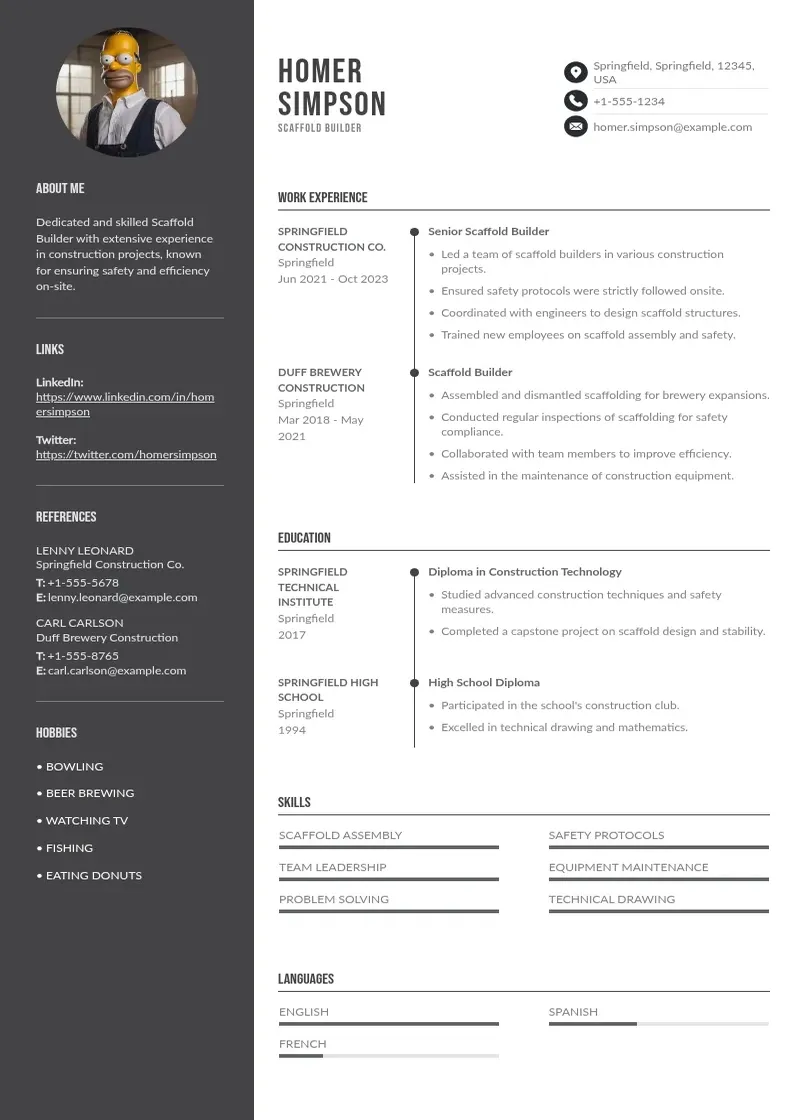
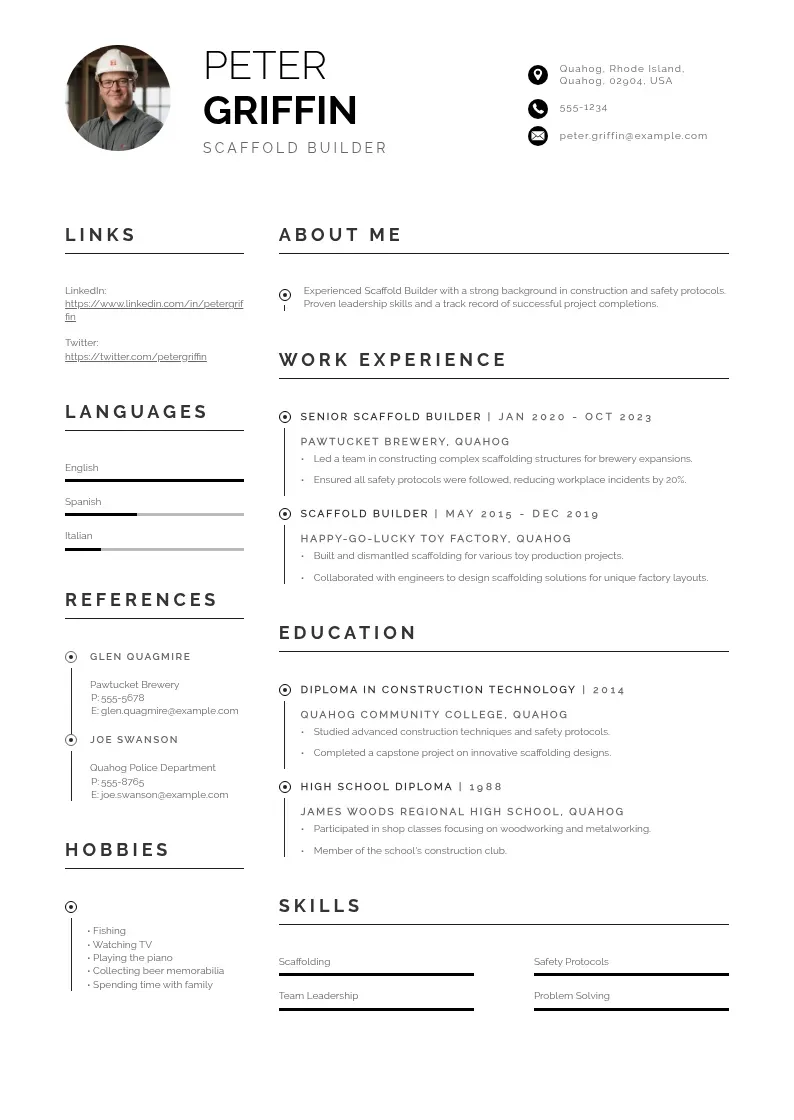
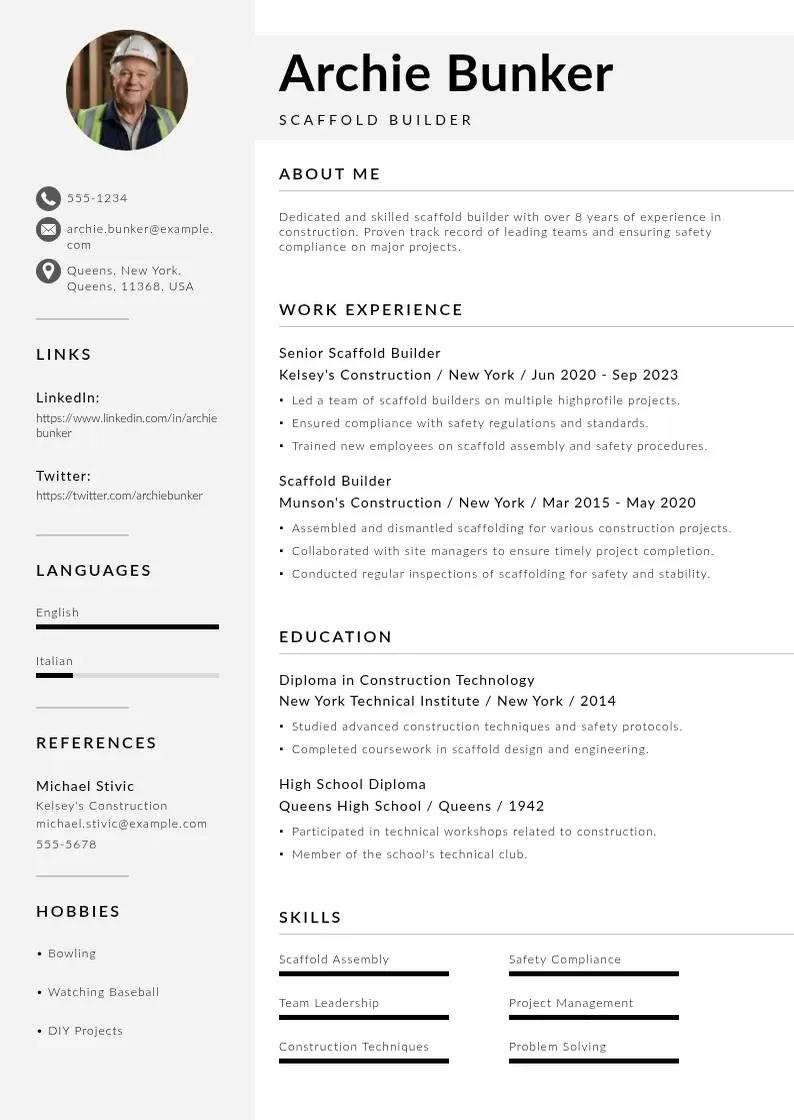
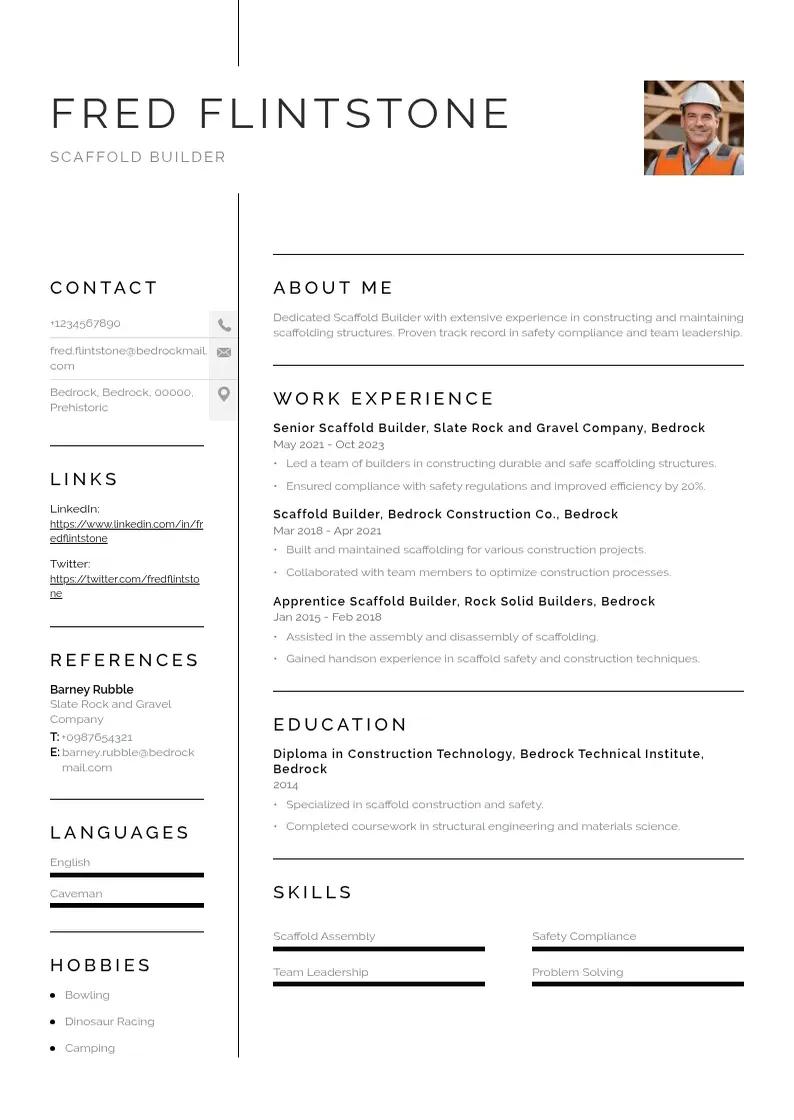
This guide shows how to create a clear scaffold builder resume. It includes a resume example, key skills, experience bullet points, formatting tips, certification advice, and tips for candidates new to construction.
Your resume should reflect your actual level of experience. An entry-level candidate should not try to compete with an experienced scaffold builder by exaggerating responsibilities. Instead, emphasize training, transferable skills, and hands-on construction experience.
If you’re new to scaffolding, use construction training, apprenticeships, laborer work, or hands-on experience to show you’re ready for the job. Highlight safety awareness, PPE, material handling, and experience supporting scaffold crews.
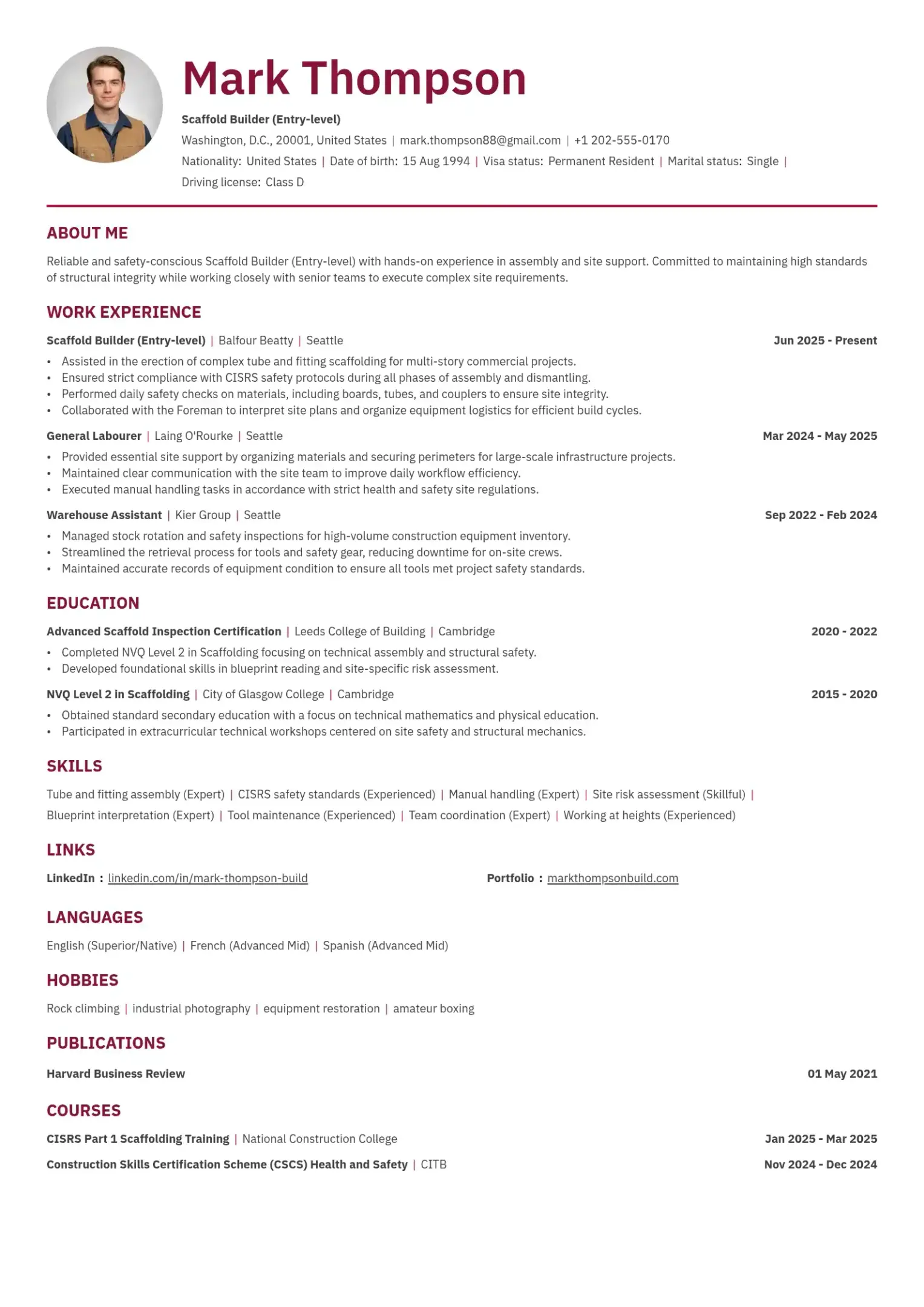
Why Employers Shortlist This Resume
Experienced scaffold builders should focus on the type of work they can handle independently. Highlight scaffold systems, erection and dismantling, inspections, technical drawings, bracing, and project experience.
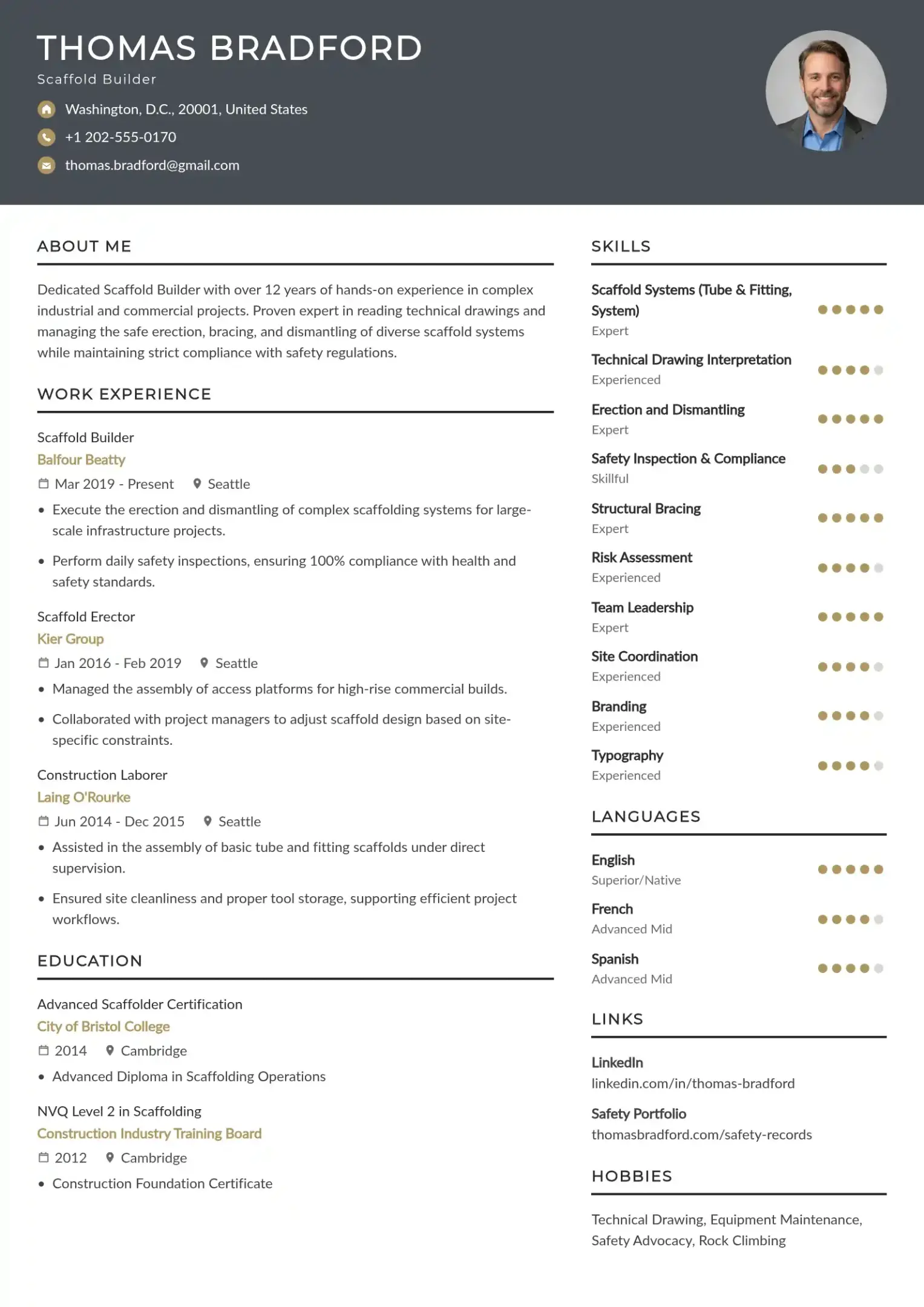
Why Employers Shortlist This Resume
Apprentices should use their training and supervised site experience to show practical knowledge. Include apprenticeship training, safety certifications, construction coursework, tools, and relevant projects.
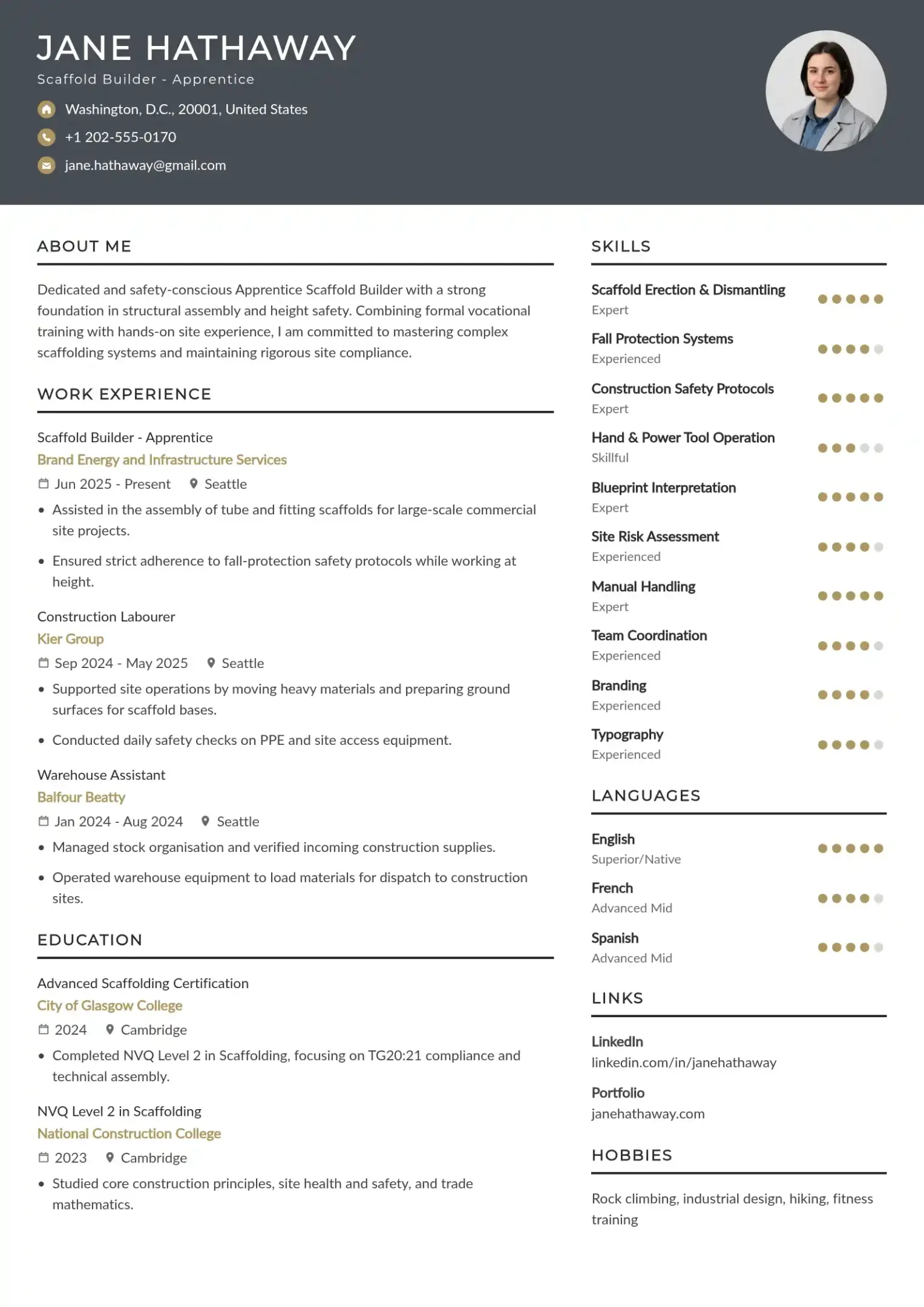
Why Employers Shortlist This Resume
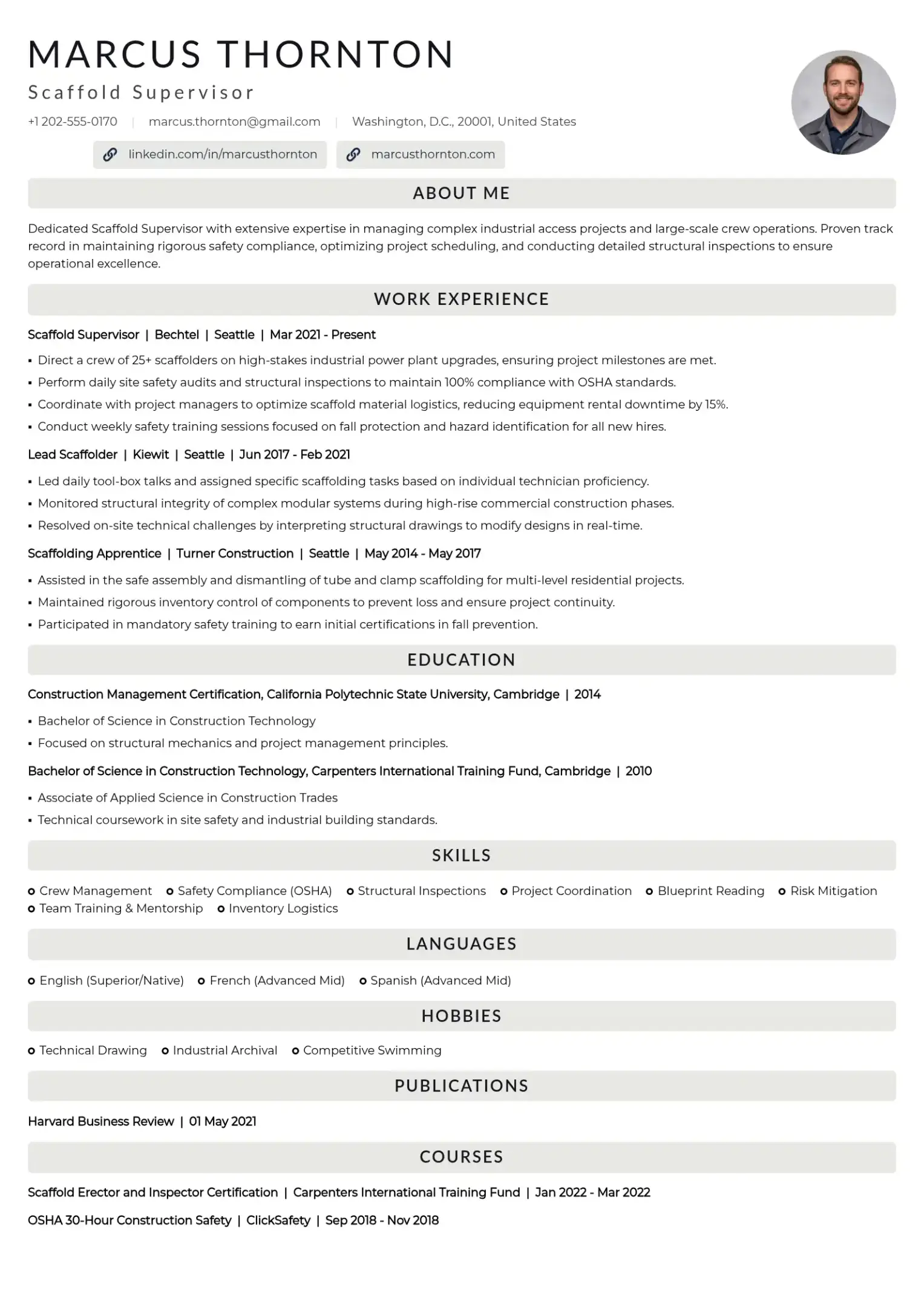
A scaffold supervisor resume should go beyond technical skills and demonstrate leadership. Focus on crew management, inspections, scheduling, safety compliance, training, and project coordination.
Why Employers Shortlist This Resume
Your resume should quickly show the scaffold systems you know, the sites you’ve worked on, and the safety responsibilities you can handle. Focus on the qualifications employers need to put you to work safely and effectively.
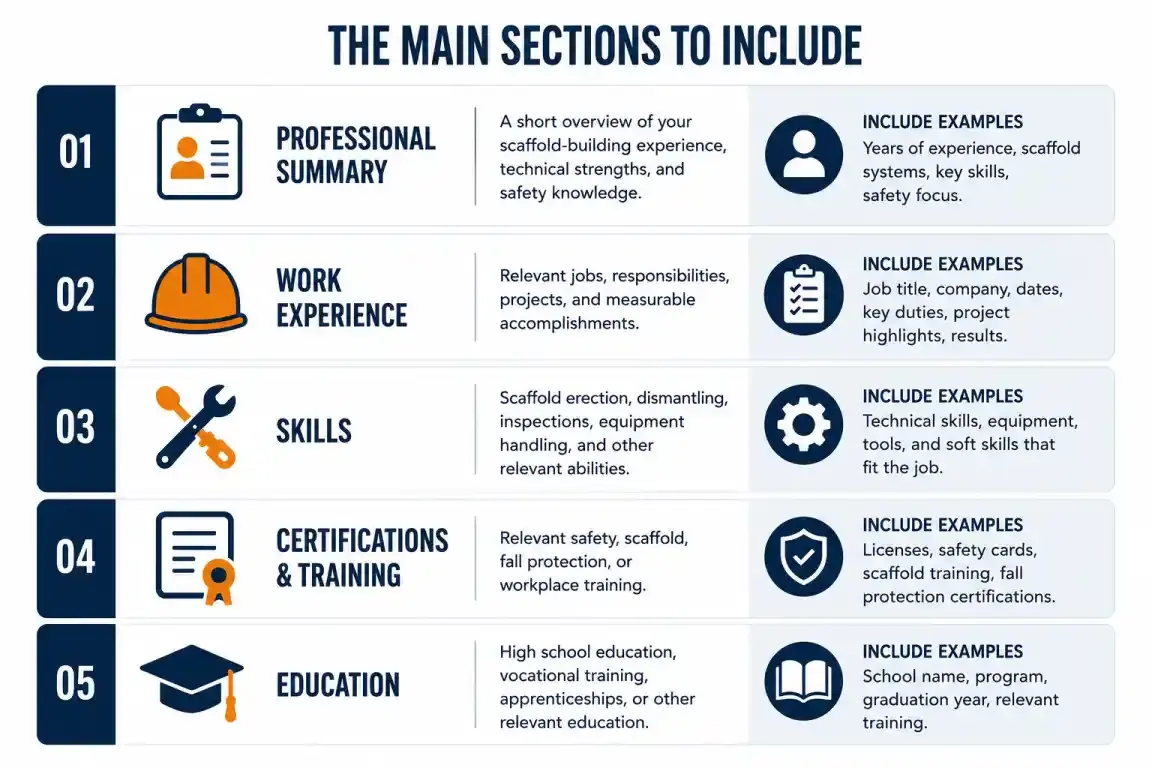
A strong resume does more than describe what you did. It shows employers how your experience relates to their current opening.
Keep your summary to a few sentences. Mention your years of experience, core scaffold skills, construction background, and safety strengths.
 Avoid vague statements such as:
“Hardworking construction professional looking for a challenging opportunity.”
 Instead, describe your actual qualifications:
“Scaffold builder with 5+ years of experience in scaffold erection, dismantling, inspection, and construction-site material handling.”
The second version immediately tells the employer what the candidate can do.
Use bullet points to describe specific work rather than copying generic job duties.
Weak:“Worked on scaffolding.”
Stronger:
“Erected and dismantled scaffold systems while following site safety procedures and project specifications.”
Where possible, add numbers. You can mention project volume, crew size, completion times, or other measurable details if they are accurate.
Action verbs make construction experience more direct and easier to scan.
Useful verbs include:
Choose verbs that accurately describe your responsibilities.
Numbers can provide context that generic descriptions lack.
For example:
Only include figures you can verify. Accuracy is more important than adding impressive-looking numbers.
Your skills section should focus on abilities that are relevant to scaffold-building work.
Prioritize the skills that appear in the specific job description rather than creating an unnecessarily long list.
A strong experience section should show more than the fact that you erected or dismantled scaffolding. Give employers enough detail to understand the type of work, level of responsibility, safety practices, and scale of the projects you handled.
Instead of writing a generic duty, add one or two details that show what the work involved.
Too vague:More specific:
Useful details can include the scaffold system, project type, height or scale, components handled, crew size, or trade supported. Only include details that reflect your actual experience.
Safety should appear naturally within your work experience rather than as a separate list of generic claims.
For example:
When relevant, mention pre-use inspections, fall-protection procedures, hazard reporting, site safety rules, or applicable OSHA requirements.
A useful scaffold builder bullet generally combines action + context + responsibility or result:
Weak:Moved scaffold materials.
Better:
Coordinated scaffold component staging with a six-person crew to keep erection work moving between work areas.
Weak:Dismantled scaffolding.
Better:
Dismantled scaffold systems in sequence and sorted reusable components for transport and storage.
Add relevant terms naturally throughout your summary, skills, and experience sections.
Common keywords include:
Do not add keywords for skills or certifications you do not actually have. A targeted resume is more effective when the keywords accurately represent your experience.
An ATS-friendly resume uses a simple structure that allows applicant tracking systems and recruiters to identify important information.
Review the job posting and identify terms that accurately match your background. Incorporate those terms naturally into your summary, skills, and experience.
Use standard headings such as Summary, Skills, Experience, Education, and Certifications. Avoid complicated tables, excessive graphics, and text embedded inside images.
Place your most recent and relevant scaffold or construction experience prominently. If you have several construction jobs, emphasize the roles with the closest connection to the position.
The reverse chronological format is generally useful for experienced scaffold builders because it places recent work history first.
For most experienced candidates, a reverse chronological resume provides the clearest view of career progression.
You can create a relevant resume even without previous scaffold builder employment. Focus on related construction experience, training, apprenticeships, tools, safety knowledge, and transferable skills.
Experience in roofing, warehouse work, general construction, industrial work, or demolition may demonstrate relevant skills such as material handling, tool use, physical stamina, teamwork, and following safety procedures. These experiences can provide a foundation for your career path into scaffolding.
Do not claim scaffold experience you do not have. Instead, show how your existing skills can transfer to scaffold-building work.
Before submitting your resume, make sure it:
A successful scaffold builder resume should make your technical skills, construction experience, safety knowledge, and relevant training immediately visible. Focus on specific responsibilities and measurable accomplishments instead of filling the page with generic construction terms.
Tailor your resume to each position, use the language found in relevant job descriptions, and keep the formatting clean and easy to scan. With the right structure and role-specific details, your resume can present your scaffold-building experience more clearly and professionally.
Our collection of expertly designed cover letter templates will help you stand out from the crowd and get one step closer to your dream job.