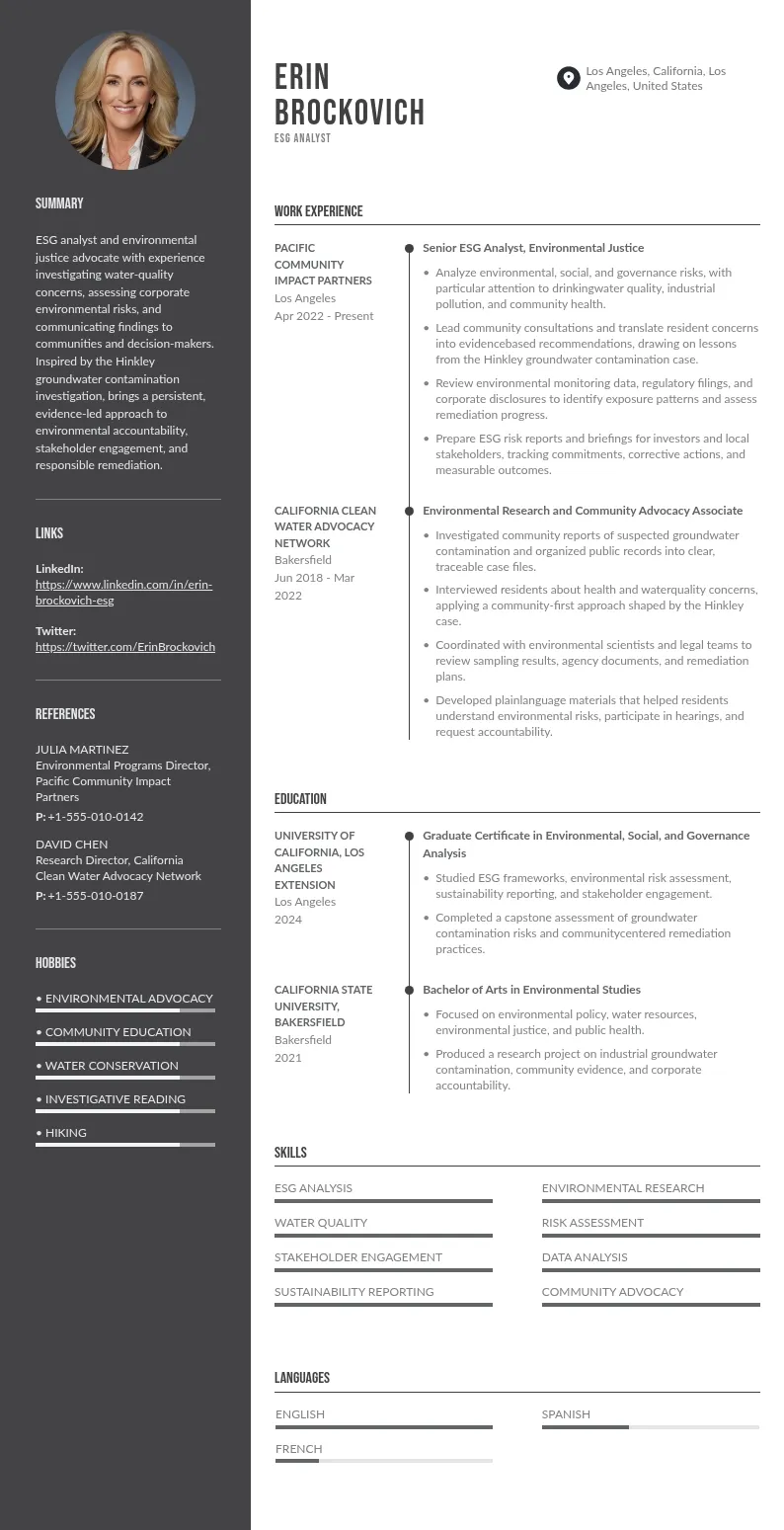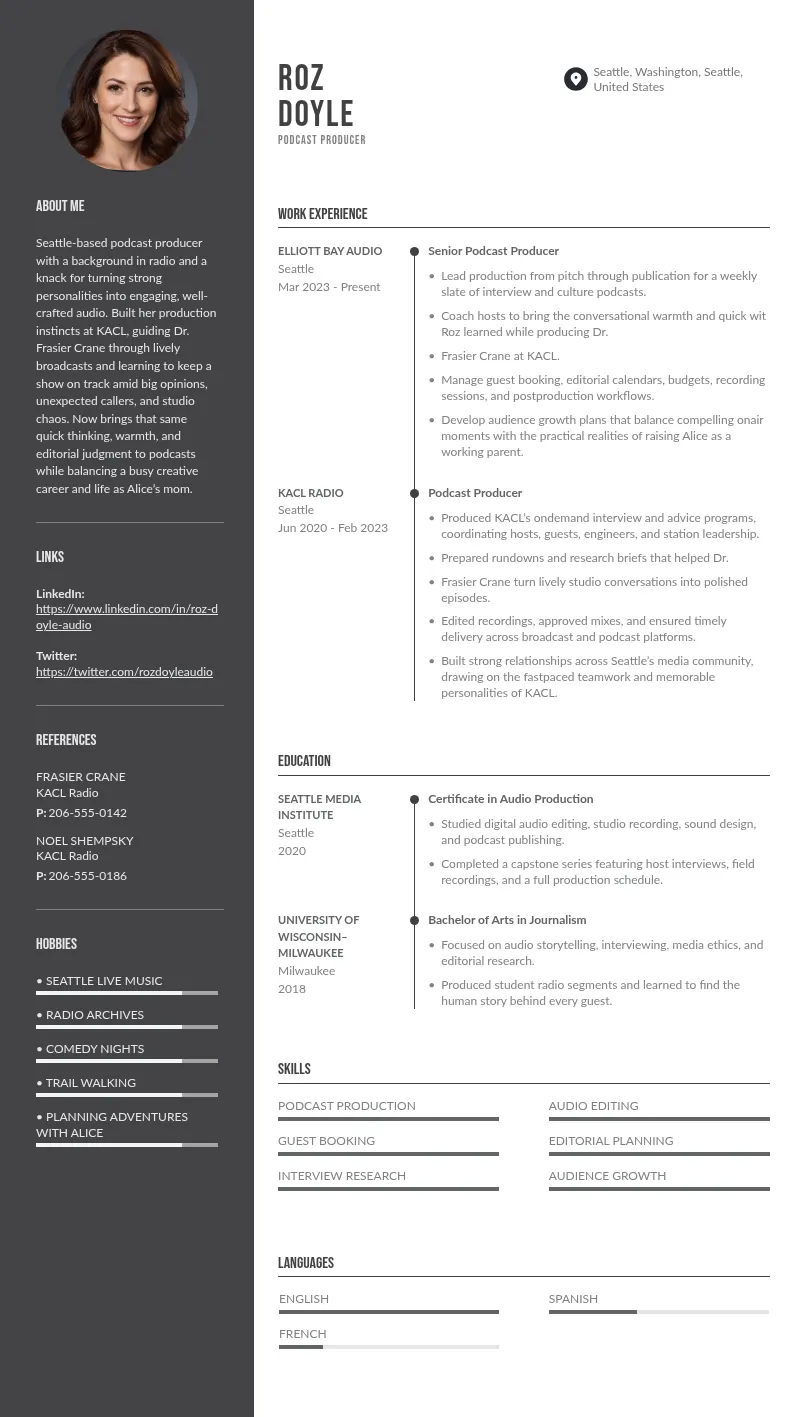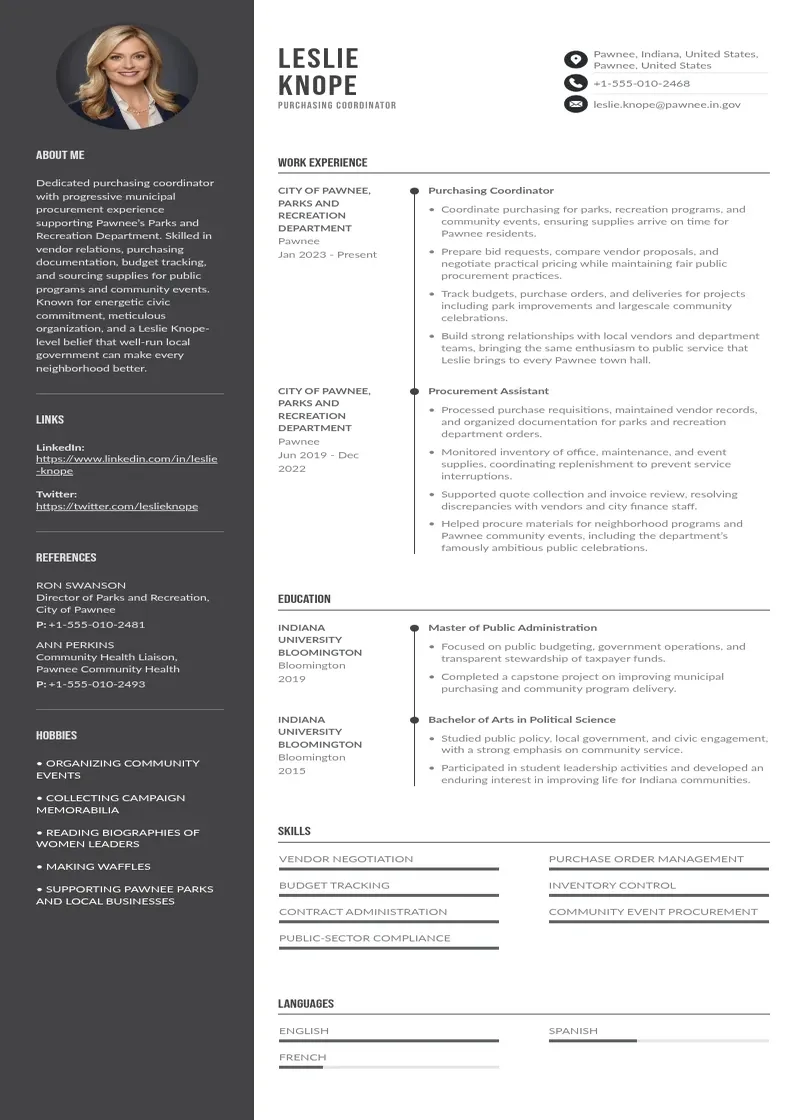


A strong procurement coordinator resume should show more than your ability to place orders. It should explain the purchasing workload you coordinate, the suppliers you manage, the systems you use, and how your work affects inventory, delivery, cost, and operations.



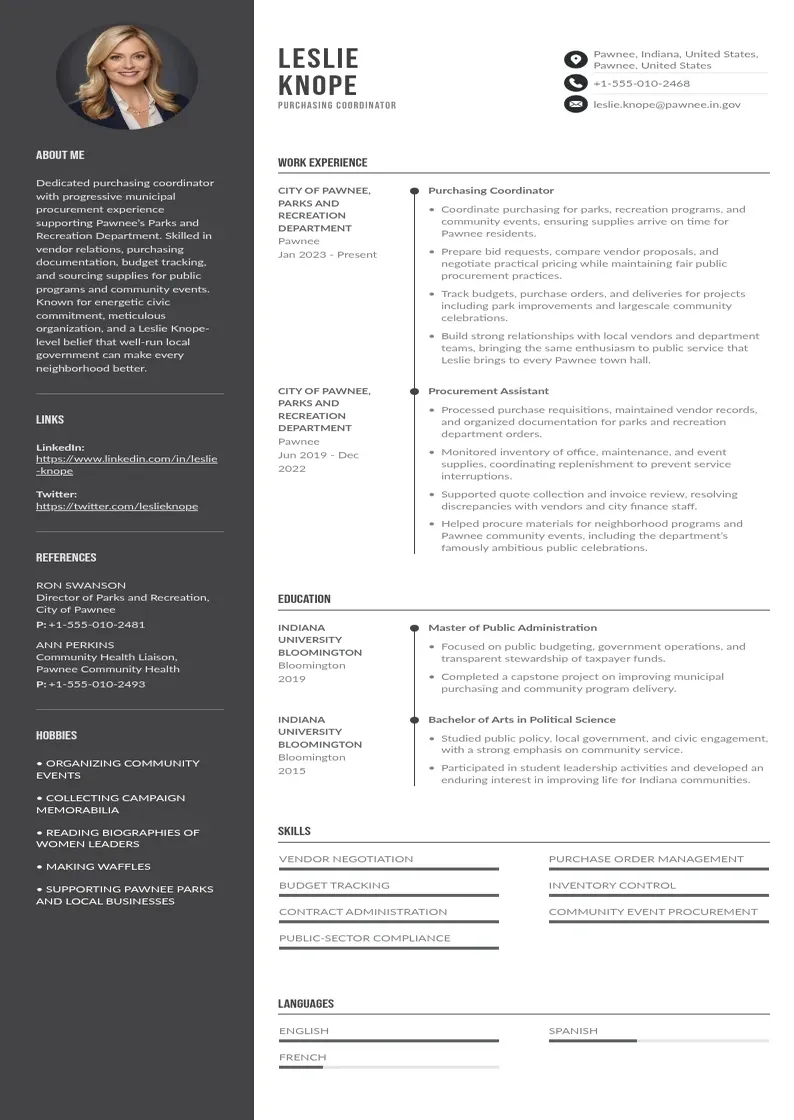
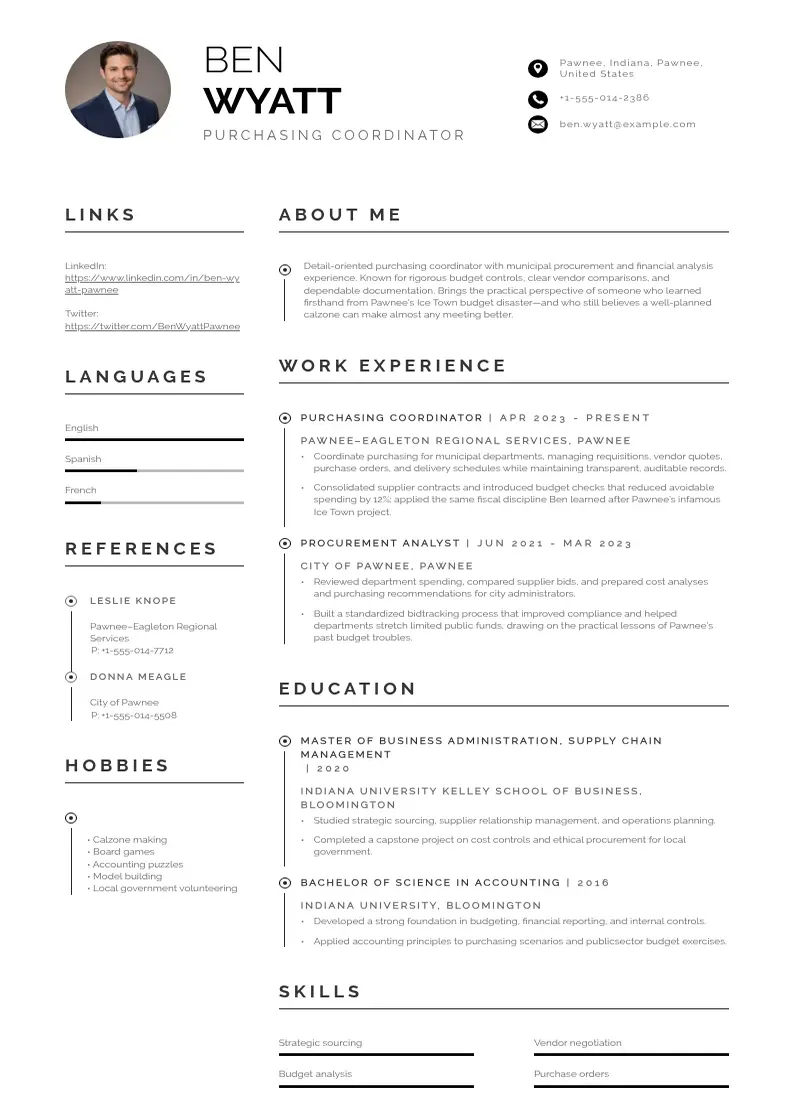
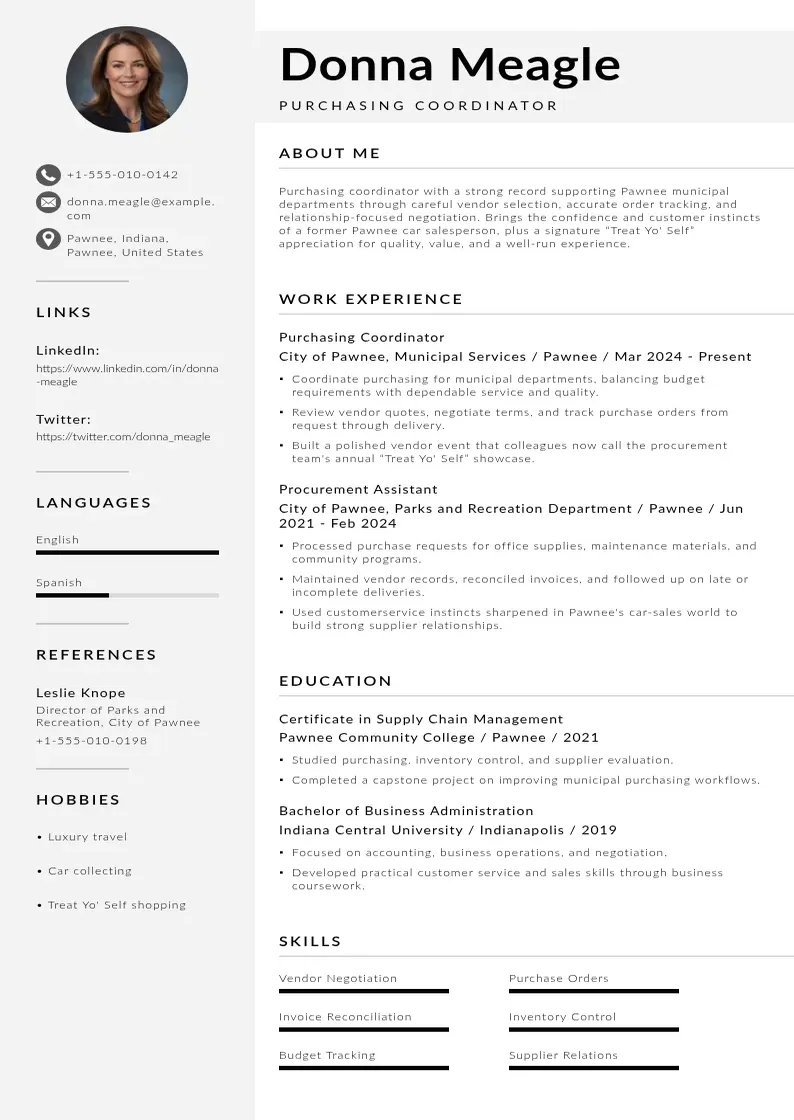
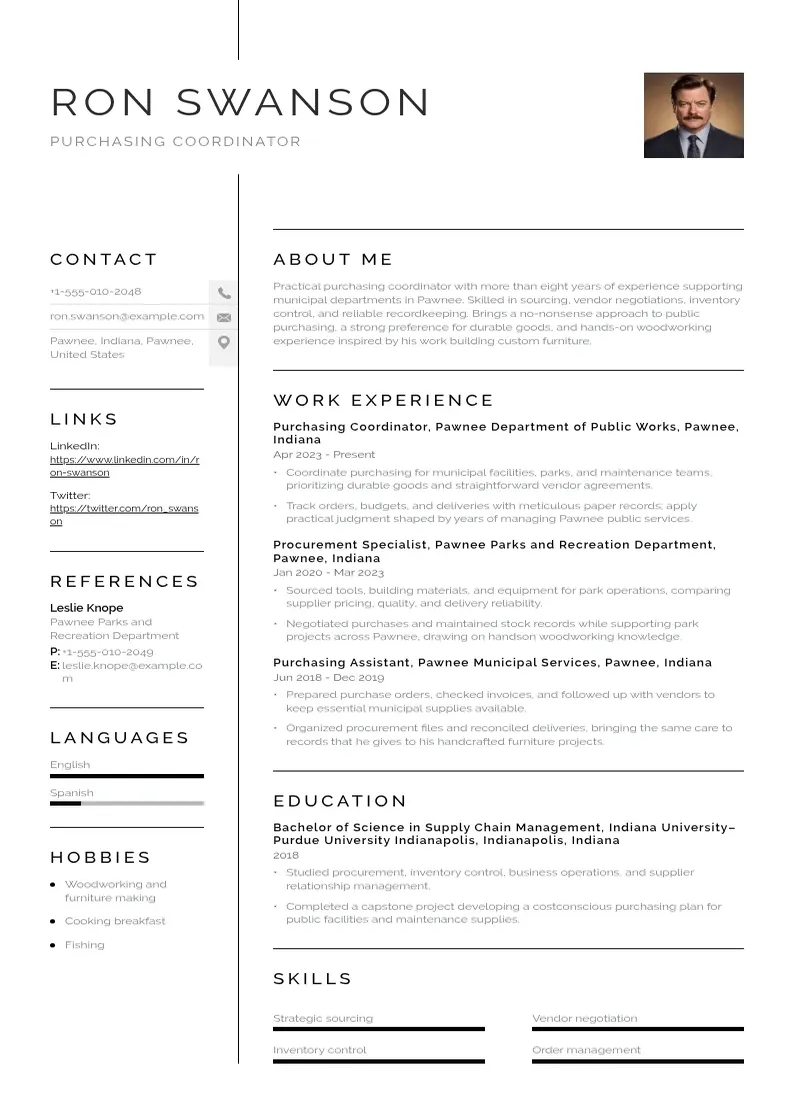
For example, processing 150 purchase orders per month shows transaction volume, while managing $2 million in annual spend shows financial responsibility. In a manufacturing environment, reducing supplier lead times or late deliveries may matter more because material shortages can interrupt production.
Below, you'll find five purchasing coordinator resume examples, followed by practical advice for showing the purchasing work behind your numbers.
The strongest example depends on your experience level and the type of purchasing operation you support.
If you're applying for your first purchasing coordinator position, focus on the work that proves you can manage purchasing transactions accurately and keep information organized.
Highlight purchase orders, supplier communication, inventory records, Excel, ERP exposure, and order tracking.
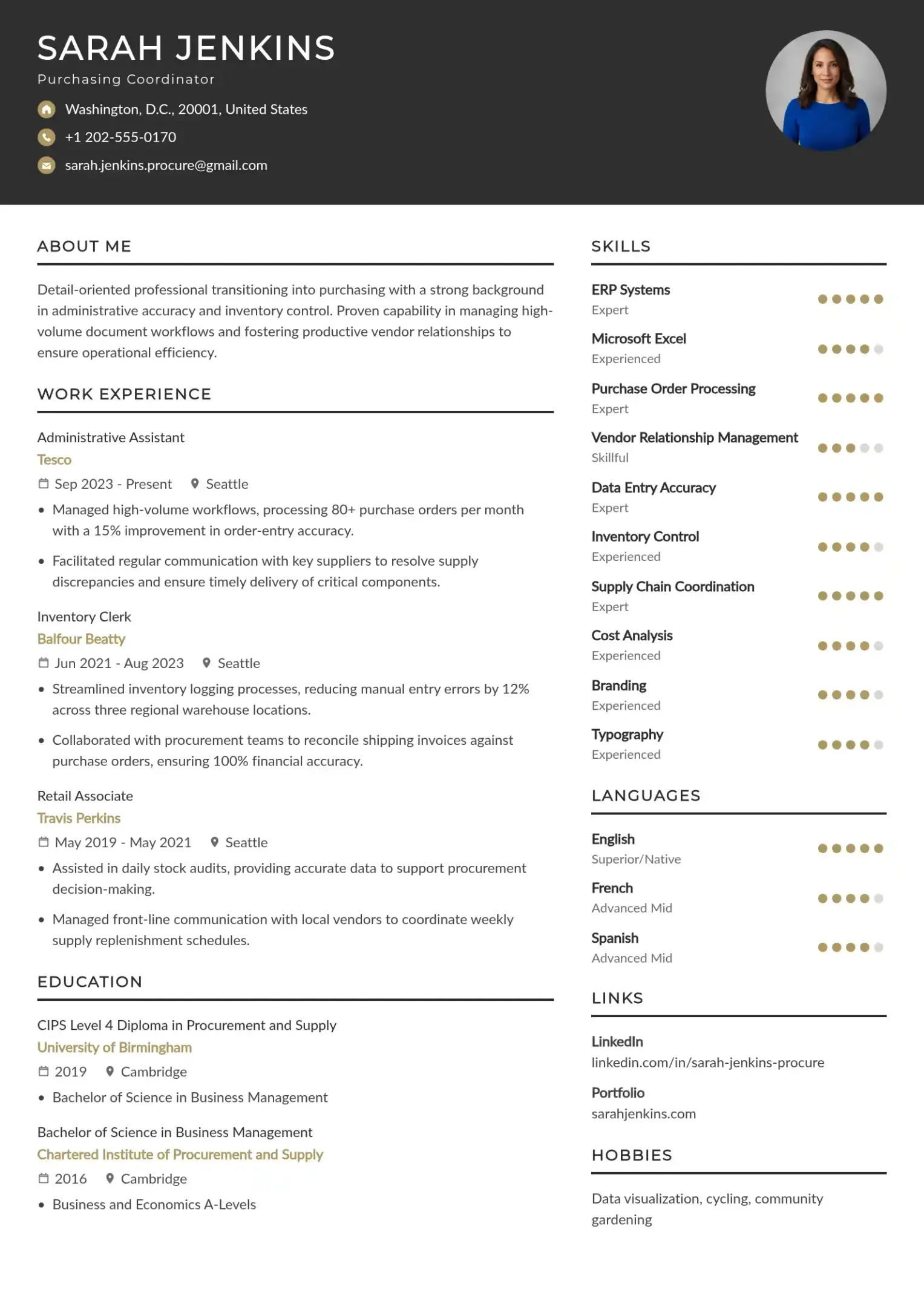
Why Employers Shortlist This Resume
What the numbers mean: At entry level, PO volume and accuracy can be more useful than large savings figures because they show that you can handle the day-to-day purchasing workflow reliably.
After several years in purchasing, your resume should show more than order processing. Highlight supplier relationships, inventory coordination, purchasing spend, negotiations, and cross-functional problem-solving.
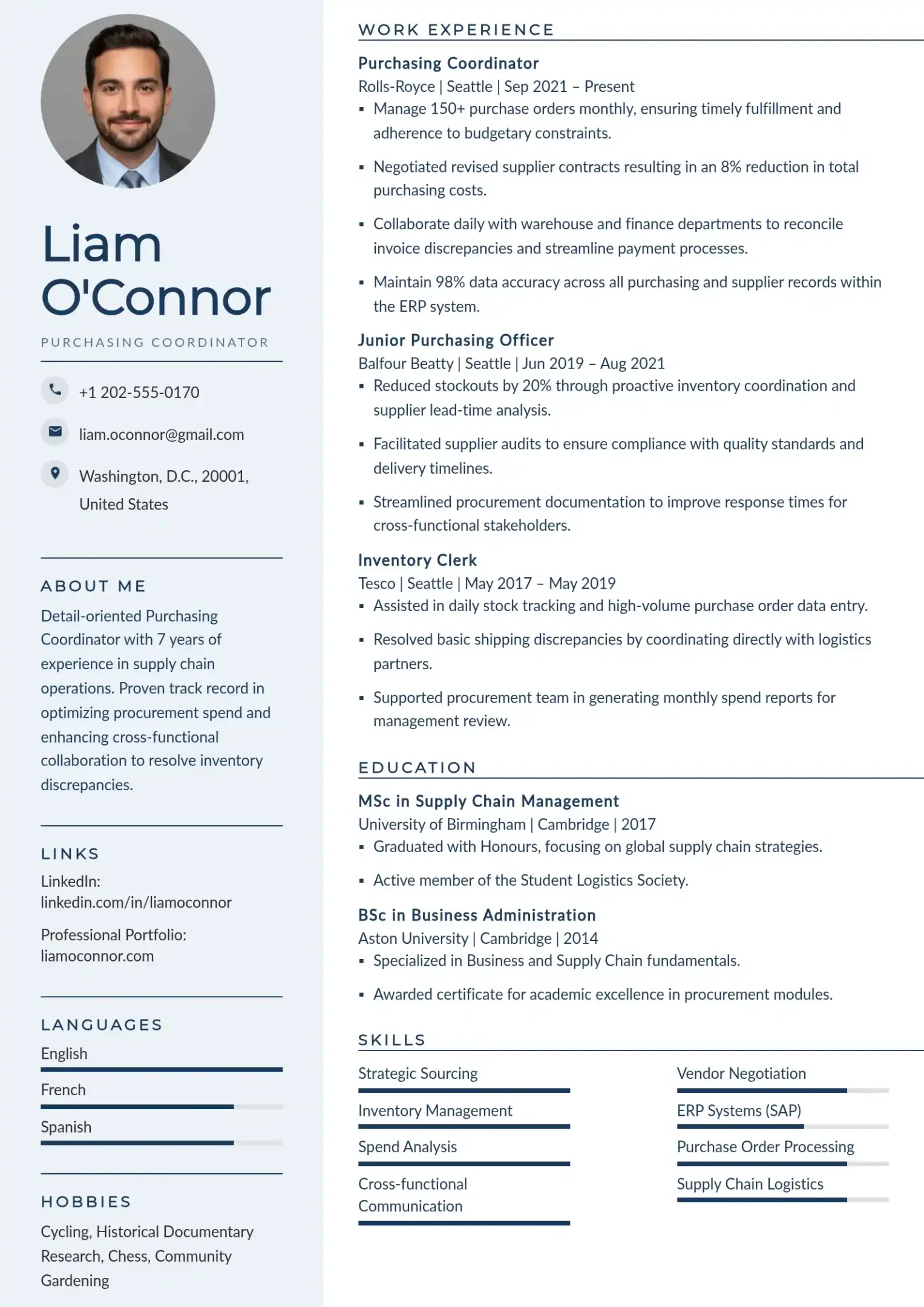
Why Employers Shortlist This Resume
What the numbers mean: PO volume shows workload, but supplier count, spend, savings, and inventory results reveal the complexity and business impact of the role.
Manufacturing purchasing requires a different emphasis because purchasing decisions can directly affect production continuity. A late shipment of a critical raw material may stop or slow a production line.
If you've purchased raw materials, components, packaging, or production supplies, show that connection.
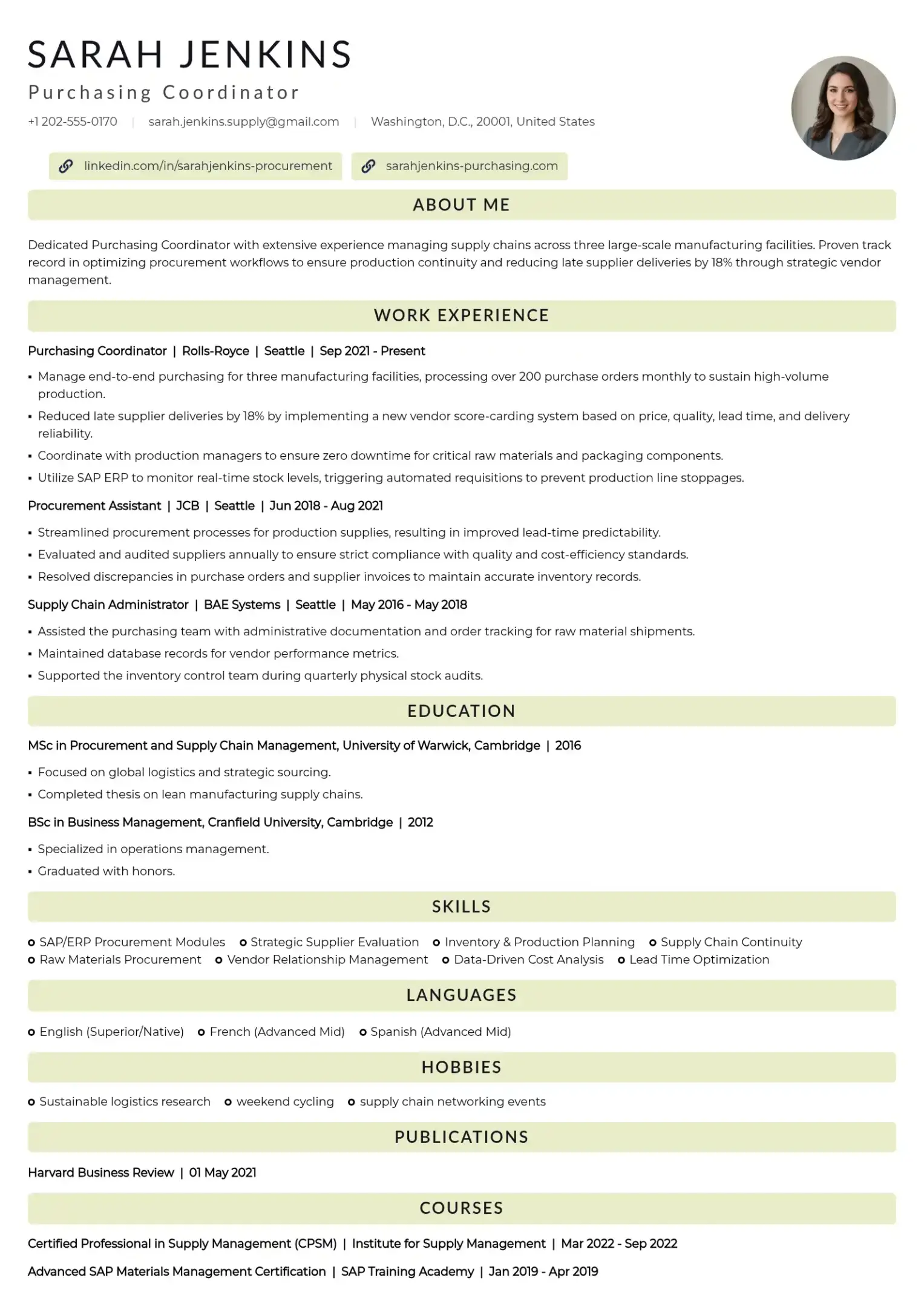
Why Employers Shortlist This Resume
What the numbers mean: For a manufacturing recruiter, reducing late deliveries or improving supplier lead time can be more meaningful than simply reporting the number of POs processed.
Purchasing coordinators with supply chain experience should show how purchasing connects with inventory, logistics management, warehousing, and shipment planning.
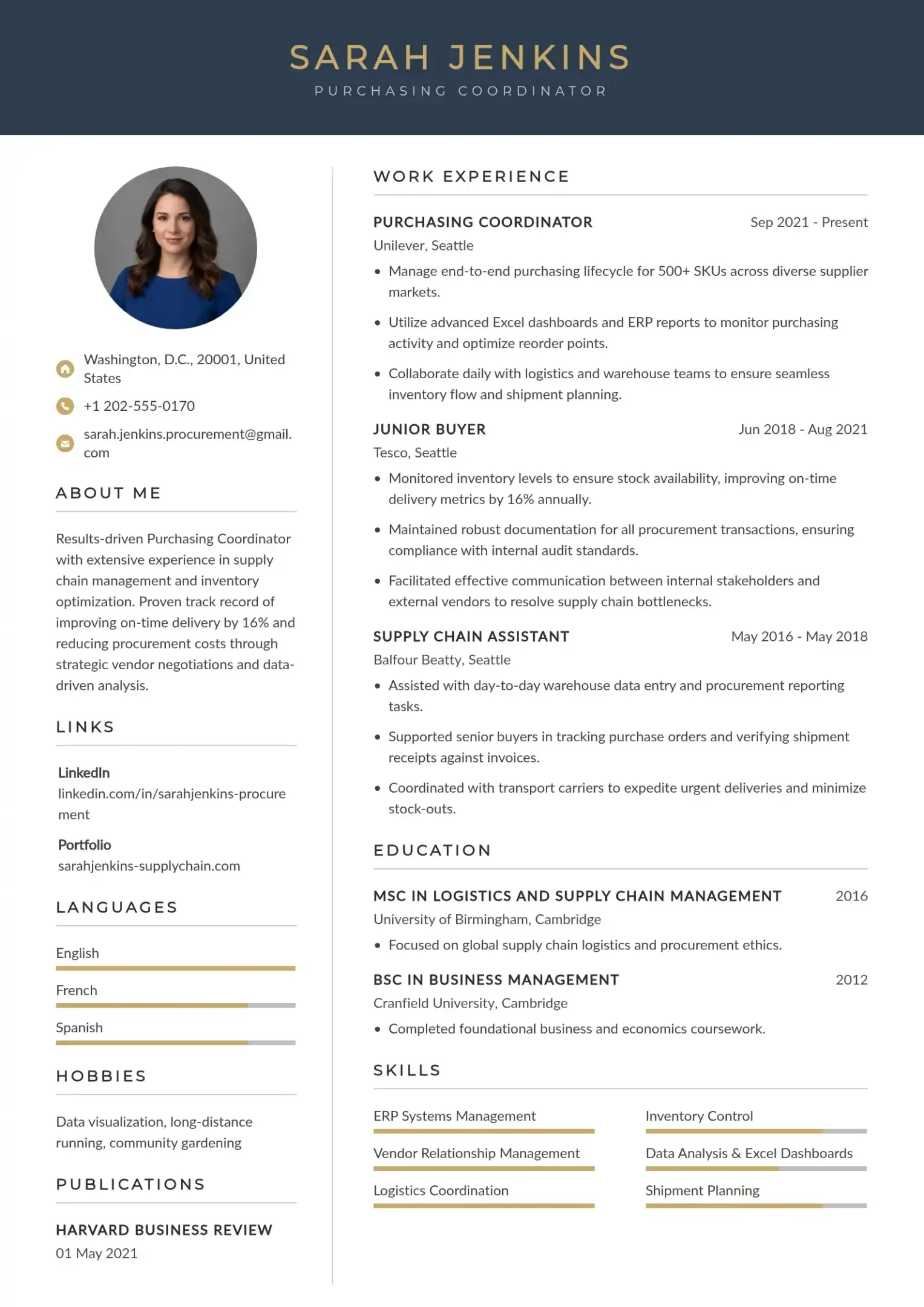
Why Employers Shortlist This Resume
What the numbers mean: SKU count shows inventory complexity, while on-time delivery and stock availability demonstrate how effectively purchasing supports the wider supply chain.
At the senior level, show ownership rather than simply activity. Recruiters want to understand the size of your supplier portfolio, annual spend, savings, supplier performance, process improvements, and team responsibilities.
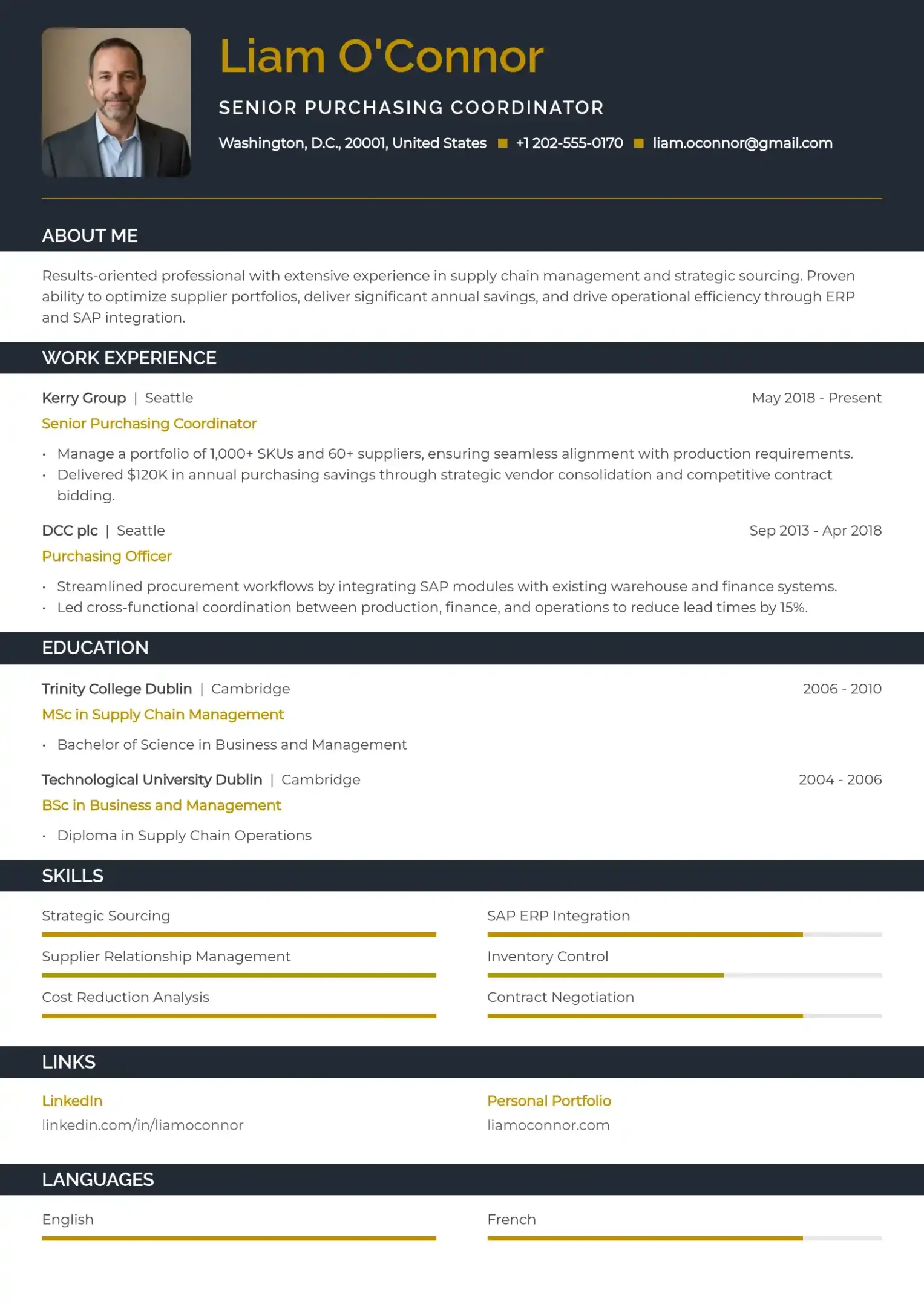
Why Employers Shortlist This Resume
What the numbers mean: At this level, annual spend, savings, supplier performance, and process ownership can tell recruiters more than PO volume alone.
A Purchasing Coordinator sits between suppliers and the internal teams that need materials, products, or services. The role can involve much more than creating purchase orders.
Typical responsibilities include:
The best resume bullets show what you coordinated, the scale of the activity, and what changed because of your work.
 For example:

Coordinated 150+ monthly purchase orders across 30 suppliers, improving order accuracy by 15% and reducing delivery discrepancies.
That tells the recruiter much more than:
Responsible for purchase orders and supplier communication.
Your summary should change depending on your experience level.
Entry-level: Emphasize PO processing, Excel, ERP exposure, order tracking, and supplier communication.
Experienced: Highlight supplier portfolios, purchasing volume, spend, inventory coordination, ERP systems, and negotiations.
Senior: Focus on cost reduction, supplier performance, sourcing, process ownership, annual spend, and cross-functional leadership that demonstrates your procurement expertise.
For example:
Purchasing Coordinator with 4+ years of experience managing 150+ monthly purchase orders, 60+ suppliers, inventory coordination, and SAP. Reduced purchasing costs by 8% through supplier negotiations while maintaining 98% purchasing-record accuracy.
The goal is to show the scale and type of purchasing work you perform, not just describe yourself as organized or hardworking.
Prioritize responsibilities that match the target job description:
If your career has progressed from Procurement Assistant to Purchasing Coordinator or Senior Purchasing Coordinator, show that progression. Increasing PO volume, supplier responsibility, spend, or process ownership can demonstrate career growth.
Choose metrics that explain the scale or impact of your work. When reviewing purchasing performance, look beyond completed transactions and consider where your results identified cost-saving opportunities through supplier negotiations, process improvements, or better purchasing decisions.
| Metric | What It Tells the Recruiter |
|---|---|
| PO volume | Transaction workload and coordination capacity |
| Annual spend | Financial scale of purchasing responsibility |
| Supplier count | Supplier-management complexity |
| SKU count | Inventory and product complexity |
| Cost savings | Negotiation and commercial impact |
| Lead time | Ability to improve purchasing speed |
| On-time delivery | Supplier-performance management |
| Stockout rate | Effectiveness of purchasing and replenishment |
| Order accuracy | Attention to purchasing data and process quality |
For example:
Coordinated purchasing for 700+ SKUs across three locations.
Or:
Negotiated supplier pricing that reduced annual purchasing costs by 8%.
Use the metric that best explains the responsibility. A manufacturing role may benefit more from lead-time and delivery metrics, while a cost-focused position may place greater value on spend and savings.
Instead of using a generic list of resume verbs, choose language that reflects the purchasing process.
Sourcing: Sourced, evaluated, compared, identified
Supplier management: Negotiated, escalated, resolved, coordinated
Ordering: Processed, released, expedited, reconciled
Inventory: Forecasted, monitored, replenished, tracked
Improvement: Reduced, streamlined, standardized, improved
For example:
Evaluated three suppliers based on price, quality, lead time, and delivery performance before recommending a new source.
Or:
Expedited critical purchase orders with suppliers, reducing average material delays by 18%.
These verbs show what you actually did rather than simply making the resume sound more active.
Don't turn your software section into a keyword inventory.
 Instead of writing:
SAP | Oracle | Microsoft Dynamics | NetSuite | Coupa | Excel
Show what you accomplished with those systems.
For example:
Then include the software names in your skills section for ATS visibility.
When describing supplier-related experience, vendor relationship management can also demonstrate that you maintained productive supplier partnerships rather than simply processing transactions.
Don't send the same resume to every employer.
Start by identifying the most important requirements in the job posting. If the employer emphasizes SAP, inventory management, supplier negotiations, purchase orders, and cost savings, prioritize those terms in your summary, experience bullets, and skills section.
For example, if the job description says:
"Experience managing purchase orders and supplier relationships using SAP."
Your resume could say:
Managed 120+ monthly purchase orders and maintained supplier records using SAP, ensuring accurate pricing, quantities, and delivery schedules.
The goal isn't to copy the job description. It's to demonstrate that your experience matches what the employer needs. The same research can also help when writing a purchasing coordinator cover letter, particularly when connecting your experience to the employer's specific purchasing requirements.
A bachelor's degree in supply chain management, business administration, logistics, finance, or a related field can strengthen your resume, although requirements vary by employer.
Depending on your career goals, consider certifications related to:
Don't add certifications simply to fill space. Prioritize credentials that are relevant to the purchasing or supply chain roles you're targeting.
A strong Purchasing Coordinator resume should highlight supplier coordination, inventory management, procurement systems, problem-solving, and measurable results. Use a targeted summary, relevant ERP keywords, and tailor your resume to the job description to improve ATS performance and stand out to recruiters and hiring managers.
Our collection of expertly designed cover letter templates will help you stand out from the crowd and get one step closer to your dream job.