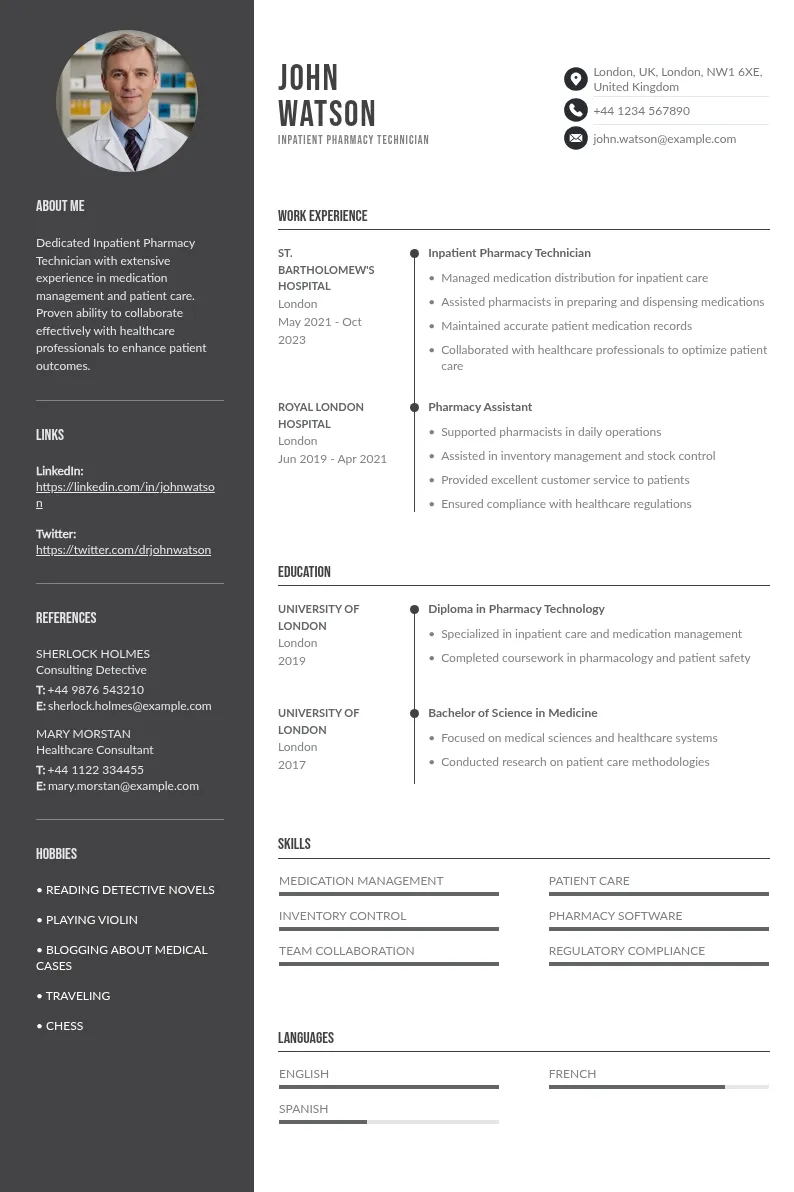


Along with general pharmacy knowledge, a strong inpatient or hospital pharmacy technician resume should make credentials, hospital experience, medication dispensing or distribution skills, pharmacy automation, sterile-compounding experience, and measurable results easy to identify.


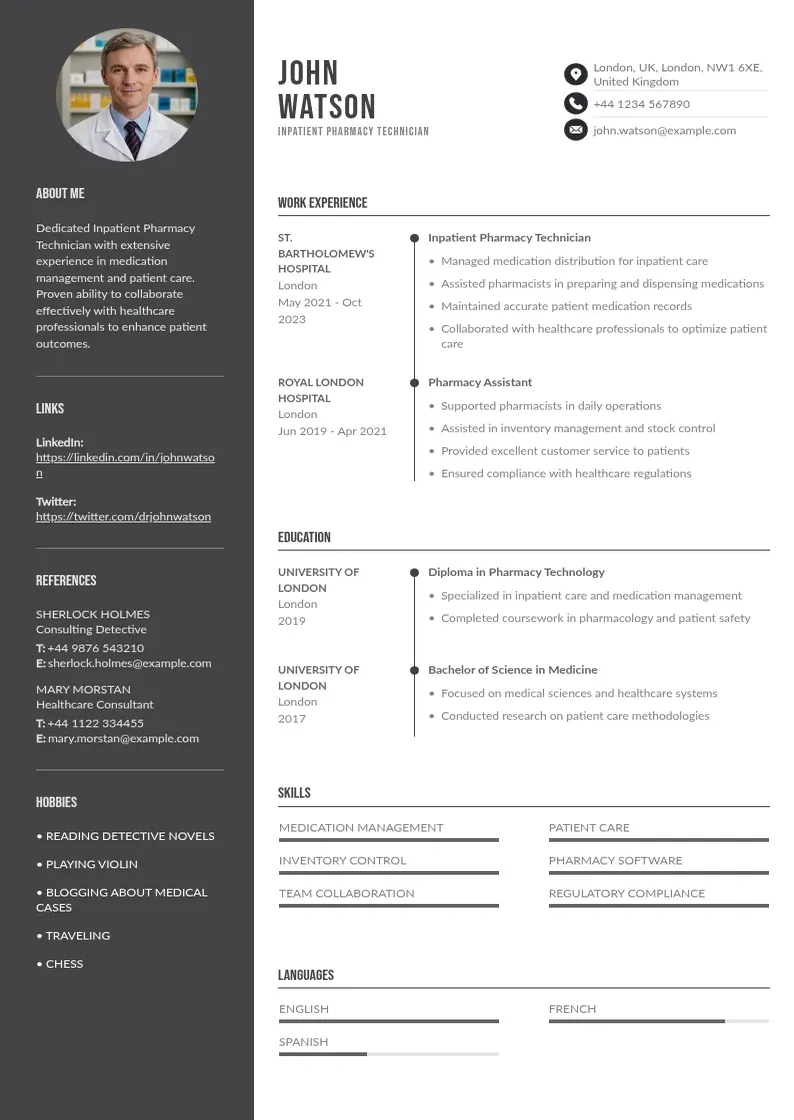
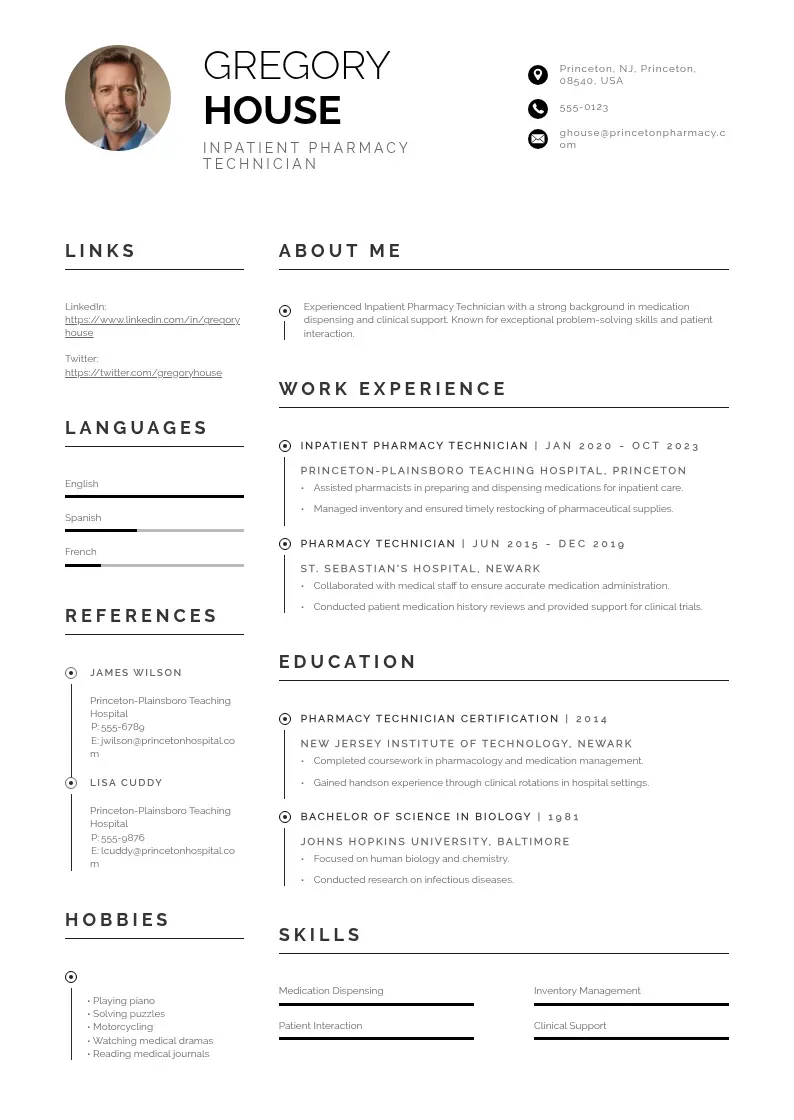
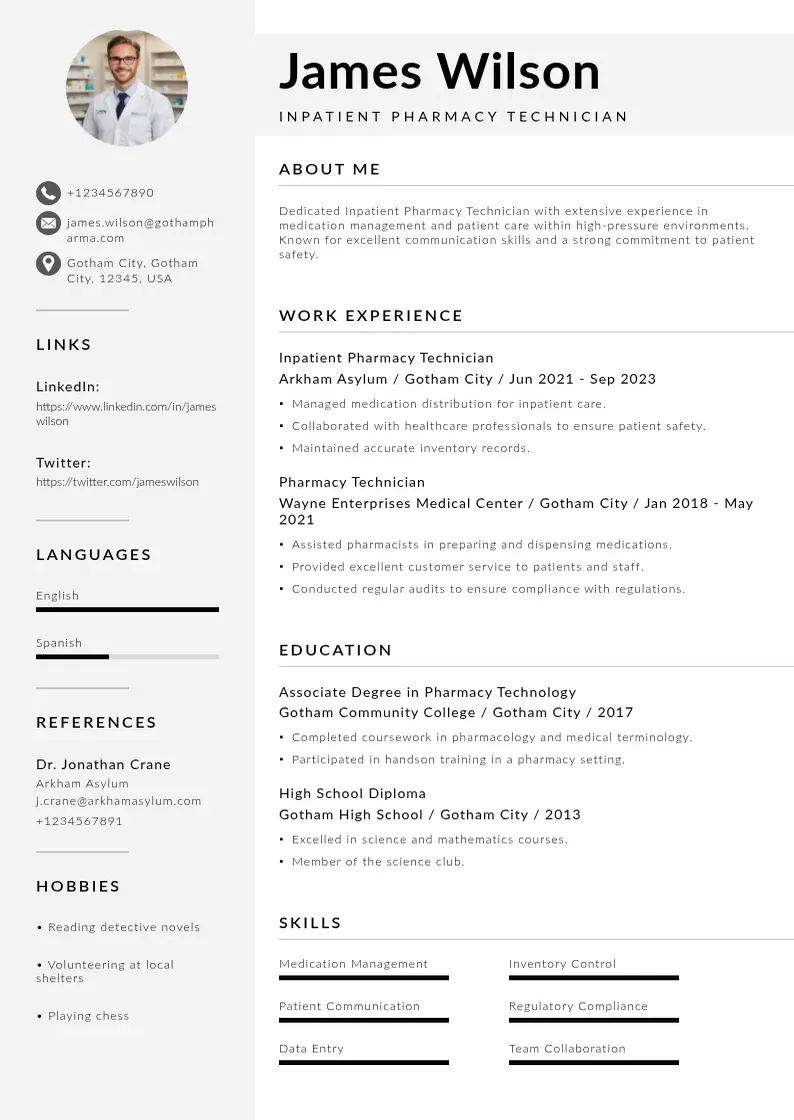
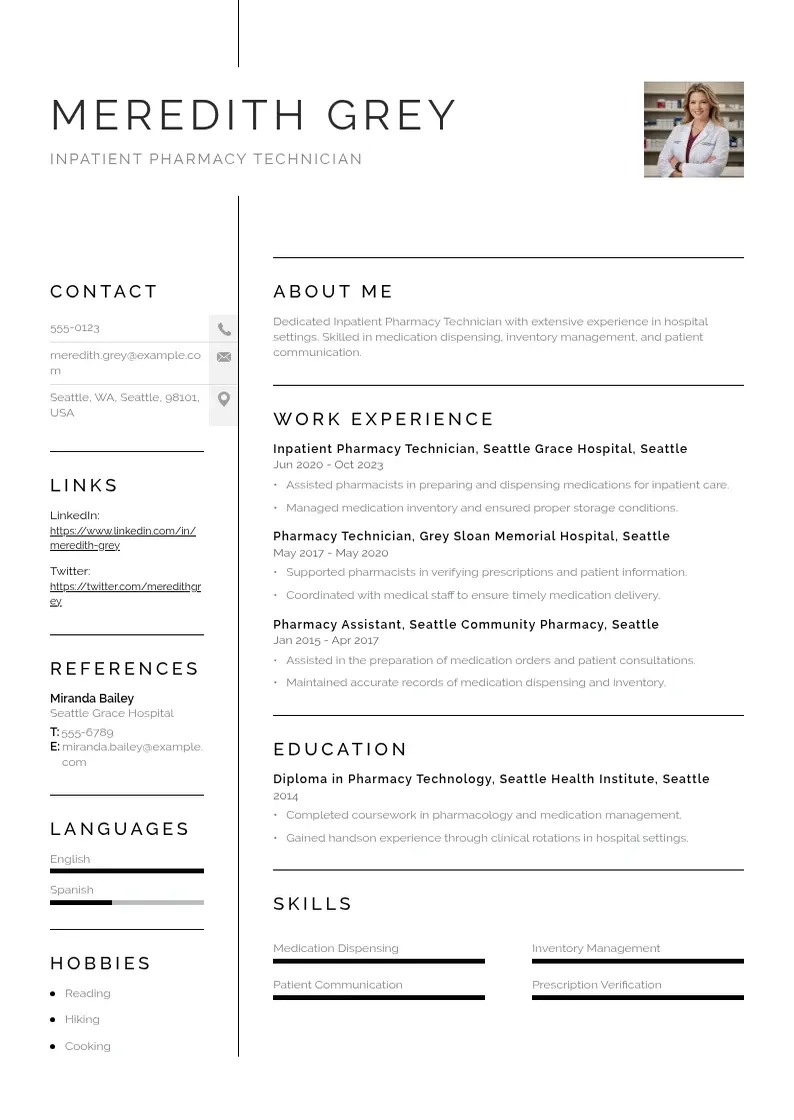
This guide features five inpatient pharmacy tech resume examples for different career stages and specialties, including experienced, entry-level, certified, IV/compounding, and lead technicians. For certified candidates, we also cover credentials from the Pharmacy Technician Certification Board (PTCB) and how to present them alongside the qualifications and accomplishments valued in inpatient pharmacy positions.
The best resume format depends on your experience, certification, and area of specialization. Use the examples below as starting points, then adjust the content to reflect your actual responsibilities, credentials, and achievements.
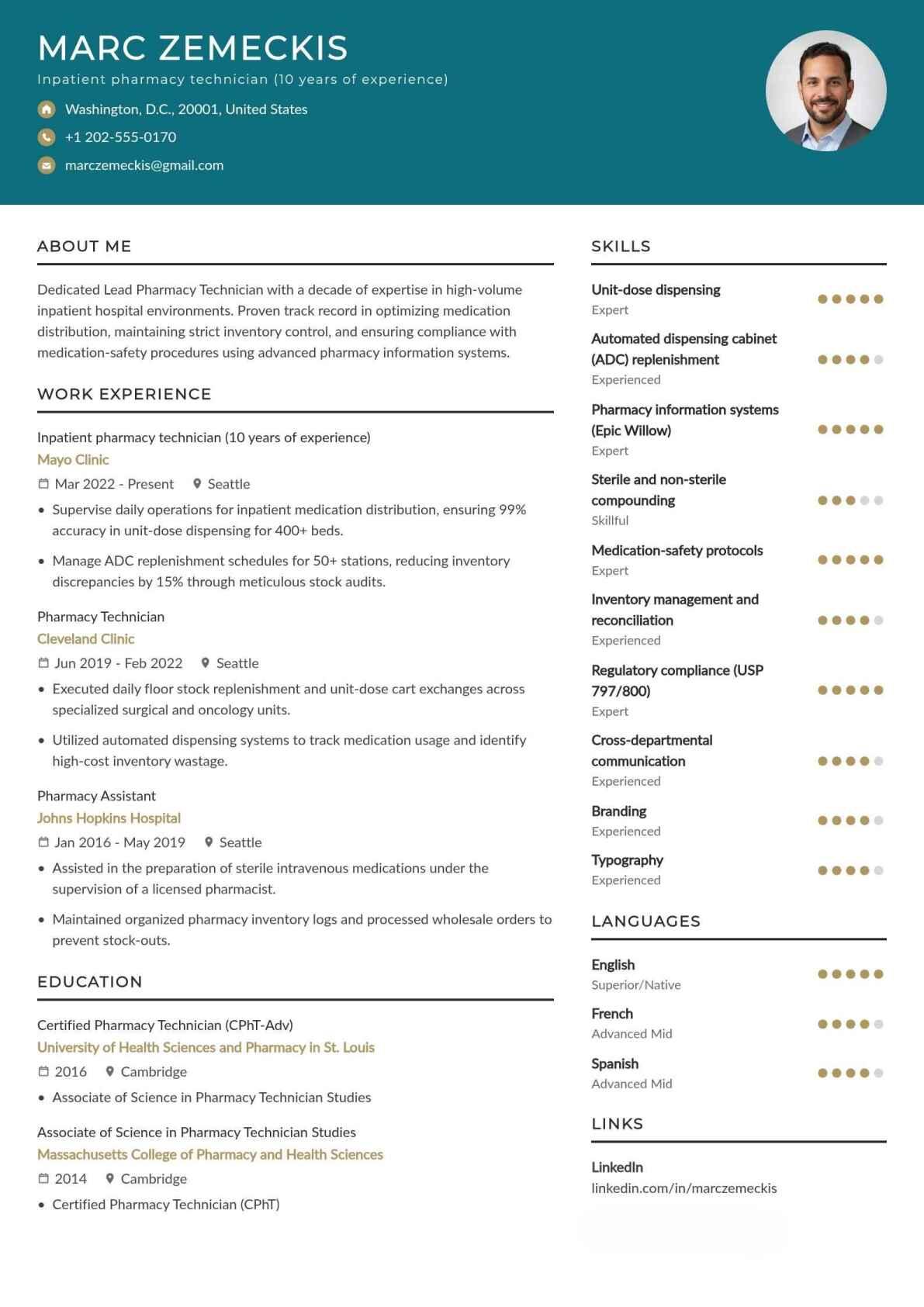
This resume is ideal for an experienced hospital pharmacy technician or candidates aiming for advanced or lead pharmacy technician position. In this kind of application, recruiters typically want evidence of hands-on hospital pharmacy experience, including unit-dose dispensing, medication distribution to nursing units, automated dispensing cabinet (ADC) replenishment, inventory control, pharmacy information systems, and medication-safety procedures.
Why Employers Shortlist This Resume
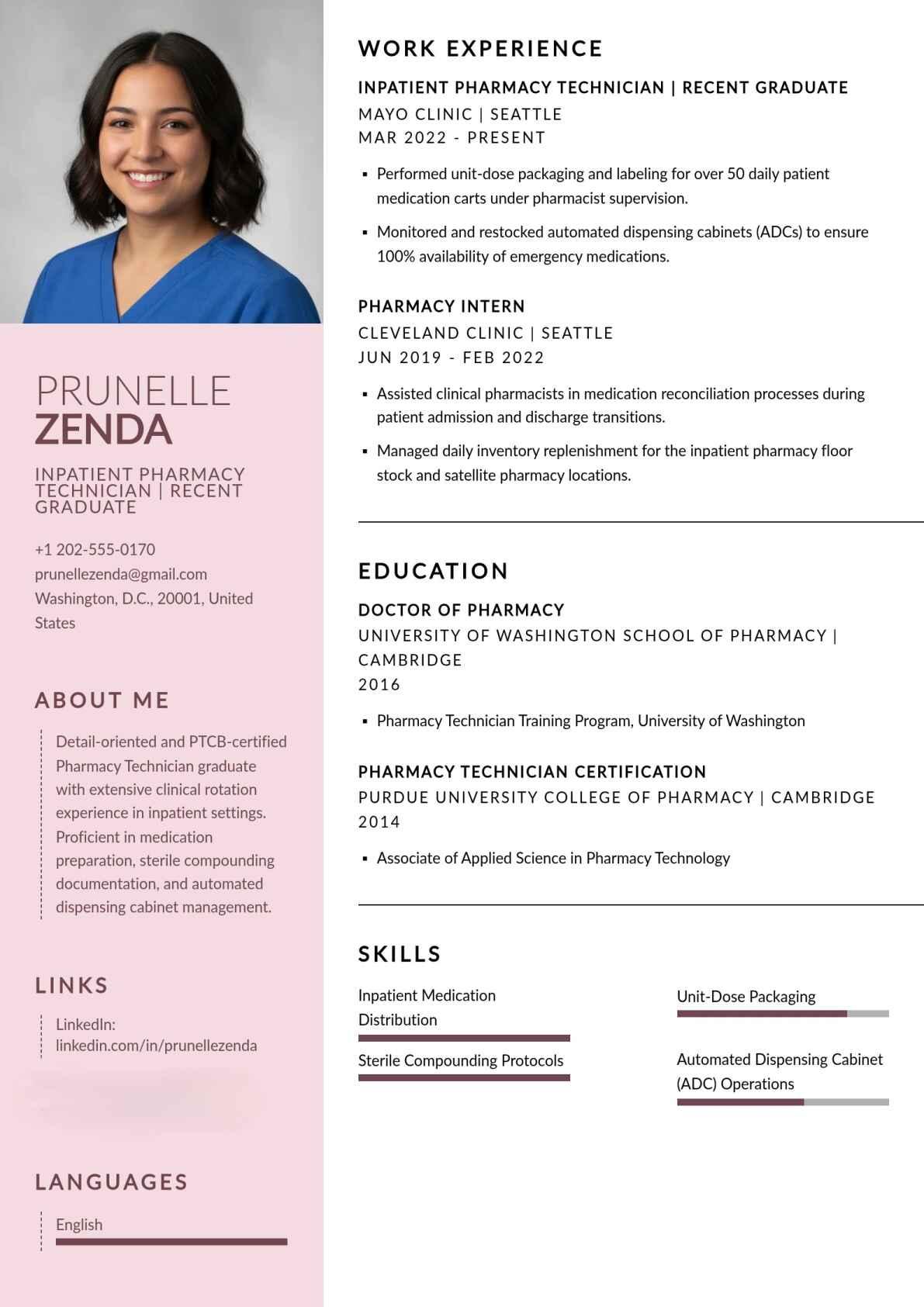
This type of resume is for recent graduates and entry-level candidates with pharmacy training, internships, hospital rotations, or limited professional experience.
For an entry-level candidate, emphasize pharmacy technician education, relevant clinical or hospital rotations, medication preparation knowledge, documentation, inventory procedures, and any applicable certification or state registration.
Why Employers Shortlist This Resume
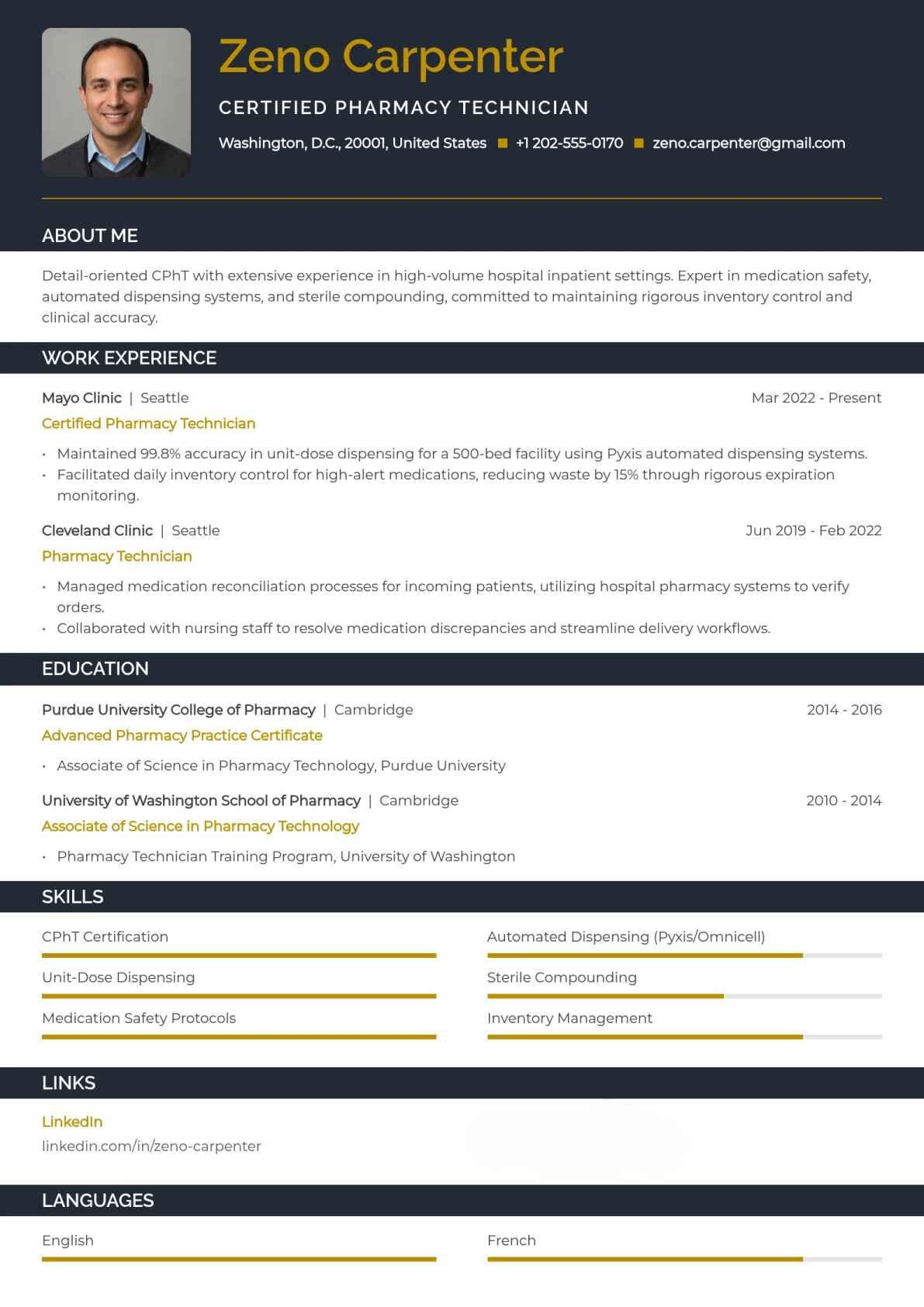
This resume is ideal for certified pharmacy technicians applying for hospital positions and wanting to showcase their credentials and technical expertise.
What Hiring Managers Look For
Place CPhT credentials prominently and link them to hospital pharmacy skills such as medication preparation, unit-dose dispensing, inventory control, pharmacy systems, automated dispensing, and medication safety.
PTCB CPhT eligibility requires approved training or qualifying work experience, plus other requirements and a passing PTCE score. Verify current requirements directly with PTCB.
Why Employers Shortlist This Resume
This resume is ideal for technicians with experience in sterile compounding, IV preparation, aseptic technique, and cleanroom procedures.
What Hiring Managers Look For
For IV-room or sterile-compounding roles, highlight sterile preparation, IV admixture, aseptic technique, cleanroom procedures, quality control, and relevant training or credentials.
USP <797> sets standards to reduce contamination, infection, and dosing risks. Mention it only if your actual training or experience supports the claim.
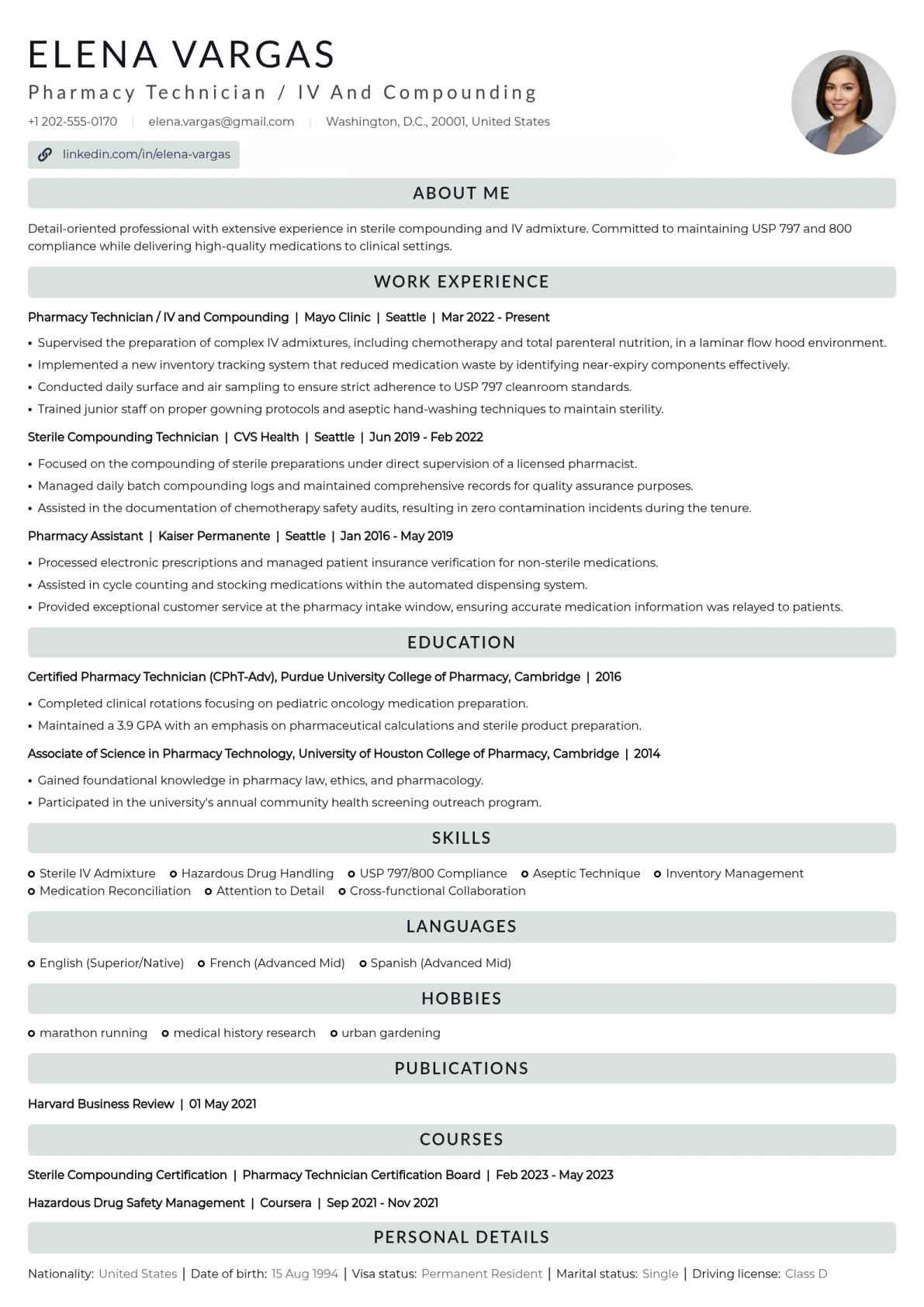
Why Employers Shortlist This Resume
An effective resume should quickly communicate your qualifications and hospital pharmacy experience. Use clear sections for your summary, skills, certifications, education, and work history, with the strongest evidence of your abilities near the top.
Your summary should establish your inpatient experience, credential status, pharmacy setting, and most relevant technical capabilities in two to four sentences.
 For example, instead of:
Pharmacy technician with experience working in a hospital.
 Use:
Use:
Certified pharmacy technician with 4 years of inpatient hospital experience specializing in unit-dose dispensing, medication distribution, automated dispensing cabinet replenishment, and inventory control.
For an IV-focused position, a stronger summary would emphasize sterile compounding and IV preparation instead:
Use:
Certified pharmacy technician with 4 years of hospital experience specializing in sterile compounding, IV admixture, aseptic technique, and cleanroom procedures.
The right summary changes with the target department. Do not lead with sterile compounding if the position is primarily central pharmacy distribution, and do not bury sterile-compounding expertise when applying for an IV-room role.
Choose skills based on the inpatient pharmacy department and responsibilities listed in the job posting.
Core inpatient skills:
Note: You can also use specific pharmacy software names relevant to inpatient roles.
For central inpatient pharmacy positions, emphasize:
For IV/sterile-compounding positions, emphasize:
For oncology or hazardous-drug positions, emphasize only applicable experience, such as:
Do not create one long list containing every pharmacy keyword. Match the skills to the department and only include competencies you can support with actual training or experience.
Make credentials easy to find instead of requiring recruiters to search through the resume.
Depending on the candidate and job requirements, this section may include:
For inpatient pharmacy roles, do more than describe what you did. Show the volume, accuracy, technical system, safety process, or operational result associated with your work.
Useful metrics include:
For example:
Weak:Stronger:
The stronger bullet shows the pharmacy task, scope, and measurable outcome.
Hospital pharmacy employers need technicians who can work accurately while following strict procedures. Your bullet points should therefore emphasize technical ability, reliability, volume, accuracy, safety, and measurable outcomes.
Use this formula:
Whenever possible, add real numbers such as medication orders processed, technicians trained, inventory value managed, error reduction, or workflow improvements.
Keywords help recruiters and applicant tracking systems identify qualifications relevant to hospital pharmacy positions. Use them naturally in your summary, skills, certifications, and experience sections.
Central pharmacy keywords:
unit-dose dispensing, medication preparation, medication distribution, medication delivery, order processing, ADC replenishment, inventory control
IV/sterile-compounding keywords:
IV admixture, sterile compounding, aseptic technique, compounded sterile preparations, cleanroom procedures, quality control
Technology keywords:
pharmacy information systems, automated dispensing cabinets, Pyxis, Omnicell, medication distribution systems
Safety and compliance keywords:
medication safety, quality control, expiration-date checks, inventory reconciliation, sterile preparation procedures
Credential keywords:
CPhT, Certified Pharmacy Technician, pharmacy technician registration, sterile-compounding training
Do not add a keyword simply because it appears in a job description. Include it only when it accurately reflects your experience, training, or credential.
For longer resume articles, a linked table of contents can also improve navigation and readability.
Note: Pharmacy technician resumes should be one page for less than 10 years experience.
Your resume should make your hospital pharmacy expertise easy to recognize within seconds. Start with one of the examples above, replace generic duties with your actual accomplishments, and tailor your skills and keywords to each position.
When you're ready to turn your experience into a polished, ATS-friendly resume, use a professional resume builder to organize your qualifications and create a job-ready application.
Our collection of expertly designed cover letter templates will help you stand out from the crowd and get one step closer to your dream job.