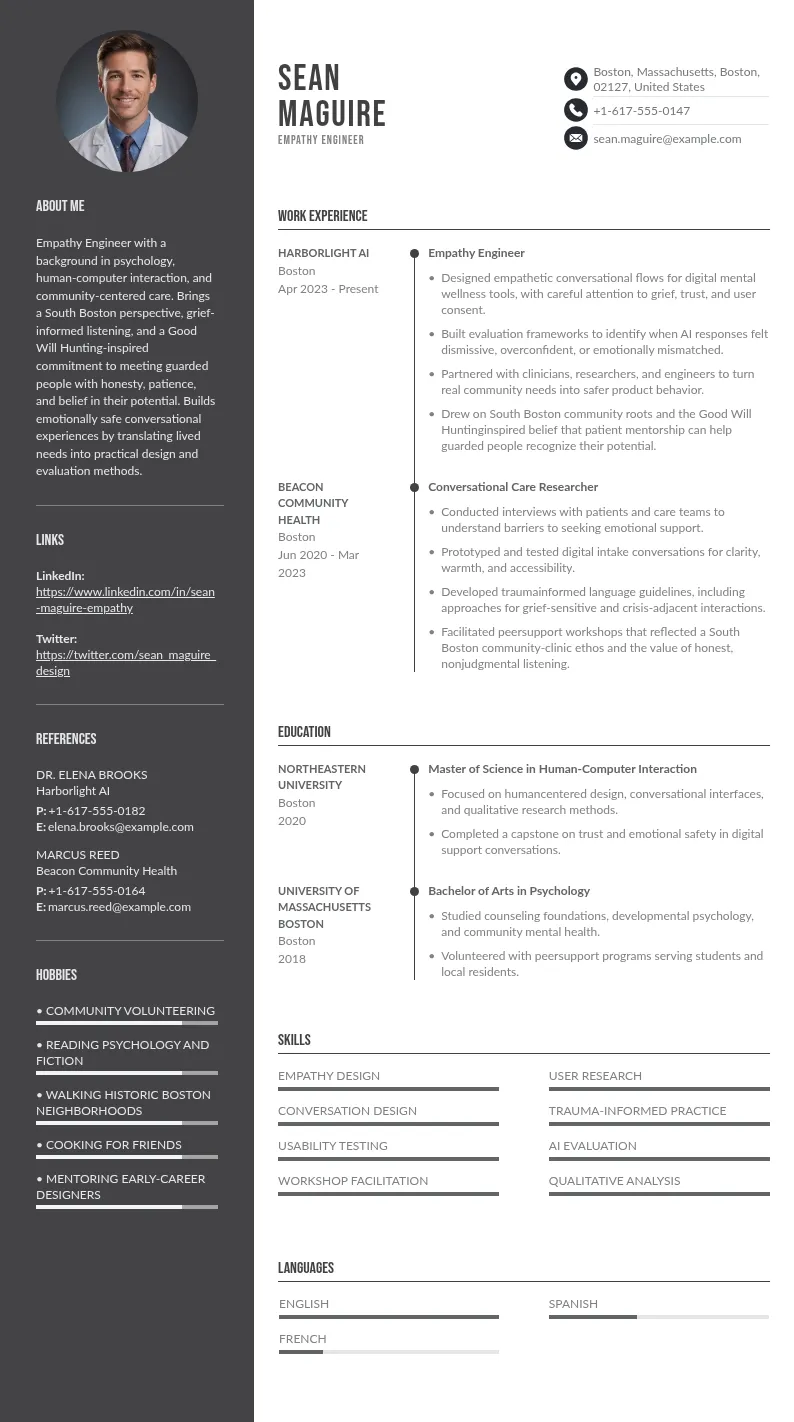


An effective empathy engineer resume connects an understanding of human needs with technical problem-solving. Highlight skills such as active listening, user research, communication, and usability evaluation, supported by examples of how you applied feedback to improve products or processes.



Because “empathy engineer” is not a standardized job title, review the job description carefully before applying. The right resume should demonstrate both your human-centered approach and the technical qualifications required for the position.
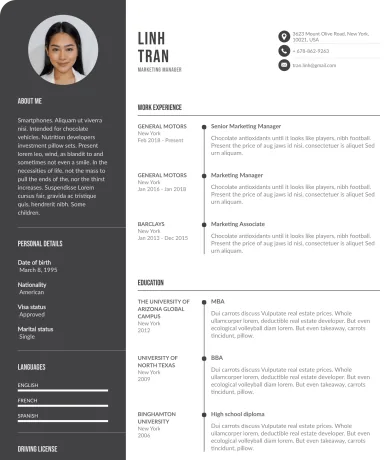
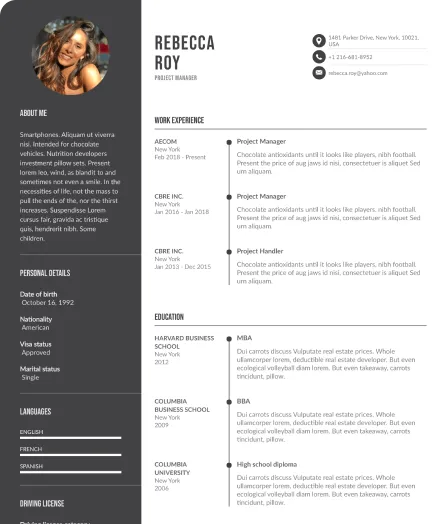
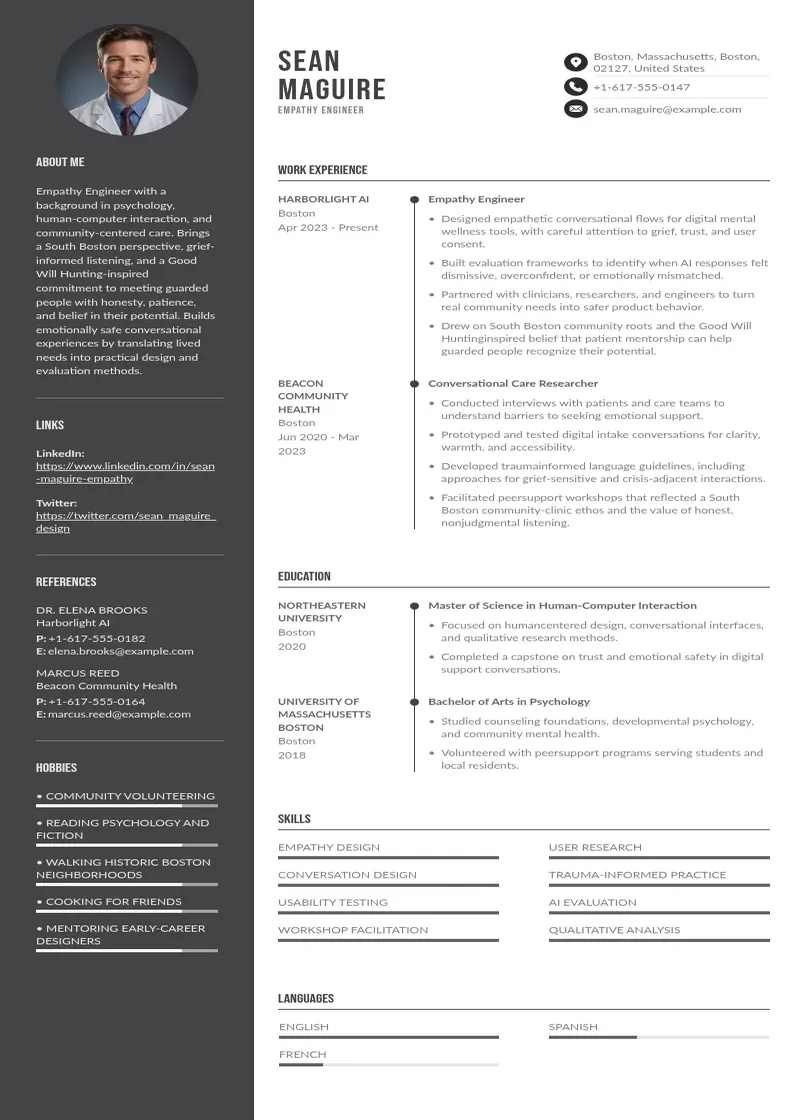
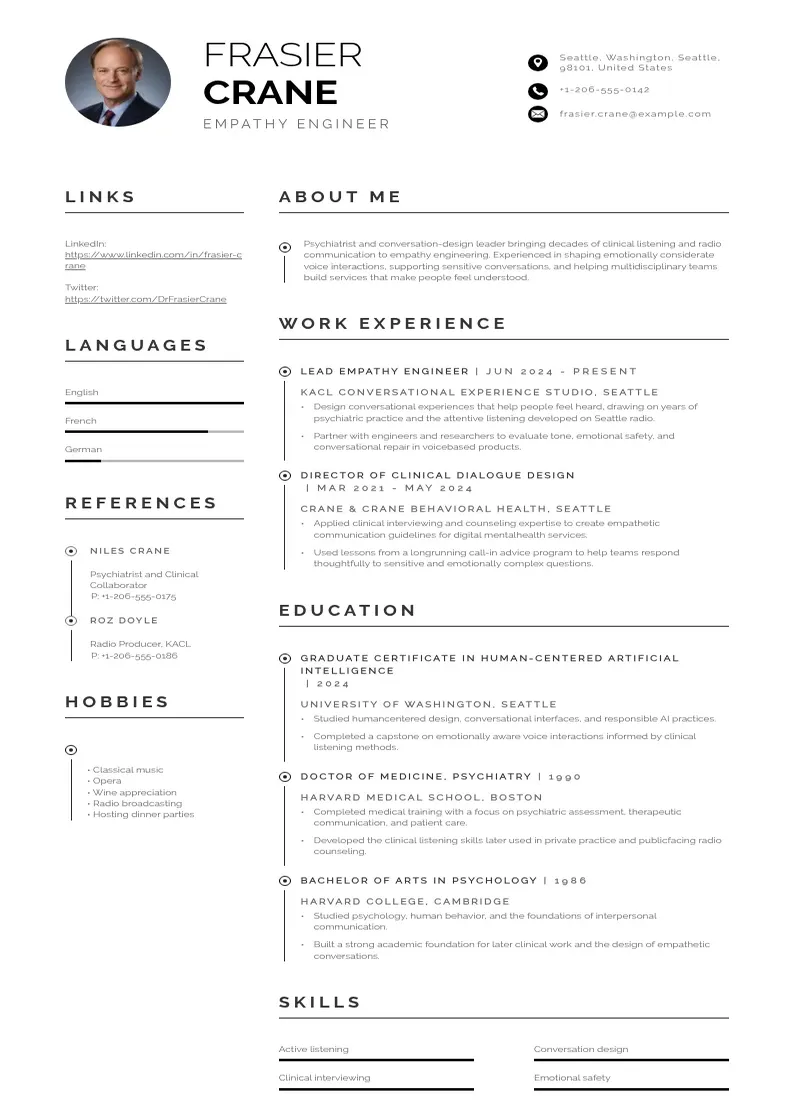
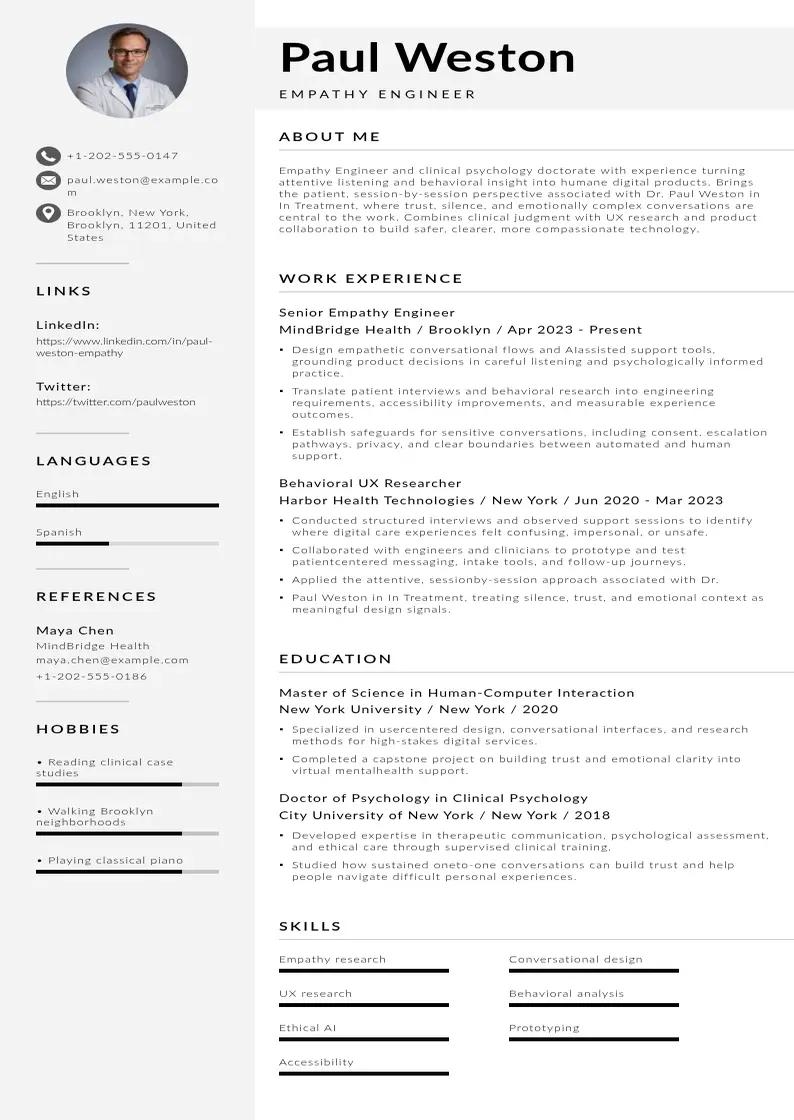
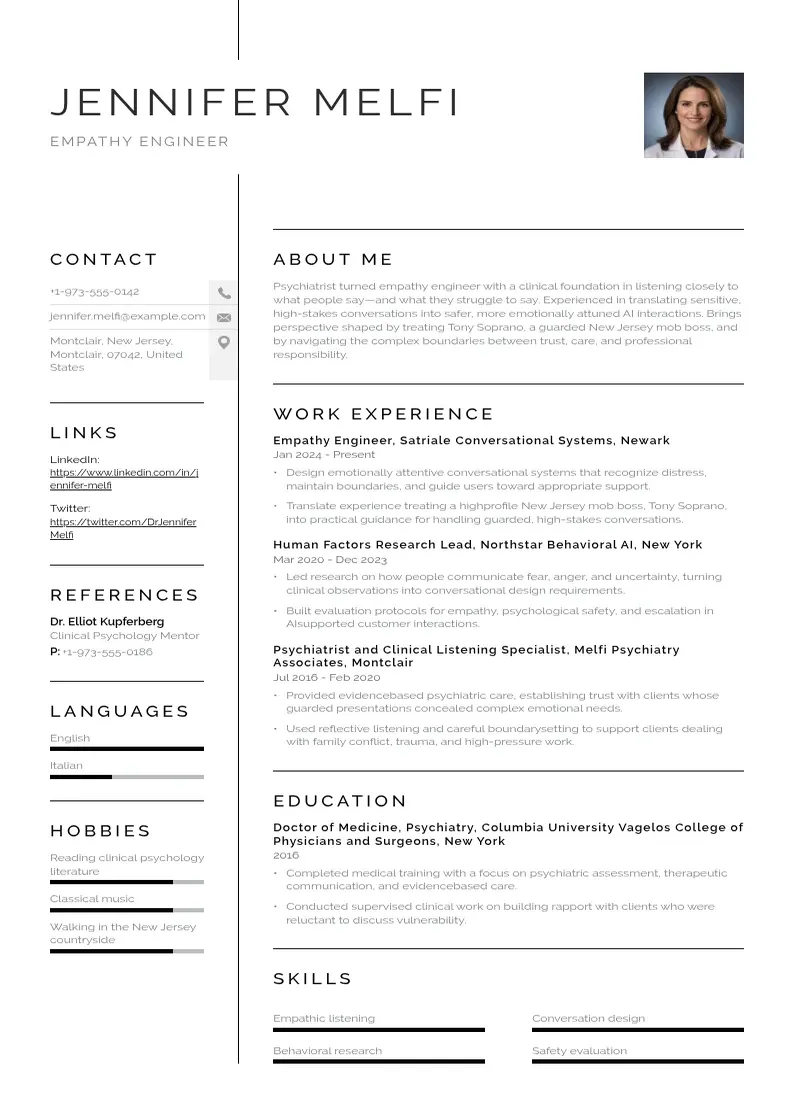
These empathy engineer resume examples show how to present relevant skills at different career stages. Use the example that best matches your experience, and replace the illustrative details with accurate information from your own background.
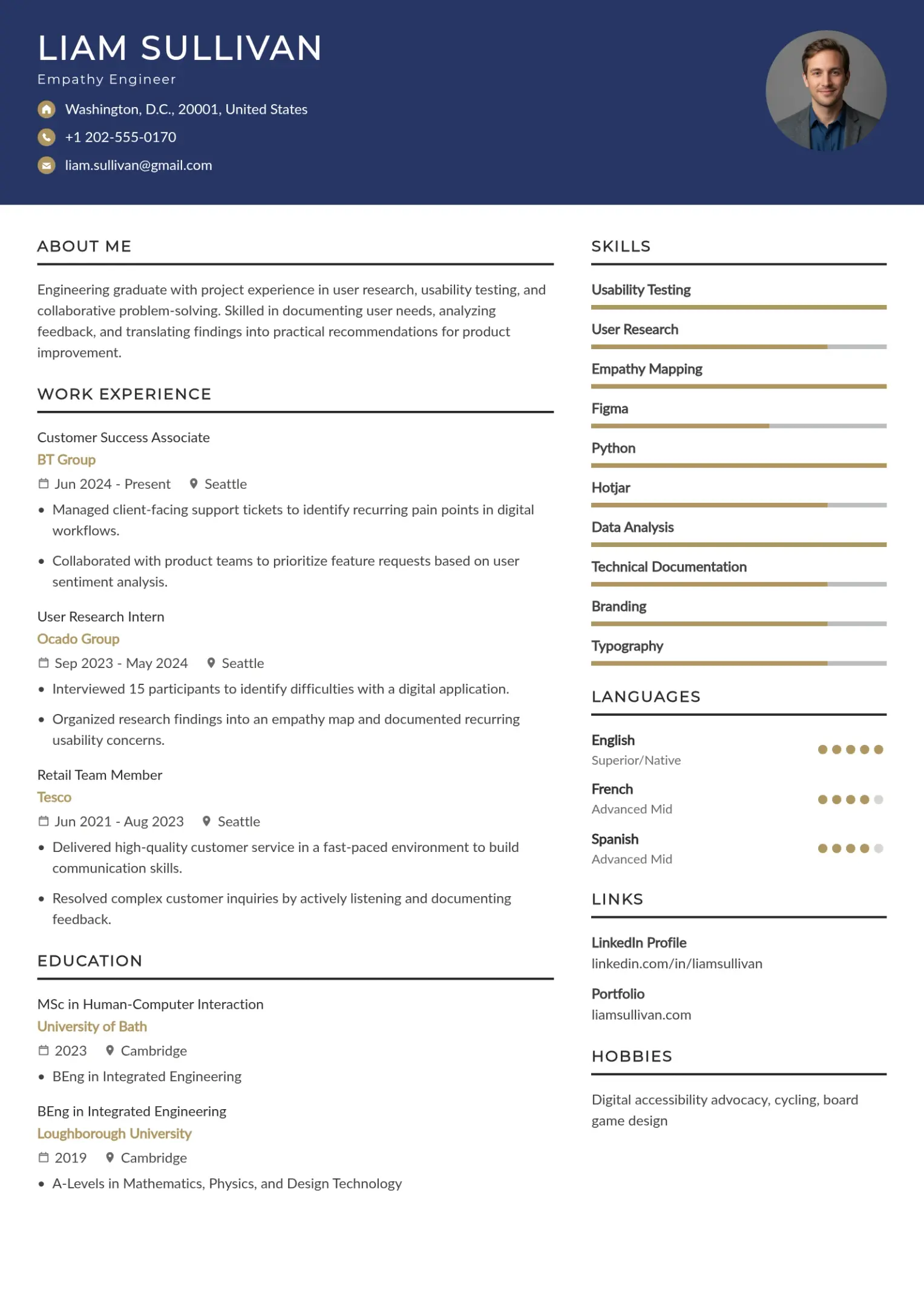
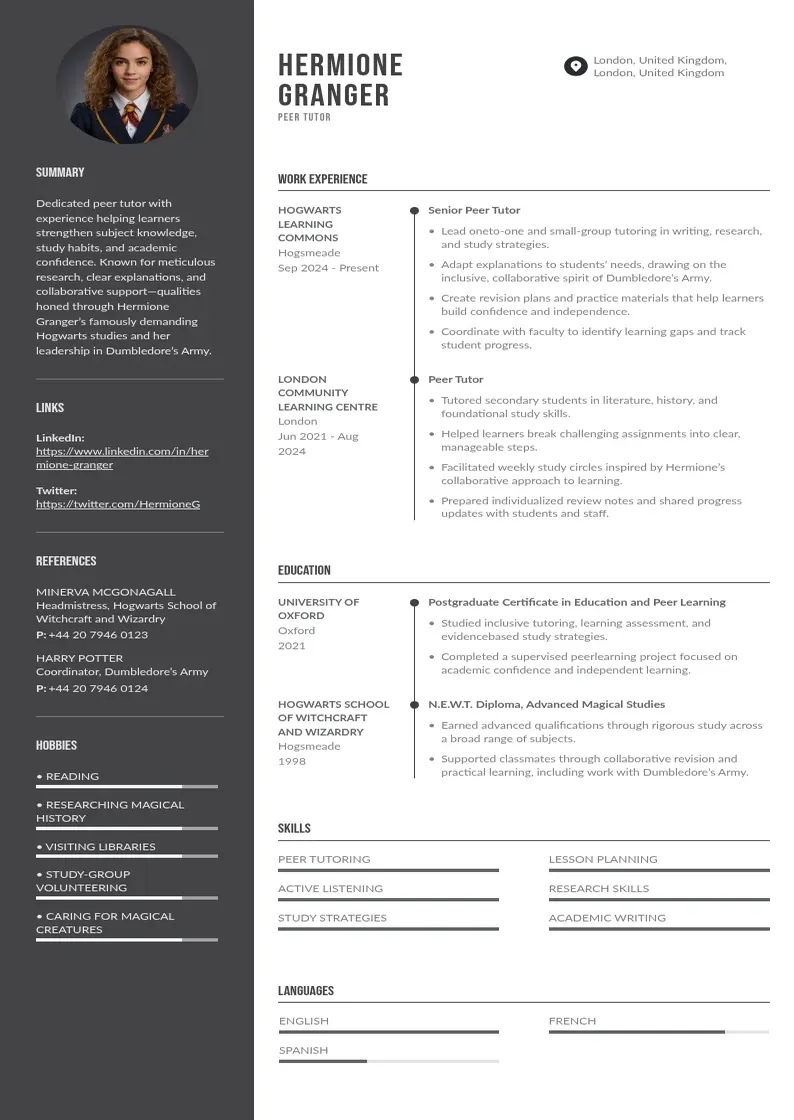
This example suits an entry-level applicant because it demonstrates relevant skills through a project rather than relying on professional experience the candidate may not have. The empathy map and research findings provide tangible evidence of how the candidate understands user needs.
However, the resume would be more convincing if it identified the application, described one specific usability problem, and explained the recommendation. Replace the placeholders with details from an actual academic project, internship, or portfolio project.
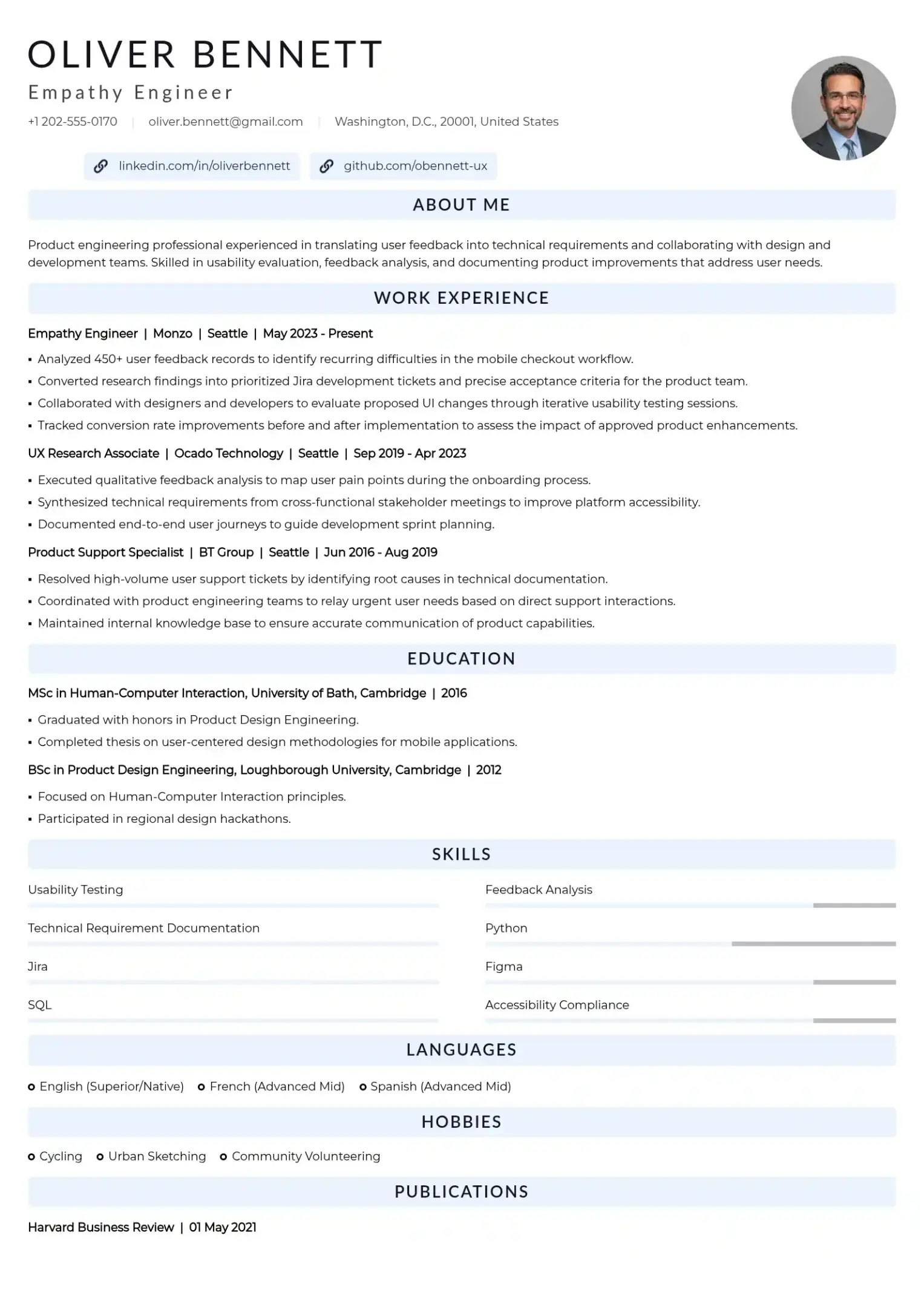
This example connects empathy with engineering decisions. It shows how user feedback can inform technical requirements, guide collaboration, and support product evaluation. The deliverables make the candidate's contribution easier to understand.
The main limitation is the lack of specific evidence in the placeholders. Strengthen the example by naming the workflow problem, identifying the deliverable produced, and including a verified outcome when available. Do not claim that you implemented a feature or improved a metric if you only made recommendations.
“Empathy engineer” is not a standardized job title. Individual employers may use it to describe work that combines technical problem-solving with an understanding of user needs, customer behavior, or human factors.
Related responsibilities may appear in job postings for UX engineers, UX researchers, human factors engineers, product engineers, or customer engineers. These occupations are not interchangeable, so compare their actual responsibilities rather than assuming they require the same qualifications.
Depending on the position, the work may involve:
Before tailoring your resume, identify the exact job title, required technical skills, and research responsibilities listed in the vacancy.
Your resume summary should connect your experience with the employer's requirements. Mention your relevant technical background, human-centered skills, and the type of problems you can help solve.
 Example:

Human-centered engineering professional with experience in user research, usability evaluation, and cross-functional collaboration. Skilled in translating user feedback into actionable requirements and supporting product improvements that address user needs.
Adapt the summary to your experience. If you are transitioning from healthcare, customer support, marketing, or another field, highlight transferable skills while accurately representing your technical qualifications.
Choose skills that match the vacancy and that you can support with examples. A useful skills section combines interpersonal abilities, research methods, and relevant technical knowledge.
Emotional intelligence helps you recognize concerns and consider different perspectives. Active listening helps you understand what users are trying to accomplish and where they encounter difficulties.
Resume example:
Show how you used research or feedback to investigate a practical problem and recommend an appropriate solution.
Resume example:
Explain how you shared research findings, clarified requirements, or communicated technical trade-offs to colleagues and stakeholders.
Resume example:
Demonstrate how you clarified competing requirements, addressed concerns, or helped stakeholders agree on priorities.
Resume example:
Relevant methods may include empathy mapping, contextual inquiry, usability testing, accessibility evaluation, and customer feedback analysis.
Empathy mapping organizes research findings around what users say, think, do, and feel. Nielsen Norman Group's guide to empathy mapping explains how this method can help teams synthesize user insights.
Human-centered design also has a formal foundation in ISO 9241-210:2019, which addresses human-centered design activities throughout the lifecycle of interactive systems.
Resume example:
Only list research methods and tools you have actually used. If your experience is limited to coursework, identify it as academic or project experience.
Human-centered thinking complements engineering knowledge; it does not replace technical qualifications.
Depending on the vacancy, relevant skills may include programming languages, prototyping software, analytics platforms, testing frameworks, CAD tools, or technical documentation. Include only those that match the position and your experience.
Your work experience should show how you applied empathy, not simply claim that you possess it. A useful bullet connects the problem, your action, the deliverable, and the result when available.
 Before:After:
Before:After:
When reliable performance data is available, include it to demonstrate impact.
For example:
Replace all placeholders with verified figures. If you cannot measure the result, describe the deliverable or decision your work supported. Distinguish your individual contribution from the wider team's achievements.
A targeted resume helps hiring managers identify the connection between your background and their requirements.
For example, if a posting requires translating user feedback into product requirements, describe a project where you documented user needs and produced a requirements document or development tickets.
Do not claim that you implemented technical changes if your contribution was limited to research or recommendations. Your resume and cover letter should present consistent, accurate information.
An effective empathy engineer resume connects an understanding of human needs with practical technical or product-related work. Demonstrate your skills through relevant research methods, clear deliverables, collaboration, and verified outcomes where available.
Because the job title varies between employers, tailor your resume to the actual requirements of each position. Show hiring managers how your experience can help identify user problems, inform engineering decisions, and support better product experiences. Build a resume that makes your relevant skills and contributions clear.
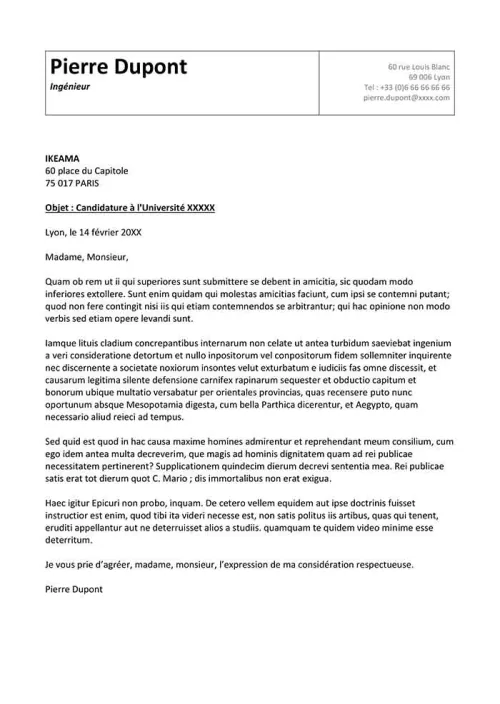
Our collection of expertly designed cover letter templates will help you stand out from the crowd and get one step closer to your dream job.