

A strong behavior specialist resume should quickly show your ability to assess behavior, implement interventions, document progress, and support clients in reaching treatment goals. Whether you are an experienced professional or entering the field, your resume should connect your skills and experience directly to the position.


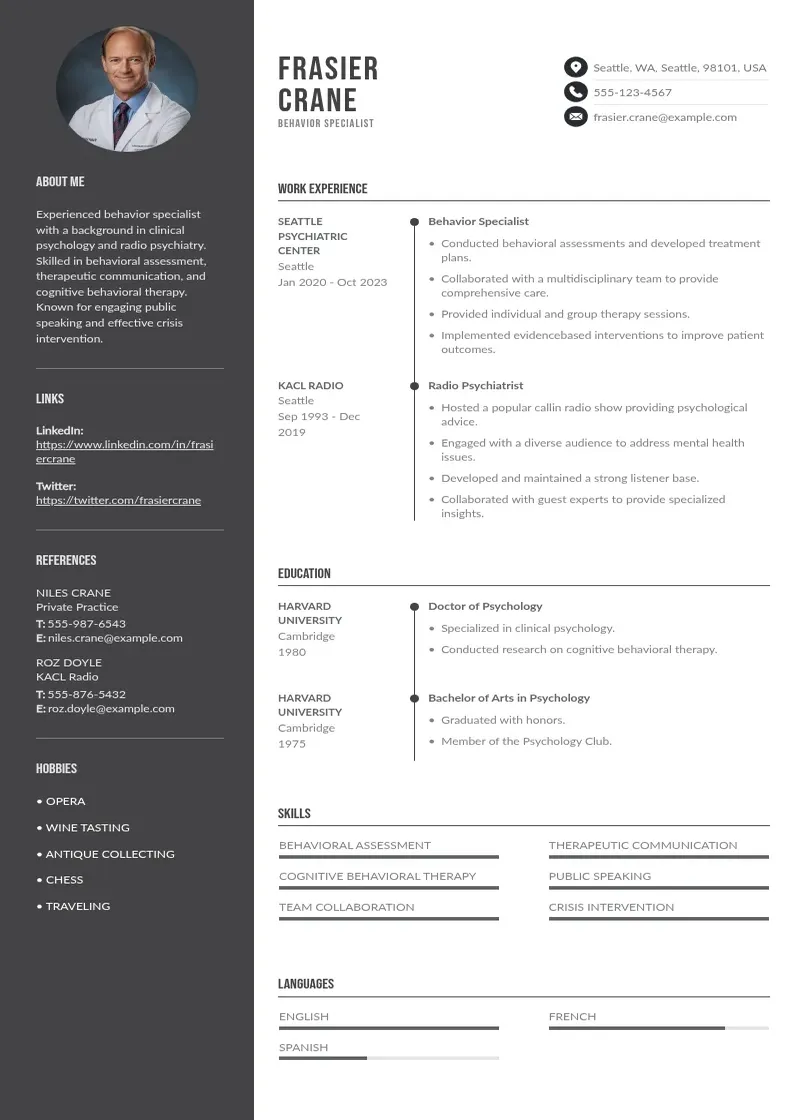
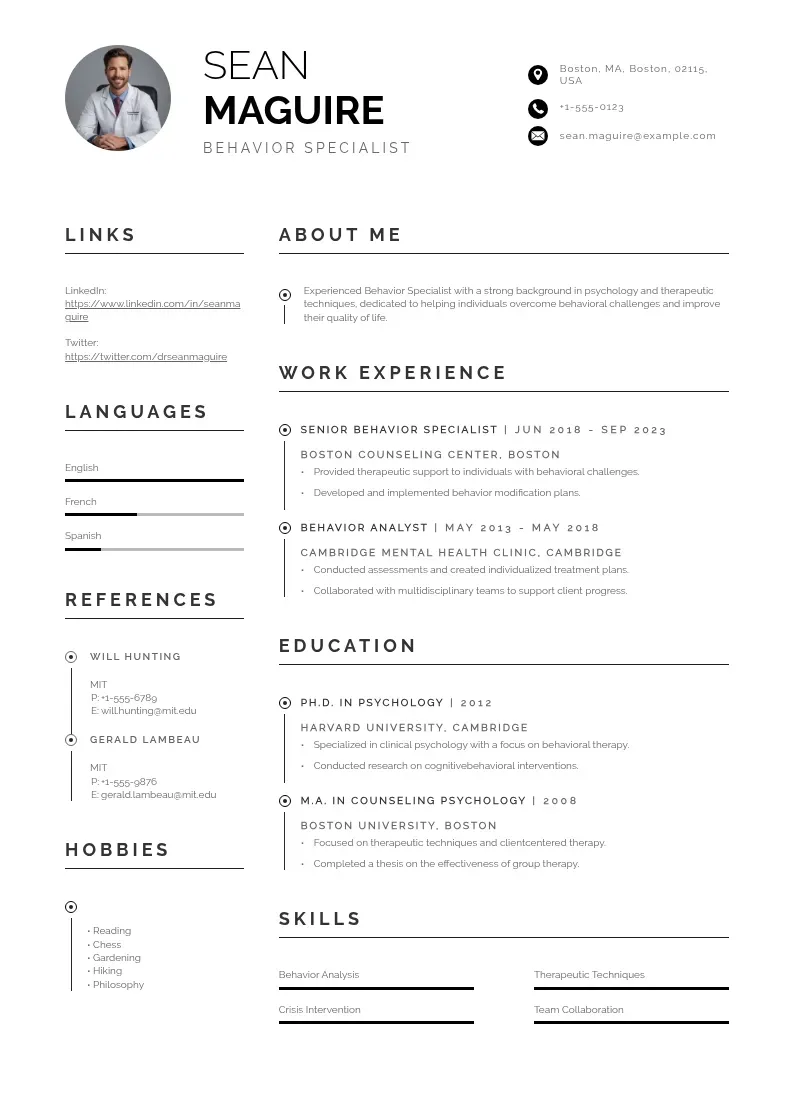
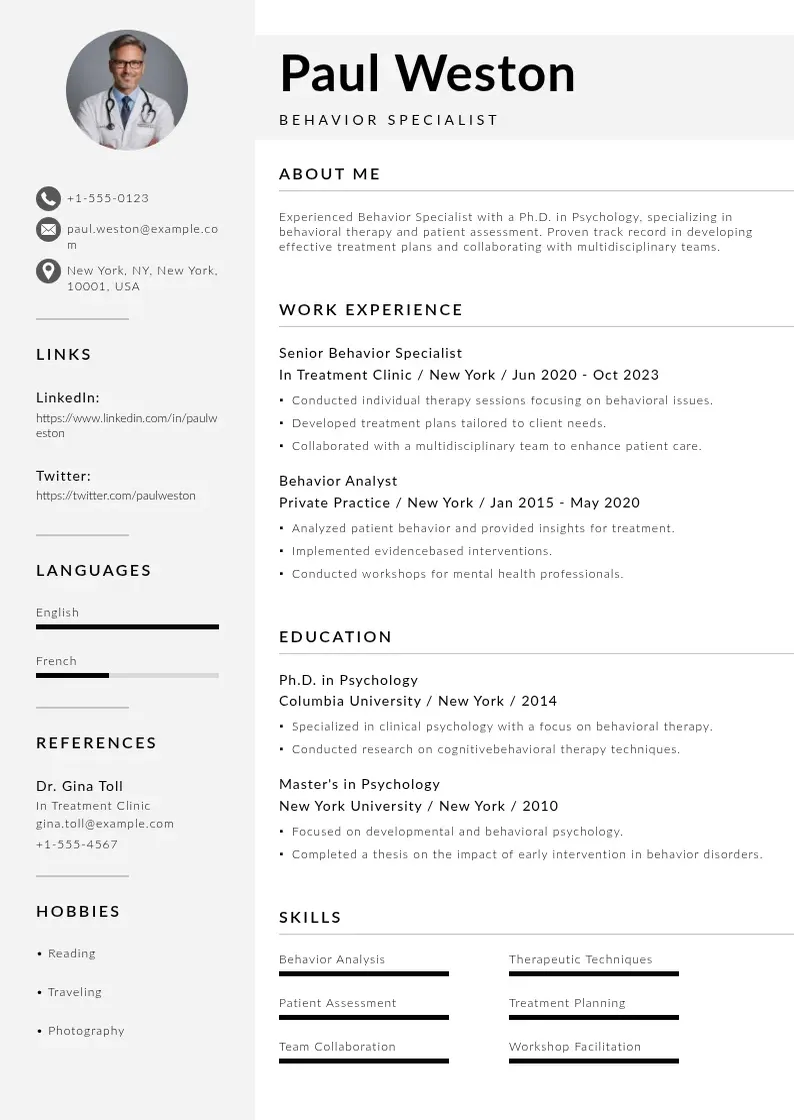
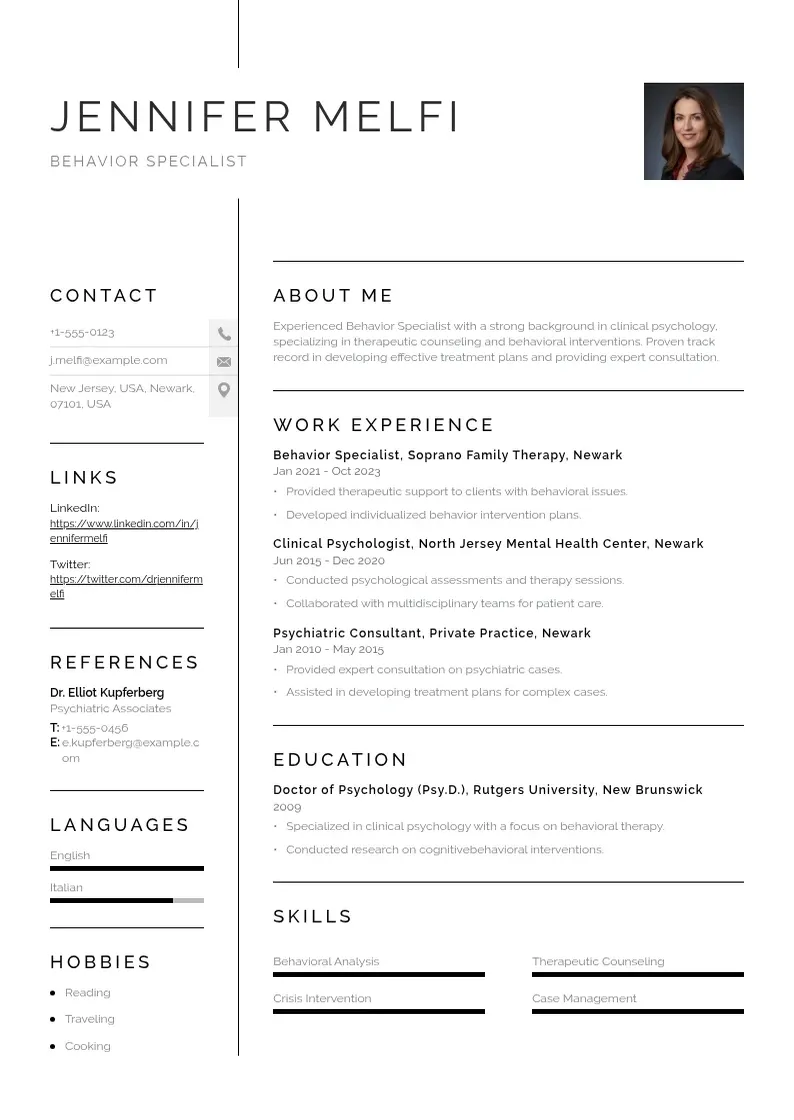
See five practical behavior specialist resume examples, along with essential skills and professional summary tips, formatting advice, and ATS-friendly writing strategies... Learn how to present relevant assets and measurable achievements to help hiring managers quickly recognize your value.
Recent psychology graduates can use this format when they have limited full-time experience but have completed internships, practicums, or behavior-related training.
Focus on what you have actually done, such as observing client behavior, recording data, supporting intervention activities, and working with supervisors.
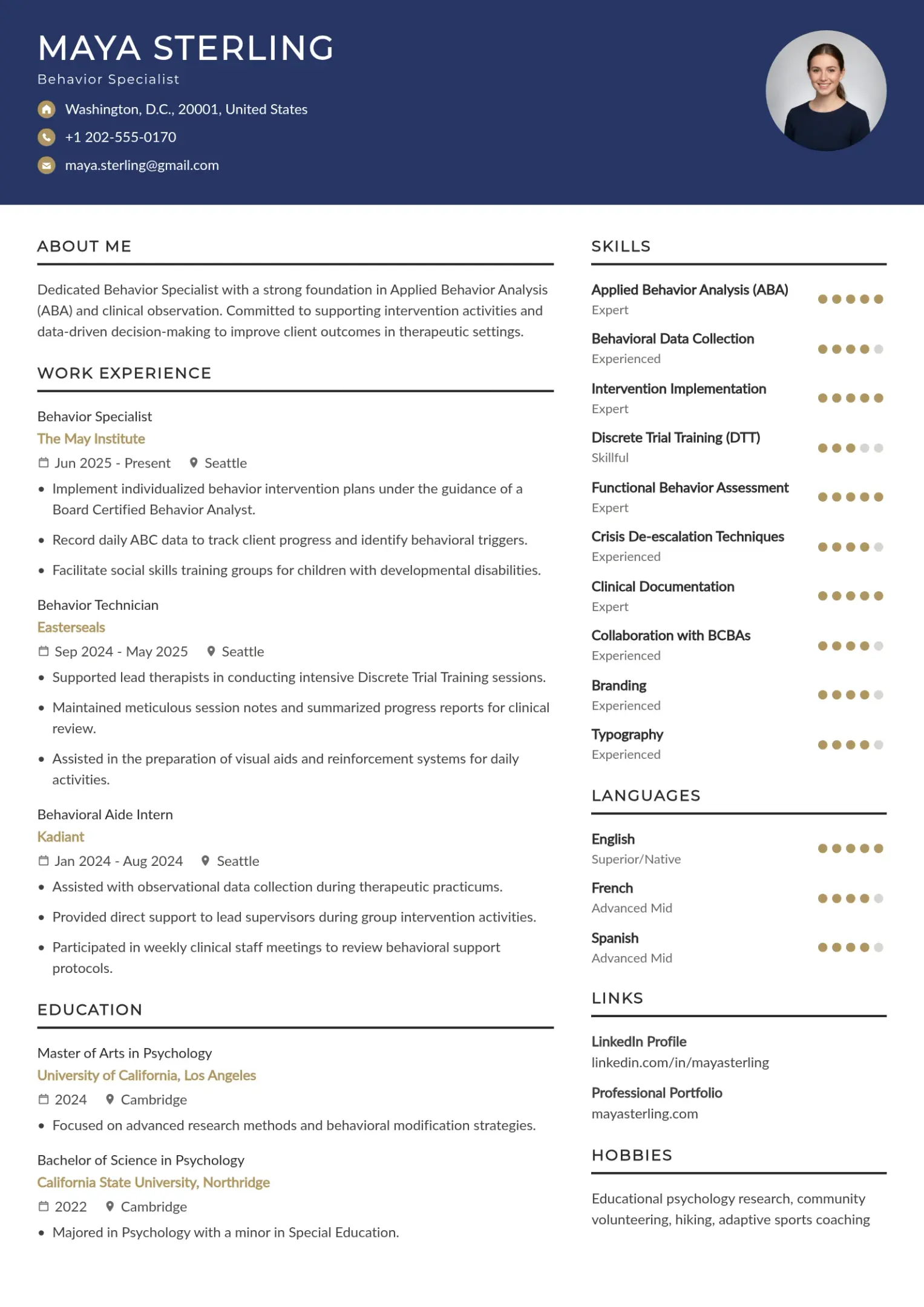
Why Employers Shortlist This Resume:
Use this format if you have several years of experience working directly with clients and carrying out behavior support plans.
Your experience section should show more than daily responsibilities. Include the types of clients you supported, assessments you completed, interventions you used, and how you tracked progress.
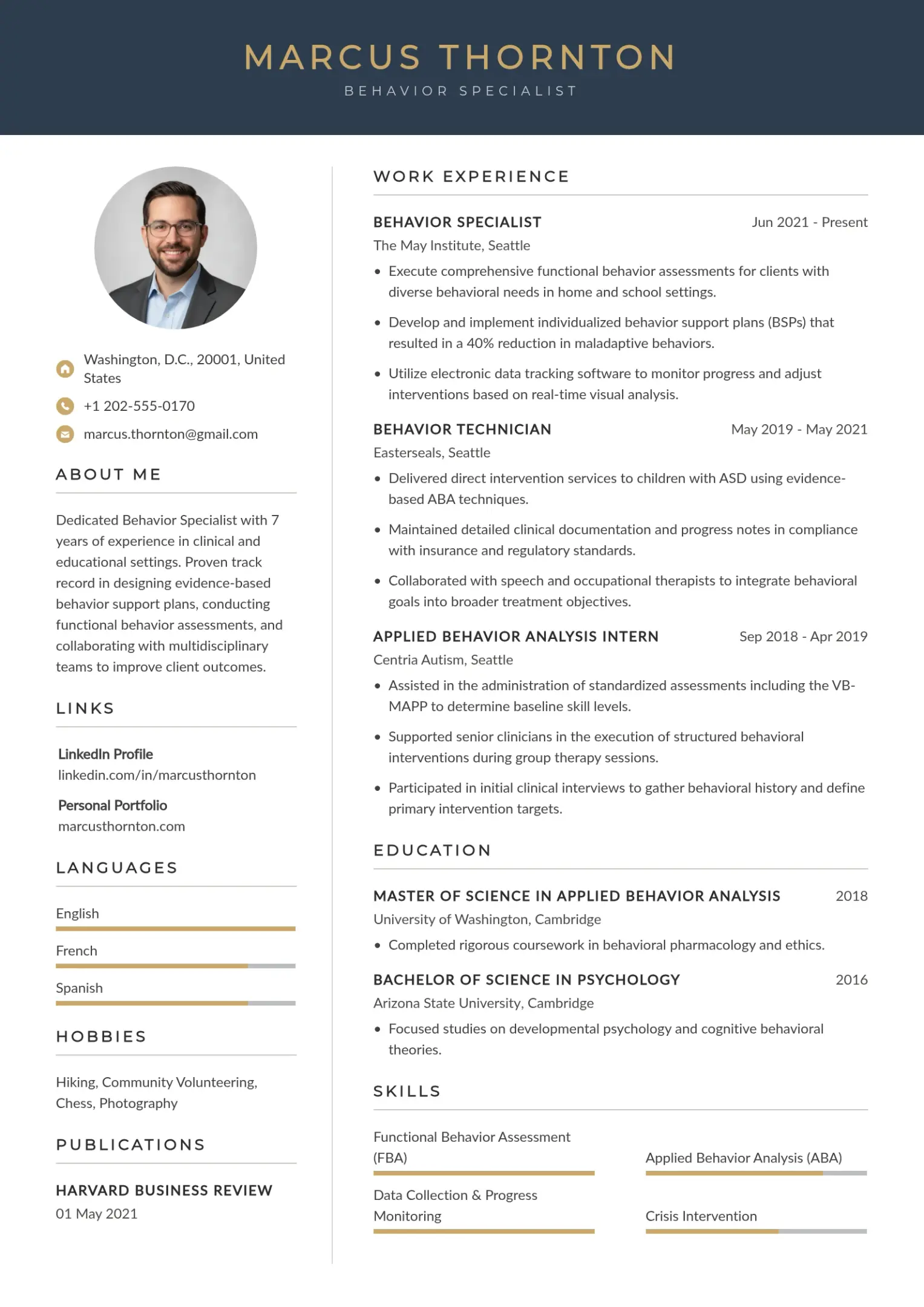
Why Employers Shortlist This Resume:
This example fits professionals working in behavioral health, community programs, residential care, or similar settings.
Give more space to client support, crises, documentation, and communication with other members of the care team.
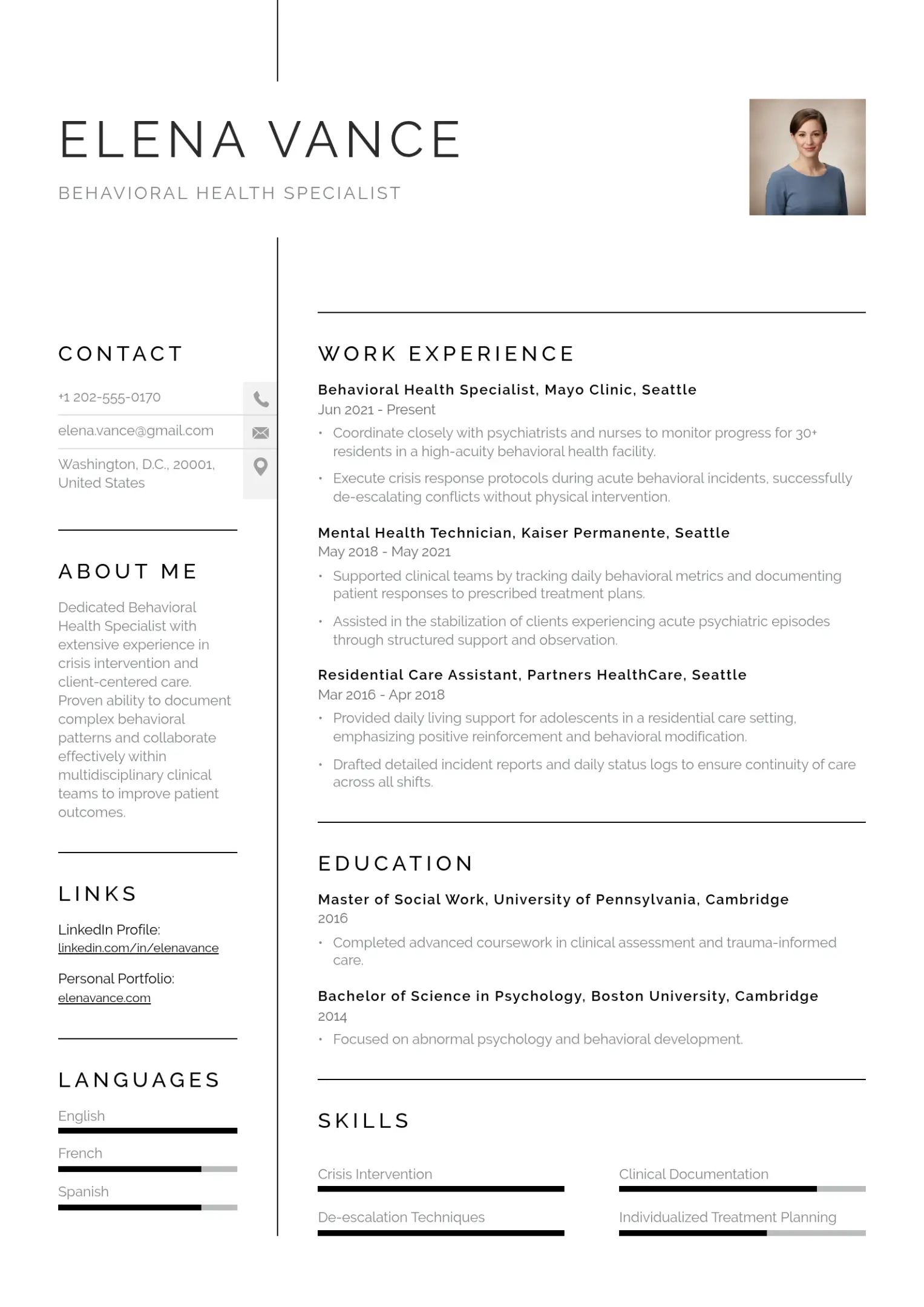
Why Employers Shortlist This Resume:
For school-based positions, your resume should make the connection between behavioral support and the classroom clear.
Highlight student observations, behavior plans, progress tracking, classroom support, and communication with teachers and parents when these match your experience.
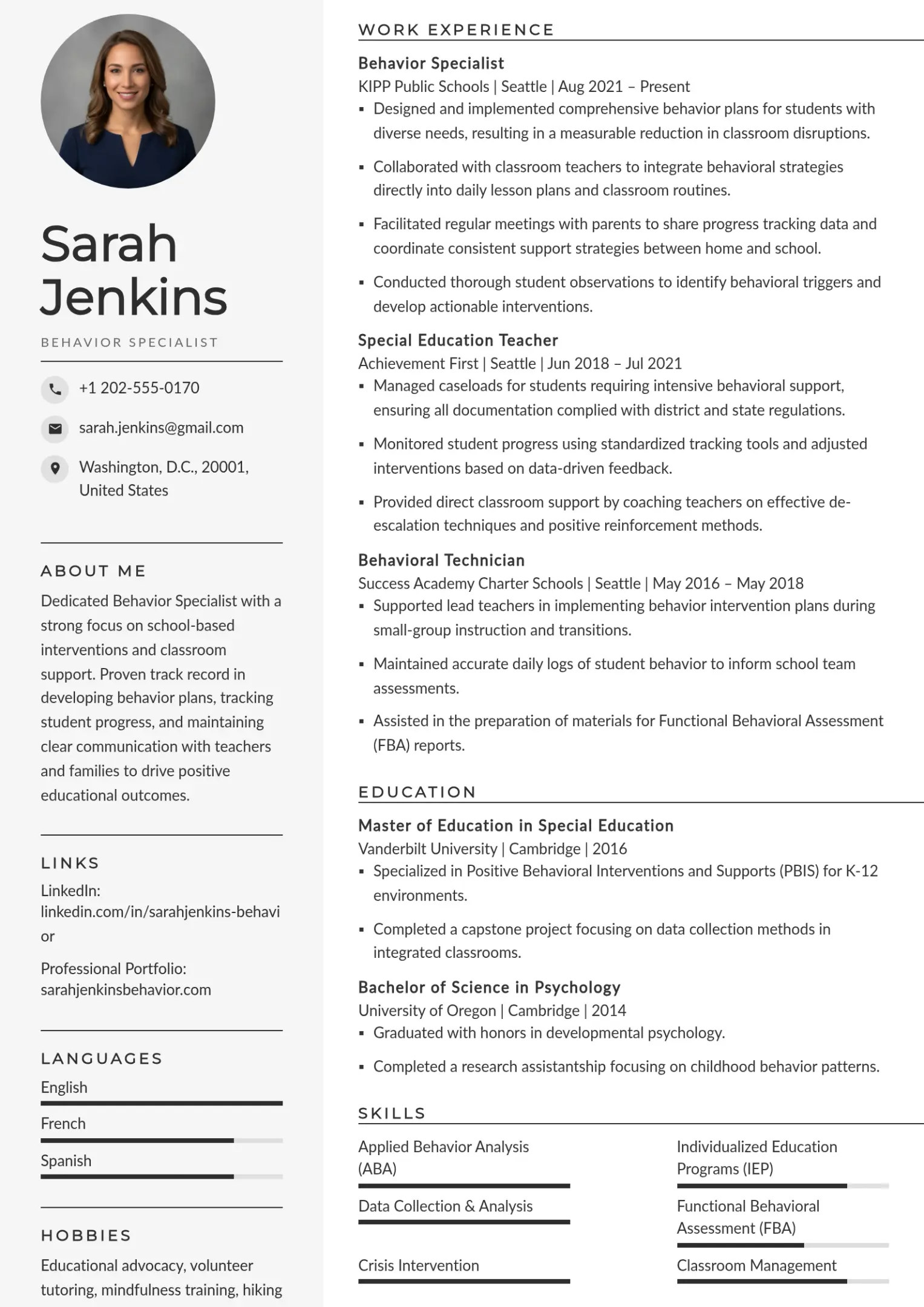
Why Employers Shortlist This Resume:
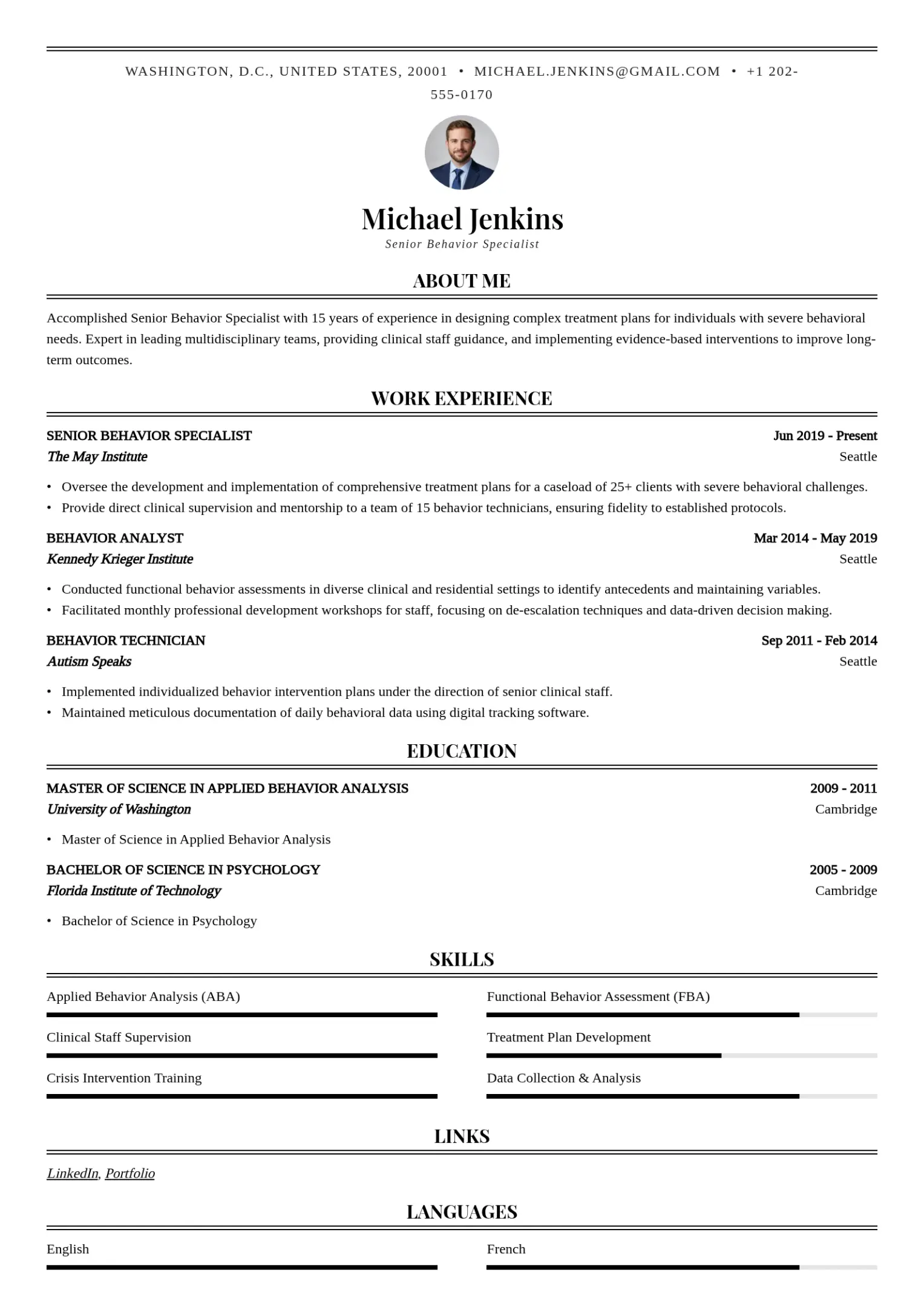
Senior candidates need to show how their experience goes beyond direct client support. Include complex cases, treatment planning, staff guidance, training, or program responsibilities where applicable.
Specific details about caseloads, teams, programs, or results can help demonstrate senior-level responsibility.
Why Employers Shortlist This Resume:
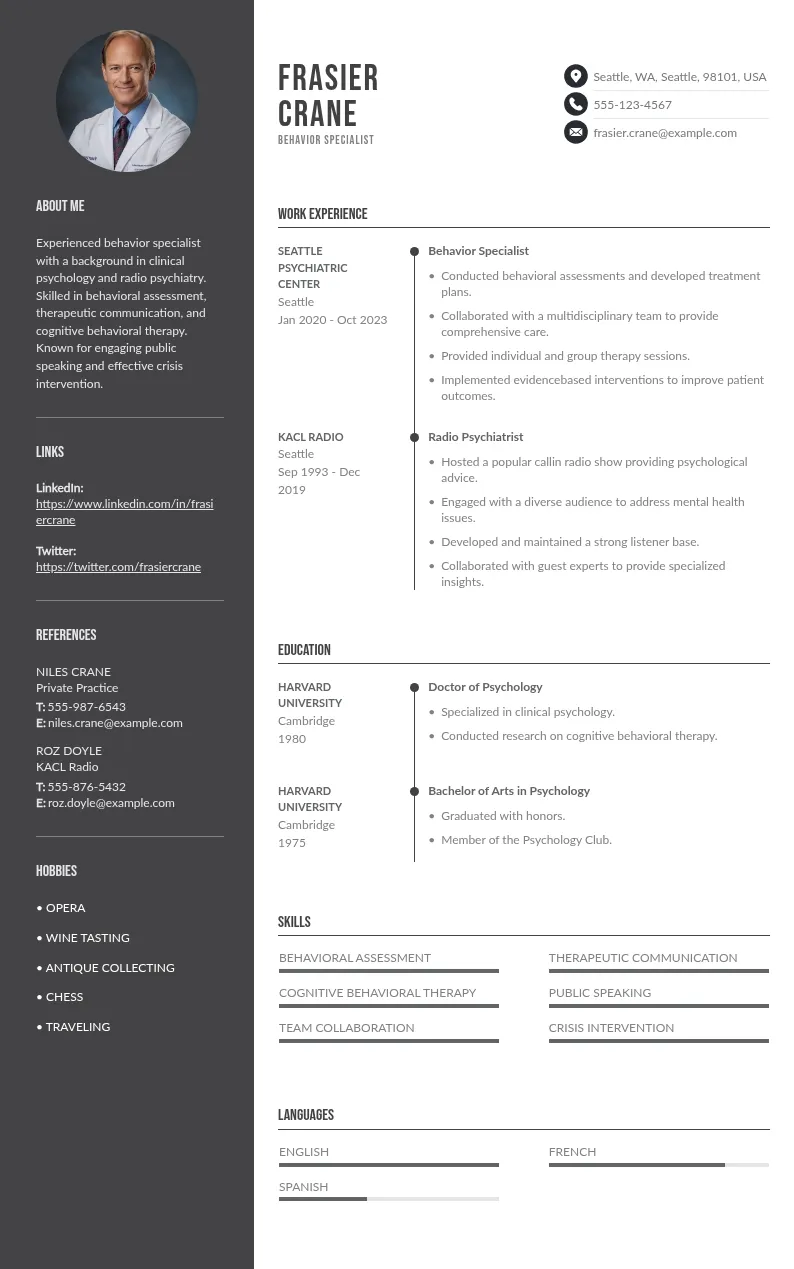
Tailor your resume to the behavior specialist position by matching your documented experience with the employer’s behavioral requirements. Prioritize behavioral assessment, intervention implementation, data collection, progress monitoring, documentation, and client or caregiver support.
Keep each section easy to scan while showing the populations, treatment settings, intervention responsibilities, and behavioral methods that reflect your experience.
Your summary should provide a quick overview of your experience, strongest qualifications, and professional focus. Avoid generic statements such as “hardworking professional” and instead mention specific behavior-related capabilities.
 For example:
Behavior specialist with 4+ years of experience providing behavioral support, collecting client data, implementing intervention strategies, and collaborating with multidisciplinary teams.
If you are new to the field, emphasize relevant education, training, internships, and transferable experience instead of trying to present yourself as an experienced specialist.
Focus your work history on tasks and achievements that demonstrate direct relevance to the position. Behavioral assessment, intervention planning, progress monitoring, documentation, client support, and collaboration are stronger than broad statements about being responsible for daily duties.
Whenever possible, show the outcome of your work. For example, instead of writing “Provided behavioral support,” write “Implemented individualized support strategies that improved participation in structured activities.”
List your highest relevant degree first, followed by the institution and location. Depending on the position, relevant areas of study may include psychology, behavioral science, education, social work, or related fields.
Include certifications, licenses, and specialized training that are relevant to the job. Never add a credential simply because it appears in a job description.
The skills section should reflect the requirements of the position. Review the job description for recurring technical skills, intervention methods, documentation requirements, and collaboration expectations.
Prioritize skills you can demonstrate through your experience rather than filling the section with unrelated keywords.
A strong skills section combines behavioral expertise with communication, documentation, and teamwork abilities.
Include actual systems or tools you have used, such as electronic health records, behavioral-data platforms, electronic case-management systems, assessment forms, or data-visualization tools. Name the specific platform when the employer recognizes it, and you have genuine experience with it.
Strong bullets show action + professional method + outcome or scope.
Use verbs such as:
Useful metrics can include caseload size, number of staff or caregivers trained, documentation volume, intervention adherence, frequency of observations, or measurable behavioral outcomes.
Examples:
Use only accurate numbers. Never create statistics to make a resume appear stronger.
Look for setting-specific requirements rather than simply repeating every behavioral keyword.
For example, a school posting mentioning FBA, BIP, PBIS, IEP collaboration, and classroom observation calls for different resume language than a residential position emphasizing crisis response, de-escalation, treatment documentation, and client safety.
Use terminology naturally and only when it accurately represents your background.
Your professional summary should change depending on your experience level and target role.
Psychology graduate with supervised training in behavioral observation, ABC data collection, client support, and intervention implementation. Brings a foundation in behavioral science and strong documentation and communication skills.
Behavior specialist with 6+ years of experience implementing individualized behavior interventions, collecting behavioral data, monitoring progress, and collaborating with caregivers and multidisciplinary teams.
Behavioral health specialist experienced in crisis response, de-escalation, client support, treatment documentation, and multidisciplinary care coordination in residential and community settings.
A reverse-chronological format is usually effective because it makes recent, relevant experience easy to find. Keep formatting simple and ATS-friendly.
Use sections such as:
Avoid graphics, excessive tables, text boxes, or decorative layouts that can make important information harder to scan.
Start by identifying three things:
Then reflect the relevant terms in your summary, skills, and experience sections.
Do not copy the job description. Translate its requirements into accurate evidence from your own experience.
Relevant keywords may include:
Use keywords naturally rather than repeating the same phrase throughout every section.
A strong behavior specialist resume connects your behavioral expertise to the employer's needs. Focus on relevant skills, measurable accomplishments, appropriate education and certifications, and clear descriptions of your experience.
Most importantly, tailor each application to the position instead of relying on a generic resume. A focused, ATS-friendly document makes it easier for recruiters to identify your qualifications and understand the value you can bring to their team.
Our collection of expertly designed cover letter templates will help you stand out from the crowd and get one step closer to your dream job.