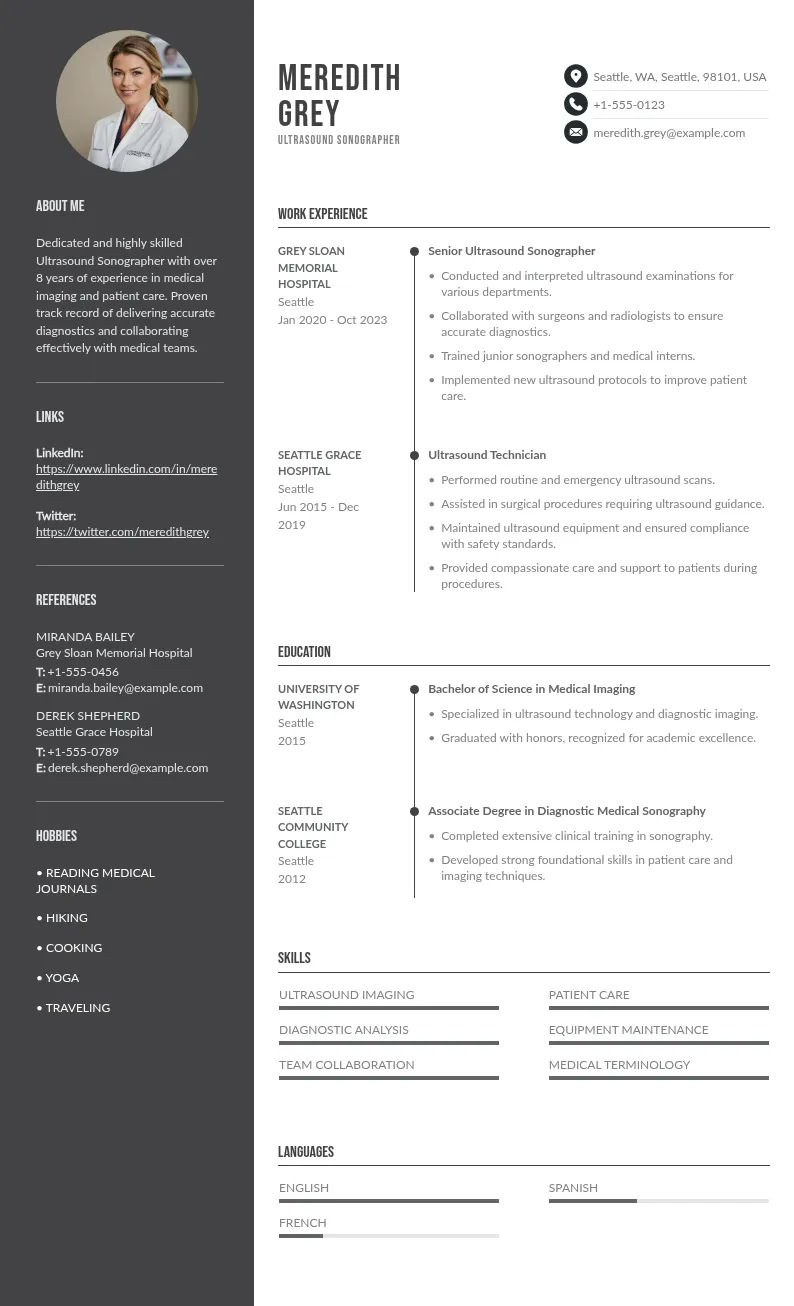
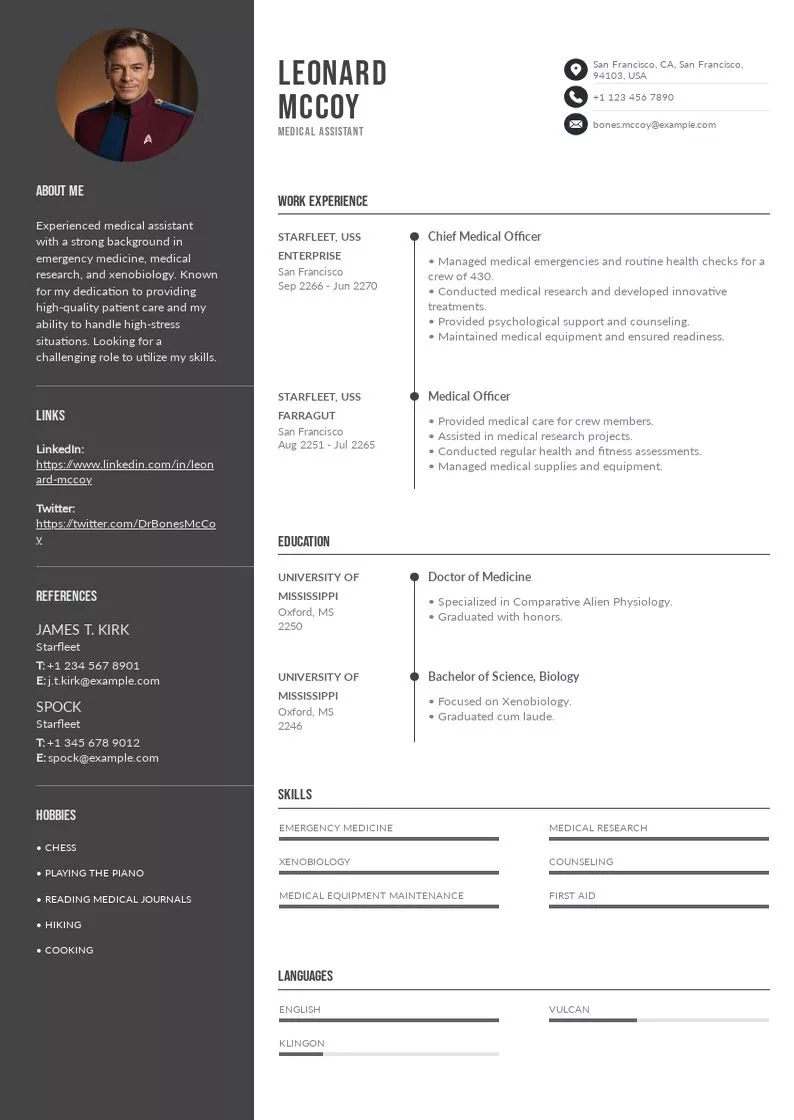
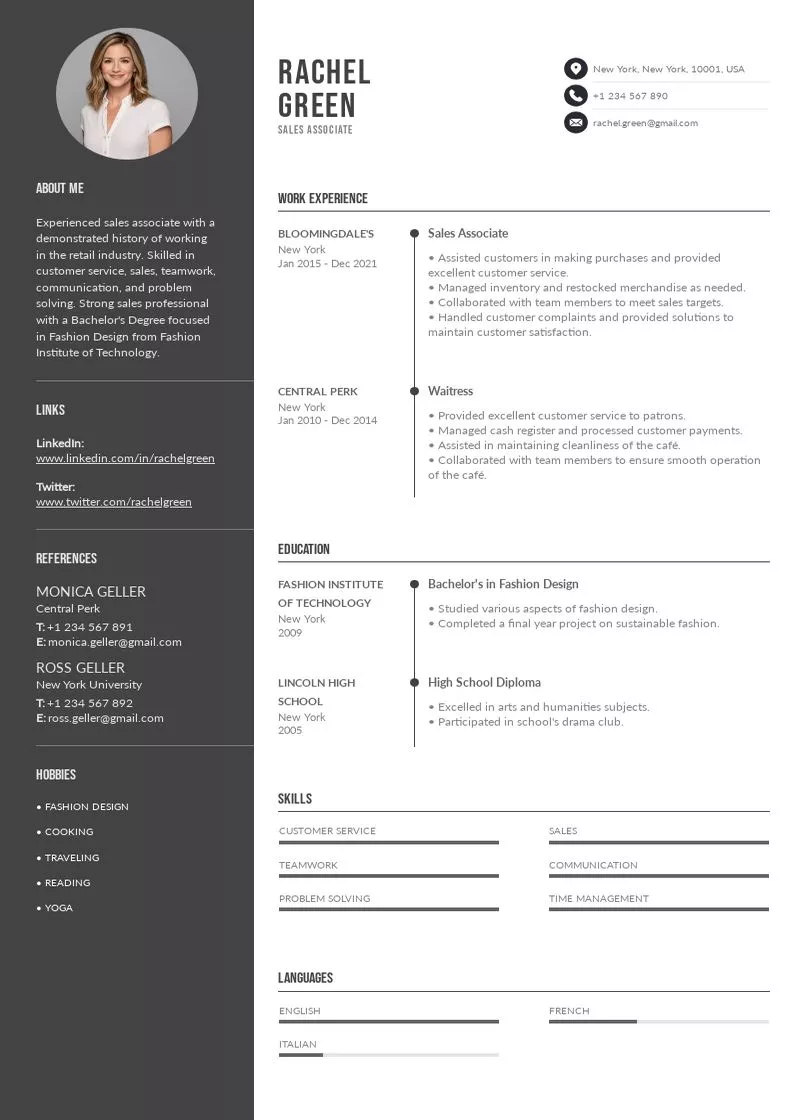
A firefighter resume must pass two filters: the ATS scanner and the hiring captain's 6-second review. This guide walks you through every section from certifications and licenses to your professional summary with examples you can adapt for volunteer, entry-level, or senior positions.


MARCUS J. HENDERSON
Firefighter / EMT-BasicChicago, IL | (312) 555-0184 | marcus.henderson@email.com | LinkedIn: linkedin.com/in/marcushenderson
Professional Summary
Dedicated firefighter with 7 years of experience at the Chicago Fire Department, holding EMT-Basic certification and trained in hazardous materials response and structural fire suppression. Responded to over 1,200 emergency calls with a consistent record of safe and effective operations. Seeking a senior firefighter position where strong technical skills and leadership experience can contribute to department performance.
Work Experience
Firefighter II — Chicago Fire Department, Chicago, IL
March 2019 – Present
Volunteer Firefighter — Oak Park Fire Station 2, Oak Park, IL
June 2017 – February 2019
Education
Associate of Applied Science, Fire Science Technology
Moraine Valley Community College, Palos Hills, IL — 2017
High School Diploma
Oak Park River Forest High School, Oak Park, IL — 2015
Certifications & Licenses
Skills
Additional Information
Member of the International Association of Firefighters (IAFF) Local 2. Completed additional coursework in emergency management through FEMA Independent Study Program. Fluent in English and conversational Spanish, enabling effective communication with Spanish-speaking community members during emergency situations.
JORDAN T. CALLOWAY
Entry-Level Firefighter Candidate
Columbus, OH | (614) 555-0237 | jordan.calloway@email.com | LinkedIn: linkedin.com/in/jordancalloway
Professional Summary
Fire academy graduate with EMT-Basic certification and 320 hours of certified firefighting training through the Ohio Fire Academy. Completed 14 months of volunteer service with Franklin County Fire District 12, responding to 110+ calls alongside career firefighters. Physically conditioned and CPAT-certified, seeking a full-time firefighter position where strong foundational training and a commitment to community safety can contribute to department operations from day one.
Work Experience
Volunteer Firefighter — Franklin County Fire District 12, Columbus, OH
August 2023 – Present
Lifeguard & Pool Supervisor — Columbus Recreation & Parks, Columbus, OH
May 2021 – August 2023 (seasonal)
Education
Fire Science Technology — Certificate of Completion
Columbus State Community College, Columbus, OH — 2023
High School Diploma
Westland High School, Columbus, OH — 2021
Certifications & Licenses
Skills
Additional Information
Completed FEMA Independent Study courses IS-100, IS-200, and IS-700 (National Incident Management System). Active member of the Ohio Volunteer Fire Fighters' Association. Scored in the top 15% of the 2024 Columbus Fire Division written examination. Fluent in English; basic Spanish communication skills.
DIANE M. KOWALSKI
Volunteer Firefighter / EMT-Basic
Portland, OR | (503) 555-0461 | diane.kowalski@email.com | LinkedIn: linkedin.com/in/dianekowalski
Professional Summary
Dedicated volunteer firefighter with 6 years of active service at Multnomah County Fire District 7, holding Firefighter II and EMT-Basic certifications. Responded to 600+ emergency calls across structural, wildland-urban interface, and medical assist incidents. Works full-time as a paramedic dispatcher and volunteers 48+ hours per month on Engine 71, bringing professional emergency communications expertise alongside hands-on fire suppression experience. Seeking to transition to a full-time career firefighter position.
Volunteer Experience
Volunteer Firefighter II — Multnomah County Fire District 7, Portland, OR
March 2019 – Present
Parallel Professional Role
Emergency Medical Dispatcher — Metro Emergency Communications (MECOM), Portland, OR
June 2018 – Present
Education
Associate of Applied Science, Emergency Medical Services
Portland Community College, Portland, OR — 2018
High School Diploma
Lincoln High School, Portland, OR — 2016
Certifications & Licenses
Skills
Additional Information
Active member of the Oregon Volunteer Firefighters' Association (OVFA) and the International Association of Fire Fighters (IAFF) affiliate chapter. Completed FEMA IS-100, IS-200, IS-300, and IS-700 (NIMS). Volunteer fire hours: 48–60 per month averaging 4 shifts. Available for immediate full-time transition with two weeks' notice from current employer.
Most fire departments receive hundreds of applications for a single opening. Your resume has roughly 6 seconds to clear the hiring captain's first pass and before that, it must survive an ATS scan. This guide shows you exactly what to include, how to format it, and which keywords matter most for 2026 job postings.
Your professional firefighter resume should have all the information of your profile including your contact information, professional summary, experience, education section, skills, certifications and licenses details and any other relevant details of transferable skills, relevant training or such.
To write a really effective resume, you need to do some research. You might already be quite familiar and knowledgeable of your role and everything that comes with it however you might not know everything that you need to write a good firefighter resume.
Doing some research will also help you find the keywords that you will have to include in your resume.
While you do the research you should also make sure that you have all the necessary qualifying documents and certifications along with licenses. Different countries and states may have different requirements that you will need to meet depending where you apply for the job.
Did you know? Volunteer firefighters are crucial in the USA. In 2020, there were 1,041,200 firefighters and 65% of them were volunteer firefighters! (Source)
Once you have done some research you can get to writing your firefighter resume.
For the best resume that has impact on the hiring managers, you need to choose the right format for your resume. There are various formats that job seekers can choose from: ATS-friendly resume format, Functional resume format, reverse chronological resume format and combination resume format.
Functional resume is suitable for freshers. The combination resume focuses on transferable skills and the experience and that is suitable for those looking for career change.
For you as a seasoned professional with significant work experience, the reverse chronological format will be the right one.
The reverse chronological format allows you to describe your experience with focus along with the key skills. It also helps you present your profile in the most professional and formal manner.
Once you have decided your format, start writing your resume. First will be the contact information in the header of the firefighter resume.
Mention your full name in a slightly bigger fonts. Next mention your contact number in formal way with area code. Make sure the number is accurate as well so that the hiring manager can contact you.
You need to mention your email address after the contact number. Your email address should be formal and professional. Do not use your personal email that maybe informal.
Although, not mandatory you can also mention your home address briefly if you are applying for the job in another state or country.
You can also include your photo if you want. However, that is not mandatory either.
After the header, you will need to describe your profile in summary. You need to be brief and concise in the profile summary.
Write your summary as 3–4 sentences of flowing prose, not bullet points, that section comes later. Lead with your certification level, years of experience, and your strongest quantified achievement. Close with the type of role or department you're targeting. Hiring manager should be able to get the gist of your profile from the profile summary.
When describing the profile summary, you should first mention the job title i.e. firefighter. Your opening line should state your title, years of experience, and your strongest credential in one sentence. Example: 'Certified firefighter with 8 years of experience at the Chicago Fire Department, holding EMT-P certification and trained in hazardous materials response.
Next up highlight your key accomplishments and relevant skills that have helped you perform well. Try not to include every accomplishment and notable details of your profile. Only mention the most important ones that are career highlights.
You can also mention any notable recognitions or awards you have received. Be brief in the profile summary and mention it all at length on the resume later.
At last note what kind of opportunity you are looking for, what you bring to the table and how you will contribute.
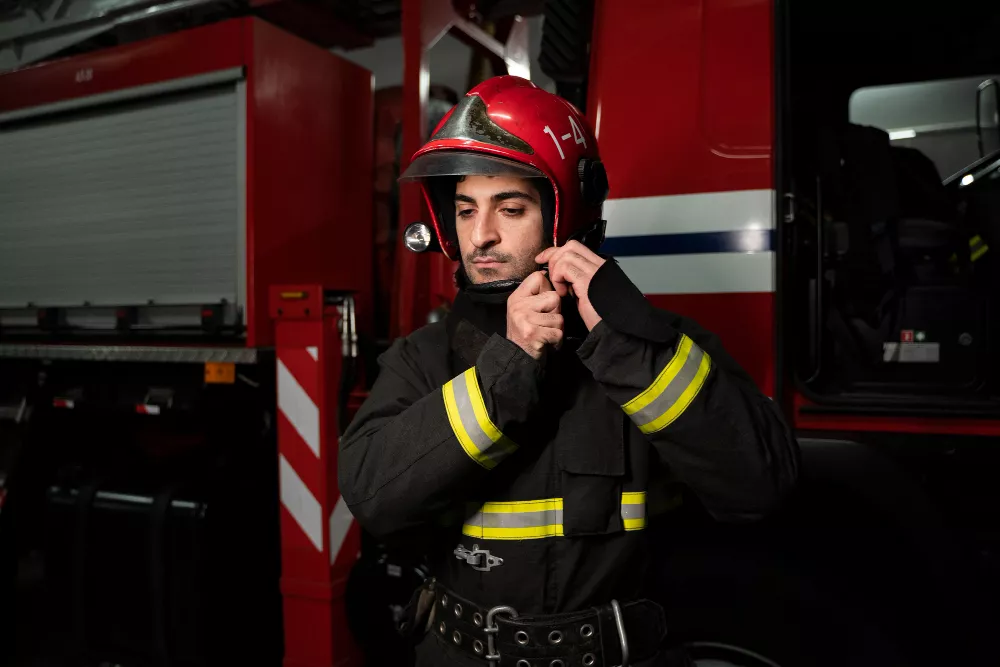
While writing the professional experience, you should begin with the job title and the employer name. Also, mention the period of time you worked there for.
Next describe the usual responsibilities that you handled at your previous jobs. Highlight and focus on exceptional performance, instances. Note the key accomplishments. Include the relevant skills that you utilized while doing all of that.
Quantify the details as much as you can. Use numbers wherever possible. How many emergency calls you attended and how many emergencies you handled.
Most importantly as mentioned before the format is reverse chronological which is defined by the manner in which you have written your experience section.
Meaning, while writing your experience section, you need to note your latest experience first and then walk back to your first experience.
Your experience section should mention all the vital aspects of the role so that the hiring manager knows that you are an experienced firefighter who is knowledgeable and skilled, not just experienced on paper.
Once you are done with the experience section you need to mention your education section. In your education section you need to mention your highest level of education. Mention the education institute and the degree you acquired.
In the education section, you can also include all the firefighting training as well. It could be on the job training or other relevant training.
You can also mention any special programs or events you have attended or completed which provided you with knowledge, skills and training.
Every hiring manager uses the Applicant Tracking System (ATS) these days which means you need to make sure your resume is good enough to beat the ATS.
The ATS works on the parameters (the relevant keywords) to scan resumes and filter the firefighter resumes they receive.
The keywords that matter most are the exact terms used in the job posting. Pull the description for the role you're targeting and scan for recurring phrases 'structural fire suppression', 'SCBA', 'ICS-300', 'driver/operator'. Mirror that language verbatim in your bullets and skills section. ATS systems match strings, not synonyms.
After the education section comes the skills section. In the skills section you need to make sure you mention all the important and relevant skills. The skills section is important as it backs up your experience and competency for the role.
Organize your skills into two categories. Hard skills (ATS-critical): Firefighter II Certification, EMT-Basic/AEMT/Paramedic, hazardous materials operations (HAZMAT), incident command system (ICS), structural fire suppression, self-contained breathing apparatus (SCBA). Soft skills (use in your summary and bullet points, not as a bare list): calm under pressure, crew coordination, physical endurance, public communication.
Above list includes skills as well as relevant areas which you should have the knowledge of. Make sure you include them all in your resume. You can also include skills and these particular topics in other sections such as experience section, profile summary section and so on.
Apart from these skills you can also include more skills-based resume approach that you have, make sure to research your role, job description, industry and everything in between and note every important skills. Include these skills in your resume to make sure you do not miss out on any job.
Apart from the above mentioned sections if you have any other information that is relevant experience or skills or such, you can mention that in your profile as well.
It could be relevant hobbies or interests, it could be something you are pursuing simultaneously i.e. medical school, night classes for relevant courses.
These details could set you apart in the pool of applicants and make an impression on the hiring manager.
Whatever your level entry-level, volunteer, or senior, every firefighter resume must include a valid driver's license with the appropriate class and endorsements. Departments run DMV checks; a missing or expired license disqualifies a candidate before the interview.
You can also refer to various firefighter resume examples and find out how a good firefighter resume is presented.
Before you submit, run a final check: certifications are listed with issuing authority and expiration date, every bullet in your experience section contains at least one number, and your file is saved as a PDF unless the posting specifies otherwise. A resume that passes these three tests is ready to compete.
All you need is to write a really good firefighter resume. Now you know all about writing a good firefighter resume. To get the firefighter position you want, you can refer to our resume examples and use the resume template.
Our collection of expertly designed cover letter templates will help you stand out from the crowd and get one step closer to your dream job.