

Since 2023, the global events industry has surged back, driven by large-scale in-person gatherings, hybrid conferences, brand activations that companies now treat as strategic communication tools, and so on. Experienced event professionals are in demand. But so is the competition for top roles. Recruiters no longer settle for a list of past jobs. They expect proof of leadership, budget ownership, and measurable impact from concept to execution.


Event management is one of the few professions where creativity and operational precision must coexist. And your resume needs to reflect both. Whether you run corporate conferences, product launches, or festivals, it must answer two questions immediately: can you manage complexity, and can you deliver experiences worth remembering?
Most event professionals struggle to make that case on paper. This guide shows you how, with realistic examples, section-by-section guidance, and the specific language that makes recruiters take notice.

Tyler Bennett
Columbus, Ohio, United States
(614) 555-2718
tyler.bennett@email.com
LinkedIn: linkedin.com/in/tylerbennett-events
Objective
Entry-level Event Assistant seeking to contribute to corporate and community events by leveraging strong organizational skills, vendor coordination experience, and proficiency in event management platforms such as Eventbrite and Microsoft Excel.
Skills
Professional Experience
Event Assistant
Riverfront Community Events — Columbus, OH
May 2024 – Present
Campus Events Volunteer
Ohio State University Student Activities — Columbus, OH
September 2022 – April 2024
Customer Service Associate
Target — Columbus, OH
2021 – 2023
Education
Bachelor of Arts – Communications
Ohio State University — Columbus, OH
Graduated: 2024
Relevant coursework: Event Planning, Public Relations, Marketing Communications
Certifications (Optional for ATS boost)
Why this ATS resume for events industry has the best chance:
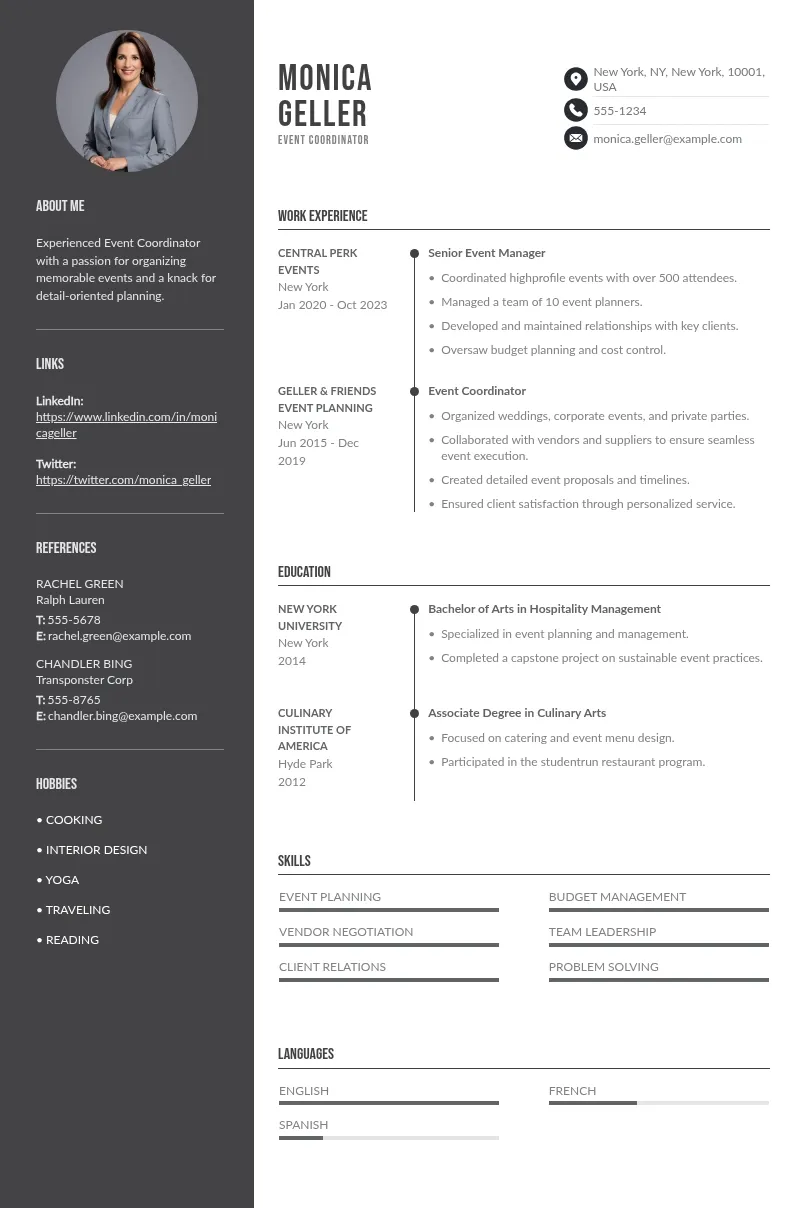
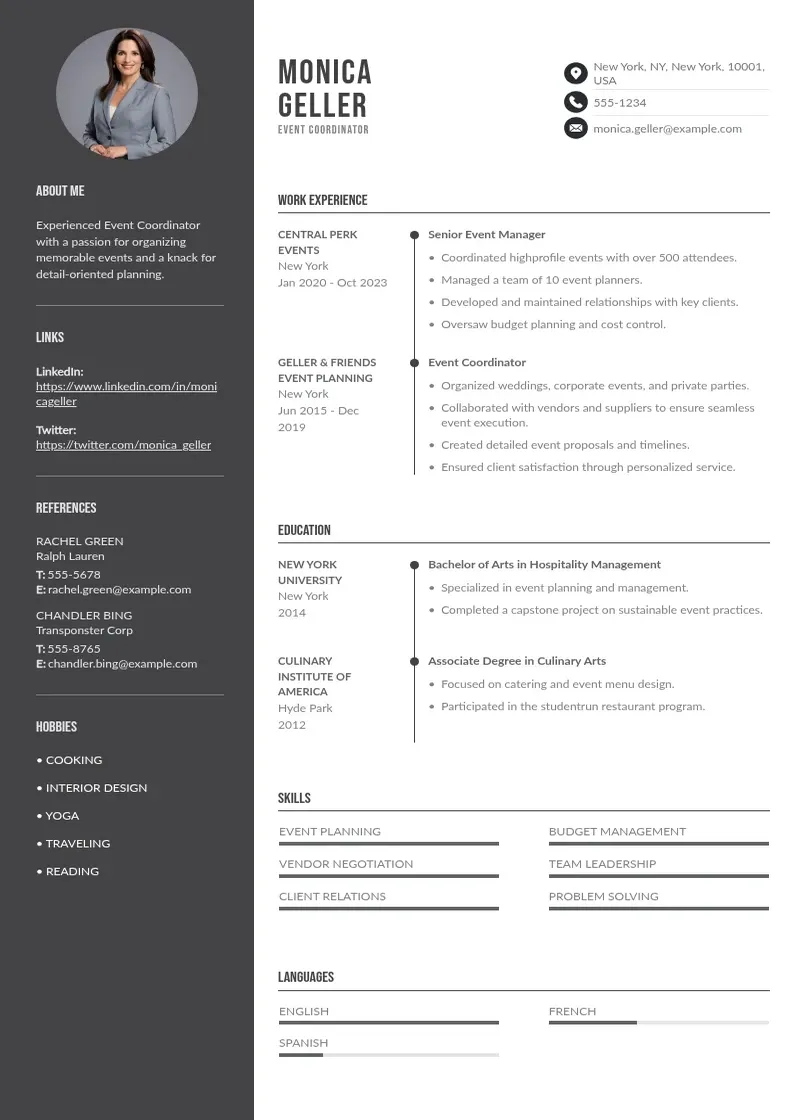
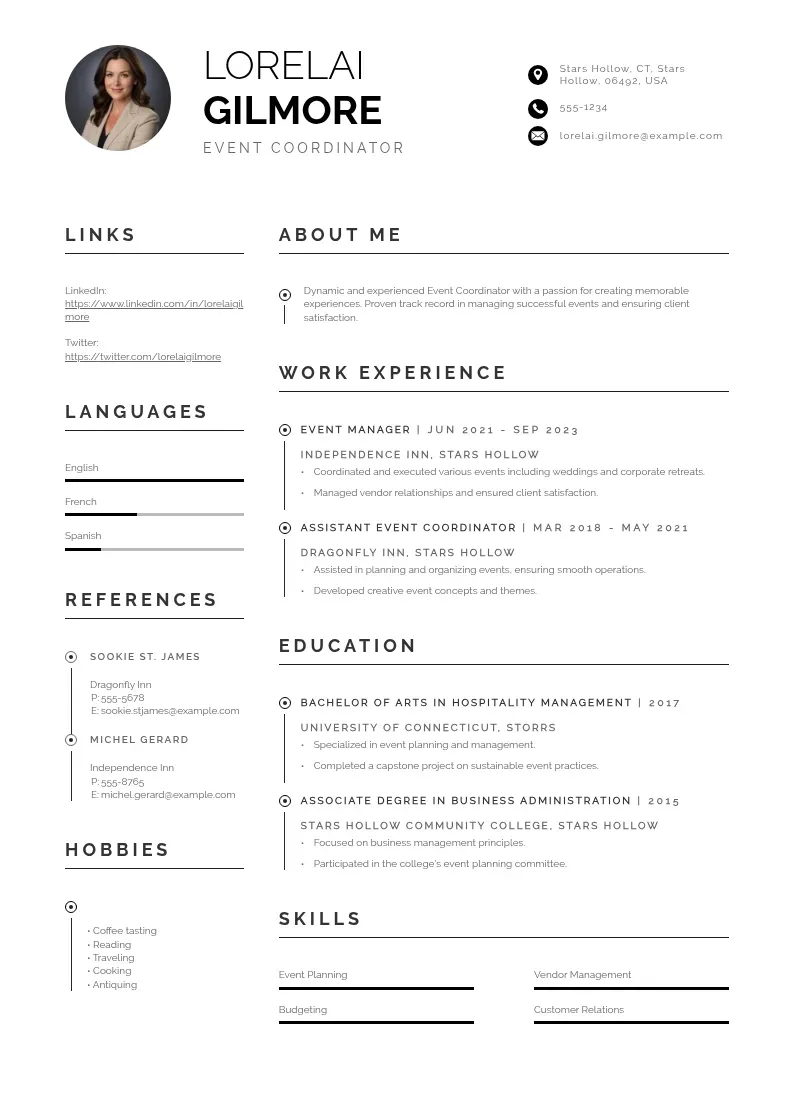
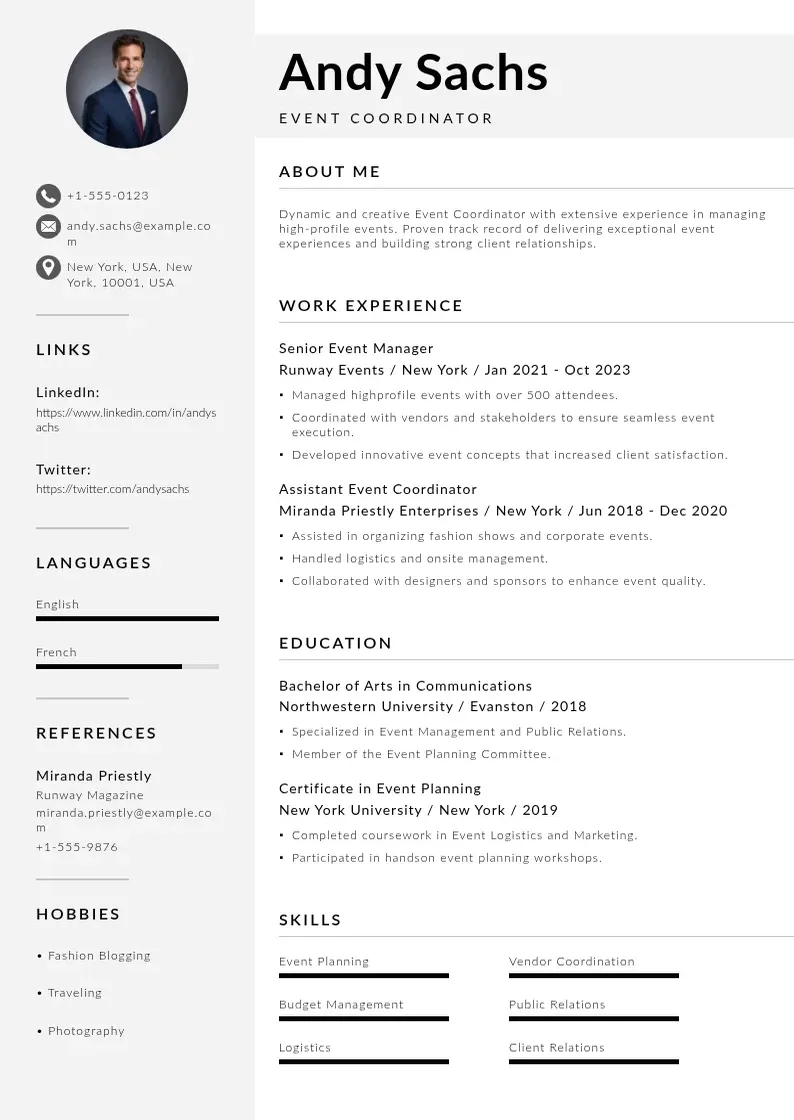
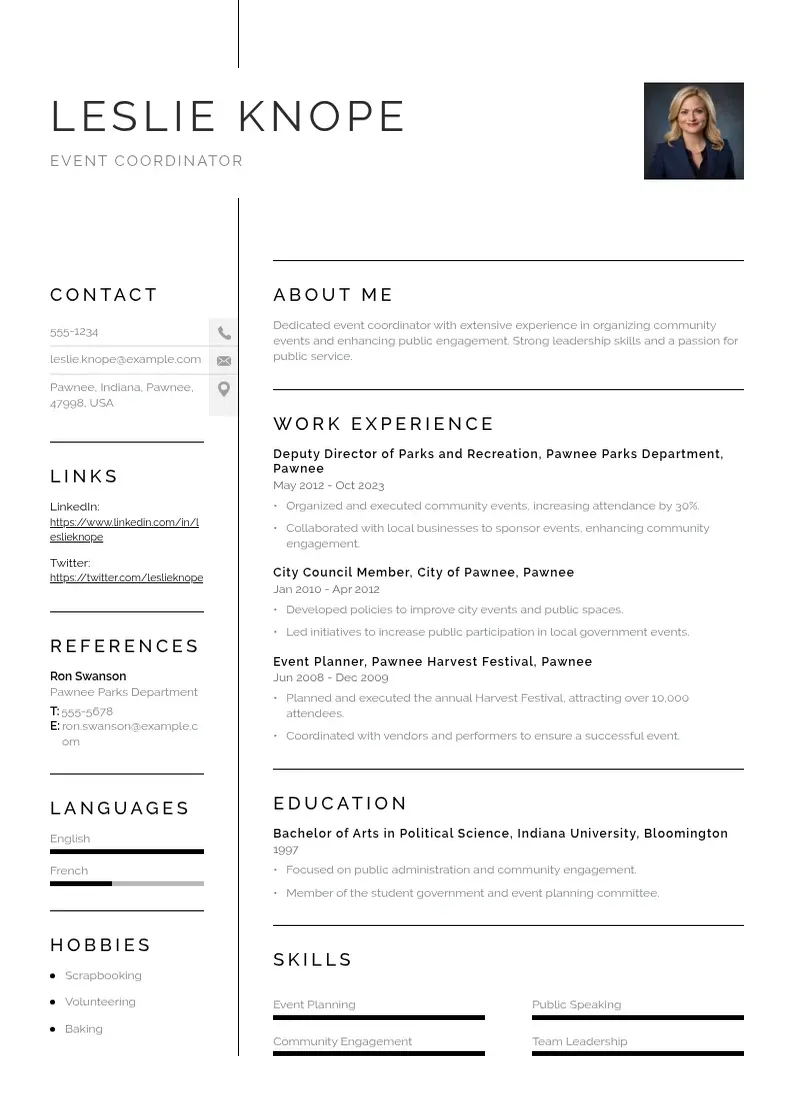
The fastest way to understand what a great event resume looks like is to see one. Before getting into strategy, here are three real-world resume profiles that consistently perform well — and what makes each one effective.
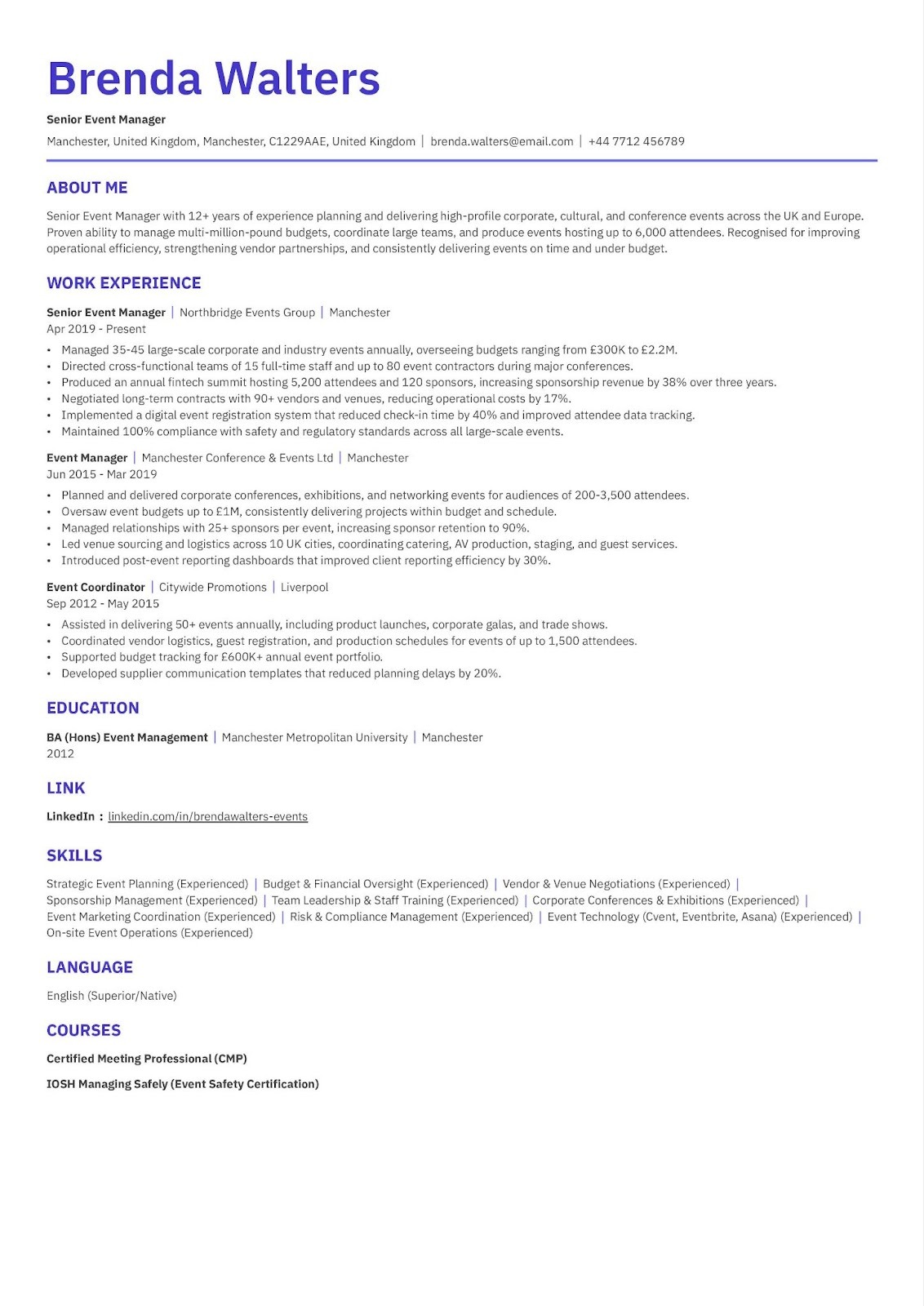
Why it works
This resume leads with numbers. Every bullet point anchors the reader in scale — how many attendees, how large the budget, how many vendors managed. It pairs those metrics with strong action verbs that make the candidate sound decisive rather than passive. Technical competencies sit alongside interpersonal ones, giving a well-rounded picture of someone who can plan and lead.
Quick Tips
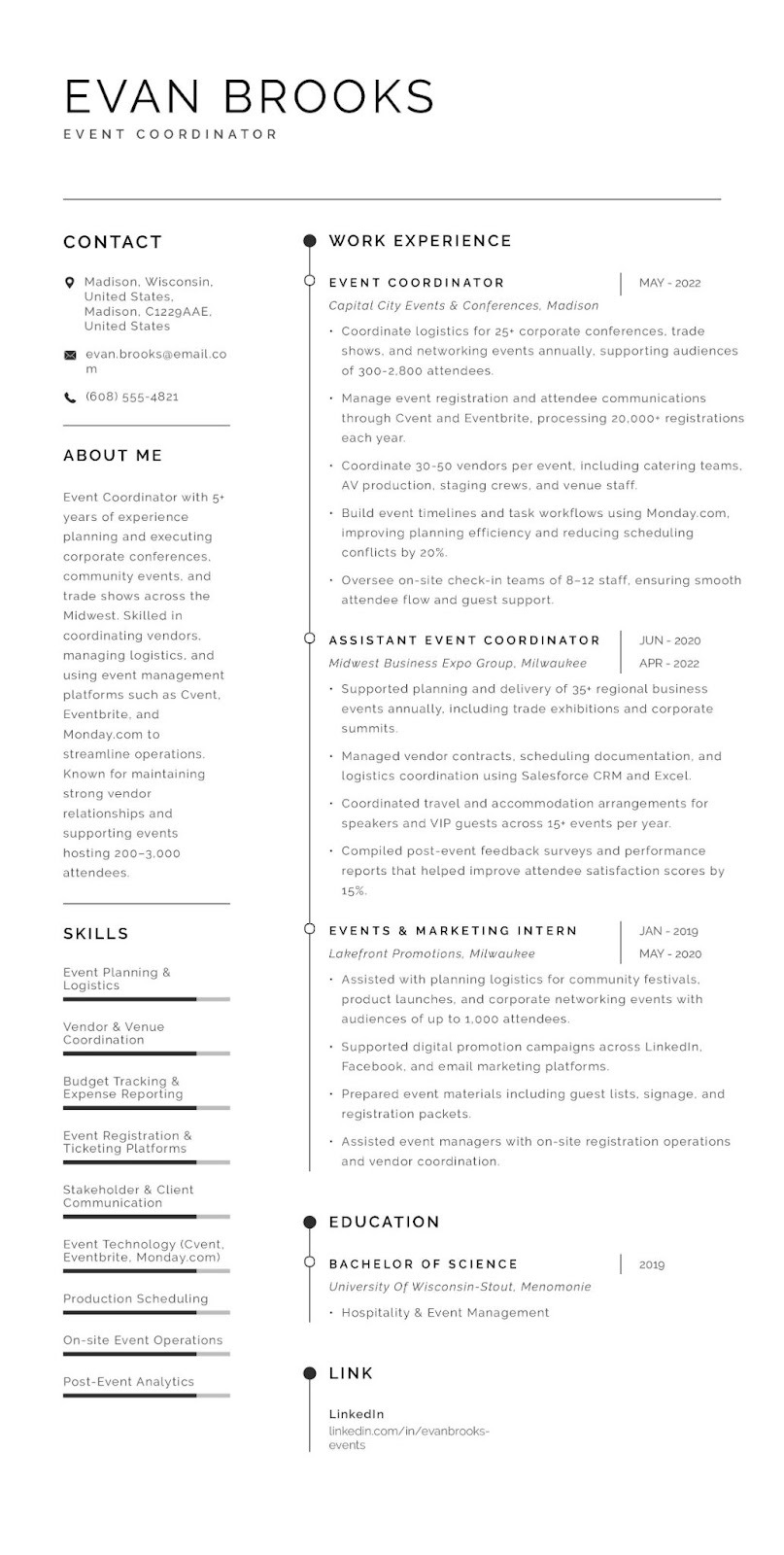
Why it works
This resume tells a clear career story. Each role builds on the last, and the bullet points reflect growing responsibility. The candidate names the tools and platforms they use, which signals technical fluency without needing a separate paragraph to explain it.
Quick Tips
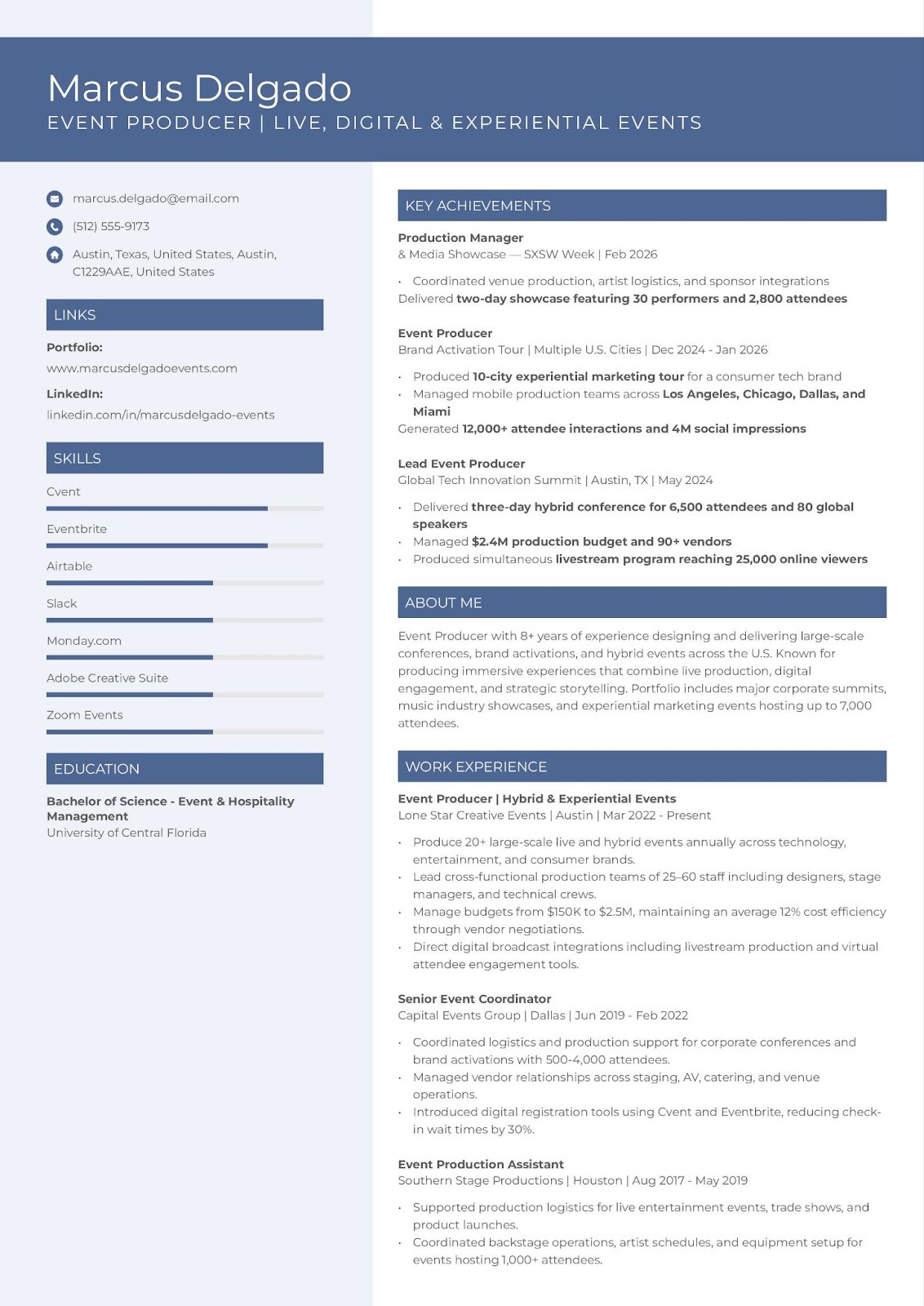
Why it works
Events are a visual, experiential industry. This resume earns attention by including a live link to an online portfolio alongside a dedicated "Key Achievements" section that spotlights signature events. It reads less like a job history and more like a highlight reel.
Quick Tips
Event industry job titles are not interchangeable, neither are the skills behind them... A production manager who writes the same resume as a wedding planner is signaling that they don't fully understand either role. Before you write a word, lock in the position you're targeting and shape everything around it.
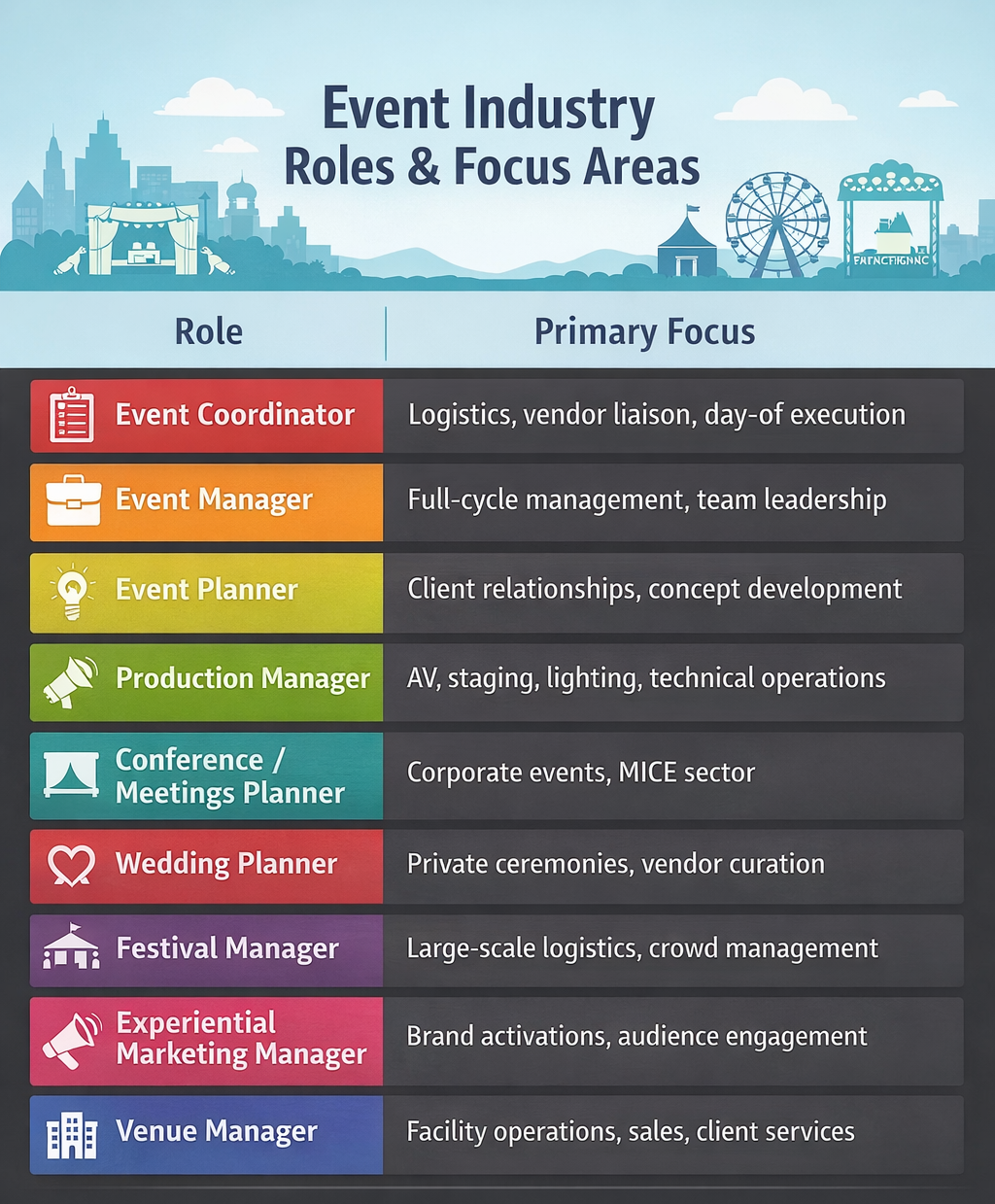
Event planners are obsessive about flow: your resume should reveal that. A clean, logical structure tells a recruiter that you think in sequences and respect other people's time. Clutter, inconsistency, or walls of text suggest the opposite.
Recruiters in events hire fast and move on just as quickly. If your most relevant credential isn't visible in the first third of the page, assume it won't be seen.
Your header is the equivalent of a venue's entrance: it sets tone before anything else has been said. A vague job title or a missing portfolio link is like a lobby with no signage.
Include:
 Example:
AMINA MEYERS
Senior Event Manager | Corporate & Experiential
+555 91 000 0000 · amina.meyers@email.com
linkedin.com/in/aminameyers - aminameyers.events
Seattle, Washington, US
Your summary is the pre-event brief for your entire event producer or event promoter resume. A weak brief sends people into an event without context, confidence, or direction. A sharp one aligns everyone before the doors open. In three to five lines, answer the only three questions a recruiter is asking: who are you, what do you deliver, and why you over the next person in the pile.
Template:
[Title] with [X] years of experience in [event type/sector]. Proven track record of [key achievement]. Skilled in [top 2–3 competencies]. Known for [your edge].
Example:
Dynamic Event Manager with seven years delivering high-impact corporate conferences, product launches, and gala dinners for audiences of up to 3,000. Proven ability to manage complex multi-vendor logistics and six-figure budgets while maintaining flawless on-site execution. Bilingual (French/English) with deep regional expertise across East Africa.
Think of your skills section the way you'd think of a vendor brief: specific, organized, and built for the person reading it. A generic list of buzzwords is the equivalent of an unvetted supplier: it technically meets the brief but gives no confidence. Tailor this section to each job description you apply to.
Hard Skills
About soft skills:
Don't list: demonstrate them. "Leadership under pressure" is a simple phrase. "Redirected a 900-person gala after the primary venue flooded six hours before doors opened, securing an alternative site and executing on schedule" is a credential.
This is where the event comes to life, or falls flat. Job descriptions tell a recruiter what your role was supposed to be. Strong bullet points show what actually happened under your watch: the scale you operated at, the decisions you made, and the results those decisions produced.
Format each role:
JOB TITLE | Company Name | City, Country | Month Year – Month Year
Use the CAR method for every bullet:
Context → Action → Result
Or more practically: [Strong verb] + [what you did] + [scale/context] + [measurable outcome]
Strong bullets:
What gets cut immediately:
These phrases signal that you watched things happen. Your resume should show that you made them happen.
Power verbs by function:
Skipping this section is a significant mistake in an industry where the work is inherently visible. A conference, a product launch, a festival, etc, these are not abstract deliverables. They happened in front of hundreds or thousands of people, and a recruiter who can picture your event is a recruiter who remembers your resume.
List three to five standout events with the format below:
Every entry should carry at least one performance metric. Audience size, budget managed, revenue generated, client satisfaction score, social reach — pick the number that tells the best story about your contribution.
List your degree, institution, location, and graduation year. Only include GPA if it's strong and recent enough to be relevant.
High-value certifications for event professionals:
The event technology stack has expanded dramatically. Your resume should reflect where you actually sit within it. Don't list every platform you've opened once. List the tools you've used to run something real:
Event Management: Cvent, Eventbrite, Whova, Bizzabo, Splash
Project Management: Asana, Monday.com, Trello, Notion
Design & Floor Planning: Canva, Adobe InDesign, AutoCAD
AV & Virtual Production: OBS, Hopin, Zoom Webinars, Resolume
CRM & Sales: Salesforce, HubSpot
Finance: Advanced Excel / Google Sheets, QuickBooks
Communication: Slack, Microsoft Teams, Zoom
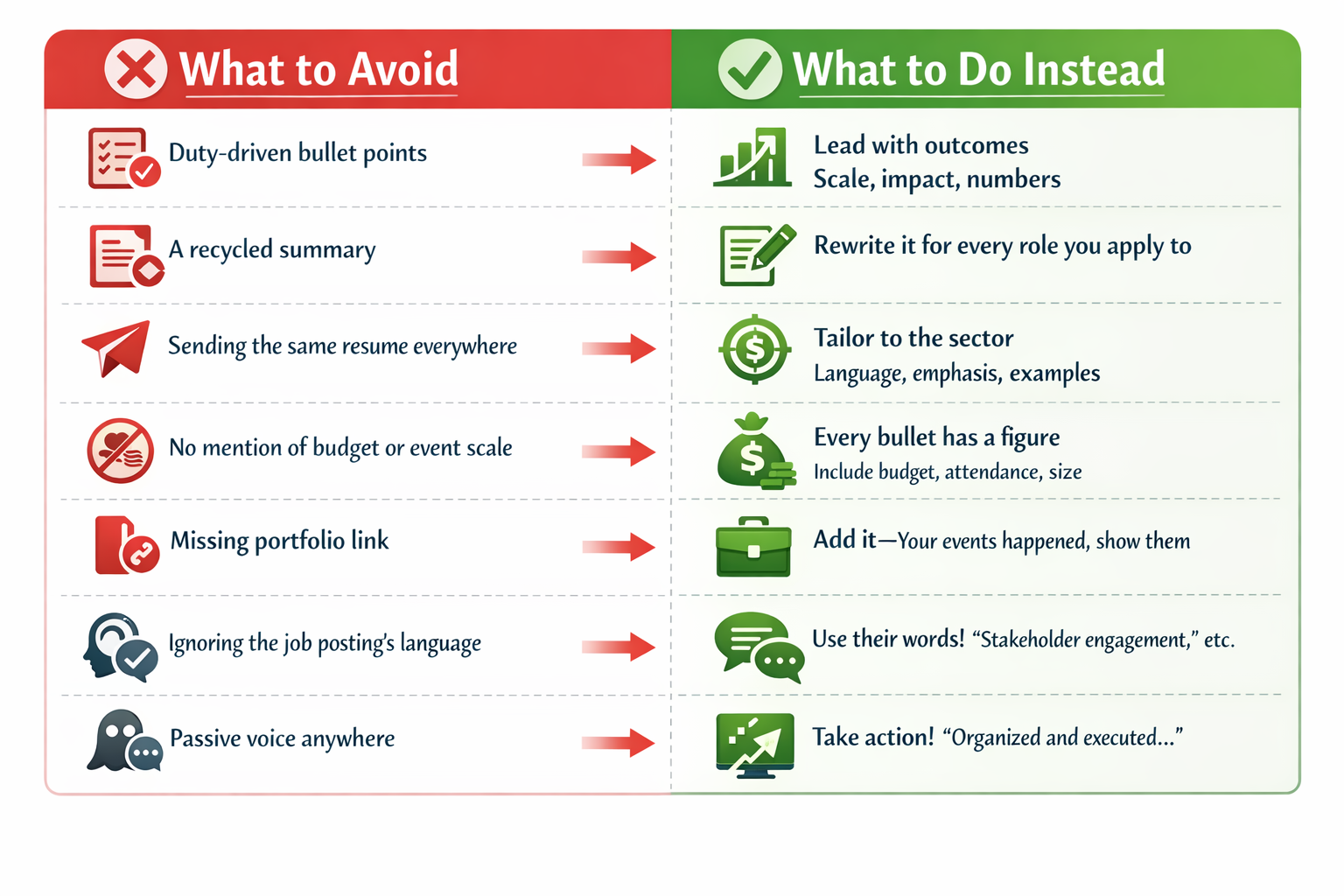
Tailoring your resume to the sector
A gala dinner and a street food festival are both events. They share almost nothing else. The recruiter hiring for one is not impressed by generic event experience. They want to see that you understand their world specifically.
This digital front-of-house that filters applications based on keywords, formatting, and structure, is the trend. Passing this stage requires the same easy discipline good event planning does: know the brief, follow the format, don't improvise where precision is required.
Your cover letter is the pre-event communication: the teaser that makes someone want to show up. If it opens with "I am writing to express my interest in," you've already lost the room. Open with a result. A moment. Something that happened because you were there.
Run through this before sending any application. Think of it as your pre-event walkthrough: the moment you catch the thing that would have gone wrong during the show.
Our collection of expertly designed cover letter templates will help you stand out from the crowd and get one step closer to your dream job.