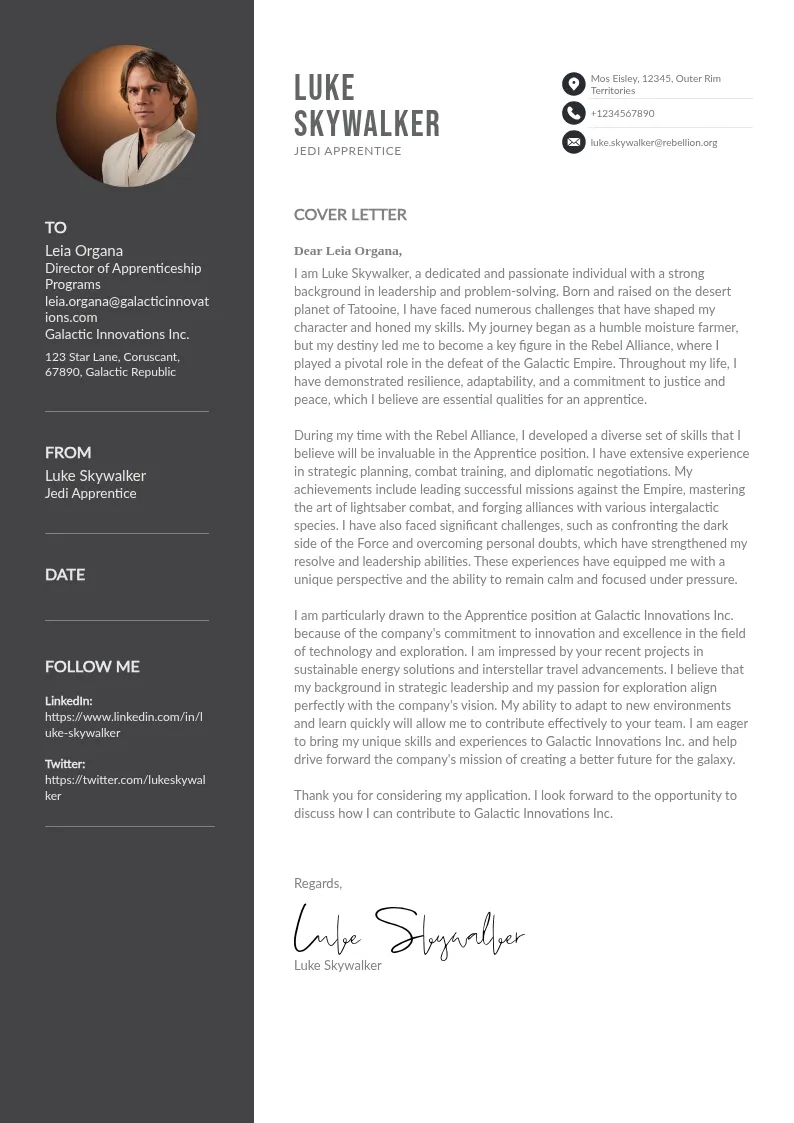
Understanding the Crucial Role of Structure in a House Parent Cover Letter

Navigating the path to becoming a House Parent can present a unique set of career challenges and aspirations. A well-structured cover letter can serve as a beacon, guiding potential employers through your professional journey with clarity and precision. This crucial document can effectively showcase your skills, experience, and personal attributes, enabling you to stand out amid a sea of applicants.
The layout of your cover letter is particularly important, as it can significantly influence the reader's perception of your suitability for the role. Therefore, investing time and effort in creating an organized and visually appealing cover letter can lead to promising opportunities in your House Parent career.
Contact Information Section in House Parent's Cover Letter
When addressing the hiring manager or employer in an application for a House Parent position, it's important to use a professional and respectful salutation. You should try to find out the name of the hiring manager or employer to personalize your salutation. If this information is not available, it's acceptable to use a general salutation. Keep in mind that your salutation sets the tone for the rest of your application, so it's important to get it right.
Here are a few sample salutations you could use:
- Dear Mr. / Ms. [Last name]
- Dear Hiring Manager
- Dear [Company name] Team
- To Whom It May Concern
- Dear Sir/Madam
If you know the name of the hiring manager or employer:
- Dear Mr. Smith
- Dear Ms. Johnson
Remember, the goal is to be respectful and professional, while also being personable and approachable.
Crafting an Engaging Opening Paragraph for a House Parent's Cover Letter
Crafting Engaging Body Paragraphs in a House Parent's Cover Letter
The main body paragraphs of a House Parent's cover letter are critical in presenting a comprehensive picture of the applicant's qualifications, experience, and suitability for the role. These paragraphs give the applicant an opportunity to elaborate on their skills, achievements, and experiences in previous similar roles, demonstrating their potential value to the hiring institution.
They provide the space to convince the hiring manager of their fit for the position by highlighting relevant competencies and attributes. Without these crucial paragraphs, the cover letter would lack depth, making it difficult for the employer to assess the applicant's suitability for the role.
The first paragraph of a cover letter for a House Parent position should include a succinct summary of the applicant's skills and experience relevant to the role. This is critical as it provides a snapshot of the applicant's qualifications and demonstrates their suitability for the position. Highlighting key skills such as conflict resolution, communication, and caregiving can help set the tone for the rest of the letter.
Additionally, it's also important to connect these skills directly to the job requirements to show the employer that the applicant understands what the role entails and how they can fulfill these requirements based on their previous experiences and acquired skills.
The second paragraph of a cover letter is often used to highlight the individual's key achievements and contributions in their previous roles. This is important because it gives the prospective employer a clear idea of the candidate's capabilities and successes, providing concrete evidence of their skills and experience. By showcasing specific accomplishments, the candidate can demonstrate their ability to achieve results, solve problems, or make significant contributions to their work. Furthermore, emphasizing how these achievements can benefit the prospective employer helps to show the candidate's potential value to the organization, making them a more attractive candidate for the role.
The third paragraph of a cover letter for a House Parent position should be dedicated to showcasing your knowledge about the company you are applying to. This is an opportunity to show the employer that you have done your research and are genuinely interested in their specific organization.
You can mention the company's mission, values, or any initiatives that resonate with you. This will demonstrate that you know what the company stands for and that you are aligned with their ethos.
Additionally, you should also explain why you believe the company is an ideal fit for you. This can be related to the company's culture, work approach, or the impact they have on the community. Explaining why you see yourself in their team will help convince the employer that you are not just looking for any job, but are specifically interested in becoming a part of their organization.
Crafting a Strong Closing Paragraph for Your House Parent Cover Letter
The closing paragraph of a House Parent cover letter is incredibly important as it provides an opportunity for the candidate to leave a lasting impression on the reader. It serves as a platform to express genuine enthusiasm and eagerness for the prospect of discussing the role and the candidate's potential contribution further in an interview. This not only highlights the candidate's interest in the position but also their proactive attitude.
Additionally, providing contact details in the closing paragraph ensures the prospective employer has clear and immediate access to reach out for further discussion. This paragraph is also an avenue to express gratitude for considering the application, demonstrating politeness and respect. Therefore, a strong closing paragraph can effectively summarize the candidate's suitability for the role, while also making a personal connection with the reader.
Choosing the Right Complimentary Close for a House Parent's Cover Letter
In crafting your application letter for the House Parent position, it is vital to ensure you use an appropriate complimentary close to leave a positive impression. This part of your letter is as important as the salutation because it offers a sense of closure and formality. It sets the tone for your entire letter and conveys respect towards the recipient. Generally, professional closing phrases such as:
- "Sincerely,"
- "Best Regards,"
- "Kind Regards,"
- "Yours Truly,"
- "Respectfully Yours,"
are considered suitable. These phrases are formal, respectful, and universally accepted. Thus, they can be effectively used as a closing in your job application letter. It's also important to follow the complimentary close with your typed full name, contact information, and if possible, a digital signature to give your application a professional touch.
Incorporating Your Signature in the House Parent's Cover Letter
In today's digital age, many might think that a digital signature is more appropriate for a House Parent cover letter. However, a handwritten signature can add a personal touch to your application that sets you apart from other candidates. While a digital signature is convenient and accepted, it may not convey the same level of sincerity and effort as a handwritten one. A handwritten signature shows that you took the time to personally sign the document, which can demonstrate your dedication and interest in the position. Therefore, if possible, it might be more beneficial to include a handwritten signature for a more personal touch on the House Parent cover letter.

Essential Tips for Crafting a Compelling House Parent Cover Letter
Writing a cover letter for a house parent position can be a daunting task, especially if you're not sure where to start or what to include. However, by following these additional tips and good practices, you can create a compelling cover letter that will stand out to potential employers.
- Tailor Your Letter: Make sure your cover letter is tailored specifically to the house parent job you're applying for. Use the job description as a guide and highlight the skills and experiences that make you the best fit for the role.
- Highlight Your Skills: As a house parent, you'll be expected to possess a variety of skills ranging from caregiving to conflict resolution. Emphasize these skills in your cover letter and provide examples of how you've used them in the past.
- Show Your Passion: Employers want to hire individuals who are passionate about their work. Make sure to convey your enthusiasm for the role and explain why you want to be a house parent.
- Use a Professional Tone: While it's important to show your personality in your cover letter, remember to maintain a professional tone. Avoid using slang or overly casual language.
- Be Concise: Keep your cover letter concise and to the point. Aim for no more than one page. Long, rambling cover letters can be off-putting to employers.
- Proofread for Errors: This cannot be stressed enough. Even the smallest spelling or grammar mistake can leave a negative impression. Always proofread your cover letter multiple times and consider having someone else look it over as well.
- Use Bullet Points: If you have a lot of information to convey, consider using bullet points to make your cover letter easier to read. This can be particularly useful when listing your skills or experiences.
- End on a Positive Note: Conclude your cover letter by reiterating your interest in the role and expressing your eagerness to discuss the opportunity further in an interview.
- Use Appropriate Salutations and Closings: Start your letter with a professional salutation such as "Dear [Employer's Name]" and end with a formal closing like "Sincerely" or "Best regards."
- Include Contact Information: Make sure to include your contact information at the top of the letter so that the employer can easily get in touch with you.
By adhering to these good practices, you can craft a cover letter that not only showcases your skills and experiences but also demonstrates your professionalism and dedication to the role of a house parent.
Final Thoughts on Crafting the Ideal House Parent Cover Letter
In conclusion, crafting the perfect cover letter for a House Parent position is a significant step towards securing your desired job. The key points to remember include making sure to adhere to the standard format of a cover letter, highlighting your relevant skills and experiences, and expressing your passion for nurturing and guiding young people. Your cover letter should be concise, professional, and should clearly outline how your unique qualities make you the best fit for the role.
Remember, your cover letter is your first chance to make an excellent impression. It not only showcases your writing skills but also your desire and preparedness for the job. For this reason, make sure you personalize your letter, speak to the specific needs of the job, and most importantly, let your passion for the role shine through.
A powerful cover letter can be a game-changer. It can put you ahead of other candidates and open the door for a rewarding career as a House Parent. So, take the time to tailor the template provided to your unique experiences and skills. After all, your individual journey and passion for making a positive difference in the lives of young people are what will make you stand out from the rest.
Go forth and create a cover letter that truly reflects you as the ideal House Parent. The impact you could make in a young person's life is immeasurable, and it all starts with that one compelling letter.